

Review · ATHENS
Olive Oil Tasting Farm Experience, Corinth Canal, Nafplio
The best part of this six-hour outing is the mix: engineering wonder at the Corinth Canal, ancient temples and fortress walls at Corinth, then a focused olive oil tasting at OLEOSOPHIA. It gives you three very different views of the Peloponnese without asking you to plan several separate trips.
I like the private vehicle, bottled water, onboard WiFi, and pickup from Athens. I also like that the English-speaking driver can add local context along the road. If Kyriakos is assigned to your group, expect a guide praised for his local history and day-trip skills. A possible drawback is the price once extras are added: the $188.74 fare does not include the €15 Ancient Corinth admission or the €70 olive tasting fee per person, and lunch is also on your own.
Key points to know before booking
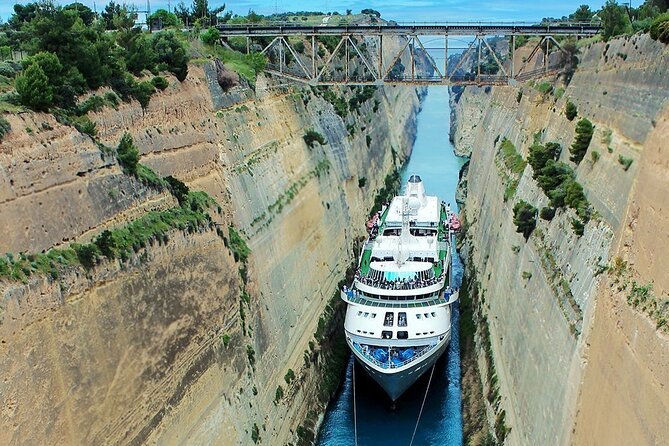
- The Corinth Canal is a short, dramatic stop: Its 6.4-kilometer channel cuts through cliffs up to 63 meters high, yet the waterway is only 21.4 meters wide.
- Ancient Corinth gets the longest visit: Allow about two hours, with the €15 entrance fee paid separately.
- Acrocorinth adds a powerful high point: The fortress rises 575 meters above Ancient Corinth and carries layers of Greek, Roman, Byzantine, Frankish, Venetian, and Ottoman history.
- The olive tasting is not included: OLEOSOPHIA charges a minimum tasting fee of €70 per person, so check the final cost carefully.
- This is a private tour: Only your group participates, with an air-conditioned vehicle, WiFi, water, and an English-speaking driver.
- The schedule is compact: The full experience lasts about six hours, and the stated travel time is one hour for all itineraries.
Why this Athens day trip works
Athens can fill several days with museums and ancient stones. This trip gives you a change of pace without sending you too far from the city. In one outing, you see a modern canal, an ancient trading city, a mountain fortress, and a Greek agricultural product that still matters today.
The route also makes sense geographically. Corinth sits at the narrow Isthmus of Corinth, the strip of land joining mainland Greece to the Peloponnese. That position gave the city control of land routes and access to two gulfs. It also explains why both the ancient city and the canal mattered so much.
Because the tour is private, you do not need to match the pace of a large group. That matters at sites with different levels of interest. You may want to spend more time among the ruins and less time at the canal, or take the olive oil session slowly after a busy morning of sightseeing. The exact flexibility is best confirmed with the operator, but the private format gives your group a better chance of discussing it.
The main tradeoff is cost. At $188.74 per person, the advertised price is not the complete bill. Add €15 for Ancient Corinth and €70 for the olive tasting, bringing the known extra charges to €85 per person before lunch. Currency conversion will affect the final total, but the basic arithmetic tells you this is a premium private excursion rather than a budget bus ride.
More Olive Farm Visits in Greece
The Corinth Canal: a sharp cut through the isthmus
The first stop is the Corinth Canal, about 6.4 kilometers long and just 21.4 meters wide. It slices through limestone cliffs that rise as high as 63 meters above the water. The scale is easy to grasp in person because the channel is so narrow compared with the steep rock walls.
The canal links the Aegean Sea with the Ionian Sea. Before it opened, ships had to travel around the Peloponnese, adding more than 700 kilometers to the journey. The canal was completed in 1893, after centuries of plans and attempts to solve the problem.
You get about an hour here, and admission is free. That is enough time for the main view and photographs without turning the stop into a long technical visit. The canal is also known for bungee jumping, so you may see extreme-sports activity, though no jump is included in this tour.
The canal’s practical limits are worth knowing. At only 21.4 meters wide, it mainly serves smaller vessels. Its importance today is as much visual and historical as commercial. I find that useful context: you are not just looking at a pretty waterway, but at a bold shortcut that changed movement around southern Greece.
Ancient Corinth and the Temple of Apollo
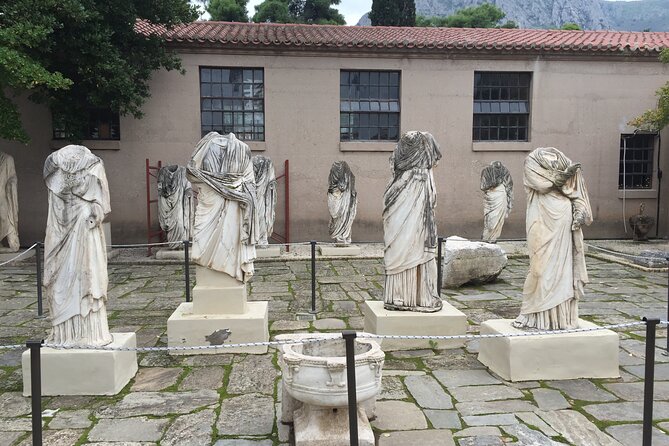
Ancient Corinth receives about two hours, making it the core archaeological stop. The €15 admission fee is not included, so keep that cost in your planning.
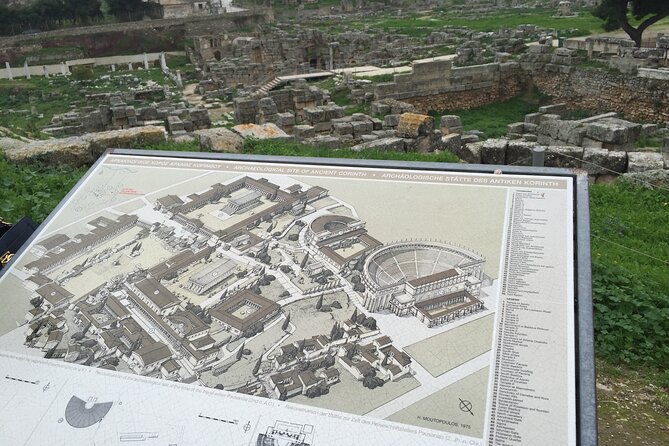
Corinth grew wealthy because it controlled the narrow land bridge between the Saronic and Corinthian gulfs. Merchants could move goods through this strategic area, and the city became a major center of trade, politics, religion, and culture. Its marketplace, or agora, once drew merchants from across the Mediterranean.
The Temple of Apollo is the most recognizable feature. It is one of the oldest Doric temples in Greece, and its remaining columns give you a clear sense of the city’s age and importance. The ruins also connect to the Isthmian Games, a major Panhellenic festival held in the Corinth area.
Two hours is a useful amount of time here, but it is not unlimited. If you like reading every sign and examining every stone, you may want to keep your pace steady. If you mainly want the major ruins and a sense of the ancient city, the allotted time should feel more comfortable.
This is also the stop where an English-speaking driver can add real value. The stones do not explain themselves. A guide who can connect the marketplace, temple, trade routes, and political role of Corinth helps turn scattered ruins into a functioning city in your mind.
Acrocorinth and its commanding fortress
Acrocorinth rises 575 meters above Ancient Corinth on a huge rock. It served as the city’s acropolis and defensive stronghold, with views over the isthmus and the surrounding region. The setting makes the military logic plain: from this height, the route through Corinth could be watched and protected.
The fortress walls spread across three defensive levels. Greek builders began the fortifications, and later Romans, Byzantines, Franks, Venetians, and Ottomans expanded or adapted them. That long sequence gives Acrocorinth a layered character. You are not looking at one period frozen in time, but at a site repeatedly reused by different powers.
The summit once held temples, including an important sanctuary to Aphrodite. Cisterns, gates, and walls remain part of the archaeological site. Admission is listed as free, though the terrain and fortress scale mean you should pay attention to the time available.
The tour gives Acrocorinth about an hour. That is enough for a strong impression and views, but you should not expect a slow exploration of every wall and path. The site is large, and the one-hour stop may feel brief if fortress architecture is your main interest.
More Olive Farm Visits in Athens:
- Sorrento Farm and Food Experience including Olive Oil, Limoncello, Wine tasting
★ 5.0 · 2,524 reviews - Crete: Road-trip to Lasithi, Zeus Cave & Olive Mill Farm
★ 4.4 · 451 reviews - Heraklion: Olive Farm Tour with Tasting of Local Delicacies
★ 4.9 · 411 reviews - Lassithi, Zeus Cave, Olive Mill Farm & Knossos Combo Tour
★ 4.6 · 404 reviews
OLEOSOPHIA and the olive oil tasting
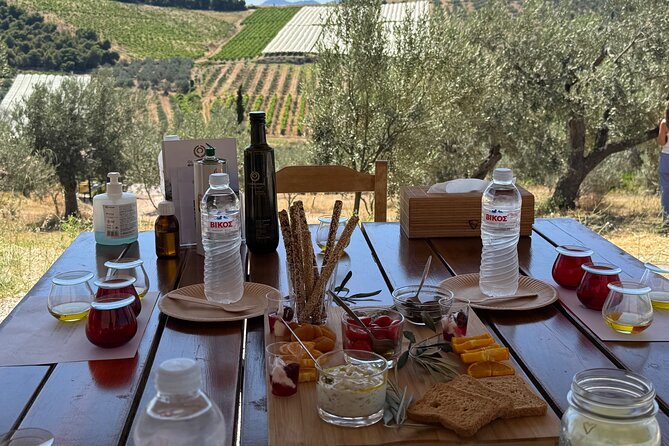
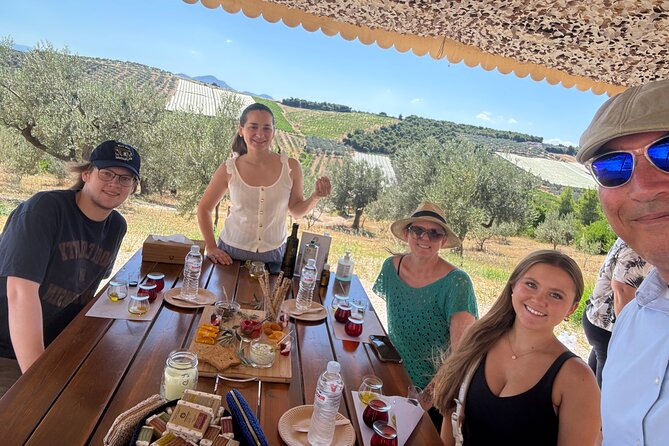
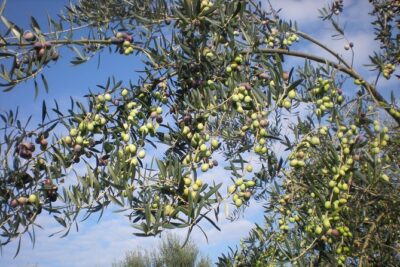
The final stop is OLEOSOPHIA Olive Garden Tours, where you spend about an hour tasting olive oil. The tasting fee is not included and is listed at a minimum of €70 per person. This is the single largest extra charge, so it deserves attention before you book.
The value here depends on your interest in food culture. If you want only the archaeological sites, the tasting adds cost and takes time from the ruins. If you enjoy learning how a major Greek product is presented and assessed, it gives the trip a different finish from a standard ancient-site circuit.
The supplied details do not specify the exact oils, food pairings, production methods, or tasting format. I would ask the operator what the €70 includes before departure. That simple question can tell you if the session fits your expectations and helps avoid a surprise at the farm.
An hour is enough for a focused tasting, but not for a full agricultural tour plus a long meal. Lunch is not included either. Plan to ask about meal timing and options if you need more than a tasting during the day.
What the private vehicle adds
Transportation is provided in an air-conditioned vehicle with private transport, WiFi, and bottled water. Pickup is offered in Athens, and the driver is English-speaking. Those details matter on a six-hour outing with several stops and road time between them.
A private vehicle is especially useful for couples, families, or a small group that wants to stay together. You avoid the fixed social pace of a large coach and have a direct point of contact for questions. The tour is offered in English, so you can discuss the sights and practical details without relying on written information alone.
The driver is scheduled to arrive five minutes before departure, and WhatsApp is used for real-time communication. Save the provider’s contact details and keep your phone available on the morning of the trip. That is a small step, but it makes pickup easier.
The tour is available daily from 7:00 AM to 7:00 PM during the stated operating period, from September 23, 2024, through December 7, 2026. The broad hours give you some scheduling choice, but the exact departure time should be confirmed when you book.
Guides and the quality of the commentary
The English-speaking driver is central to the experience because the tour combines transportation with several historical sites. Kyriakos is specifically associated with strong local-history explanations and day trips to Corinth and Delphi. If he is driving your departure, you can reasonably expect a guide who enjoys explaining the region.
A female guide has also been described as speaking excellent English and giving lively explanations. The operator may assign different guides, so do not assume a particular person unless the company confirms it. Still, the available guide feedback points to two qualities worth seeking: clear English and an energetic way of presenting history.
The best use of the guide is to ask questions as you go. At Corinth, ask how trade shaped the city. At Acrocorinth, ask about the different powers that controlled the fortress. At the canal, ask why its narrow width limits modern shipping. Specific questions should lead to a more useful day than simply following the route silently.
Is the $188.74 price good value?
For a private six-hour outing with pickup, transport, water, WiFi, and an English-speaking driver, $188.74 per person can make sense for people who value convenience and a tailored format. The cost becomes easier to justify when divided among a small private group, although the listed fare is still per person.
The important warning is that the advertised amount is not all-inclusive. Ancient Corinth costs €15 per person. The olive tasting costs a minimum of €70 per person. Lunch is separate. With the known fees added, you are at $188.74 plus €85 per person, before food and any currency conversion.
That total may be fair if the olive tasting is a major reason for your trip. It is less attractive if you mainly want the canal and archaeological sites, since the tasting fee is high compared with the short one-hour session. Ask for the full price in your booking currency and confirm what the tasting includes.
There is also a free-cancellation policy if you cancel at least 24 hours before the start time. Changes or cancellations inside that window are not refunded. The experience needs good weather, and a weather cancellation offers a different date or a full refund.
Who should book this experience?
I would recommend this tour to you if you want a private, guided day outside Athens and like combining archaeology with local food culture. It suits couples, families, and small groups that prefer a car and direct communication over a large scheduled coach.
It is also a good choice if you have already seen the main Athens sites and want a broader sense of the region. Corinth shows how geography shaped trade and power, while the canal shows how modern engineering tried to solve the same geographic challenge.
I would think twice if your priority is a long archaeological visit. Ancient Corinth gets two hours and Acrocorinth gets one, so serious site specialists may want a tour built around more time at the ruins. I would also hesitate if the €70 olive tasting fee feels too high or if you expect lunch to be part of the package.
Most people can participate, but the tour is limited to adults aged 18 and above. The supplied details do not provide a fuller accessibility description, so ask the provider about paths, steps, and the exact walking involved at Acrocorinth if that affects your decision.
Should you book the Corinth and olive oil tour?
Book it if you want a well-rounded private outing with a clear mix of canal views, ancient Corinth, a fortress, and a dedicated olive oil tasting. The private transport and English-speaking driver make the day easy to manage, and guides such as Kyriakos or the noted English-speaking female guide may add useful local color.
Skip it if you want the lowest possible price, a full lunch, or several hours at Acrocorinth. Before paying, confirm the final per-person total, the tasting inclusions, the guide assignment if important to you, and the departure time. With those points clear, this is a practical way to see Corinth beyond the usual Athens circuit.
FAQ
Where does this tour start?
Pickup is offered in Athens. The driver arrives five minutes before the departure time, and WhatsApp is used for real-time communication.
How long does the experience last?
The tour lasts approximately six hours. The stated travel duration is one hour for all the itineraries.
Is this a private tour?
Yes. Only your group participates in the activity.
Is the tour offered in English?
Yes. An English-speaking driver is included, and the tour is offered in English.
Is transportation included?
Yes. Private transportation in an air-conditioned vehicle is included, along with WiFi on board and bottled water.
How much is Ancient Corinth admission?
Entrance to Ancient Corinth is not included and is listed at €15 per person.
Is the olive oil tasting included in the price?
No. The minimum experience fee for the olive tasting is listed as €70 per person.
Is lunch included?
No. Lunch is not included.
Can I cancel for a full refund?
Yes, if you cancel at least 24 hours before the experience start time. Cancellations or changes made less than 24 hours before the start time are not refunded. If poor weather causes the tour to be canceled, you are offered another date or a full refund.
Freshly pressed around Athens
- Relax Day: Thermal Lake, Olive Oil Tasting & Poseidon Temple Tour★ 5.0 · 5 reviews
- Keramikos Olive Oil Experience & Walking Tour★ 5.0 · 6 reviews
- Private tour in Nafplio with Olive oil Tasting Tour in Corinth★ 5.0 · 9 reviews
- Flavors of Greece: Olive Oil and Wine Tasting Tour in Athens★ 5.0 · 2 reviews
- Private Wine & Olives Tasting Experience: Beach View Villa Paros★ 5.0 · 2 reviews
- ATHENS OLIVE ESTATE – Olive Oil Workshop with Farm-to-Fork Lunch★ 5.0 · 6 reviews
- Sounion Highlights: Vouliagmeni, Olive Farm, Poseidon Temple, Thorikos Theatre★ 4.5 · 3 reviews
- Thissio Olive Oil Experience & Walking Tour★ 5.0 · 2 reviews
Olive Farm Visits, compared.
Sorrento Farm and Food Experience including Olive Oil, Limoncello, Wine tasting
Read our review →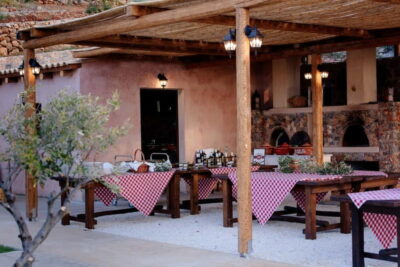
Crete: Road-trip to Lasithi, Zeus Cave & Olive Mill Farm
Read our review →
Heraklion: Olive Farm Tour with Tasting of Local Delicacies
Read our review →
Lassithi, Zeus Cave, Olive Mill Farm & Knossos Combo Tour
Read our review →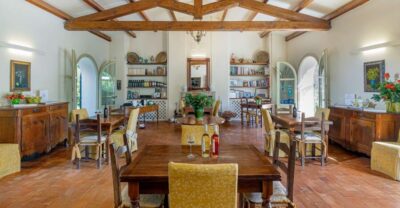
Alghero: Wine and Olive Oil Tasting at a Local Farm
Read our review →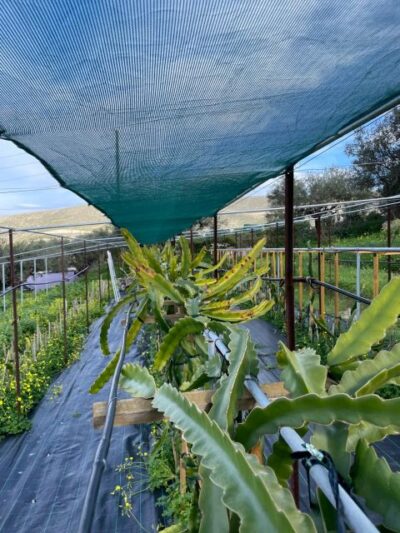
Traditional Olive Grove and Dragon Fruit Farm Tour
Read our review →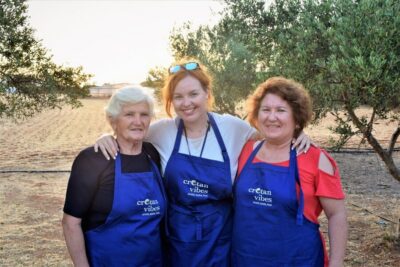
Moires: Cooking Class and Olive Oil Tasting at a Family Farm
Read our review →
Sóller: Olive Oil Guided Tour and Tasting at Can Det Estate
Read our review →Other lists with this tasting on them