
Review · CRETE
Pallada Semi-Private Olive Oil Tours in Sternes, Chania
The best part of Pallada’s tour is that you do not simply taste olive oil at a shop counter. You begin among Greek olive tree varieties, native herbs, flowers, and a small vegetable garden, then follow the fruit into a working mill. I like the clear connection between farm, factory, and table. I also like the four-oil tasting, since it gives you a useful way to compare flavor rather than treating every bottle as the same.
The possible drawback is its short length. At about 90 minutes, this is a focused introduction, not a full-day farm visit or a broad food tour. The mill is in Sternes, so you need to plan your own way there, and the experience is offered in English only.
Key points at a glance
- Four in-house extra virgin olive oils: Taste several oils side by side and learn how to tell their differences.
- A botanical walk among olive trees: See native Cretan herbs, flowers, vegetables, and several Greek olive varieties.
- A working modern mill: Follow the production process through the factory equipment, from harvested fruit to finished oil.
- A local guide-led experience: Bill has led some visits, explaining olive growing, harvesting, production, and tasting in a friendly, hands-on way.
- A Cretan dakos finish: End with the classic starter served with the olive oil of your choice.
- A genuinely small group: The maximum is eight people, which leaves room for questions and personal attention.
Why this small olive oil tour works
Pallada gives you a compact lesson in one of Crete’s most important foods. Olive oil is present at nearly every Cretan table, but most visitors see only the final bottle. Here, you get to connect the bottle with the trees, the fruit, the harvest, the machinery, and the food you eat at the end.
That sequence matters. You first learn where the olives grow, then how the mill handles them, and finally how the finished oil tastes. I find that approach more useful than a simple tasting because it gives you a working picture of the entire process.
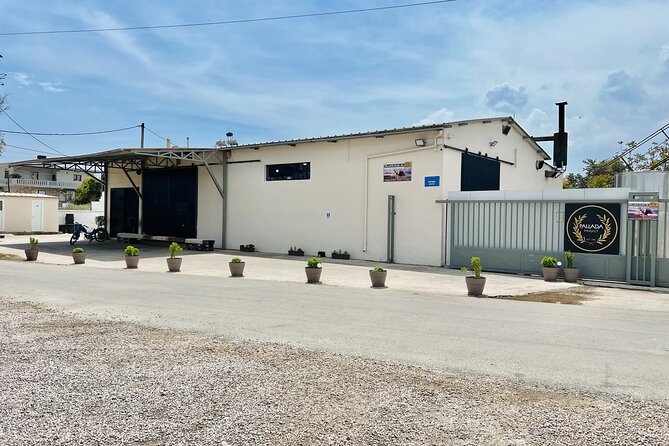
The tour takes place at Pallada Olive Oil and Tours in Sternes, at an address listed as an unnamed road. It begins and ends at the same meeting point. The setting is not presented as a grand museum or a large industrial attraction. It is a small olive oil operation with a botanical park and modern production facilities, which suits visitors who prefer a direct local experience.
The group limit of eight is one of the most useful details here. A small group makes it easier to hear the guide around the factory equipment, ask about cultivation, and spend time comparing the oils. If Bill is leading your visit, you can expect an approachable guide who explains the process in plain terms and handles questions about growing, harvesting, and flavor.
More Olive Oil Tours around Crete:
- Crete: Quad Safari, Olive Mill with Tasting & Ghost Village
★ 4.9 · 1,004 reviews - From Chania: Olive Oil, Wine, Cheese & Honey Tasting Tour
★ 4.6 · 490 reviews - Crete: Road-trip to Lasithi, Zeus Cave & Olive Mill Farm
★ 4.4 · 451 reviews
Walking through Pallada Kèpos
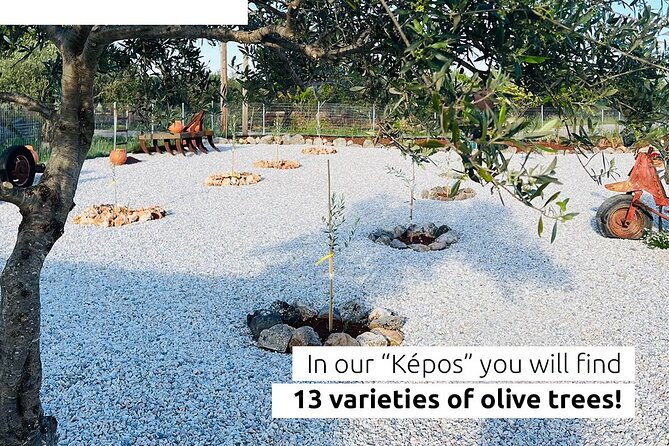
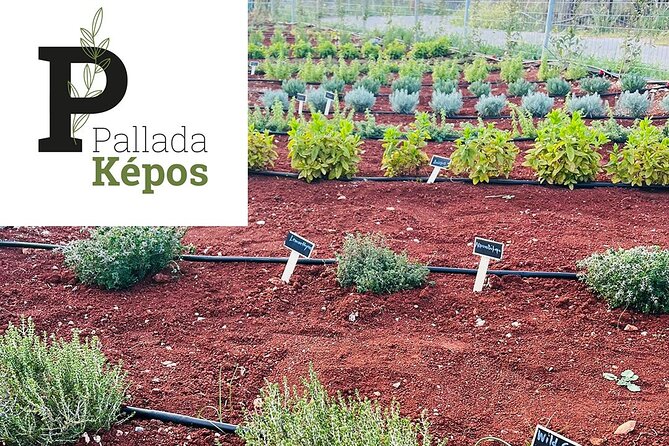
The visit begins at Pallada Kèpos, a small botanical park set among olive groves. This opening walk gives you a chance to look at the living side of olive oil production before entering the mill.
You will see several Greek olive tree varieties, along with native Cretan herbs and flowers. There is also a small vegetable garden. These details help place olive growing in its local setting. The trees are not just raw material for a factory. They are part of a wider farm environment that includes plants used in Cretan cooking and the natural features of the island.
The guide talks about the trees and the olive fruit, then explains cultivation and harvest. This is where you can ask practical questions: how the fruit develops, what happens during harvest, and why the condition of the olives matters before they reach the mill.
Do not expect a long botanical lecture. The park is small, and the walk is one part of a 90-minute visit. That is a benefit if you want a clear introduction without spending half a day outdoors. It may feel brief if your main interest is horticulture rather than olive oil.
Still, this first section gives the tour a sense of place. You are not tasting a generic product detached from Crete. You are looking at the trees and plants connected to the food on your plate.
Inside the modern olive mill
After the grove walk, you visit Pallada’s olive mill facilities. The tour moves among the modern production equipment while the guide explains the phases of olive oil production in detail.
This part should appeal to anyone who enjoys seeing how food is made. You get more than a statement that olives are pressed. The guide explains the stages that turn harvested fruit into oil, giving you a better idea of the work between the orchard and the bottle.
The factory visit also balances the outdoor section. The grove shows the agricultural side of olive oil. The mill shows the controlled, technical side. Together, they help you understand that good oil depends on both healthy fruit and careful handling after harvest.
Because the group is capped at eight, you should have a better chance of seeing the equipment and following the explanation than you would on a large factory visit. The tour is still short, so the presentation will be selective rather than an exhaustive technical course. If you want to study machinery in detail, you may wish the visit lasted longer. If you want the basic process explained clearly, the timing is sensible.
Learning how to taste four oils
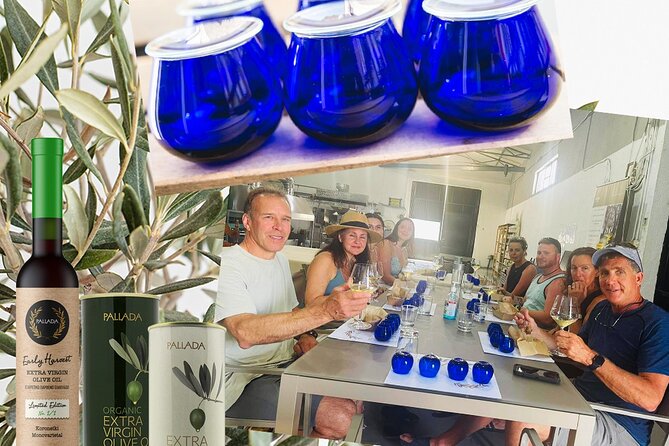
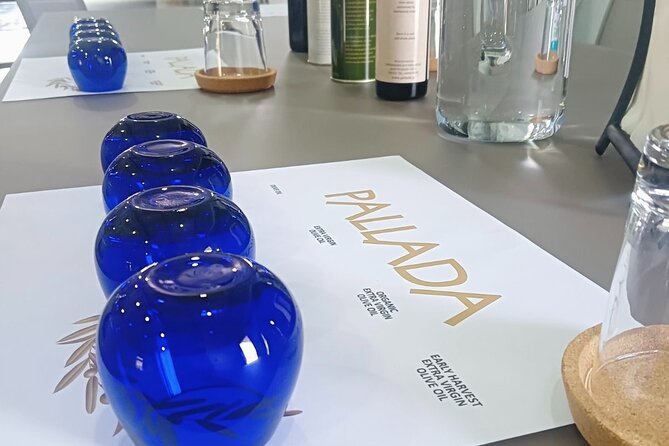
The tasting is the heart of the experience. Pallada serves four different extra virgin olive oils made in-house, and the guide shows you how to taste them.
This is more helpful than simply passing around bread and asking which oil you prefer. You learn to compare the oils and recognize their differences. The tasting can make you pay attention to qualities you might otherwise miss, such as the way one oil feels or tastes different from another.
The important lesson is not that one oil is automatically best. It is that extra virgin olive oils can vary. Once you taste four side by side, you have a better chance of identifying the styles you enjoy and choosing more confidently when buying oil later.
The activity works well for cooks and food lovers. One visitor with a strong interest in cooking found the tasting especially worthwhile, and that makes sense. You can use the lesson at home when deciding which oil to use with bread, salads, vegetables, or cooked dishes.
The tasting also gives the tour its clearest educational payoff. After the grove walk and mill visit, you can connect the production details with the result in your glass or tasting dish. It is a simple structure, but it works.
Same olive country, a different way to taste it:
- Heraklion: Olive Farm Tour with Tasting of Local Delicacies
★ 4.9 · 411 reviews - From Chania: Wine and Olive Oil Tasting Tour with Snacks
★ 4.8 · 354 reviews - The Terra Creta Olive Oil Experience Tour
★ 4.7 · 344 reviews - Crete: Zeus Cave, Lassithi Plateau, and Olive Factory Tour
★ 4.7 · 310 reviews
Finishing with Cretan dakos
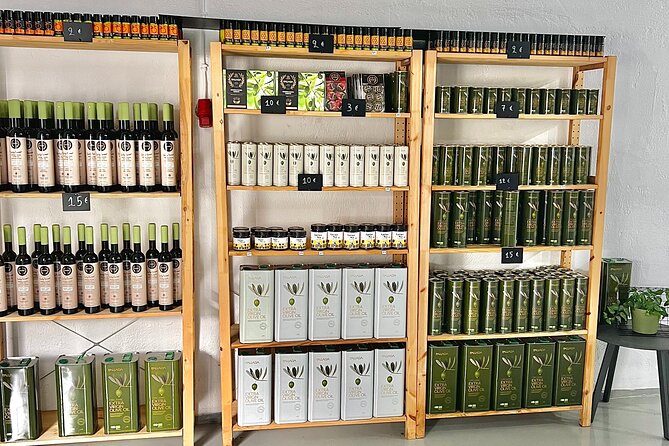
The final food is Cretan dakos, a traditional starter served with the olive oil of your choice. Dakos is a practical choice for this tour because it lets you use the oil in a familiar Cretan dish rather than tasting it in isolation.
The topping and presentation are not described in detail, so you should think of this as a traditional local bite, not a full meal. The supplied information identifies it as a starter, and the tour lasts only about an hour and a half. Have a larger meal before or after if you need one.
What I like here is the choice of oil. After tasting four varieties, you can select the one you want with the dakos. That turns the final course into a small test of what you have learned. You are not only told how oil works with food. You get to make the final choice yourself.
Price, timing, and overall value
The listed price is $41.94 per person. For roughly 90 minutes, that is not the cheapest way to taste olive oil, especially if you are comparing it with a casual shop tasting. The value comes from the combination of the botanical walk, the production visit, the four oils, the tasting lesson, and the Cretan starter.
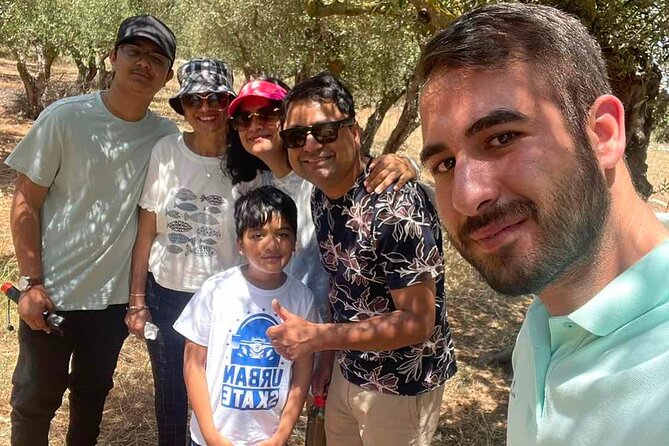
I would judge this by the amount of personal attention rather than by the clock alone. With no more than eight people, the guide can answer questions and keep the tasting from feeling rushed. You are paying for access to the small operation and for an explanation of how to taste, not just for four small samples.
The price makes the most sense if you are already interested in food, cooking, farming, or local traditions. It is also a good fit for a visitor who wants one focused activity near Chania without committing to a long excursion.
If olive oil is not high on your list, the visit may feel too specialized. The tour does not include a broad Cretan meal, a long countryside drive, or several separate food stops. Its value depends on your interest in the subject.
The experience is often booked about 21 days ahead, which suggests that you should not leave it until the last minute if your schedule is fixed. Confirmation is sent within 48 hours, subject to availability. The activity is offered in English, and mobile tickets are accepted.
Who should book this experience
I would recommend Pallada to anyone who wants a clear, local introduction to Cretan olive oil. It works particularly well for:
- People who enjoy cooking and want to improve their tasting skills
- Couples looking for a short food-focused activity
- Families who prefer a small group to a large organized tour
- Visitors interested in farming and traditional Cretan products
- Anyone who wants to connect a food product with its source
The maximum group size of eight also helps families and small parties keep the experience personal. Most people can participate, and service animals are allowed. The site is near public transportation, though the provided details do not give a specific route or schedule.
You should also consider the setting and duration. This is a visit to an olive oil mill in Sternes, not a central Chania walking tour. Plan enough time to reach the meeting point at Pallada Olive Oil and Tours, and do not assume the activity includes transportation from your hotel.
What the experience does especially well
The strongest feature is the way the visit links three stages: trees, machinery, and food. You begin by looking at olive varieties and cultivation, then see the modern equipment, and finish by tasting the result. That structure gives the short tour a clear purpose.
The tasting instruction is another strong point. Many food activities say they include samples, but here you taste four different extra virgin olive oils and learn how to distinguish them. You leave with a practical skill rather than only a pleasant snack.
The guide is important, too. Bill has received praise for explaining the olive oil process and helping visitors understand the tasting. The feedback also points to a friendly approach and plenty of answers to questions. Since guide availability can vary, you should see Bill as a possible guide rather than a guaranteed one.
The traditional dakos is a smart ending. It keeps the visit rooted in Crete and gives you a chance to use the oil with food. The dish is small, but it makes the tasting more memorable.
Limits to keep in mind
The tour is short and specialized. You will not cover every part of Cretan agriculture, and you should not expect a full meal or a full-day farm program.
The exact setting is practical rather than polished for mass tourism. That is part of the appeal, but visitors looking for a grand visitor center may find the operation modest. The supplied information also does not give details about shade, seating, or the amount of time spent at each stop, so do not build your expectations around a long relaxed outdoor stay.
English is the stated language. If you need another language, this may not be the right choice. Transportation is not included in the details provided, and you return to the same meeting point, so you are responsible for arranging your arrival and departure.
Cancellation is flexible up to 24 hours before the start time, with a full refund. Cancellations or changes made less than 24 hours ahead are not accepted for a refund. That is useful protection, but it also means you should watch the local time and your plans around the booking.
Should you book Pallada?
Book it if you want a focused, small-group lesson in one of Crete’s everyday staples. The walk through Pallada Kèpos, the modern mill visit, four in-house oils, and the dakos course form a well-paced introduction. The experience is especially worthwhile for cooks, food lovers, and anyone who prefers meeting a local producer over browsing another souvenir shop.
Skip it if you want a large meal, a long farm outing, or a general sightseeing tour near Chania. At $41.94, the price is fair when you value instruction and personal attention, but it is high for a simple snack and a few samples.
For the right audience, Pallada offers a useful souvenir that costs nothing to pack: after 90 minutes, you should understand olive oil a little better and taste it with sharper attention.
FAQ
Where does the Pallada olive oil tour take place?
The tour starts and ends at Pallada Olive Oil and Tours in Sternes, Crete, at an unnamed road address listed as Sternes 731 00, Greece.
How long does the experience last?
The activity lasts approximately 1 hour and 30 minutes.
How much does the tour cost?
The listed price is $41.94 per person.
How many people can join the tour?
The maximum group size is eight people.
What language is the tour offered in?
The experience is offered in English.
How many olive oils will I taste?
You will taste four different extra virgin olive oils made in-house.
What food is served during the visit?
The sample menu includes Cretan dakos, served with the olive oil of your choice.
Is transportation included?
The provided details identify the meeting point and say the site is near public transportation, but they do not state that transportation to or from the site is included.
Can I cancel for a full refund?
Yes. You can cancel at least 24 hours before the experience start time for a full refund. Cancellations or changes made less than 24 hours before the start time are not accepted for a refund.
Freshly pressed around Crete
- Crete in a Day: Knossos, Soap Workshops, Olive Oil & Wine Tasting★ 5.0 · 5 reviews
- 1 hour and 30 minutes wines and olive oil tasting in Greece★ 5.0 · 2 reviews
- Full Day Spinalonga Elouda Agios Nikolaos Olive factory Tour★ 4.5 · 5 reviews
- Traditional Olive Oil Making at Spiridi Olive Oil Farm – Crete★ 5.0 · 3 reviews
- Guided Tasting of 3 Extra Virgin Olive Oils at Douloufakis Winery★ 5.0 · 2 reviews
- PRIVATE Workshop ESSENTIAL OILS & OLIVE OIL Factory with TASTING★ 5.0 · 5 reviews
- Private Guided Tour to Lasithi Plateau Villages & Olive Oil Mill★ 5.0 · 5 reviews
- Wine olive and Food of Crete, Heraklion★ 5.0 · 11 reviews
Crete Olive Oil Tours, compared.
Crete: Quad Safari, Olive Mill with Tasting & Ghost Village
Read our review →
From Chania: Olive Oil, Wine, Cheese & Honey Tasting Tour
Read our review →
Crete: Road-trip to Lasithi, Zeus Cave & Olive Mill Farm
Read our review →
Heraklion: Olive Farm Tour with Tasting of Local Delicacies
Read our review →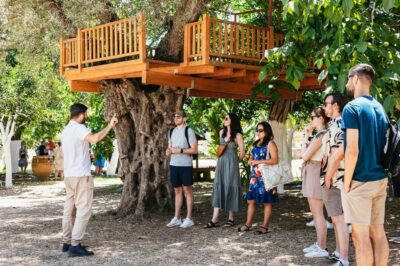
From Chania: Wine and Olive Oil Tasting Tour with Snacks
Read our review →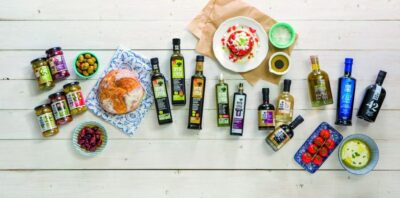
Crete: Zeus Cave, Lassithi Plateau, and Olive Factory Tour
Read our review →
Crete: Full-Day Cretan Wines, Olive Oil, Raki and Food Tour
Read our review →Other lists with this tasting on them