
Review · CRETE
Spiridi Olive Oil Farm Tour
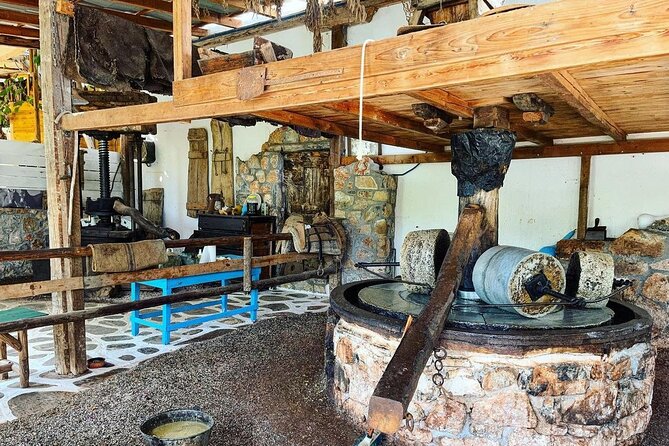
The most interesting part of Spiridi Olive Oil Farm is its small-scale look at everyday Cretan food culture. You move through old olive-oil equipment and exhibit stations with an iPad or tablet, then taste the products you have just learned about. I especially like the traditional olive press and the tasting of olive oil, honey, olives, herbs, and raki. The farm feels more personal than a large factory tour.
I also like the low price and flexible pace. At $9.60 per person, it is an easy addition to a day near Agios Nikolaos, and the self-guided format lets you stop where you like. The main drawback is that the basic visit is not a full cooking or farm workshop. It can take an hour, but some people spend two hours, especially if they browse the shop or join an extra activity.
Key points to know before you go
- Traditional olive press: See old equipment and learn how olive oil production changed over time.
- Self-guided tablet tour: Follow audio, text, videos, and information boards at your own speed.
- Cretan tasting table: Sample olive oil, olives, honey, herbs, raki, and other local products.
- Small family setting: Expect a relaxed visit rather than a large, tightly scheduled attraction.
- Extra hands-on activities: Cooking, cheese making, pottery, wine tasting, and olive-oil demonstrations may be available separately.
- Easy short outing: The visit lasts about an hour, though you can stay longer, and the farm is about a 30-minute walk from central Agios Nikolaos.
A small farm with a big place in Cretan life
Olive oil is not just another item on a Cretan menu. It is part of cooking, farming, family life, medicine, cosmetics, and trade. Spiridi Olive Oil Farm gives you a compact way to see those connections without committing half a day to a formal tour.
The setting is a family-run place just outside Agios Nikolaos. You are not being led through a giant industrial plant. Instead, you walk among exhibits and stations, read the information, watch short explanations, and build your own picture of how olives become oil.
That format suits me because it leaves room for curiosity. If the traditional press catches your eye, you can spend more time there. If you already know the basics, you can move faster and save your attention for the tasting table and shop.
The visit is offered in English. It is also open to most people, and service animals are allowed. The maximum group size is 40, though the self-guided structure means the experience need not feel like one large group moving in lockstep.
More Olive Farm Visits in Crete
- Crete: Road-trip to Lasithi, Zeus Cave & Olive Mill Farm
★ 4.4 · 451 reviews - Heraklion: Olive Farm Tour with Tasting of Local Delicacies
★ 4.9 · 411 reviews - Moires: Cooking Class and Olive Oil Tasting at a Family Farm
★ 5.0 · 93 reviews
What happens during the one-hour visit
Your visit starts at Spiridi Olive Oil Farm, listed at Cretan Olive Oil Farm, Agios Nikolaos 721 00. Admission includes access to the olive oil museum and a guided self-tour using audio and written information.
You may receive an iPad or similar tablet for the route. Several exhibit stations explain olive cultivation, pressing, storage, and the many products made from the olive. Information boards add another layer, so you are not dependent on one guide speaking continuously.
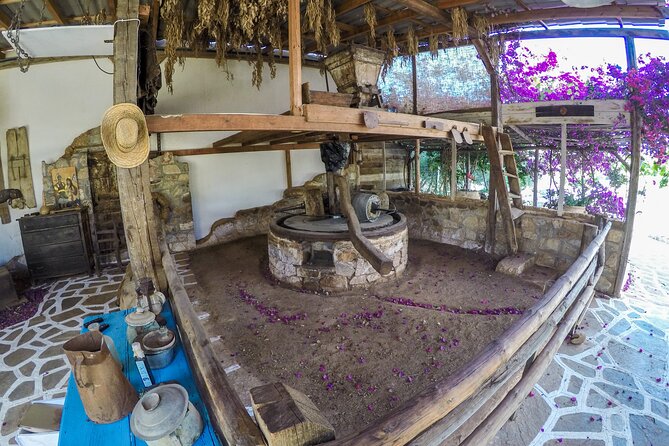
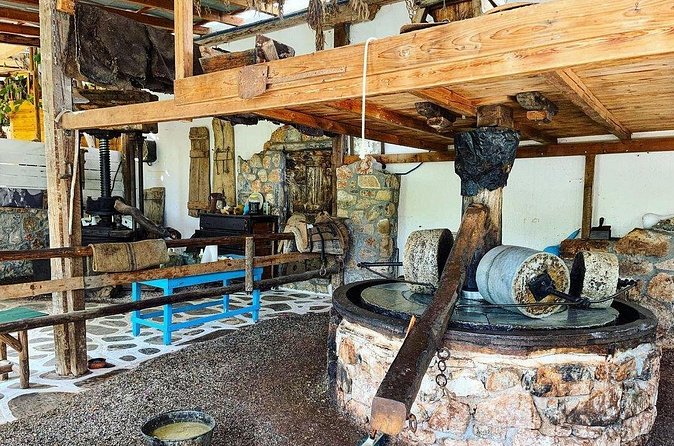
The route is simple, but it is not empty or superficial. One exhibit explains the traditional olive press, a useful stop because it makes the production process visible. Olive oil can seem simple when it arrives in a bottle, but the old equipment shows the physical work behind it.
You also learn about carob and other local products connected to Cretan foodways. That broader view matters. The farm is not only telling you how to buy better olive oil. It is showing how several crops and homemade goods fit into rural life.
The basic visit is advertised at about one hour. Plan longer if you want to read all the displays, watch the videos carefully, taste slowly, or shop. A two-hour stay is quite possible, especially if the farm is lively when you arrive.
The museum and traditional press are the real anchors
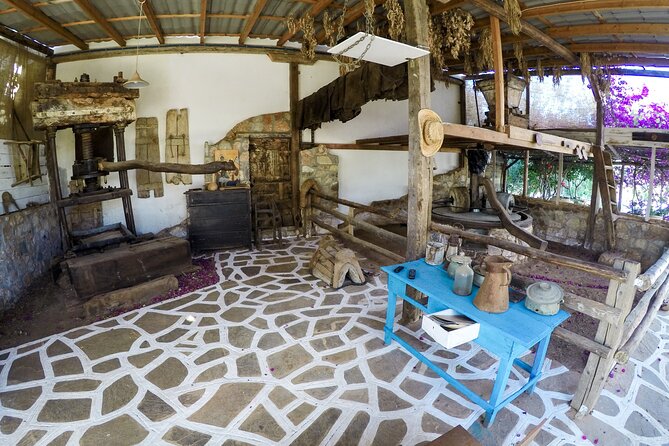
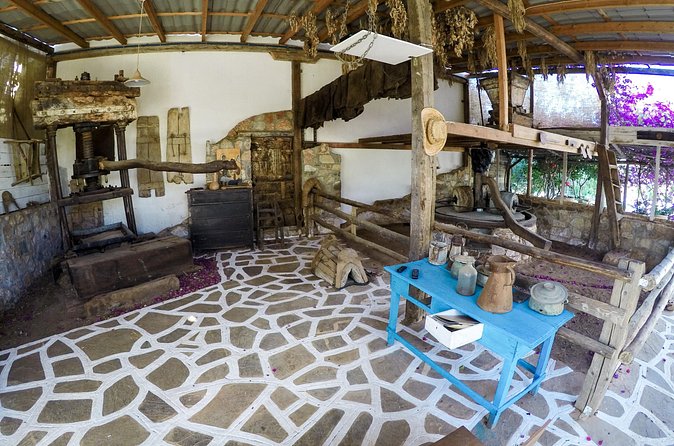
The museum is modest rather than grand, and that is part of its appeal. You get a close look at tools and methods that belong to working farm culture, not just polished display cases.
The traditional olive press is especially useful for putting modern production in context. You can see how much machinery, force, and handling were once needed to extract oil. The self-guided material then connects those older methods with present-day olive-oil production.
I would not come expecting a full working mill demonstration as part of the standard ticket. A separate olive-oil production demonstration is mentioned among the farm’s other activities, but it is not included in the basic admission described here.
That distinction is important. The standard visit is educational and hands-on in the sense that you taste products and move through the exhibits. It is not a full production class. If you want to see more of the making process, ask about the extra demonstration before booking.
The audio guide is worth considering if it costs only a small extra amount at the farm. The written boards are useful, but audio and video can make the equipment easier to understand, especially if you want a fuller explanation without waiting for a guide.
The tasting is the part that brings it all together
The tasting gives the museum visit a practical finish. You are not just hearing about olive oil and honey in the abstract. You can taste olive oil, olives, honey, herbs, raki, and other local delicacies.
Try the olive oil carefully rather than treating it as a quick sample. Notice the differences in smell, bitterness, fruitiness, and peppery finish. The point is not to choose a single winner. It is to understand that olive oil has character, much like wine or cheese.
Honey adds a different flavor and texture, while olives show the fruit in a more familiar form. Raki, the local spirit, gives the tasting a distinctly Cretan note. If you do not drink alcohol, you can still enjoy the other products, but the information supplied does not specify alternate tasting arrangements.
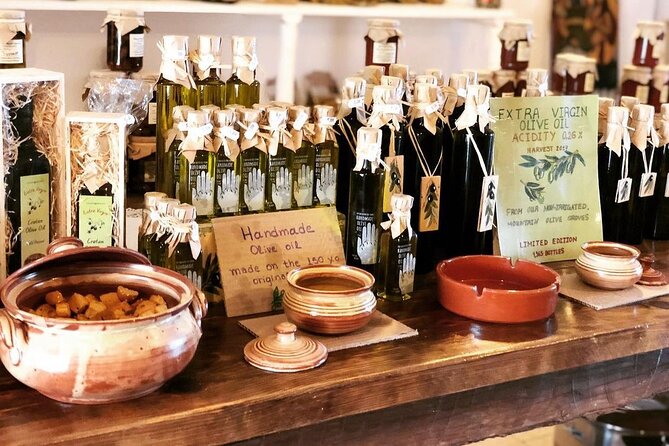
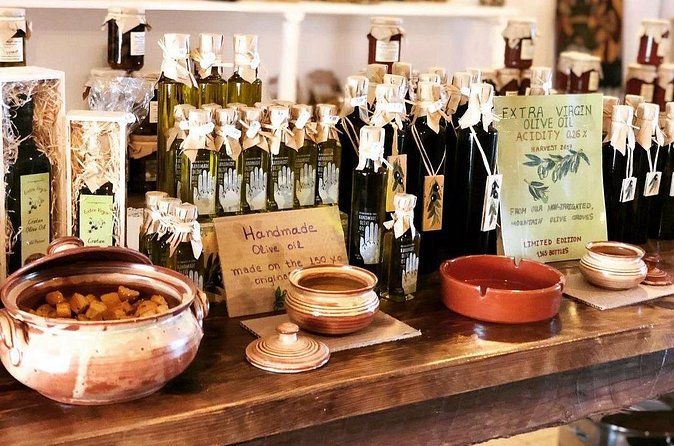
The farm also offers herbs and olive-based goods. These samples help explain why olive cultivation reaches beyond the bottle on your kitchen shelf. Olive oil appears in food, soaps, cosmetics, and other local products.
The tasting is free as part of the included experience, but food and drinks beyond the tasting are not included. You should not arrive expecting a full meal. Think of this as a generous sampling session, not lunch.
More Olive Farm Visits in Greece
- Kleanthi Olive Farm: Guided Tour with Local Delicacies Tasting
★ 5.0 · 51 reviews - Makrigialos-Ierapetra: Hidden Villages & Olive Oil Farm Tour
★ 4.4 · 16 reviews - Cretan Farm Tour with Cheese-Making, Olive Oil Tasting & Picnic
★ 5.0 · 10 reviews - Farm Tour with Cheese-Making, Olive Oil Tasting & Picnic
★ 5.0 · 8 reviews
A shop with useful souvenirs, not just shelf fillers
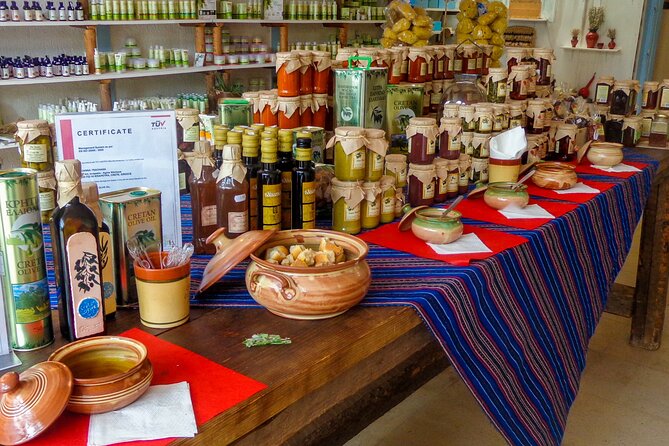
The farm shop is one of the practical strengths of the visit. You can buy olive oils, honey, raki, pottery, cosmetics, and other local products after learning what you are looking at.
Prices have been described as reasonable, and the shop may offer a broader selection of olive-oil goods and local honey than you will find in central Agios Nikolaos. That makes the visit more useful than a standard souvenir stop.
I would wait until after the tasting before buying. You can compare products with a better idea of what you like, and you are less likely to grab the first attractive bottle. If you are flying home, check your airline and baggage rules before buying liquids.
The pottery is another nice touch. The farm includes a pottery atelier, and pottery workshops may be available separately. Even if you do not take a class, handmade pieces can make better souvenirs than mass-produced items, particularly if you want something tied to the place.
Cosmetics made with local ingredients are also sold. The available information does not list every product, so ask about ingredients and packing if you have allergies or are carrying items home.
The extra activities change the nature of the visit
The one-hour museum and tasting is the basic experience. Spiridi also offers activities such as cooking lessons, cheese making, pottery workshops, wine tastings, and olive-oil production demonstrations.
These are not minor add-ons if you want a deeper connection with Cretan food. A cooking lesson lets you work with local ingredients. Cheese making shows another traditional craft. Pottery gives you a physical activity rather than another display to read.
The standard booking does not include these workshops, and the supplied details do not give their prices or schedules. You should arrange them separately if they are the main reason you want to visit.
For many people, the short self-guided route is enough. It works well on a hot afternoon, a rainy day, or a spare morning before another activity. If you want an active cultural lesson, book one of the farm’s longer offerings instead of assuming it comes with the basic ticket.
How to fit the farm into an Agios Nikolaos day
The farm is just outside Agios Nikolaos. One description places it about a 30-minute walk from the town center, with places along the way where you can stop for a drink or something to eat.
That walk may appeal to you if you want a simple outing and do not mind spending part of the day on foot. The information provided does not include hotel pickup or drop-off, so do not book this expecting transportation from your accommodation.
The meeting point and ending point are the same. That makes planning easy, particularly if you are walking or arranging your own taxi. The visit runs Monday through Saturday from 10:00 a.m. to 5:00 p.m. during the stated April 11 through October 31, 2026 season. Check the operating date and hours for your own booking, since seasonal hours can change.
The farm is a sensible stop before lunch, after a morning in Agios Nikolaos, or on a day when you want something indoors and low key. It is not the best choice if you need a packed schedule with a precise departure time, since the tasting and shop can tempt you to linger.
What the $9.60 price really buys you
At $9.60 per person, the value is strong if you want a short cultural stop rather than a large guided excursion. Admission covers the museum, the self-guided audio and text route, and tastings of several local products.
You are paying for access and explanation, not for transportation, a meal, or a hands-on workshop. That is a fair trade for a one-hour visit, particularly if you plan to buy olive oil or honey and want a better sense of what you are choosing.
Older comments refer to a lower euro price, so prices have clearly varied. Use the current booking price as your guide rather than relying on past amounts. The shop prices are described as reasonable, but purchases are extra.
The experience also has a useful flexibility. You can keep it short and affordable, or turn it into a longer stop by adding a workshop or spending time with the farm products. Just confirm the details of any extra activity before you arrive.
Who will enjoy Spiridi Olive Oil Farm most
I would recommend this farm to you if you like food traditions, small family businesses, and short cultural visits with something to taste at the end. It is a good fit for couples, families, and anyone who wants an easy introduction to Cretan olive oil.
It also suits curious shoppers. If you plan to take home oil, honey, raki, soap, or pottery, the museum gives your purchases a sense of place. You are not simply buying a bottle because it has a Greek label. You have learned something about how and why it is made.
Families may appreciate the relaxed route, though the supplied information does not list specific children’s activities in the standard visit. The farm atmosphere is informal, and the self-guided format can be easier than keeping children quiet through a long lecture.
I would be less enthusiastic if you want a full farm-to-table meal, a long guided walk through olive groves, or a detailed production demonstration included in the ticket. Those are not part of the basic one-hour experience as described.
The farm is also less suitable if you have only a few minutes between fixed transport connections. It is a relaxed visit, and the walk from town can add time.
Practical booking advice and cancellation
You receive confirmation at the time of booking, and the ticket is mobile, so you can keep it on your phone. The activity is offered in English, and most people can take part.
Free cancellation is available if you cancel at least 24 hours before the start time. A cancellation made less than 24 hours ahead, or a change made inside that period, is not accepted for a refund. The cut-off uses local time.
The experience is booked, on average, six days ahead. That does not mean you must always reserve that early, but it is a useful sign to avoid leaving the visit until the last minute during the open season.
Should you book Spiridi Olive Oil Farm?
Book it if you want an affordable, friendly introduction to Cretan food culture near Agios Nikolaos. The traditional press, clear self-guided material, wide tasting selection, and local shop give you more substance than a simple sample stop.
Skip it if your main goal is a full cooking class or a live olive-oil production demonstration. In that case, arrange one of the farm’s separate workshops.
For most visitors, I would treat Spiridi as a smart one-hour addition to an Agios Nikolaos day. It is small, reasonably priced, easy to understand, and rooted in products you can taste and take home. That is a good way to meet Crete through what people actually grow, make, pour, and eat.
FAQ
Where is Spiridi Olive Oil Farm?
It is located at Cretan Olive Oil Farm, Agios Nikolaos 721 00, Greece, just outside Agios Nikolaos.
How long does the standard visit last?
The standard visit lasts about one hour. You may spend longer if you take your time with the exhibits, tasting, and shop.
What is included in the ticket?
Admission includes access to the olive oil museum, a guided self-tour with audio and text, and tastings of olive oil, honey, raki, and local products.
Is hotel pickup included?
No. Hotel pickup and drop-off are not included. The activity begins and ends at the farm.
What days and hours is the farm open?
For the stated April 11 through October 31, 2026 season, it is open Monday through Saturday from 10:00 a.m. to 5:00 p.m.
Are workshops included in the basic visit?
No. Cooking lessons, cheese making, pottery workshops, wine tastings, and olive-oil production demonstrations are separate activities and are not included in the basic ticket.
Can I cancel for a full refund?
Yes, if you cancel at least 24 hours before the experience start time. Cancellations or changes made less than 24 hours ahead are not accepted for a refund.
Freshly pressed around Crete
- Crete in a Day: Knossos, Soap Workshops, Olive Oil & Wine Tasting★ 5.0 · 5 reviews
- Full Day Spinalonga Elouda Agios Nikolaos Olive factory Tour★ 4.5 · 5 reviews
- Traditional Olive Oil Making at Spiridi Olive Oil Farm – Crete★ 5.0 · 3 reviews
- 1 hour and 30 minutes wines and olive oil tasting in Greece★ 5.0 · 2 reviews
- Guided Tasting of 3 Extra Virgin Olive Oils at Douloufakis Winery★ 5.0 · 2 reviews
- PRIVATE Workshop ESSENTIAL OILS & OLIVE OIL Factory with TASTING★ 5.0 · 5 reviews
- Private Guided Tour to Lasithi Plateau Villages & Olive Oil Mill★ 5.0 · 5 reviews
- Wine olive and Food of Crete, Heraklion★ 5.0 · 11 reviews
Olive Farm Visits, compared.
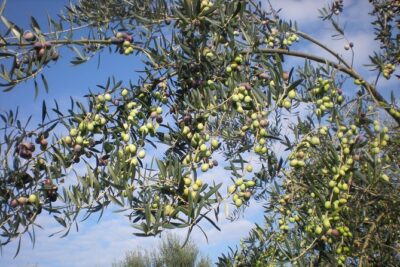
Sorrento Farm and Food Experience including Olive Oil, Limoncello, Wine tasting
Read our review →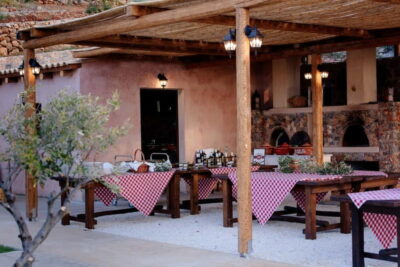
Crete: Road-trip to Lasithi, Zeus Cave & Olive Mill Farm
Read our review →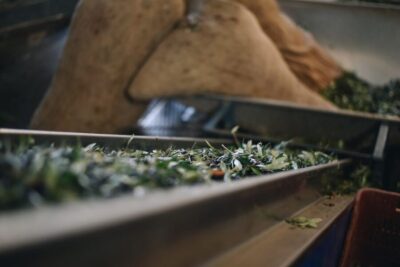
Heraklion: Olive Farm Tour with Tasting of Local Delicacies
Read our review →
Lassithi, Zeus Cave, Olive Mill Farm & Knossos Combo Tour
Read our review →
Alghero: Wine and Olive Oil Tasting at a Local Farm
Read our review →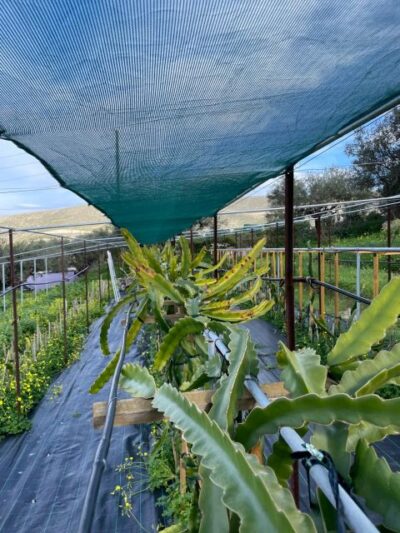
Traditional Olive Grove and Dragon Fruit Farm Tour
Read our review →
Moires: Cooking Class and Olive Oil Tasting at a Family Farm
Read our review →
Sóller: Olive Oil Guided Tour and Tasting at Can Det Estate
Read our review →Other lists with this tasting on them