
Review · SAN GIMIGNANO
Extra Virgin Olive Oil Experience
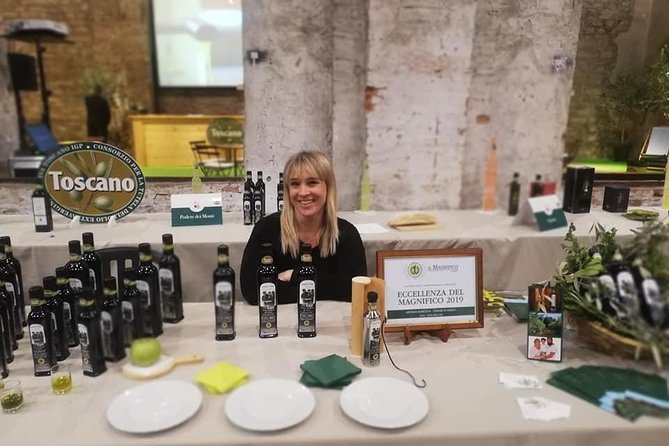
The most interesting part of this private olive oil tasting is that you learn directly from a Tuscan producer, not from a general food guide. At Agriturismo Il Vicario, Katia explains the full path from olive tree to bottle, including the low-impact oxidation system used to protect the oil’s character and traceability.
I like two things right away: the small private format lets you ask practical questions, and the roughly one-hour length fits neatly into a San Gimignano afternoon. You also get bottled water and snacks, so this is more than a quick sample at a shop.
The main consideration is the meeting point. Agriturismo Il Vicario is outside central San Gimignano, and no transport is included in the supplied details, so you’ll need to plan your own way there. The setting and producer-led format reward visitors who make the effort.
Key points at a glance
- A private tasting at Agriturismo Il Vicario: Only your own group takes part, giving you room to ask questions and set the pace.
- Katia leads the learning: She explains olive growing, pressing, selling, and the culture behind Tuscan oil.
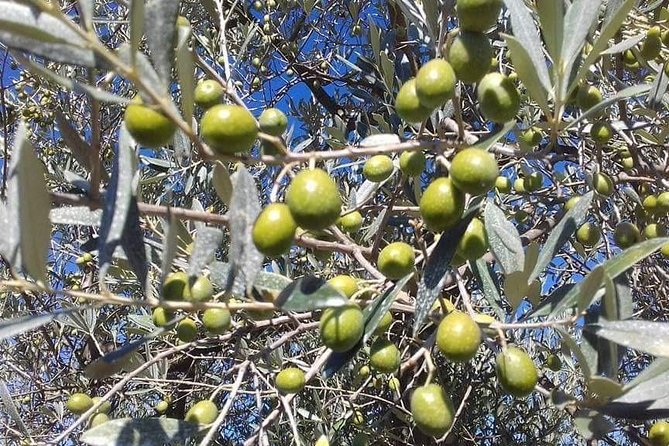
- A close look at production: You’ll hear about harvesting, pressing, cultivar integrity, traceability, and a low-impact oxidation system.
- A compact one-hour activity: The 3:30 pm start works well after exploring San Gimignano and before dinner.
- Water and snacks are included: These simple extras make the tasting more comfortable and useful.
- A strong value at $13.96 per person: For a private, producer-led food activity, the price is modest, though getting to the meeting point is your responsibility.
Why olive oil makes sense in San Gimignano
San Gimignano is best known for its medieval towers and hill-town views, but the surrounding countryside is also tied closely to farming. Olive oil is part of daily Tuscan cooking, and learning about it in a producing area gives you a more grounded sense of local food than simply buying a bottle in a town shop.
This activity focuses on extra virgin olive oil, the grade most closely associated with careful production and fresh flavor. You are not just told that olive oil is important. You learn how choices made during growing, harvesting, pressing, and storage affect what reaches your plate.
I like this approach because it connects food with work. The oil on a restaurant table can seem simple, but its flavor reflects the olive variety, the timing of the harvest, and the way the fruit is handled. The producer’s explanation of oxidation is especially useful. Oxidation can affect freshness, so hearing how a low-impact system is used helps you understand why production methods matter.
The activity also treats olive oil as part of Italian culture. You’ll hear about its role in cooking and daily life, not just its price or appearance. That makes this a good choice if you enjoy knowing how a local ingredient fits into the wider culture of a place.
More Olive Oil Tours around Italy:
- Sorrento Farm and Food Experience including Olive Oil, Limoncello, Wine tasting
★ 5.0 · 2,524 reviews - Olive oil tasting in Sorrento
★ 5.0 · 434 reviews - Sorrento: Lemon, Olive Oil and Wine Tasting Tour with Lunch
★ 5.0 · 300 reviews
Meeting Katia at Agriturismo Il Vicario
Your starting point is Agriturismo Il Vicario, at Loc. S. Andrea, 1, 53037 San Gimignano SI, Italy. The activity begins at 3:30 pm and ends back at the same meeting point.
The address may not be enough for every navigation app, so use the map listing for Agriturismo Il Vicario in San Gimignano or enter the provided GPS coordinates: 43.498289393719965, 11.041675632923306. This is one of those outings where checking the route before leaving town is wise.
Katia is one of the owners and leads the discussion about olive oil. Her role matters because she can connect the technical points with the working life of the property. The experience feels personal rather than like a standard tasting counter with a rehearsed sales pitch.
The private setup is another practical advantage. Your group does not share the session with strangers, so you can ask about things that interest you most. You might want to know how to spot quality oil, how to use it in cooking, or what changes between harvest and pressing. The supplied information does not promise a fixed question-and-answer format, but the private arrangement gives you a better chance to have that kind of conversation.
The first lesson: olive oil as a food and tradition
The tasting begins with an introduction to the place of extra virgin olive oil in Italian gastronomy. This gives the session a useful foundation before you move into production details.
I appreciate that the experience does not treat oil as a luxury item detached from ordinary meals. The central idea is simple: good extra virgin olive oil can improve food raw or cooked, but using it well takes some judgment. The producer’s goal is to show you how that combination works.
You’ll learn why oil is not just a generic cooking fat. Different oils can bring different aromas and flavors to a dish, and the way you use them affects the result. The information provided does not specify the exact foods served with the tasting, so you should think of the snacks as a helpful accompaniment rather than a full meal.
The cultural introduction also helps explain why Tuscan producers care about cultivar integrity. A cultivar is a particular olive variety, with its own traits and flavor. Protecting that identity means handling the fruit in a way that allows its character to remain clear rather than losing it during production.
From olive tree to press
The next part follows the production chain. You’ll hear about growing the olive trees, harvesting the fruit, pressing the olives, and selling the finished oil.
This is the part I find most useful for anyone who usually buys oil without thinking much about its origin. The path from tree to bottle involves several choices. Harvesting affects the fruit. Pressing affects the extracted oil. Storage and handling affect how well the oil keeps its qualities.
The activity does not simply present the producer’s final product. It explains the work behind it. That matters because labels can be confusing, and a basic understanding of production helps you make better choices later in Italy or at home.
The discussion also includes traceability. In plain terms, traceability helps connect the bottle back to its source and production process. For a food product, that link gives you more confidence about where the oil came from and how it was handled.
You should not expect a full farm workday or a long walk through every stage of an olive harvest. The experience lasts about one hour, so the production story is presented as a focused talk and tasting rather than a full agricultural tour. That compact format is a plus if your day in San Gimignano is already full.
Same olive country, a different way to taste it:
- Alghero: Wine and Olive Oil Tasting at a Local Farm
★ 4.8 · 294 reviews - Ostuni: Masseria tour among thousand-year-old olive trees with oil tasting
★ 4.8 · 261 reviews - Balestrate: Olive Grove Tour with Wines & Olive Oil Tasting
★ 5.0 · 241 reviews - Bardolino: Vineyard Tour with Wine, Olive Oil & Food Tasting
★ 4.6 · 221 reviews
Understanding the low-impact oxidation system
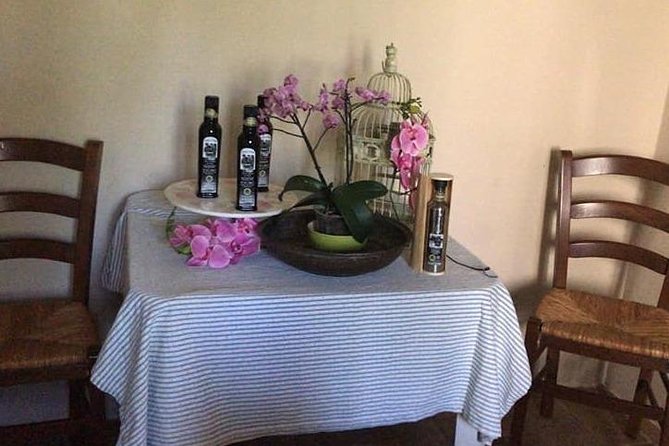
One of the more unusual details here is the producer’s low-impact oxidative system. The session explains how this method respects the integrity of the olive variety and keeps the oil traceable.
You do not need a technical background to get value from this part. The basic point is that olive oil quality depends on protecting the fruit and oil from unnecessary damage during production. By explaining the system used on site, the producer shows you that flavor is tied to process, not just to marketing language.
This is also a good moment to ask questions. You might want to know how oxidation changes an oil, why production choices affect flavor, or how the method supports traceability. Since your group is private, you can spend more time on these points than you could during a crowded public tasting.
The supplied details do not specify the machinery, the exact olive cultivars, or the harvest dates. That is worth keeping in mind if you are looking for a highly technical mill tour. What you do receive is a clear introduction to the producer’s philosophy and the reasons behind its system.
The tasting: learning with your senses
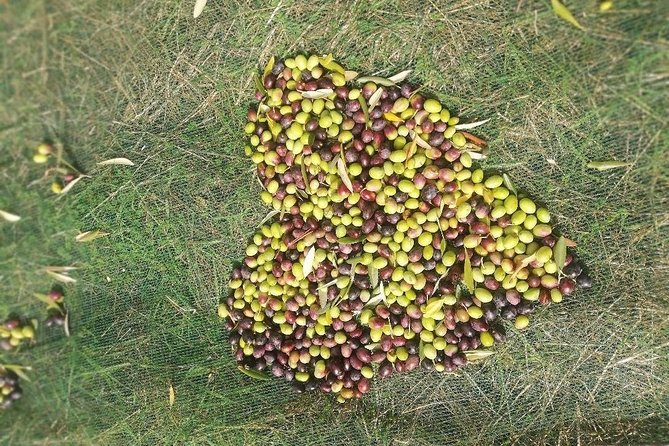
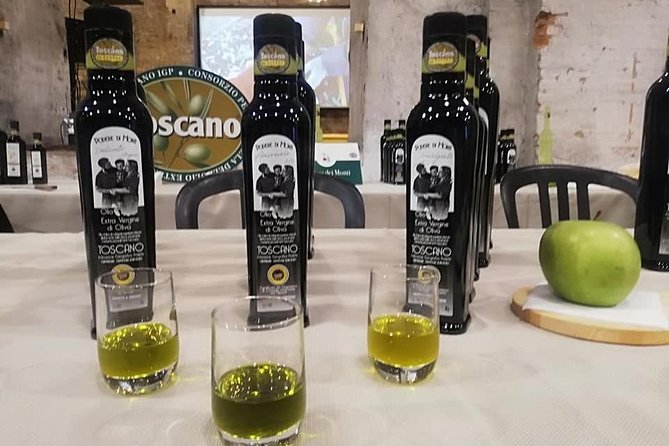
The final part is a sensory tasting of the extra virgin olive oil. This is where the earlier explanation becomes practical.
You’ll sample the oil and consider it as more than a yellow liquid used for frying. The tasting is meant to help you notice its qualities and understand why producers describe it as liquid gold. That phrase is common in Italy, but here it has a practical meaning: the oil is central to cooking, farming, and local income.
Water is provided during the activity, along with snacks. Those details may seem small, but they help you reset your palate and keep the session comfortable. The snacks also give you a chance to think about how the oil works with food rather than tasting it in isolation.
The exact snacks and tasting presentation are not specified, so do not book this expecting a set lunch or a large spread. This is a focused tasting, not a cooking class or a meal. If you want a full dining experience, you’ll need to arrange that separately.
Still, the simple format has a benefit. The oil remains the subject, and you can pay attention to its flavor and texture. I like tastings that teach you what to notice rather than simply asking you to admire a product.
What the private format adds
A private activity can be especially useful for couples, families, or small groups with different levels of interest. Someone who already knows a little about olive oil can ask more detailed questions, while a first-time taster can request a basic explanation without feeling rushed.
The private format also makes the experience more personal. Katia can speak directly with your group, and the discussion can respond to your cooking habits or travel interests. The available information does not promise a customized menu or a particular number of samples, so the advantage is mainly the conversation and attention.
There is no minimum group size stated for a normal booking, but the activity can be canceled if the minimum number of participants is not met. If that happens, you are offered another date or activity, or a full refund.
Service animals are allowed, and most people can participate. No special fitness ability is indicated. Since the meeting point is at an agriturismo outside the central town area, you should consider your own transport and mobility needs before booking.
Is $13.96 a good price?
At $13.96 per person, this is inexpensive for a private, producer-led food experience in the San Gimignano area. You receive an introduction to Tuscan olive oil, an explanation of production methods, a tasting, bottled water, and snacks.
The value is strongest if you want context, not just a free sample. A shop tasting may let you try oil, but it will not necessarily explain growing, pressing, oxidation, traceability, and the producer’s philosophy in one compact session.
The price is less compelling if you are already an olive oil expert or mainly want a full meal. This is not presented as an extended farm visit, a cooking lesson, or a large food tour. Its strength is the direct conversation and focused tasting.
You should also factor in the time and cost of reaching Agriturismo Il Vicario. Transport to and from the meeting point is not listed as part of the activity. The low booking price does not remove that practical issue.
The activity is often reserved about 30 days ahead, so booking early is sensible if your San Gimignano schedule is fixed. Confirmation is sent at booking, and the mobile ticket makes it easy to keep the booking on your phone.
Timing your afternoon in San Gimignano
The 3:30 pm start suits a day built around the old town. You can explore the towers, lanes, and central sights earlier, then head to the agriturismo for a quieter food-focused stop.
The session lasts about one hour, so it will not take over your day. It ends back at the meeting point, which makes the return route easy to understand, but you still need to allow time for getting back to San Gimignano or continuing to your next stop.
Because the activity requires good weather, keep an eye on the forecast. If poor weather causes a cancellation, you are offered another date or a full refund. You can also cancel for a full refund if you do so at least 24 hours before the 3:30 pm start time.
A cancellation made less than 24 hours before the start is not refundable, and late changes are not accepted. The cut-off follows local time in Italy. These rules are simple, but they make it important to avoid placing the booking in a tightly packed itinerary that could change at the last minute.
Who should book this olive oil experience?
I would suggest this activity to food-focused visitors who want a short, local lesson rather than a large organized excursion. It works particularly well for people who cook, enjoy buying regional products, or want to understand why Tuscan olive oil costs what it does.
It is also a good fit for a private group. Families and couples can ask questions at their own pace, and people with different levels of interest can still find something useful in the session.
You may want to skip it if you are looking for a full meal, a long farm walk, or a detailed technical tour of every machine used in production. The supplied details promise a one-hour tasting and explanation, not a full-day agricultural program.
The meeting point is the main practical hurdle. Make sure you can reach Agriturismo Il Vicario at 3:30 pm, and check the map or GPS coordinates before setting out. Once that is sorted, the activity is short, affordable, and easy to fit around a San Gimignano visit.
Should you book it?
Book this experience if you want a direct introduction to Tuscan olive oil from people involved in making it. Katia’s personal explanations, the private setting, the production story, and the sensory tasting give you more substance than a quick retail sample.
At $13.96, the cost is modest, especially for a private activity with water and snacks. I would make the booking if you have a free afternoon, can arrange transport to Agriturismo Il Vicario, and want your food experience to include both tasting and practical information.
Skip it only if your main goal is a substantial meal or a long countryside tour. For everyone else, this is a smart one-hour addition to a San Gimignano itinerary, with enough detail to change how you taste and buy olive oil after you leave Tuscany.
FAQ
Where does the olive oil experience begin?
It begins at Agriturismo Il Vicario, Tuscan cooking class, Loc. S. Andrea, 1, 53037 San Gimignano SI, Italy.
What time does the experience start?
The start time is 3:30 pm.
How long does the activity last?
The experience lasts approximately one hour.
Where does the activity end?
It ends back at the same meeting point, Agriturismo Il Vicario.
Is this a private experience?
Yes. Only your own group participates in the activity.
Who provides the experience?
The experience provider is Podere di Monti.
Is a mobile ticket available?
Yes. The booking includes a mobile ticket.
Are water and snacks included?
Yes. Complimentary bottled water and snacks are provided during the activity.
What happens if bad weather cancels the experience?
You are offered a different date or a full refund if poor weather causes the activity to be canceled.
Freshly pressed around Italy
- E-bike tour in Ostuni, the olive trees and the rock village★ 5.0 · 4 reviews
- Tuscan ExtraVirgin Olive Oil Tour★ 5.0 · 4 reviews
- Wine and Extra virgin olive oil tasting in Lucca, Tuscany★ 5.0 · 3 reviews
- Bellagio/Lezzeno/Oliveto Lario to/from Milan Malpensa Apt (Private Transfer)★ 5.0 · 4 reviews
- Lecce : Half day E-Bike tour to Old Olive Mill & Olive Oil Taste★ 5.0 · 3 reviews
- Sunset Magic E-bike Tour at Sunset in Capoliveri★ 5.0 · 4 reviews
- Chianti from Florence:PRIVATE Wine, Olive Oil Tasting in the Tuscan countryside★ 5.0 · 2 reviews
- Leonardo Da Vinci’s wind mill visit and Organic olive oil tasting★ 4.5 · 12 reviews
Italy Olive Oil Tours, compared.
Sorrento Farm and Food Experience including Olive Oil, Limoncello, Wine tasting
Read our review →
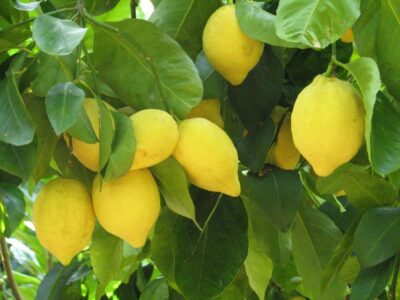
Sorrento: Lemon, Olive Oil and Wine Tasting Tour with Lunch
Read our review →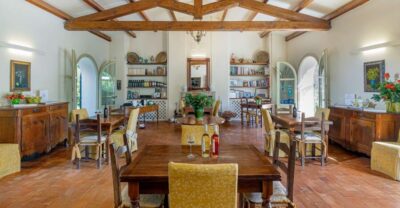
Alghero: Wine and Olive Oil Tasting at a Local Farm
Read our review →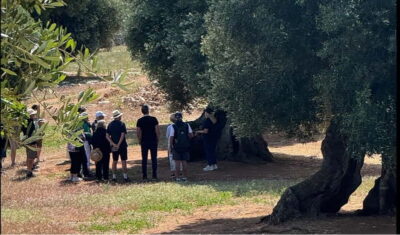
Ostuni: Masseria tour among thousand-year-old olive trees with oil tasting
Read our review →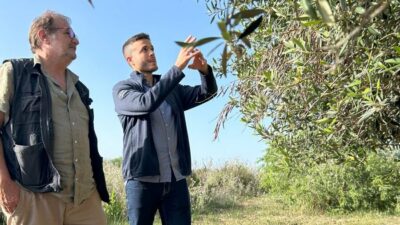
Balestrate: Olive Grove Tour with Wines & Olive Oil Tasting
Read our review →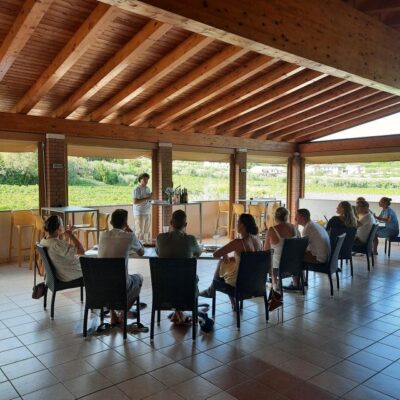
Bardolino: Vineyard Tour with Wine, Olive Oil & Food Tasting
Read our review →
Tuscany Bike Tour with Wine, Oil and Food in the Florentine Hills
Read our review →Other lists with this tasting on them