
Review · ATHENS
Thissio Olive Oil Experience & Walking Tour
The best part of the Thissio Olive Oil Experience is that it connects a simple Greek staple with the streets around the Acropolis. You begin beneath the ancient monument, walk among olive trees, and then sit down for a proper tasting led by Thalia, a certified Olive Oil Sommelier. This is not just a snack stop. It is a short lesson in how Greece eats, farms, and preserves tradition.
I like the small group size, capped at 15, and the useful skills you take home: how to taste olive oil, how extra virgin differs from virgin, and how to store a bottle properly. I also like the setting. Thissio gives the walk a sense of place, while the tasting room provides a calm finish with Greek oils, cheese, breadsticks, marmalade, and a green apple.
The main consideration is the price, $108.89 per person, for about 90 minutes. That is a serious charge for a short activity, so you should book it for the expert instruction and regional tasting, not simply for breakfast. Also, the description says three oils, while one account describes six, so confirm the current tasting lineup before you pay.
Key points to know before booking
- The tour starts at 9:30 am in Thissio: Meet at Plateia Jacqueline de Romilly and return to the same meeting point.
- The walk begins beneath the Acropolis: Olive trees and historic Thissio provide the setting for the first part of the lesson.
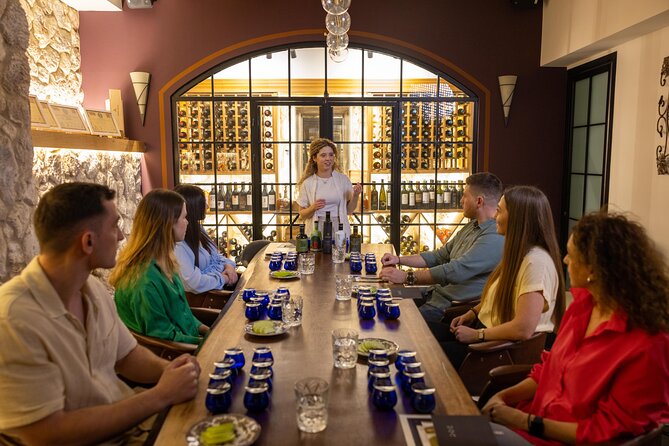
- Thalia leads the tasting: She is identified as a certified Olive Oil Sommelier and explains the tasting method in detail.
- You learn practical olive oil skills: The session covers production, oil grades, tasting, and home storage.
- The tasting focuses on Greek regional differences: The listed program includes three extra virgin oils from different varieties and parts of Greece.
- The finish is light, not a full meal: Expect bottled water, an apple, cheese, breadsticks, and marmalade, with alcohol excluded.
Starting beneath the Acropolis at 9:30 am
Your morning begins at Plateia Jacqueline de Romilly in Athens. The meeting point is near public transportation, and the tour ends back there, so you do not need to arrange a separate ride across the city afterward. Private transportation is not included.
The 9:30 am start makes sense for this kind of outing. You get a cooler part of the day for the walk, and the experience can fit neatly before a museum visit, a long lunch, or a major Acropolis plan. I would still allow a little extra time to find the meeting point. The activity is offered in English, and confirmation arrives when you book.
Thissio is a good choice for an olive-focused walk because the neighborhood gives the subject a physical setting. You are not beginning in a generic classroom. You are walking through an old Athens district, with the Acropolis close by and olive trees around you. The tour does not promise an olive farm visit, so do not expect to see the full agricultural process in the countryside. Instead, the neighborhood walk acts as an introduction to the place olive trees hold in Greek life.
The route lasts only part of the 90-minute experience. That matters. This is not a long city walking tour with a quick oil sample tacked onto the end. The walk is designed to lead you toward the tasting, where most of the teaching takes place.
More Olive Oil Tours around Athens:
- Athens: Acropolis Wine Tasting with Cheese and Olives
★ 4.9 · 337 reviews - Athens Old Town: Greek Olive Oil & Herbs Tasting
★ 4.2 · 41 reviews - ”Athens Olive Oil Tasting”
★ 4.9 · 16 reviews
Following the olive tree from blossom to harvest
During the walk, Thalia explains the life cycle of the olive tree. You learn about pruning, blossoming, and harvest, along with the way these trees became a lasting Greek symbol.
This section gives you a better way to look at the countryside and food markets you may encounter later in Greece. An olive tree is not simply a decorative plant beside a road. Its care follows a yearly pattern, and the final taste of the oil begins long before the bottle reaches your table.
The walk also gives the activity a cultural frame. Olive oil is tied to cooking, farming, trade, and daily meals across Greece. The guide connects those broad ideas to the tree itself, which keeps the subject grounded. You will likely come away noticing details you might otherwise pass without a thought, such as the shape of an olive tree, the effects of pruning, or the difference between an ornamental tree and one managed for fruit.
The historical setting adds atmosphere, but keep your expectations measured. The tour is about olive oil, not a full archaeological explanation of Thissio or the Acropolis. If you want a detailed account of ancient monuments, you will need a separate guided visit. Here, the Acropolis works as a powerful backdrop to a food lesson.
Entering the tasting room for the technical lesson
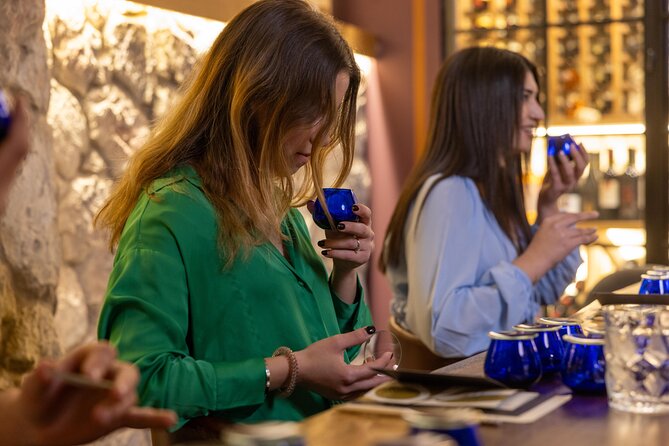
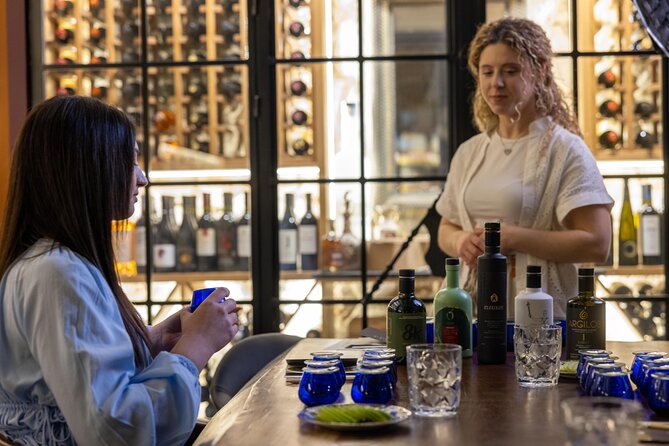
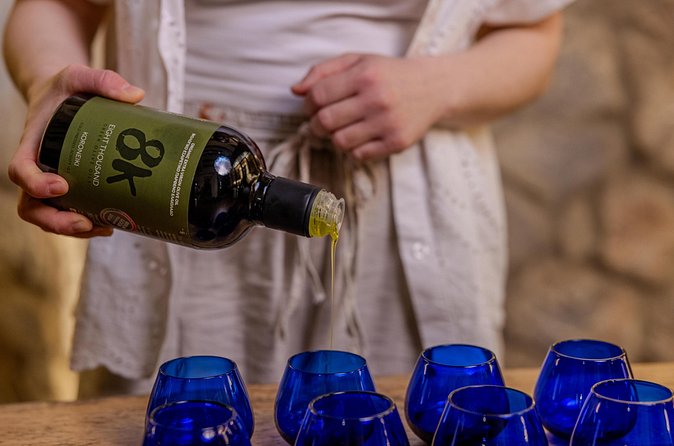
The walk ends at a tasting room, where the activity becomes more focused. Thalia takes you through the main stages of olive oil production and shows you the official way to taste the oil.
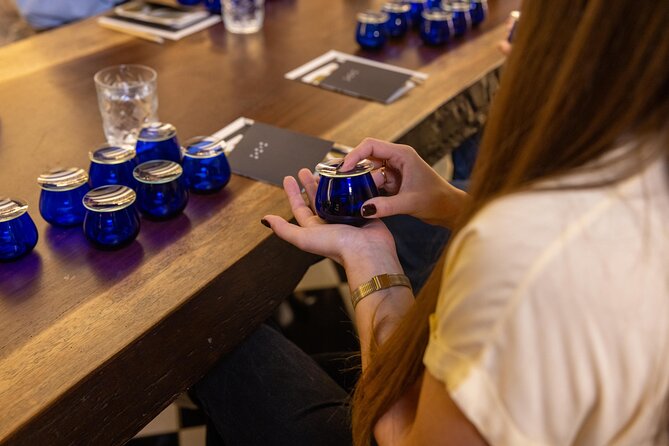
That instruction is the heart of the experience. Many people judge olive oil by color or by whether it tastes mild. Formal tasting gives you a better set of questions. You pay attention to aroma, bitterness, and the peppery sensation that can appear in a good oil. The point is not to choose the smoothest oil automatically. It is to recognize what you are sensing and understand what those sensations can indicate.
The tasting also covers the difference between extra virgin and virgin olive oil. This is useful knowledge if you buy oil in Greece, bring a bottle home, or want to make sense of labels in your own kitchen. The session does not simply ask you to sample and pick a favorite. It explains the categories behind the bottle.
You also learn how olive oil is produced. The supplied details do not specify the exact equipment or processing site, so you should expect an explanation rather than a factory tour. That is still worthwhile because production affects freshness, flavor, and quality. The lesson gives you a clearer idea of why two oils made from the same basic ingredient can taste quite different.
Comparing Greek oils by region and olive variety
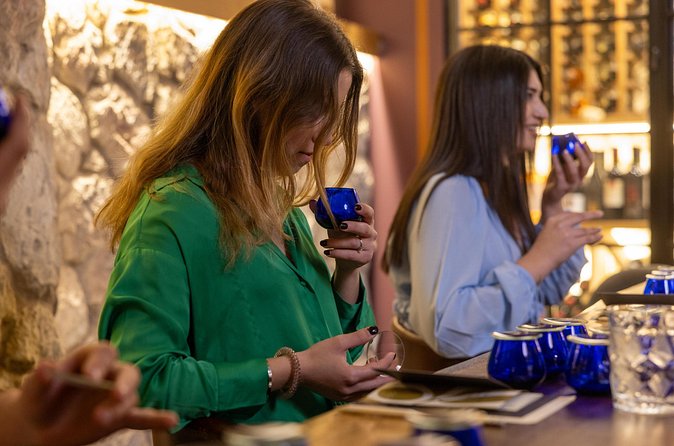
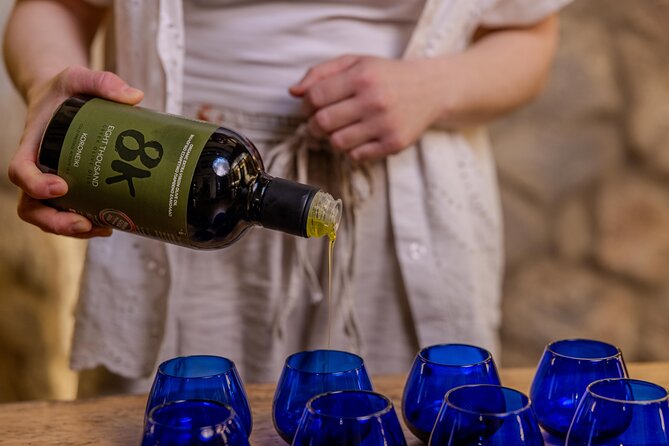
The listed program includes three distinct extra virgin olive oils, each linked to a different Greek variety and region. That comparison is more useful than tasting one premium oil in isolation. A single sample can taste pleasant, but several oils let you notice differences in aroma, bitterness, and spice.
One account describes tasting six different oils rather than three. Since the current description specifies three, I would treat three as the dependable expectation and ask Thalia or the provider if the number matters to you. The selection may change, or the session may sometimes include additional samples. Either way, you should not book on the assumption that six are guaranteed.
The oils are described as some of Greece’s finest, but the more important point is variety. You are tasting oils tied to different parts of the country rather than receiving one anonymous house pour. That regional approach gives you a better sense of Greece as a producer of distinct oils, not just a country that uses olive oil in every kitchen.
If you already enjoy cooking, this can change the way you use oil at home. You may begin to think about an oil for dipping, another for salads, and another for a stronger finish. The activity does not promise a shopping stop or a bottle included in the price, so do not count on leaving with oil unless that is confirmed separately.
Same olive country, a different way to taste it:
- Street food tasting in the locals favorite hidden places
★ 5.0 · 15 reviews - From Athens: Olive Oil Tasting, Olive Grove & Wine Experience
★ 5.0 · 13 reviews - Full-Day Private Tour Corinth and Olive Oil Tasting from Athens
★ 5.0 · 13 reviews - Athens: Cretan Olive Oil Tasting Experience
★ 5.0 · 10 reviews
Learning how to store olive oil at home
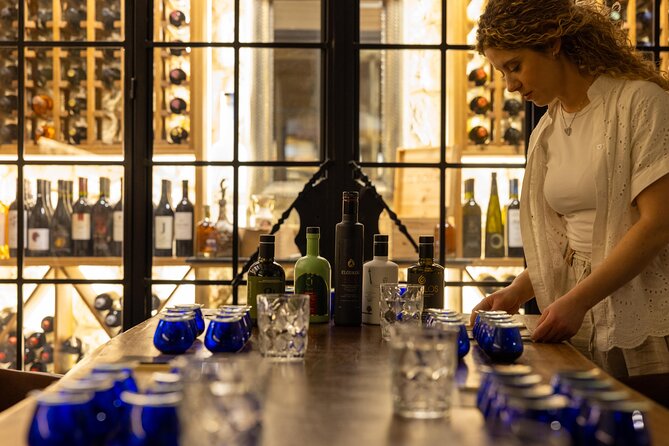
The home-storage advice is one of the most practical parts of the session. Olive oil is not a product you should treat like an indestructible pantry item. The guide explains how to store it properly, which can help you protect the flavor and quality of a bottle after you return home.
This advice adds value because tasting skill alone does not help much if the oil is stored badly. You may learn to identify a fresh, peppery oil, then lose those qualities by leaving the bottle in an unsuitable spot. The session connects buying, tasting, and using the oil, rather than treating the tasting as a one-time performance.
The information provided does not spell out every storage rule, so I would listen closely and take notes if this is your main reason for booking. The format is short, and there is a lot to cover in 90 minutes.
Finishing with cheese, breadsticks, marmalade, and an apple
The final snack is modest but well matched to the subject. You receive a cheese platter with breadsticks and marmalade, along with a green apple and bottled water. This gives you something to eat after the tasting without turning the activity into a full meal.
The food also helps you consider olive oil in a wider setting. You are not only smelling and sipping oil from a tasting cup. You can think about how oil works with bread, cheese, and other everyday foods. The apple offers a fresh contrast after the stronger flavors.
Alcoholic drinks are not included. That is not a weakness for this particular experience. Alcohol could distract from the aroma and taste of the oils, and the morning schedule makes a nonalcoholic finish sensible. Still, if you expect a broader Greek food tour with wine, several courses, or a substantial lunch, this will feel too limited.
I would eat a small breakfast beforehand if you need a full meal. The included food is a light snack, not a replacement for lunch. That distinction is important when comparing the $108.89 cost with longer food tours in Athens.
What the $108.89 price really buys you
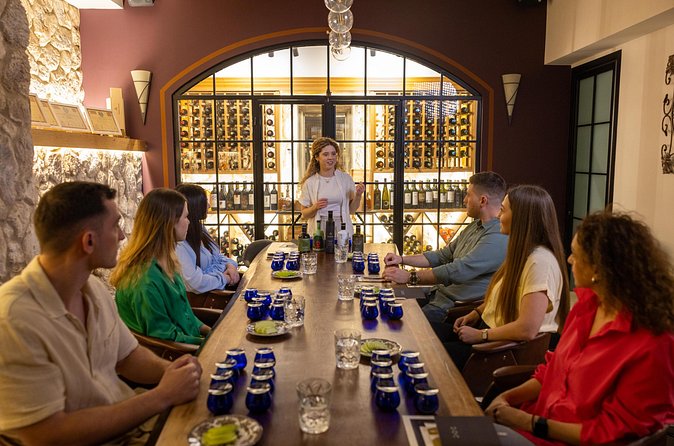
At $108.89 per person, this is priced as a specialist experience rather than a casual tasting. You are paying for a professional guide, a structured lesson, several Greek oils, a neighborhood walk, and a small food pairing. The group maximum of 15 keeps the format from becoming a large crowd, though the actual group size can be smaller or close to the limit.
The price makes the most sense if you want to understand olive oil, not merely sample it. You get the most value if you ask questions, compare the oils carefully, and remember the storage advice. A person who only wants a quick taste may find the cost high for 90 minutes.
The setting also matters. You are not spending the entire time in a tasting room far from central Athens. The activity begins with Thissio and the Acropolis nearby, giving you a useful neighborhood experience before the lesson. Still, the short duration limits how much city sightseeing is included.
I would compare this with your priorities. If your Athens schedule already includes several food stops, this may feel repetitive or expensive. If you want one focused morning activity tied closely to Greek agriculture and cooking, the price is easier to justify.
Who will enjoy this most
I would recommend the experience to:
- Food-minded visitors who want more than a standard restaurant meal.
- Home cooks who want to taste oils carefully and improve their buying and storage habits.
- First-time visitors to Athens who like pairing a neighborhood walk with a food lesson.
- Repeat visitors looking for a fresh subject beyond the major archaeological sights.
- Small groups and couples who prefer an organized activity with a limited capacity.
- People curious about Greek culture through a daily ingredient rather than a museum display.
It may be less suitable if you need a substantial breakfast, want a long guided walk, or dislike strong flavors such as bitterness and peppery olive oil. It is also not a private tour, and the group can include up to 15 people.
Most people can take part, and service animals are allowed. The experience is offered in English. Since the walk and tasting both matter, wear something comfortable for a short morning on foot, though the supplied information does not specify a dress code or route difficulty.
Booking, cancellation, and practical details
You receive confirmation at the time of booking. Free cancellation is available if you cancel at least 24 hours before the 9:30 am start. Cancel later than that, or make changes inside the 24-hour window, and you should not expect a refund. The cut-off follows Athens local time.
The tour begins and ends at Plateia Jacqueline de Romilly. Private transportation is not included, so plan your own way to the meeting point. Bottled water is included, but alcoholic drinks are not.
Because the activity is usually booked about 18 days ahead, I would not leave it until the last morning of your Athens stay if this is important to you. That booking pattern suggests planning ahead is sensible, especially if you want a particular date.
Should you book the Thissio Olive Oil Experience?
Book it if you want a compact, focused introduction to Greek olive oil and appreciate a guide who can explain the subject with care. The strongest features are the Thissio setting, the official tasting method, the comparison of Greek oils, and the practical advice you can use at home. Thalia’s passion for explaining the differences is central to the experience.
Skip it if you are looking for a full food tour, a major meal, a farm visit, or a low-cost activity. At $108.89, the experience asks you to value instruction as much as food.
One final tip: confirm how many oils are included before booking. The published program names three, while an account of the experience describes six. If the number is settled and the price fits your interests, this is a thoughtful way to spend a morning in Athens, with olive oil serving as your guide to Greek food and tradition.
FAQ
Where does the Thissio Olive Oil Experience begin?
It begins at Plateia Jacqueline de Romilly in Athens, Greece.
What time does the experience start?
The start time is 9:30 am.
How long does the activity last?
The experience lasts approximately 1 hour and 30 minutes.
Is transportation included?
No. Private transportation is not included. The activity ends back at the meeting point.
How many olive oils will I taste?
The listed program includes three extra virgin olive oils from different Greek varieties and regions. One account describes six oils, so confirm the current number before booking.
Can I cancel for a full refund?
Yes. You can receive a full refund if you cancel at least 24 hours before the experience start time. Cancellations or changes made less than 24 hours before the start are not accepted for a refund.
Freshly pressed around Athens
- Relax Day: Thermal Lake, Olive Oil Tasting & Poseidon Temple Tour★ 5.0 · 5 reviews
- Keramikos Olive Oil Experience & Walking Tour★ 5.0 · 6 reviews
- Private tour in Nafplio with Olive oil Tasting Tour in Corinth★ 5.0 · 9 reviews
- Flavors of Greece: Olive Oil and Wine Tasting Tour in Athens★ 5.0 · 2 reviews
- Private Wine & Olives Tasting Experience: Beach View Villa Paros★ 5.0 · 2 reviews
- Olive Oil Tasting Farm Experience, Corinth Canal, Nafplio★ 5.0 · 2 reviews
- ATHENS OLIVE ESTATE – Olive Oil Workshop with Farm-to-Fork Lunch★ 5.0 · 6 reviews
- Sounion Highlights: Vouliagmeni, Olive Farm, Poseidon Temple, Thorikos Theatre★ 4.5 · 3 reviews
Athens Olive Oil Tours, compared.
Athens: Acropolis Wine Tasting with Cheese and Olives
Read our review →
Athens Old Town: Greek Olive Oil & Herbs Tasting
Read our review →

Street food tasting in the locals favorite hidden places
Read our review →
Full-Day Private Tour Corinth and Olive Oil Tasting from Athens
Read our review →
From Athens: Olive Oil Tasting, Olive Grove & Wine Experience
Read our review →
Other lists with this tasting on them