
Review · ATHENS
Keramikos Olive Oil Experience & Walking Tour
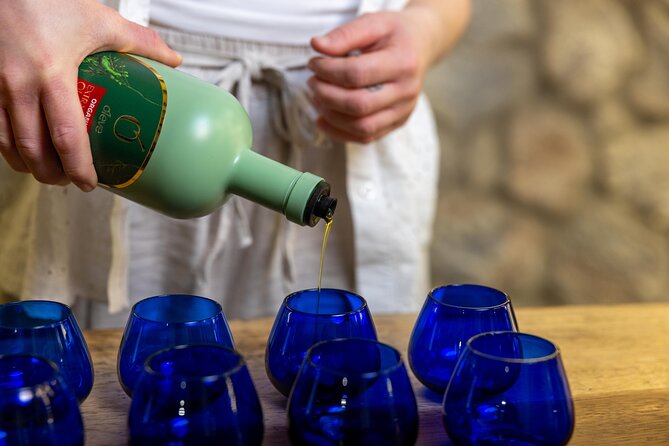
Athens has an ancient symbol you can taste. This 2.5-hour experience links the olive tree to the city’s origin story, then turns a simple lunch into a practical lesson in Greek food. At the center is Thalia, a certified Olive Oil Sommelier who teaches you how to spot faults, compare varieties, and use oil with more care.
I like the small maximum of 15 people, which should give you room to ask questions, and I like the walk from Thissio to Keramikos because it connects old Athens with the city’s creative present. The tasting is not just a row of little glasses. You also eat a Greek meal with the oils, so you can see how they work with real food.
The main consideration is the price: $166.80 per person is a serious spend for two and a half hours. You are paying for a private-style specialist lesson, several tastings, snacks, lunch, and the guide’s attention, but this is best for food lovers who want more than another standard sightseeing walk.
Key points to know before booking
- Start beneath the Acropolis: Meet at the Theseus Statue in Thissio Square at 1:00 pm.
- Learn to taste properly: Thalia explains the official method and helps you identify defective oil.
- Compare three Greek oils: Each extra virgin oil comes from a different Greek variety and region.
- Walk from ancient Athens to Keramikos: The route covers olive trees, Athens’ name, and Keramikos’ pottery and street-art identity.
- Lunch is part of the lesson: Bread, salad, fava, eggs, a daily pie, and dessert are paired with the oils.
- Keep the timing in mind: The full activity lasts about 2 hours and 30 minutes and ends back at the meeting point.
Why this Athens food walk feels different
Many Athens tours stop at temples, museums, and viewpoints. This one uses a familiar food to explain Greece from another angle. Olive oil is not treated as a garnish here. It becomes the thread connecting mythology, farming, production, tasting, and the Greek table.
I like that the experience begins outdoors instead of taking you straight into a restaurant. You get some context first, then walk through parts of the city before sitting down to taste. That gives the meal more meaning, especially if you have already spent days looking at olive branches carved into ancient art without thinking much about the tree itself.
The format also suits curious eaters who want a skill they can use after the holiday. You learn how to assess oil by smell and taste, how extra virgin differs from virgin oil, and how to keep a bottle properly at home. This is more useful than simply being told which oil tastes best.
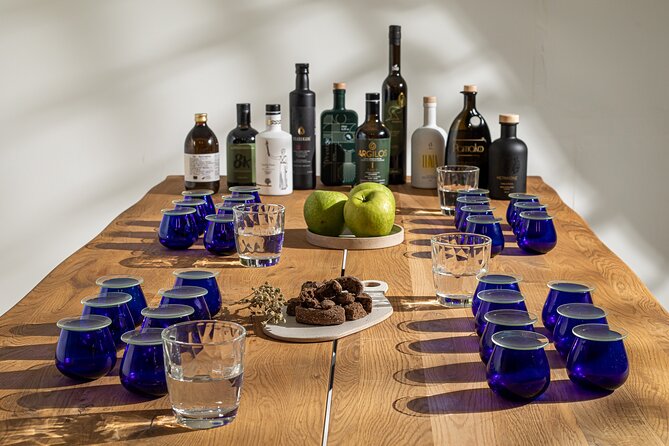
The cost needs an honest look. At $166.80, it is not a cheap lunch or a casual food sample. It includes bottled water, a green apple, all oil samples, snacks, lunch, and a specialist guide. If you value instruction and a focused cultural experience, the package may make sense. If your main goal is a filling Greek meal, you can spend much less elsewhere.
More Olive Oil Tours around Athens:
- Athens: Acropolis Wine Tasting with Cheese and Olives
★ 4.9 · 337 reviews - Athens Old Town: Greek Olive Oil & Herbs Tasting
★ 4.2 · 41 reviews - ”Athens Olive Oil Tasting”
★ 4.9 · 16 reviews
Starting at the Theseus Statue in Thissio
Your meeting point is the Statue of Theseus in Thissio Square, Athens 105 55. The start time is 1:00 pm, so plan to arrive early enough to find the statue and settle in before the walk begins.
This location gives the opening talk a useful setting. Beneath the Acropolis, you hear the story behind Athens’ name and the city’s link with the olive tree. The point is not just a mythological footnote. It shows how the olive has long carried religious, economic, and everyday meaning in Greece.
The opening also helps you understand why olive oil deserves more attention than a quick pour over salad. The tree is tied to the identity of Athens, and the experience uses that idea to move from ancient culture into modern food.
Because the activity is offered in English, you should be comfortable following an English-language talk about production and tasting. Thalia’s role is especially important here. The guide is not simply leading a route. She is the person who explains the technical points and answers questions, so her specialist focus shapes much of the experience.
Walking among Athens’ olive trees
The first part of the route looks at the olive tree itself. You learn about the stages of its life, including pruning, blossoming, and harvesting. These details matter because they show that good oil begins long before the bottle reaches a restaurant table.
I like this part because it slows the subject down. You are not only comparing finished products. You are also seeing the tree as a living crop with seasonal work behind it. The walk gives you a basic framework for understanding why oils from different areas and varieties can taste different.
You will encounter olive trees during the walk, but this is not presented as a farm visit. You should think of it as an urban introduction to the plant and its place in Greece. The setting remains Athens, not the countryside, and that is both a benefit and a limit.
The benefit is convenience. You can add the experience to a city stay without giving up most of a day for a rural excursion. The limit is that you will not see harvesting in progress, visit an olive press, or follow production from tree to mill. If you want a full agricultural tour, this is not that kind of outing.
From ancient Thissio to creative Keramikos
The walk continues toward Keramikos, a neighborhood once associated with pottery workshops and now known for its creative energy and street art. This change of scenery gives the activity a nice rhythm. Ancient Athens is not left behind completely, but the focus shifts toward the city you see today.
The connection with pottery is also fitting. The route moves from a traditional craft district to another Greek craft, the making and judging of olive oil. You get a sense of Athens as a working city, not only as a collection of monuments.
The walking section is one reason to wear comfortable shoes. The total tour lasts about two and a half hours, and the experience includes both outdoor walking and a seated tasting. The supplied details do not specify the exact distance or terrain, so you should not assume a strenuous hike, but comfortable footwear is still the sensible choice.
This part also makes the activity a good option for people who want a little city orientation without booking a formal sightseeing tour. You pass through Thissio and Keramikos while following a clear food theme. The focus remains olive oil, so anyone wanting a detailed architectural tour of these neighborhoods should choose a different walk.
Same olive country, a different way to taste it:
- Street food tasting in the locals favorite hidden places
★ 5.0 · 15 reviews - From Athens: Olive Oil Tasting, Olive Grove & Wine Experience
★ 5.0 · 13 reviews - Full-Day Private Tour Corinth and Olive Oil Tasting from Athens
★ 5.0 · 13 reviews - Athens: Cretan Olive Oil Tasting Experience
★ 5.0 · 10 reviews
Entering Meigma Restaurant for the tasting
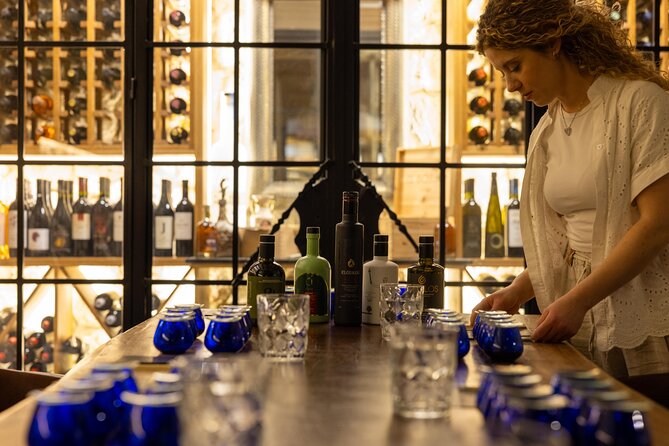
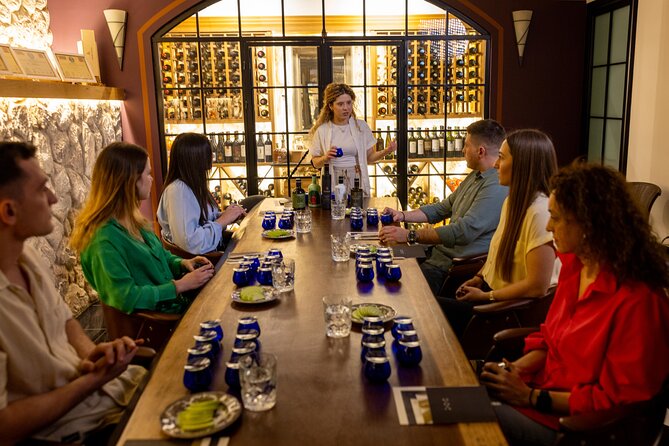
The walking portion finishes at Meigma Restaurant, where the main tasting begins. The setting has been described as a beautiful cellar, which gives the lesson a more intimate food-and-wine feel, though the subject here is Greek olive oil.
Thalia takes you through the main stages of production before asking you to taste. This order matters. You first learn what the oil is, how it is made, and what can go wrong. Then you apply that information with the samples in front of you.
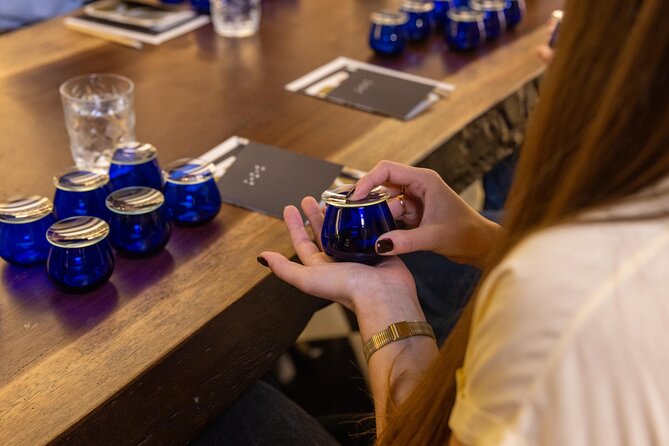
You also learn the official olive oil tasting technique. This means paying attention rather than simply swallowing oil with bread. The aim is to notice aroma, flavor, and defects. A green apple is included, which can help refresh your palate between samples.
The practical lesson is one of the strongest reasons to book. You learn to identify defective oil, a skill that can change the way you shop. You also learn the difference between extra virgin and virgin olive oil, two labels that are often treated as interchangeable by casual diners.
The tasting includes three distinct extra virgin oils. Each represents a different Greek variety and region, so the comparison gives you a clear way to notice how origin and type affect character. The information provided does not name the specific varieties, so you should not expect to choose a particular region when booking.
What the three-oil comparison teaches you
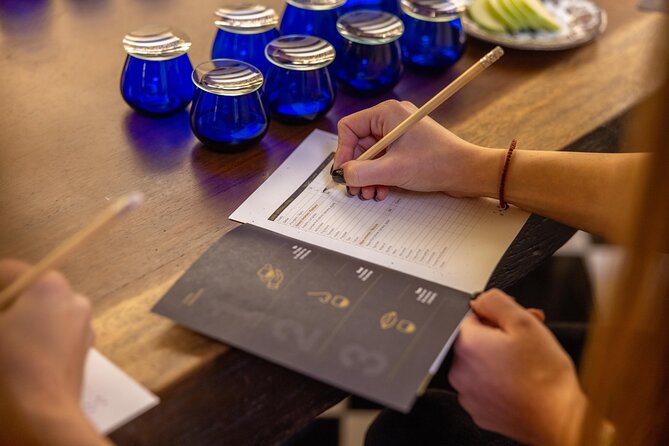
Tasting three oils side by side is more useful than tasting one excellent oil on its own. With one sample, you can decide whether you like it. With three, you can begin to notice contrasts and describe what you prefer.
The lesson also helps separate personal taste from quality. A strong or bitter oil is not automatically defective, and a mild oil is not automatically better. Thalia’s instruction helps you understand that quality involves more than picking the flavor you find easiest.
I would pay close attention to the storage advice. You learn how to keep olive oil properly at home, which is a small detail with real value. Even a good bottle can lose quality if stored poorly, and buying a premium oil makes little sense if it is then left in unsuitable conditions.
The tasting is educational, but it should not feel like an exam. The point is to give you a method and vocabulary you can use later. Ask questions. The format specifically encourages you to pick the sommelier’s brain, and the group limit of 15 should make conversation possible.
The Greek lunch and olive oil pairings
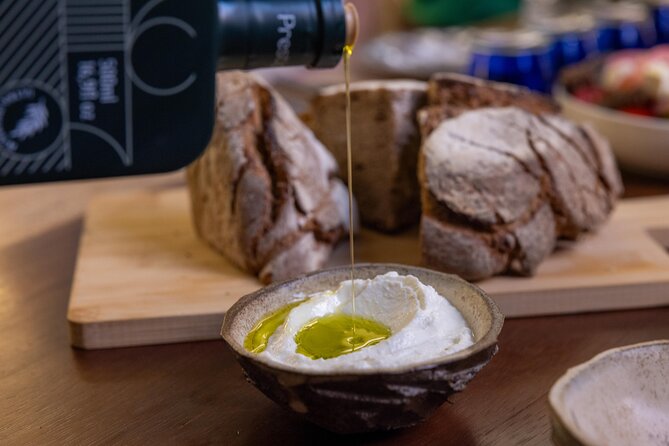
After the technical tasting, the experience turns to lunch. This is where the subject becomes easier to understand because you taste the oils with food instead of treating them as isolated samples.
The sample menu includes warm bread, a seasonal salad with local ingredients, local fava with extra virgin olive oil, eggs staka with clotted butter and pancetta, a pie of the day, and a local dessert. Bottled water is included, while alcoholic drinks are not.
The fava is a natural match for the lesson because the oil is part of the dish, not an afterthought. Bread and salad offer simpler pairings, while the eggs, butter, pancetta, and daily pie bring heavier flavors to the table. Together, the menu shows how olive oil can change the balance and finish of familiar Greek foods.
One useful point from the experience is that the food can amount to more than a light snack. The menu includes several savory courses and dessert, and the meal may be enough for some people to skip dinner. You should arrive ready for a proper midday meal rather than planning to eat a full lunch before the tour.
The exact daily pie, seasonal salad, and local dessert can vary. That is normal for a menu built around available ingredients, but it also means you should not book expecting one fixed set of dishes. Alcohol is not included, so budget separately if you want a drink.
Who will get the most from the $166.80 price
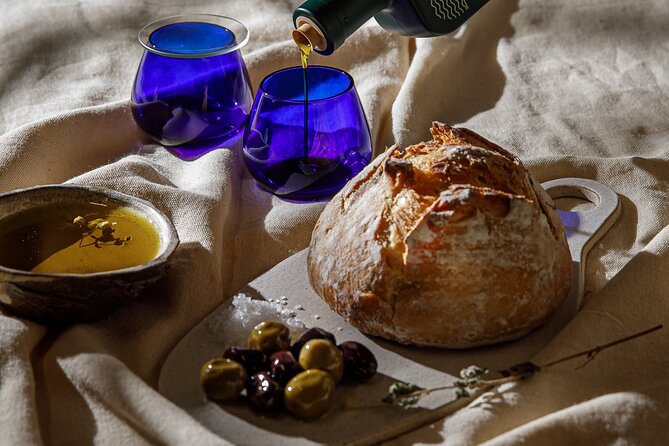
This experience is aimed at a fairly specific audience. I would recommend it most strongly to people who enjoy food, want direct instruction, and have already seen some of Athens’ major ancient sights.
It also suits couples, families, and small groups who prefer asking questions to listening quietly in a large crowd. The group maximum is 15, and the private-style attention from Thalia is a central part of the value.
Food-focused visitors may find the price easier to justify because you receive both a tasting and a substantial meal. The three oils, snacks, green apple, bottled water, and lunch are included, so there should be no surprise charge for the core food portion.
Still, the price is high compared with an ordinary Greek meal. If you are watching your budget, consider the experience as a specialist class with lunch rather than as a restaurant booking. That is the fairest way to judge it.
The activity may be less suitable if you dislike structured tastings, have little interest in cooking, or want a major archaeological tour. Ancient Greece appears through the story of Athens and the olive tree, but the main subject is olive oil, not the Acropolis or Keramikos monuments.
Timing, meeting details, and cancellation
The experience starts at 1:00 pm and lasts approximately 2 hours and 30 minutes. It ends back at the meeting point, so allow extra time afterward before booking another activity.
You receive a mobile ticket, and the activity is offered in English. The meeting point is near public transportation, but private transportation is not included. Service animals are allowed.
The maximum group size is 15 people. Confirmation is provided at booking, and free cancellation is available if you cancel at least 24 hours before the start time. Cancellations or changes made less than 24 hours before the start are not accepted for a refund.
Should you book the Keramikos Olive Oil Experience?
Book it if you want a food lesson with real cultural context, not just a quick sample at a market. The best parts are the walk from Thissio to Keramikos, Thalia’s specialist guidance, the chance to identify defective oils, and the meal that lets you test the oils with Greek dishes.
Think twice if $166.80 feels too high for a two-and-a-half-hour activity, or if your priority is archaeological sightseeing. You will not visit an olive farm or an olive mill, and the neighborhood walk is a supporting part of the program rather than its main event.
For food-minded visitors, this is a strong choice. You leave with a better sense of how Greek olive oil is made, how to taste it, how to store it, and how it changes a meal. That is a useful souvenir, and it takes up only one afternoon in Athens.
FAQ
Where does the experience begin?
It begins at the Statue of Theseus in Thissio Square, Athens 105 55, Greece.
What time does the tour start?
The start time is 1:00 pm.
How long does the experience last?
The experience lasts approximately 2 hours and 30 minutes.
Where does the experience end?
The activity ends back at the meeting point.
Is the experience offered in English?
Yes. The experience is offered in English.
How many olive oils will I taste?
You will taste three distinct extra virgin olive oils, each representing a different Greek variety and region.
Is lunch included?
Yes. Lunch is included, along with bottled water, a green apple, oil samples, and snacks.
What food is on the sample menu?
The sample menu includes warm bread, seasonal salad, local fava, eggs staka with clotted butter and pancetta, the pie of the day, and a local dessert.
Are alcoholic drinks included?
No. Alcoholic beverages are not included.
How many people can join the activity?
The activity has a maximum of 15 people.
Is private transportation included?
No. Private transportation is not included, though the meeting point is near public transportation.
Can I cancel for a full refund?
Yes. You can cancel for a full refund if you cancel at least 24 hours before the experience starts.
Freshly pressed around Athens
- Relax Day: Thermal Lake, Olive Oil Tasting & Poseidon Temple Tour★ 5.0 · 5 reviews
- Private tour in Nafplio with Olive oil Tasting Tour in Corinth★ 5.0 · 9 reviews
- Flavors of Greece: Olive Oil and Wine Tasting Tour in Athens★ 5.0 · 2 reviews
- Private Wine & Olives Tasting Experience: Beach View Villa Paros★ 5.0 · 2 reviews
- Olive Oil Tasting Farm Experience, Corinth Canal, Nafplio★ 5.0 · 2 reviews
- ATHENS OLIVE ESTATE – Olive Oil Workshop with Farm-to-Fork Lunch★ 5.0 · 6 reviews
- Sounion Highlights: Vouliagmeni, Olive Farm, Poseidon Temple, Thorikos Theatre★ 4.5 · 3 reviews
- Thissio Olive Oil Experience & Walking Tour★ 5.0 · 2 reviews
Athens Olive Oil Tours, compared.
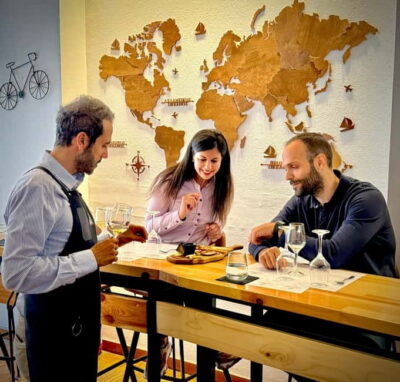
Athens: Acropolis Wine Tasting with Cheese and Olives
Read our review →
Athens Old Town: Greek Olive Oil & Herbs Tasting
Read our review →
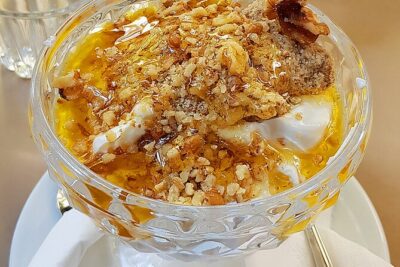
Street food tasting in the locals favorite hidden places
Read our review →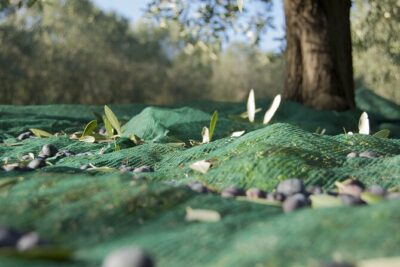
Full-Day Private Tour Corinth and Olive Oil Tasting from Athens
Read our review →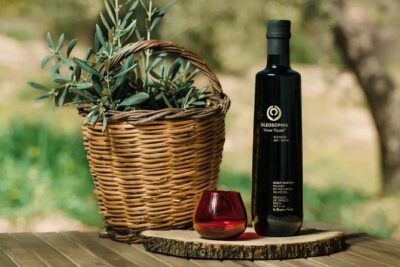
From Athens: Olive Oil Tasting, Olive Grove & Wine Experience
Read our review →
Other lists with this tasting on them