
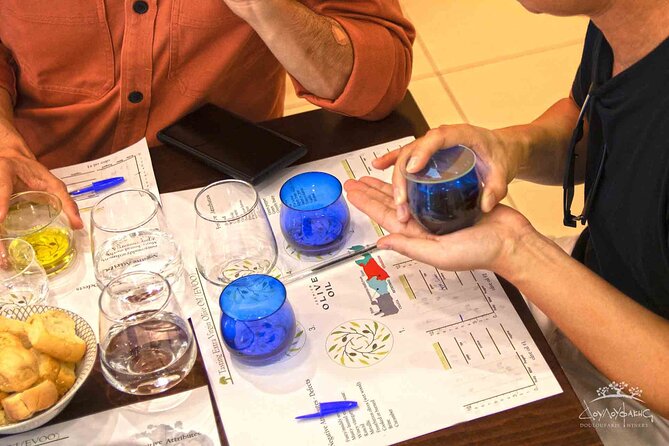
Review · CRETE
Guided Tasting of 3 Extra Virgin Olive Oils at Douloufakis Winery
The most interesting part of this experience is the side-by-side comparison of three Koroneiki olive oils from different parts of Crete. Instead of tasting one oil and calling it a day, you learn how soil, climate, and local production choices can shape the flavor of the same olive variety.
I like the hands-on tasting lesson, especially the focus on smelling, swirling, and spotting flavor notes. I also like the small maximum of nine people, which should give Katerina room to explain traditional production methods and answer questions without turning the session into a lecture.
The main consideration is that this is a focused olive oil tasting, not a full winery tour or meal. The $24.08 price includes water and Cretan rusks, but extra food, drinks, and transportation are on you.
Key points to know before you book
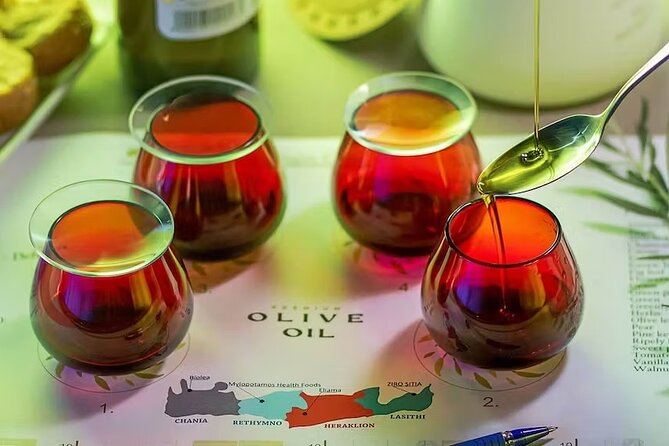
- Three Koroneiki oils: Compare oils from Shteia and Agia Varvara, with each one showing a different side of the same Cretan olive variety.
- Katerina leads the lesson: Expect practical instruction on aroma, swirling, tasting, and recognizing flavor profiles.
- One-hour format: The session fits neatly into a day of exploring Crete, but it leaves little time for a wider winery visit.
- Small group size: No more than nine people can join, making questions and conversation easier.
- Simple local accompaniments: Water and Cretan rusks are included, while additional food and drinks cost extra.
- Rural meeting point: You meet and finish at Douloufakis Winery in Dafnes, with parking available and no hotel transfers.
Three oils, one famous Cretan olive
This tasting works because it gives you a clear comparison. All three oils come from the Koroneiki olive, a variety closely associated with Greece and especially useful for understanding Cretan olive oil. By keeping the olive type consistent, the differences between regions become easier to notice.
You may pick up fruity notes in one sample, then find a sharper, peppery finish in another. Those changes are not just a matter of personal taste. They can reflect where the olives grew and how the oil was produced.
For you, that means the tasting has a useful structure. You are not simply being handed three small portions and told to choose a favorite. You receive a basic method for judging the oils, then put that method to work from one sample to the next.
The oils are sourced from Shteia and Agia Varvara. The supplied details do not identify every oil by a separate estate or village, so you should not expect a full map-based regional lecture. Still, the two source areas provide enough contrast for a worthwhile tasting lesson.
More Olive Oil and Wine Tastings in Crete
- From Chania: Olive Oil, Wine, Cheese & Honey Tasting Tour
★ 4.6 · 490 reviews - From Chania: Wine and Olive Oil Tasting Tour with Snacks
★ 4.8 · 354 reviews - Crete: Full-Day Cretan Wines, Olive Oil, Raki and Food Tour
★ 5.0 · 264 reviews
Learning how to taste olive oil properly
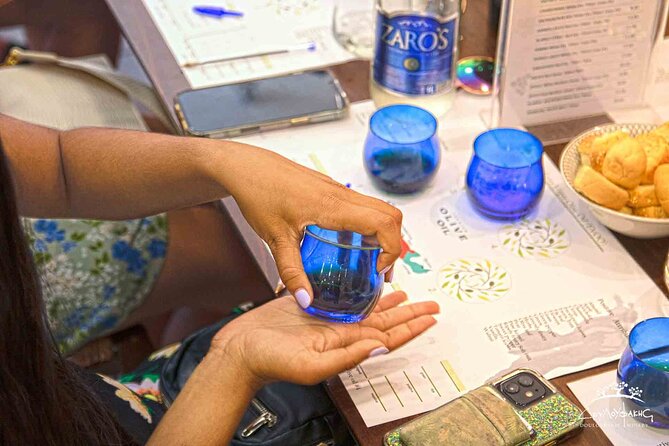
The session begins with guidance from the host on how to approach each oil. You learn to smell it, swirl it, and taste it with more attention than you might use at a restaurant table.
That process matters because olive oil can be hard to judge when it is poured over food. Bread, herbs, cheese, or a strong sauce can hide the oil’s aroma and finish. Here, the oil gets your full attention first, with Cretan rusks available as a simple local accompaniment.
You may find that the scent gives you clues before the taste does. One oil could seem fresh and fruity, while another may feel more assertive at the back of your throat. The point is not to memorize fancy tasting terms. It is to notice what changes between samples and understand why those changes matter.
Katerina also shares practical tips for recognizing quality and explains traditional production methods. The available information does not specify every technique covered, so expect useful context rather than a technical course in olive cultivation or milling.
I like this format for first-time tasters. You leave with a way to compare oils at home, in a market, or at a Cretan restaurant. That is more useful than simply hearing that one bottle is good and another is better.
Why the regional comparison matters
Olive oil is often sold with broad labels such as Greek or Cretan, but those labels can hide plenty of variation. A tasting like this narrows the focus and lets you connect flavor with place.
The comparison between Shteia and Agia Varvara gives the lesson a sense of geography without requiring a long excursion. You can taste how oils from different areas may offer different aromas and finishes, even when they use the same Koroneiki variety.
The supplied description points to fruity notes in one region and a peppery finish in another. Those are the kinds of differences you can realistically notice in one hour. You do not need a trained palate, and you do not need to know much about olive oil before arriving.
You should keep your expectations measured. This is not presented as a harvest visit, a walk through olive groves, or a working mill tour. You are tasting selected oils and hearing about production traditions. If your main interest is vineyard scenery, wine tasting, or a full agricultural visit, this experience may feel too narrow.
For anyone curious about food culture, though, the narrow focus is a strength. You get time to pay attention instead of rushing through several unrelated activities.
What the one-hour visit is likely to feel like
The activity starts at Douloufakis Winery in Dafnes, postal code 700 11, Greece. You meet there, complete the tasting, and finish back at the same point.
The one-hour duration keeps the pace manageable. You can fit it before lunch, after a visit elsewhere in the area, or into a wider day of exploring Crete. It is also short enough for people who enjoy food experiences but do not want to spend half a day in a formal class.
A likely flow is simple:
- You arrive at the winery and settle in with water.
- The host introduces the oils and explains the tasting approach.
- You smell, swirl, and taste the samples in sequence.
- You compare aromas, flavors, and finishes.
- Traditional production methods and practical quality tips add context.
- Cretan rusks provide a modest accompaniment during or after the tasting.
- You finish at the winery rather than being taken to another location.
The exact order is not specified, so you should treat this as the shape of the experience rather than a minute-by-minute schedule. The important point is that the session centers on guided comparison, not a long itinerary.
More Olive Oil and Wine Tastings in Greece
- Cretan Wines & Olive oil tour – The treasures of Crete
★ 5.0 · 147 reviews - Crete Private Tour: The Secrets of Wine, Olives & Honey
★ 4.5 · 59 reviews - Rethymno: Private Winery & Olive Oil Tasting Tour with Lunch
★ 5.0 · 56 reviews - Wine, Olive Oil, and Honey Tour with Winemaker
★ 5.0 · 55 reviews
A small group makes the instruction more useful
The maximum group size is nine people. That is a helpful limit for a tasting based on scent and flavor, since large groups can make it hard to hear explanations or ask questions.
You may still share the session with other people, so do not expect a private appointment unless that is arranged separately. But a group of nine is small enough for the host to move through the oils without rushing every explanation.
This size also suits mixed levels of interest. You can ask basic questions about extra virgin olive oil without feeling out of place, while more experienced tasters can focus on regional character and production methods.
Katerina is identified as the guide for the session and is praised for explaining distinct aromas and flavors, traditional production, and ways to recognize good oil. That combination is useful because it links the sensory part of the tasting with the practical side of buying and using olive oil.
I would especially value that guidance if you are planning to take home a bottle from Crete. Tasting several oils first can help you describe what you like instead of choosing based only on a label or attractive packaging.
What is included, and what is not
The price is $24.08 per person. For a one-hour guided session, that is a fair price if you want instruction rather than a quick sample at a shop.
You receive water and Cretan rusks. The rusks are a fitting local touch, but they should not be mistaken for a meal. Additional food and drinks are not included, so plan to eat separately if you are booking this around lunchtime.
Parking is included, which matters because the winery is outside the center of Heraklion in Dafnes. You do not need to budget for a separate parking fee at the meeting point.
Hotel pickup and drop-off are not included. You must make your own way to the winery and return afterward. The activity is near public transportation, but the information provided does not specify routes, schedules, or how close the stop is. Check your route before booking rather than assuming public transportation will be convenient.
The mobile ticket is practical for an activity that may be part of a larger day. Keep the booking confirmation available on your phone, and allow enough time to reach Dafnes without arriving flustered.
Who will get the most from this tasting
I would recommend this experience to you if you enjoy food, want a short cultural activity, or are curious about how professional tasting works. It also suits couples and small groups who want an activity that feels more local than a standard sightseeing stop.
It is a good choice for:
- First-time olive oil tasters who want clear instructions.
- Food-focused visitors looking for a Cretan specialty.
- People with a free hour near Dafnes.
- Small groups who prefer conversation over a large commercial tour.
- Visitors planning to buy olive oil and wanting help identifying flavor differences.
- Travelers who already know wine tasting and want to compare another agricultural product.
Families may also find the short duration manageable, although the data does not give a specific child age policy. Service animals are allowed, and most people can participate.
You may want to skip it if you need hotel transport, expect a full meal, or want a long winery tour with several stops. The name of the provider is Οινοποιείο Δουλουφάκη, but the details supplied here focus on the olive oil tasting rather than wine production.
Planning your visit to Douloufakis Winery
The meeting point is Douloufakis Winery, Dafnes 700 11, Greece. Since transportation is not included, this is the most important practical detail to settle before paying.
You have parking at the site, which makes driving a straightforward option. If you rely on public transportation, confirm the route and timing in advance. The activity ends back at the meeting point, so you will need a return plan as well.
The experience is often booked 48 days ahead on average. That does not guarantee that every date fills early, but it is a useful warning if your Crete schedule is fixed. Small groups have limited capacity, and a maximum of nine people gives the session a more personal feel at the cost of fewer available spaces.
Confirmation is provided at booking, and the ticket is mobile. The cancellation policy allows a full refund if you cancel at least 24 hours before the local start time. Changes or cancellations inside that window are not accepted for a refund.
How this compares with a casual olive oil tasting
A casual tasting might let you sample one or two oils, perhaps with bread, and then move on. This experience gives you more structure. You learn a tasting method, compare three oils, and hear about traditional production.
That extra instruction is the main reason to pay $24.08. If you only want to try olive oil for a few minutes, you might find the session more formal than necessary. If you want to understand what you are tasting, the guidance makes the price easier to justify.
The session also avoids the problem of trying to cover too much. One hour is enough for three oils and basic explanation, but not enough for an entire food tour. I see that as an honest limit rather than a flaw, as long as you book it for what it is.
The Cretan rusks add a local food connection, but they do not turn the activity into lunch. Consider having a meal before or after, especially if your day includes a drive through the countryside.
Should you book this olive oil experience?
Book it if you want a focused introduction to Cretan olive oil, appreciate small groups, and can reach Douloufakis Winery on your own. The strongest reasons are the comparison of three Koroneiki oils, the clear tasting method, and Katerina’s practical explanation of flavor, production, and quality.
Think twice if you are looking for hotel pickup, a substantial food spread, or a long winery visit. At $24.08, the value comes from the guided lesson and regional comparison, not from the amount of food or the length of the activity.
For most food-curious visitors with an hour to spare, I would make this a worthwhile addition to a Crete itinerary. You leave with more than a pleasant taste. You gain a simple way to judge olive oil the next time a bottle claims to be the good stuff.
FAQ
Where does the olive oil tasting take place?
The tasting takes place at Douloufakis Winery, Dafnes 700 11, Greece. You also finish the activity at the winery.
How long does the experience last?
The guided tasting lasts approximately one hour.
How many olive oils will I taste?
You will taste three extra virgin olive oils made from Koroneiki olives. The oils come from Shteia and Agia Varvara.
What is included in the price?
The experience includes water, parking, and Cretan rusks. Additional food and drinks are not included.
Is transportation from my hotel included?
No. Hotel pickup and drop-off are not included. The meeting point is near public transportation, and parking is available.
What happens if I need to cancel?
You can receive a full refund if you cancel at least 24 hours before the experience start time. Cancellations or changes made less than 24 hours before the start time are not refunded.
Freshly pressed around Crete
- Crete in a Day: Knossos, Soap Workshops, Olive Oil & Wine Tasting★ 5.0 · 5 reviews
- 1 hour and 30 minutes wines and olive oil tasting in Greece★ 5.0 · 2 reviews
- Full Day Spinalonga Elouda Agios Nikolaos Olive factory Tour★ 4.5 · 5 reviews
- Traditional Olive Oil Making at Spiridi Olive Oil Farm – Crete★ 5.0 · 3 reviews
- PRIVATE Workshop ESSENTIAL OILS & OLIVE OIL Factory with TASTING★ 5.0 · 5 reviews
- Wine olive and Food of Crete, Heraklion★ 5.0 · 11 reviews
- Shore Escape: Chania, Monastery & Olive Oil Tasting★ 5.0 · 6 reviews
- Private Guided Tour to Lasithi Plateau Villages & Olive Oil Mill★ 5.0 · 5 reviews
Olive Oil and Wine Tastings, compared.
Sorrento Farm and Food Experience including Olive Oil, Limoncello, Wine tasting
Read our review →
From Mendoza: 3 Wineries, Olive Oil Factory Tour & Tasting
Read our review →
From Chania: Olive Oil, Wine, Cheese & Honey Tasting Tour
Read our review →
From Chania: Wine and Olive Oil Tasting Tour with Snacks
Read our review →
Athens: Acropolis Wine Tasting with Cheese and Olives
Read our review →
Sorrento: Lemon, Olive Oil and Wine Tasting Tour with Lunch
Read our review →
Alghero: Wine and Olive Oil Tasting at a Local Farm
Read our review →
Other lists with this tasting on them