
Review · CRETE
Traditional Olive Oil Making at Spiridi Olive Oil Farm – Crete
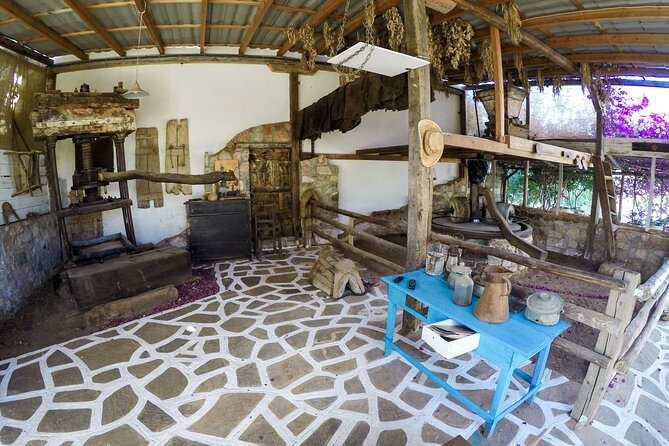
The best part of this Cretan olive oil workshop is that you do not just watch an old method being explained. You push the stone mill, handle the crushed olives, and operate a manual wooden press inside a 130-year-old olive oil factory. It is a small, practical lesson in how food was made before modern machinery took over.
I like the hands-on work and the close guidance from the family team, especially since the group is capped at 10 people. I also like the 100ml bottle of family extra virgin olive oil, which gives you a useful souvenir rather than another trinket. The main drawback is its short length: at about 90 minutes, this is a focused workshop, not a full farm day.
Key points to know before you book
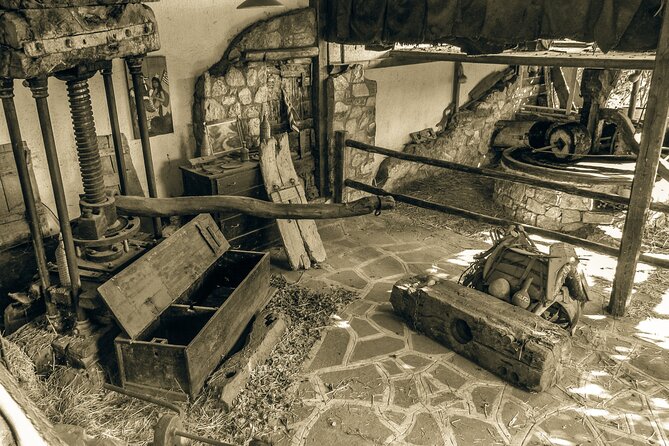
- You operate historic equipment: Weigh olives, push a stone mill, fill large sacks, and press the olive paste by hand.
- The setting is a 130-year-old factory: The old machinery gives the workshop a strong connection to Cretan food traditions.
- The group stays small: A maximum of 10 people makes it easier to take part instead of standing at the back.
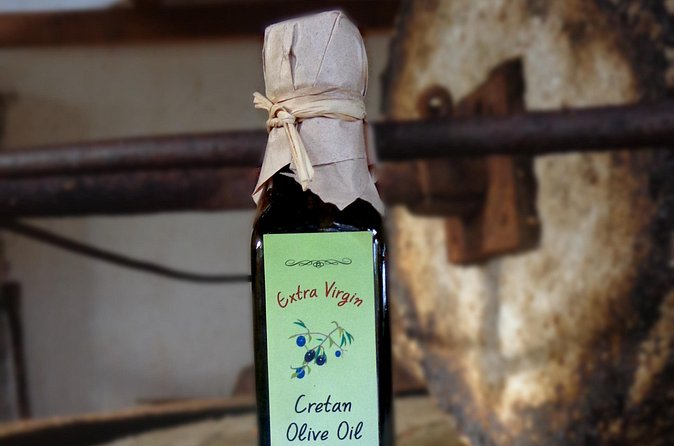
- The tasting comes at the end: You finish by sampling the farm’s oil and receiving a 100ml bottle of handmade extra virgin olive oil.
- The visit starts at 10:30 a.m.: Plan to meet at Spiridi Olive Oil Farm in the Agios Nikolaos area.
- You can add other farm activities separately: The farm also offers wine tasting, cheese making, honey, cooking, and an electronic tour, but these are not part of this olive oil workshop.
Inside a 130-year-old Cretan olive oil factory
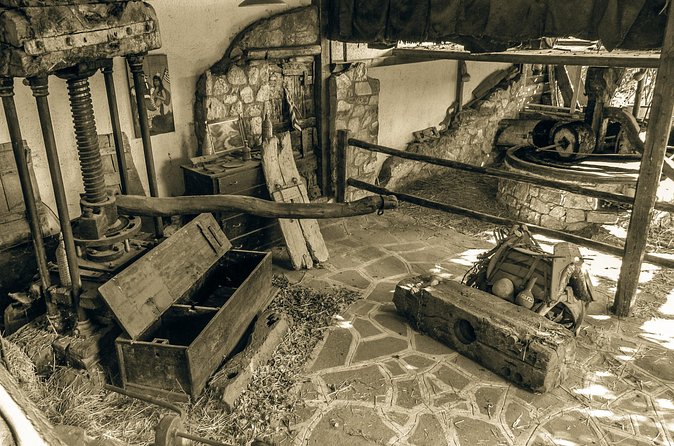
This visit works because the setting is not a modern classroom dressed up with a few antique props. The workshop takes place in a 130-year-old olive oil factory, where the old tools help explain the work in a clear, physical way.
You begin with the olives themselves. The group weighs them, which gives you a simple sense of the raw material before production starts. From there, you follow the same basic path used by earlier generations: crush the olives, transfer the paste, press it, and taste the result.
That order matters. Olive oil can seem like a mysterious product when you only see a bottle on a shop shelf. Here, you can watch the process change from whole fruit to a thick olive paste and then to oil. The work is not complicated to understand, but it is much more memorable when your own hands help make it happen.
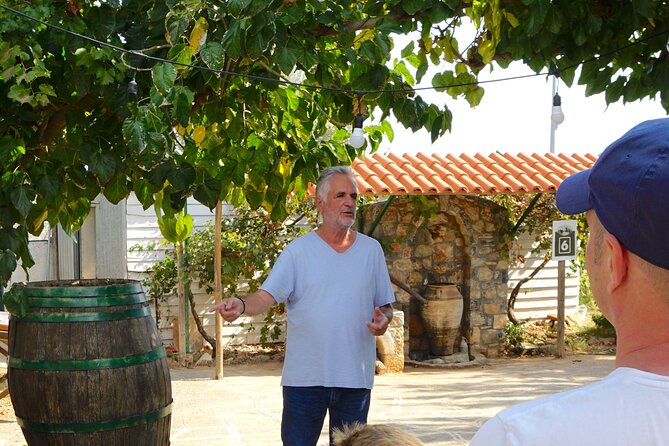
The family guides you through each stage. The supplied information names Tassos as the person who handled inquiries and helped organize larger group visits, while the wider family team leads the workshop. The staff speak English, and the activity is offered in English, so you can ask questions as the work goes along.
More Olive Farm Visits in Crete
- Crete: Road-trip to Lasithi, Zeus Cave & Olive Mill Farm
★ 4.4 · 451 reviews - Heraklion: Olive Farm Tour with Tasting of Local Delicacies
★ 4.9 · 411 reviews - Moires: Cooking Class and Olive Oil Tasting at a Family Farm
★ 5.0 · 93 reviews
Pushing the stone mill yourself
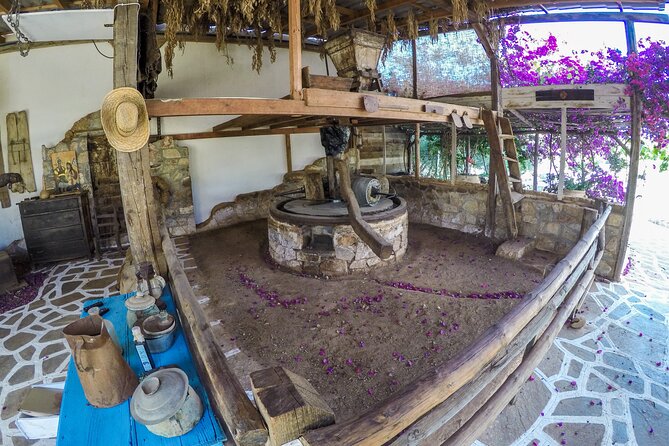
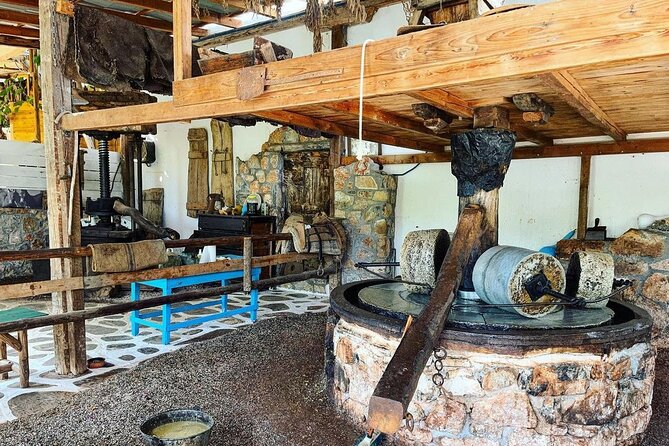
The stone mill is the central moment. Instead of standing beside it while someone else demonstrates, you help push it yourself. That small effort changes the mood of the visit. You feel the weight and pace of the old process, even if only for a short time.
Children can take part as well, with supervision and help during the pressing work. This makes the workshop a good choice for families who want something more active than a tasting. It also gives adults a better sense of how much labor sat behind a basic kitchen staple.
The practical work is well suited to a group of up to 10. You will not have the scale of a large commercial tour, where one person handles the machinery while everyone else watches from several rows away. The small size should give you a fair chance to take part, though the exact amount of time each person spends at a tool can vary.
The old mechanism is also the main reason to book this rather than choosing a standard olive oil tasting. A tasting teaches you about flavor. This workshop adds the physical side of production, which is the part most visitors never get to see.
From crushed olives to a manual wooden press
After the olives are crushed, you transfer the paste into large sacks. This step may sound plain, but it helps you see that traditional oil making was a sequence of manual jobs, not one dramatic press at the end.
The olive paste then goes into a manual wooden press. You help press it into oil, with the family team guiding your movements and explaining what is happening. The equipment is historic, so this is not meant to reproduce the speed or volume of a modern oil factory. It is a demonstration and workshop built around the older method.
That distinction is important. You should book this for the chance to handle the process and connect with Cretan food heritage, not because you expect to produce a large amount of oil or receive a technical lesson in modern commercial production.
The physical work also makes this a better fit for people who like participation. If you prefer a quiet talk followed by a tasting, the manual tasks may feel more involved than necessary. If you enjoy learning by doing, the mill and press are the heart of the visit.
The final tasting and 100ml oil gift
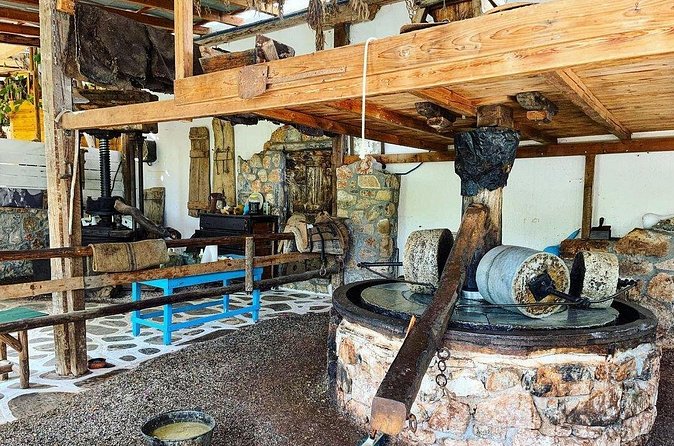
The workshop ends with an olive oil tasting. This gives you a chance to connect the work with the finished product and notice what the family is making. The tasting is included, along with drinking water.
You also receive a 100ml bottle of the family’s extra virgin handmade olive oil. It is a modest amount, but it is a sensible keepsake. You can take home something connected directly to the activity instead of buying a generic souvenir at the end.
The small bottle also makes the price easier to assess. At $78.60 per person, the workshop is not the cheapest short activity in Crete. You are paying for a private-feeling, small-group session, access to an old factory, guided participation, tasting, and the take-home bottle. For someone who values local food traditions and active demonstrations, that package can make sense.
It is less convincing if you judge it strictly by duration or by the quantity of oil included. The activity lasts about 1 hour 30 minutes, and the bottle is 100ml. The value lies in the setting and participation, not in taking home a large supply of oil.
More Olive Farm Visits in Greece
- Kleanthi Olive Farm: Guided Tour with Local Delicacies Tasting
★ 5.0 · 51 reviews - Spiridi Olive Oil Farm Tour
★ 4.5 · 22 reviews - Makrigialos-Ierapetra: Hidden Villages & Olive Oil Farm Tour
★ 4.4 · 16 reviews - Cretan Farm Tour with Cheese-Making, Olive Oil Tasting & Picnic
★ 5.0 · 10 reviews
What the 90-minute schedule feels like
The published start time is 10:30 a.m., and the activity ends back at the farm. Since the full visit lasts roughly 90 minutes, you can fit it into a morning without giving up most of your day.
The schedule should feel concentrated rather than rushed. You move through weighing, crushing, transferring, pressing, and tasting in one short visit. The staff’s help is important because the work has several stages, and the old equipment needs to be used correctly.
Do not expect a long meal or a broad farm tour as part of this booking. Food and drinks are not included other than water. The tasting is specifically olive oil, not a full Cretan lunch.
The farm does offer other activities, including wine tasting, cheese making, honey, cooking, and an electronic tour using provided tablets. Those can add a wider food program if arranged separately, but you should not assume they are included in this olive oil session.
One useful nearby idea comes from the setting in Agios Nikolaos. After the workshop, a short walk downhill can take you toward town and the archaeological museum. That walk is not part of the organized activity, and you should plan it independently, but it can help turn a brief morning workshop into part of a larger visit.
Why the small group makes a difference
A maximum of 10 people is one of the strongest practical details here. Hands-on demonstrations only work when everyone gets a reasonable chance to participate. With a smaller group, you can ask questions, handle the equipment, and see what is happening without fighting for a position.
The group limit also suits families and small parties. The equipment is not simply a backdrop. You need room to push the mill, move sacks, and work near the press, so a packed group would weaken the whole point of the visit.
Still, small does not mean private. The activity can include other people, and the amount of personal attention depends on the final group. Think of it as a compact workshop rather than a one-to-one lesson.
The family-led format adds warmth without requiring you to sit through a long formal presentation. You get running explanations while the work happens. That style is useful if you want facts in short pieces, at the moment they make sense.
A good choice for families and food-focused visitors
I would point families toward this workshop if children are old enough to follow instructions around the old equipment. The chance to push the mill and help with the press gives younger participants a clear job. Service animals are allowed, which is useful for people traveling with an assistance animal.
It also suits anyone building a food-centered day in Crete. You could pair the olive oil session with a separate cooking class, cheese-making visit, wine tasting, or honey activity at the farm, provided those are booked or arranged separately.
People interested in traditional crafts and rural life should find the format rewarding. You are not only hearing that olive oil matters to Crete. You are taking part in a process that shows why it required time, strength, and cooperation.
I would be more cautious about recommending it to someone seeking a full farm meal, a long countryside outing, or a modern technical tour of olive oil production. None of those are the focus here. The visit stays close to one old factory and one traditional method.
Practical details that matter
The meeting point is Spiridi Olive Oil Farm, listed at Cretan Olive Oil Farm, Ag. Nikolaos 721 00, Greece. You need to make your own way there, since transport is not listed as part of the experience.
The ticket is mobile, and confirmation is provided when you book. The activity is offered in English. It has a stated maximum of 10 people, which is worth checking when choosing a date if the hands-on element is your main reason for going.
The experience includes drinking water, but not other food or drinks. Wear clothing you do not mind using during a working demonstration. The supplied details do not specify a dress code or footwear requirement, so I would simply choose comfortable clothes suitable for handling olive paste and old equipment.
Free cancellation is available if you cancel at least 24 hours before the 10:30 a.m. start time. Changes or cancellations inside that window are not accepted for a refund. If the minimum number needed to run the activity is not met, you are offered another date or experience, or a full refund.
The activity is booked an average of 18 days ahead. That does not guarantee that every date sells out, but it is a useful reason to reserve early if your Crete schedule is fixed.
Is the $78.60 price fair?
For a 90-minute activity, $78.60 per person is a noticeable spend. You should not compare it with a simple bottle purchase or a brief shop tasting. This is a guided, small-group workshop with access to a historic factory, use of traditional equipment, an oil tasting, water, and a 100ml bottle to take home.
I see the value in the participation. The price pays for access to tools you are unlikely to operate elsewhere, plus the family’s time and supervision. The bottle adds a physical reminder of the visit, but it should not be the main reason you book.
The price works best for you if authentic food production matters more than getting the most minutes for your money. It works less well if you want a full meal, a longer farm program, or a large amount of oil to bring home.
Should you book the Spiridi olive oil workshop?
Book it if you want a short, active lesson in Cretan food heritage and like the idea of working with old machinery. The stone mill, large sacks, manual wooden press, final tasting, and family bottle give the visit a clear shape. The small group makes the hands-on promise believable.
I would especially recommend it to families, food lovers, couples who prefer local activities over standard sightseeing, and anyone staying near Agios Nikolaos who wants a useful morning stop. Add separate cheese, wine, honey, or cooking activities only if you want a longer food day.
Skip it if your priority is a full meal, transport from your hotel, or a long technical tour. At $78.60, the workshop needs to match your interests. If you want to understand traditional olive oil making by taking part rather than watching from a distance, this is a strong choice.
FAQ
Where does the olive oil workshop take place?
It takes place at Spiridi Olive Oil Farm, also listed as Cretan Olive Oil Farm, in Agios Nikolaos, Crete, at Ag. Nikolaos 721 00, Greece.
What time does the activity start?
The workshop starts at 10:30 a.m.
How long does the workshop last?
The activity lasts approximately 1 hour 30 minutes.
Is the workshop offered in English?
Yes. The experience is offered in English.
How many people can join the activity?
The maximum group size is 10 people.
What hands-on tasks are included?
You weigh olives, crush them by pushing a stone mill, transfer the crushed olives into large sacks, and press the olive paste using a manual wooden press.
Is olive oil tasting included?
Yes. An olive oil tasting takes place at the end of the workshop. Drinking water is also included.
Do you receive anything to take home?
Yes. Each participant receives a 100ml bottle of the family’s extra virgin handmade olive oil.
Can you cancel for a full refund?
Yes, if you cancel at least 24 hours before the experience start time. Cancellations made less than 24 hours in advance are not refunded.
Freshly pressed around Crete
- Crete in a Day: Knossos, Soap Workshops, Olive Oil & Wine Tasting★ 5.0 · 5 reviews
- Full Day Spinalonga Elouda Agios Nikolaos Olive factory Tour★ 4.5 · 5 reviews
- 1 hour and 30 minutes wines and olive oil tasting in Greece★ 5.0 · 2 reviews
- Guided Tasting of 3 Extra Virgin Olive Oils at Douloufakis Winery★ 5.0 · 2 reviews
- PRIVATE Workshop ESSENTIAL OILS & OLIVE OIL Factory with TASTING★ 5.0 · 5 reviews
- Private Guided Tour to Lasithi Plateau Villages & Olive Oil Mill★ 5.0 · 5 reviews
- Wine olive and Food of Crete, Heraklion★ 5.0 · 11 reviews
- Shore Escape: Chania, Monastery & Olive Oil Tasting★ 5.0 · 6 reviews
Olive Farm Visits, compared.
Sorrento Farm and Food Experience including Olive Oil, Limoncello, Wine tasting
Read our review →
Crete: Road-trip to Lasithi, Zeus Cave & Olive Mill Farm
Read our review →
Heraklion: Olive Farm Tour with Tasting of Local Delicacies
Read our review →
Lassithi, Zeus Cave, Olive Mill Farm & Knossos Combo Tour
Read our review →
Alghero: Wine and Olive Oil Tasting at a Local Farm
Read our review →
Traditional Olive Grove and Dragon Fruit Farm Tour
Read our review →
Moires: Cooking Class and Olive Oil Tasting at a Family Farm
Read our review →
Sóller: Olive Oil Guided Tour and Tasting at Can Det Estate
Read our review →Other lists with this tasting on them