
Review · CORFU
Corfu: Olive Oil Experience – The Governor’s Olive Mill
The star of this Corfu outing is the oil itself, made from the island’s local Lianolia olive. You’ll see how a family mill links old stone equipment with modern extraction, then taste the result with bread, cheese, tomatoes, capers, and dessert. I especially like the hands-on tasting lesson and the visit to Mitera, a roughly 1,500-year-old olive tree.
I also like the family feel. Guides including Maria, Eleni, George, and Sotiris add local stories to the drive and the mill visit. The main drawback is timing: although the advertised duration is three hours, several schedules can run five to six hours, and the minivan ride may feel crowded. Cruise passengers should allow plenty of time before returning to the ship.
Key points to know before booking

- Taste Corfu’s Lianolia olive oil: Learn how aroma, bitterness, fruitiness, and defects help identify quality.
- See old and modern production together: The family’s traditional loutrouvio gives context to the machinery used today.
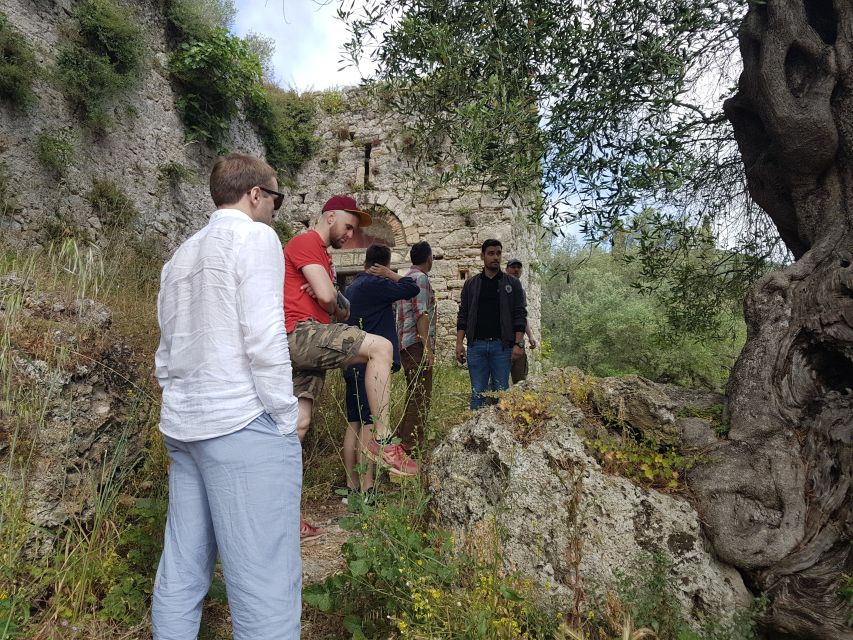
- Meet the Mitera olive tree: This ancient tree is said to be about 1,500 years old and makes a memorable photo stop.
- Enjoy a useful food tasting: Bread, cheese, tomatoes, capers, water, and a small sweet course accompany the oil.
- Add history beyond the mill: The route includes a stop at Gardiki Byzantine Castle.
- Check the timing carefully: Pickup details and group numbers vary, so confirm the plan before departure.
Why this olive-oil tour is worth your time in Corfu
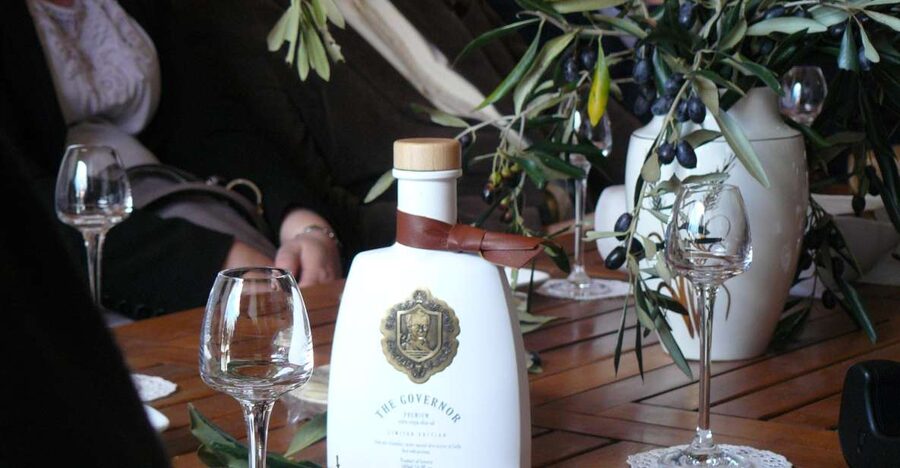
Corfu is often sold through beaches and old-town lanes, but its olive culture explains a great deal about the island’s countryside and family traditions. The Governor’s Olive Mill gives you a practical way into that story. You are not only looking at bottles in a shop. You are tracing the oil from tree, to fruit, to mill, to plate.
The experience costs about $80 per person. That is not the cheapest half-day activity on Corfu, but the price includes pickup and return, a guide, the mill tour, olive-oil tasting, snacks, and several stops outside the mill. For someone interested in food, farming, or local culture, the package offers fair value.
The strongest part is the mix of explanation and tasting. You will hear why Corfu’s Lianolia variety matters, then use your senses to understand the difference between ordinary supermarket oil and a fresh extra-virgin product. The tasting is not just a chance to pour oil on bread and call it lunch. You are shown how to smell and taste it properly, and what to look for when buying oil later.
More Olive Mill and Factory Tours in Greece
- The Governor’s Olive Mill Tour with Olive Oil Tasting
★ 5.0 · 502 reviews - Crete: Quad Safari, Olive Mill with Tasting & Ghost Village
★ 4.9 · 1,004 reviews - Knossos-Zeus Cave -Old Traditional Villages-Olive Oil Factory
★ 5.0 · 694 reviews
The drive from Corfu to the mill
Pickup is available from selected hotels, the airport, or the port within the stated service area. The information gives both a 25-kilometer and a 30-kilometer pickup radius, so I would confirm your exact address before booking. You should also provide the number of people and pickup point at least 24 hours ahead.
The usual pickup is around 9:00 to 9:30 in the morning, with the mill tour beginning at about 10:30. From Corfu Town or the port, the drive can take around 45 minutes to an hour. The road journey is part of the experience, since guides often point out island history and local customs along the way.
George, Spiros, Spyros, Sotiris, and other drivers have been praised for making this transfer more than a simple shuttle. They may explain the places you pass and help you understand how olive growing fits into everyday Corfiot life. Past outings have also included small detours, such as a bakery stop or a better photo location, though these should not be treated as guaranteed parts of every departure.
The vehicle is a minivan, with one note stating a maximum of eight people in the van. Another booking detail describes the activity as a small group limited to 10, while the same information also says the total number can range from 20 to 30. That is a real point to clarify. The mill experience may be organized in a larger group even if transport is split between vans.
Inside the old family mill
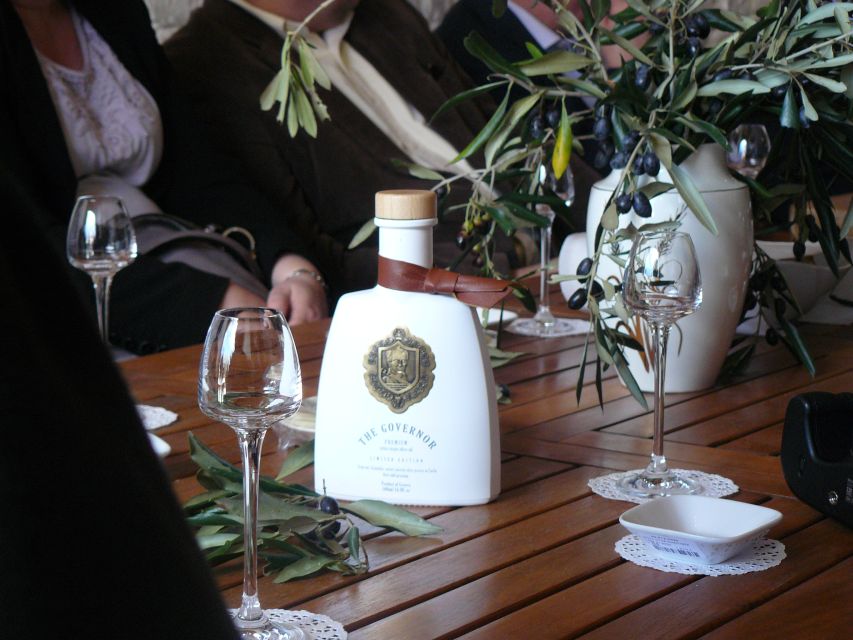
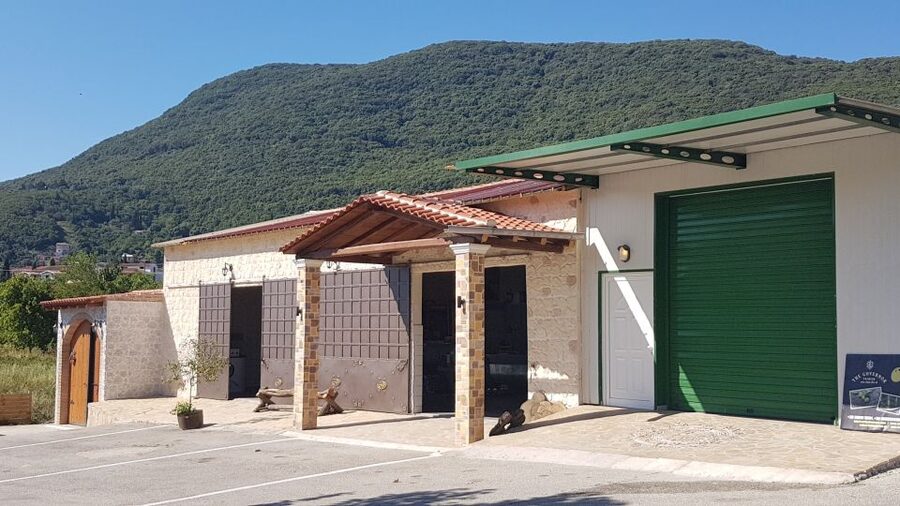
The tour begins in the museum area, where you are introduced to the long connection between Greece, Corfu, olive trees, and olive oil. Old tools and machinery show how demanding production once was. This opening matters because it keeps the modern mill from feeling like an isolated factory visit.
You then see the family’s old loutrouvio, or olive mill. The traditional method required far more physical labor and time than current production. The machinery, work areas, and explanations help you picture how olive oil was made in Corfu for generations.
This section suits curious adults and older children who enjoy seeing how food was produced before modern equipment. It is also a good choice if you want more than a tasting. The point is not to pretend that old methods were better. Instead, you learn what changed, what modern machinery improves, and why careful processing affects the final oil.
How modern extra-virgin oil is produced
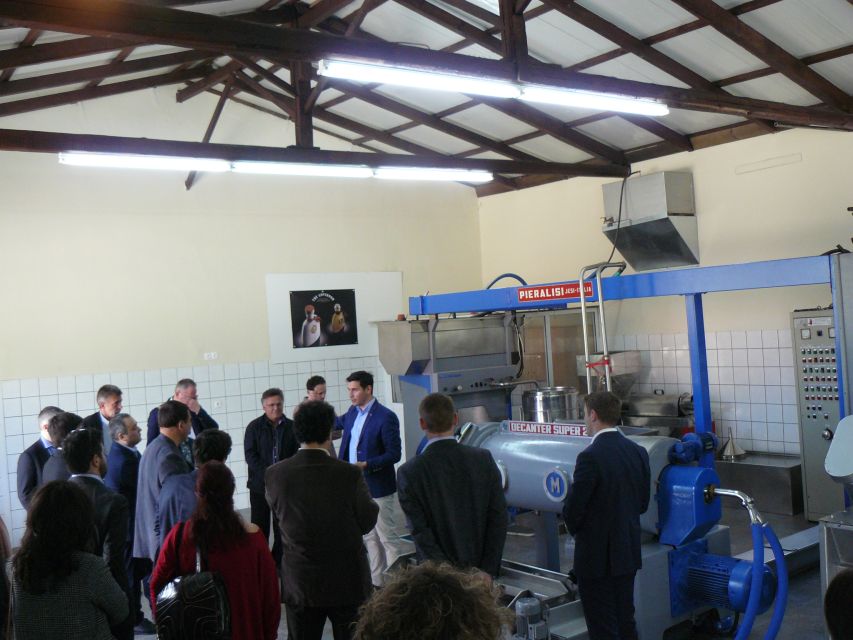
The modern production area follows the old mill and explains each stage of processing and extraction. The guides connect the machines to the quality of the finished oil, which makes the technical material easier to follow.
The Governor Extra Virgin Olive Oil is made from the single Lianolia variety of Corfu. The mill presents its international awards, including the claim that this was the first monovarietal extra-virgin oil made from this local variety. It also presents the oil as the first olive oil with a health claim and as a medical food in published scientific literature.
Those are strong claims, so listen to them as part of the producer’s presentation rather than as a substitute for your own judgment. The useful takeaway is simpler: you will understand why a single-variety oil can have a distinct character, and why harvest, extraction, storage, and labeling all matter.
The mill also presents its recognition as Best Greek Olive Oil Brand of 2016 according to Gastronomos. Awards do not automatically make an oil right for your kitchen, but they give useful context before you taste it.
More Olive Mill and Factory Tours in Corfu:
- From Mendoza: 3 Wineries, Olive Oil Factory Tour & Tasting
★ 4.6 · 901 reviews - Crete: Road-trip to Lasithi, Zeus Cave & Olive Mill Farm
★ 4.4 · 451 reviews - Lassithi, Zeus Cave, Olive Mill Farm & Knossos Combo Tour
★ 4.6 · 404 reviews - Zeus Cave, Lassithi Plateau, Olive Oil Factory, Kritza, Pottery
★ 5.0 · 362 reviews
The tasting lesson: what you actually learn
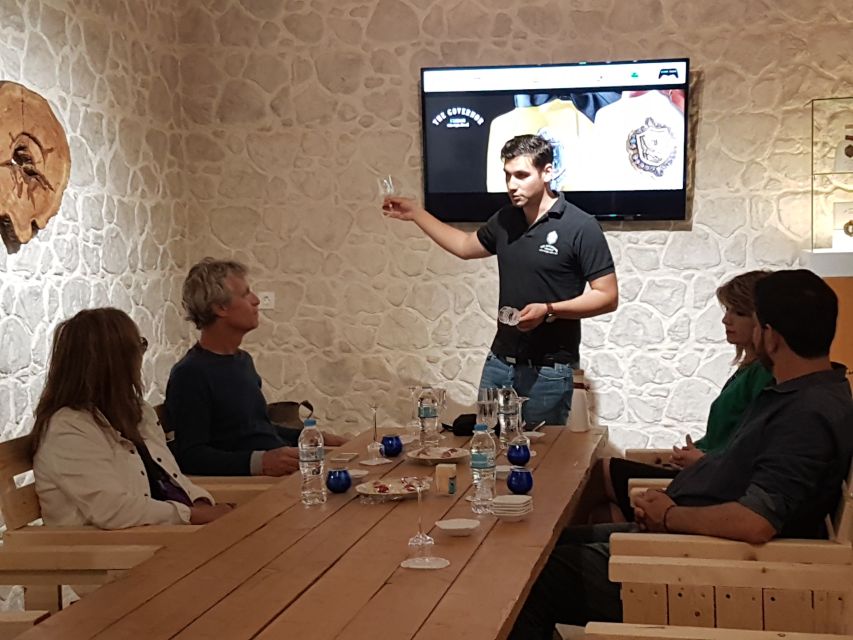
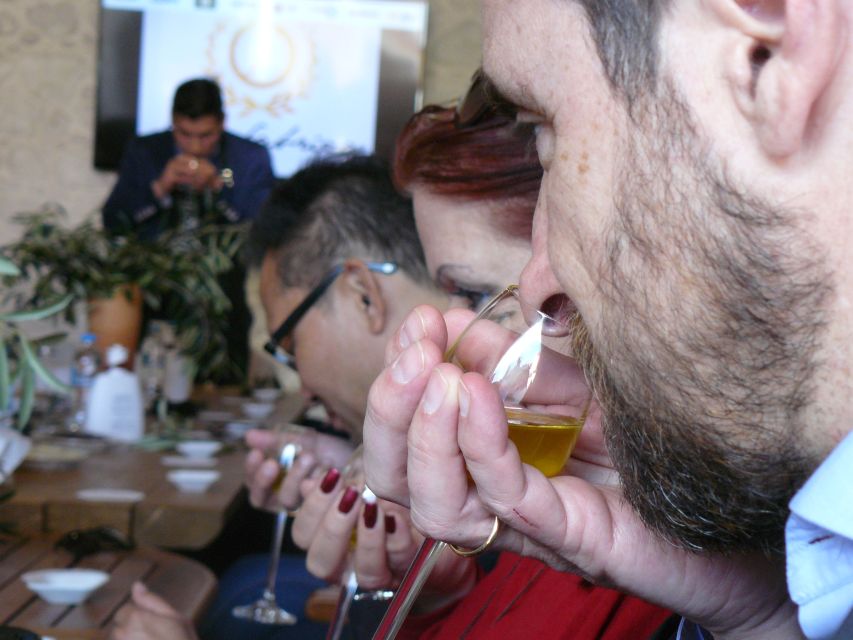
The tasting is the practical heart of the outing. You are shown how to examine the oil by smell and taste rather than judging it only by color. This is valuable because color can be misleading, while fresh aroma and balanced flavor tell you much more.
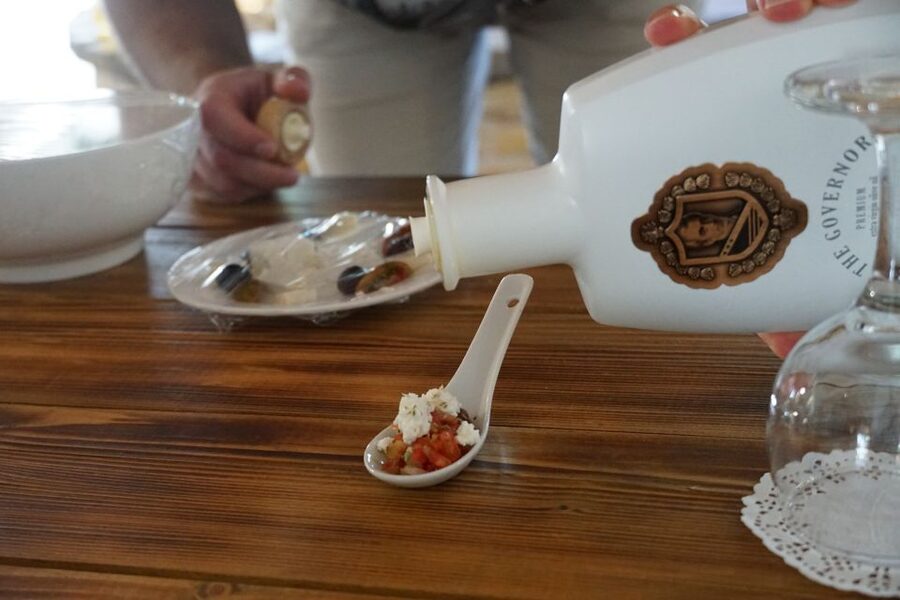
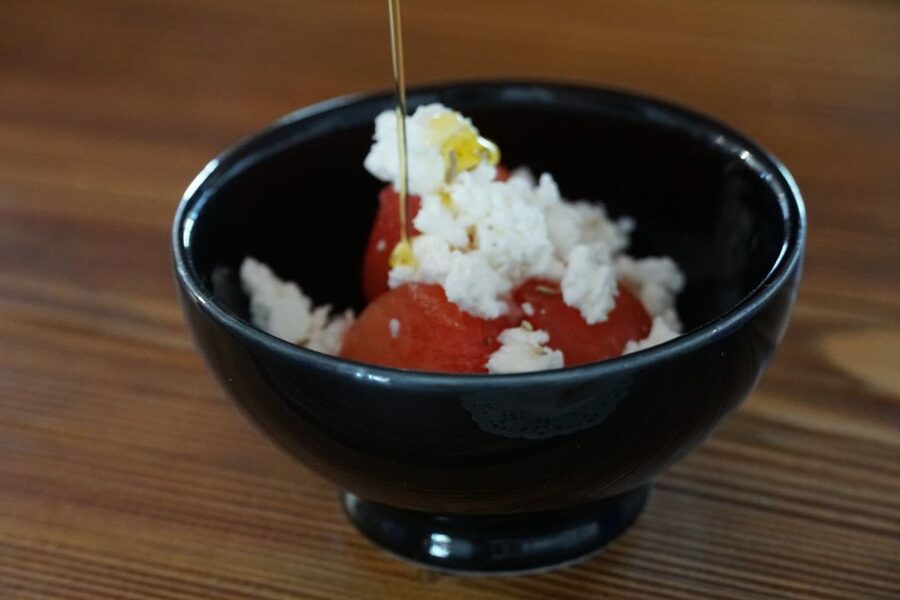
Expect the oil with village bread, cheese, cherry tomatoes, and capers. Natural mineral water is provided, and dessert may be yogurt, ice cream, or chocolate. The portions are described as finger food, not a full meal, so I recommend eating breakfast before pickup.
The tasting helps you notice the traits of a good extra-virgin oil. You may detect fruitiness, bitterness, and a peppery finish. Those sharper notes are not automatically faults. The guide explains how to separate desirable character from stale or defective flavors, and how to store oil properly at home.
One especially useful lesson concerns buying oil after your trip. You can ask about the variety, harvest information, storage, and quality category instead of picking a bottle based only on attractive packaging. The tasting also gives you a reference point for comparing the oil you already use.
There is an exhibition shop where you can purchase the mill’s oils and related products. Buying is optional, and the shop is best treated as a chance to take home something you have just learned to assess. One past participant also purchased Greek sea salt there, but available products can change.
Ancient groves and the Mitera tree
After the mill, the outing continues by vehicle to the Dafnis family’s old olive groves. These trees are a major reason to choose this experience instead of a simple tasting in town. You see the scale and age of the groves, not only the finished bottle.
The key stop is Mitera, or Mother Tree, described as about 1,500 years old. The tree offers a strong sense of time: olive cultivation here is not a modern lifestyle display but an agricultural tradition with roots far back in Corfu’s past.
Wear shoes suitable for a short walk through uneven ground. In warm months, mosquitoes can be present, so insect repellent is sensible. Mosquito bite cream has been available on past outings, but it is still better to bring your own protection.
The grove stop is also a good chance for photographs. Drivers such as Sotiris and Spyros have been praised for helping with pictures and for explaining the tree’s place in the family story. The exact route and amount of time outdoors can vary, especially in hot weather or when a ship departure creates a firm deadline.
Gardiki Castle adds a second layer of Corfu history
The route includes a stop at Gardiki Byzantine Castle, where you learn more about the area’s past. It is a useful counterpoint to the mill and olive groves. The day becomes a short study of Corfu’s food, farming, and defensive history rather than a single commercial visit.
The castle stop is not the main reason to book the outing, and the available details do not promise a long archaeological tour. Think of it as a brief historical pause and photo stop. If you love old fortifications, it adds real value. If you want to spend every minute tasting oil, it may feel like an extra detour.
Timing, group size, and cruise-port planning
The advertised duration is three hours, but the schedule deserves careful attention. The outline includes about one hour of transport, a 1.5-hour mill visit, another short drive, and a grove and castle stop. In practice, complete outings have sometimes taken five or six hours.
That longer timing can be a benefit if you want a fuller island outing. It can be a problem if you are visiting Corfu from a cruise ship. Tell the operator your ship’s departure time before the day begins. One cruise passenger had to skip the grove portion to get back on time, and the driver adjusted the plan.
Pickup and return are offered at selected locations, including the Corfu port area. The service is wheelchair accessible according to the booking information, but the old mill, groves, and castle may involve different surfaces. Ask the operator about your specific mobility needs before reserving.
The experience is listed with English and Greek support, with English identified as the available tour language in the practical notes. Children under eight can enter free. Again, confirm the current group setup, since the information gives different figures for a small group of up to 10 and a total group of 20 to 30.
Who will enjoy this experience most
I would choose this tour if you like food with a clear sense of place. It works especially well for couples, families with older children, cruise passengers with enough port time, and anyone who wants a countryside outing without arranging a rental car.
It is also a strong pick for travelers who buy olive oil at home and want to understand what the label and flavor actually mean. The tasting lesson stays useful long after your Corfu holiday.
You may want another activity if your priority is a relaxed beach day, a private tour, or a guaranteed short schedule. This is not a private outing, and the minivan can feel crowded. The drive, mill, grove, tasting, and castle also make it more active than a quick food stop.
The staff’s warmth is a major part of the appeal. Maria and Eleni have led clear, lively explanations at the mill, while George, Sotiris, Spiros, and Spyros have added local color on the road. The exact guide depends on the date, but the family-run character is central to the experience.
Should you book the Governor’s Olive Mill tour?
Book it if you want to connect Corfu’s food culture with its countryside and history. The old mill, modern processing area, thoughtful tasting, ancient trees, and Gardiki Castle create a fuller experience than a standard sample-and-shop visit.
At $80, I consider it good value for someone who will use the transport and appreciate the teaching. I would confirm the pickup radius, group size, total timing, and cruise schedule before paying. Free cancellation up to 24 hours ahead and reserve-now, pay-later terms also make planning easier.
Skip it if you have very little time, dislike group transport, or want a full meal rather than tasting portions. For everyone else, this is one of Corfu’s more useful food outings. You leave with a better idea of how good oil should smell and taste, plus a clearer picture of why olive trees matter so much on the island.
FAQ
How long does the olive mill experience last?
The advertised duration is three hours, but the full outing can take longer. The transport, mill tour, olive groves, and castle stop have sometimes made the day last five to six hours.
What is included in the price?
Pickup and drop-off, a guide, and olive-oil tasting are included. The tasting comes with village bread, cheese, cherry tomatoes, capers, dessert, and mineral water.
Where can pickup take place?
Pickup is available from selected hotels, the airport, and the port, within the stated service area. The information gives both a 25-kilometer and 30-kilometer radius, so confirm your location with the operator.
What time is pickup?
Pickup is generally around 9:00 to 9:30 in the morning, with the mill tour starting at about 10:30.
Is this a private tour?
No. The activity is not private. The information describes a small group limited to 10, but also gives a total participant range of 20 to 30, so confirm the current group arrangement.
Is the tour available in English?
English is the listed tour language in the practical information. English and Greek are also given as available languages.
Are children allowed?
Yes. Entry is free for children below eight years old.
Can I cancel or pay later?
You can cancel up to 24 hours before the activity for a full refund. Reserve-now, pay-later booking is also available.
Freshly pressed around Corfu
- Corfu Organic Olive Oil Tasting at Family Farm★ 5.0 · 5 reviews
- Bus Trip with Swim to Paleokastritsa and Olive Oil Museum★ 5.0 · 3 reviews
- Hiking in the Olive Groves,Villages,Sunset,with Swim Stop★ 5.0 · 8 reviews
- Wine Tour and Olive Tasting- Small Group Tour★ 3.5 · 14 reviews
- Corfu: Hiking in Olive Groves,Village,Sunset,with Swim Stop★ 5.0 · 13 reviews
- Exclusive Olive Oil Tasting in Corfu Old Town★ 5.0 · 15 reviews
- Symphony of Flavors – Corfu Old Town Food and Olive Oil Tasting★ 5.0 · 17 reviews
- Cooking Classes and olive oil tasting.The real taste of Greece!★ 5.0 · 56 reviews
Olive Mill and Factory Tours, compared.
Crete: Quad Safari, Olive Mill with Tasting & Ghost Village
Read our review →
From Mendoza: 3 Wineries, Olive Oil Factory Tour & Tasting
Read our review →
Knossos-Zeus Cave -Old Traditional Villages-Olive Oil Factory
Read our review →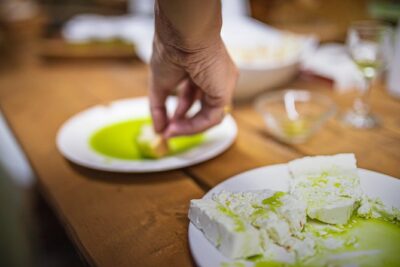
The Governor’s Olive Mill Tour with Olive Oil Tasting
Read our review →
Crete: Road-trip to Lasithi, Zeus Cave & Olive Mill Farm
Read our review →
Lassithi, Zeus Cave, Olive Mill Farm & Knossos Combo Tour
Read our review →
Zeus Cave, Lassithi Plateau, Olive Oil Factory, Kritza, Pottery
Read our review →
Crete: Zeus Cave, Lassithi Plateau, and Olive Factory Tour
Read our review →Other lists with this tasting on them