
Review · CHANIA
In Crete Discover the miracle of Olive Oil and Organic Fruits
The most unusual part of this Chania tour is its look at three eras of olive oil making. You move from a modern factory to an old mill, then to a private farm where olive growing is still part of daily life. The day also includes an ancient olive tree in an undisclosed location, mountain views, and quiet mainland villages.
I like the private format and the way the tour joins food, farming, local history, and scenery in one day. I also like that you get more than a tasting: you see machinery, production methods, byproducts, and the work behind a bottle of extra virgin olive oil. The main drawback is the price, $179.43 per person, and lunch and drinks are not included.
Key points to know before booking
- Three methods of olive oil production: See modern, traditional, and historic production methods in one day.
- A private 2,500-year-old olive tree: Visit an ancient tree in a location kept undisclosed by the operator.
- Fresh fruit from a working farm: Pick seasonal fruit and learn about everyday agricultural work.
- Hotel pickup in central Chania: Transport is included from central Chania areas, with cruise-port pickup available.
- Mountain and valley views: The Malaxa stop adds broad views across Chania’s inland regions.
- A full day with a specialist guide: Your guide is both an olive oil producer or farmer and a licensed historian guide.
Why this olive oil tour feels different
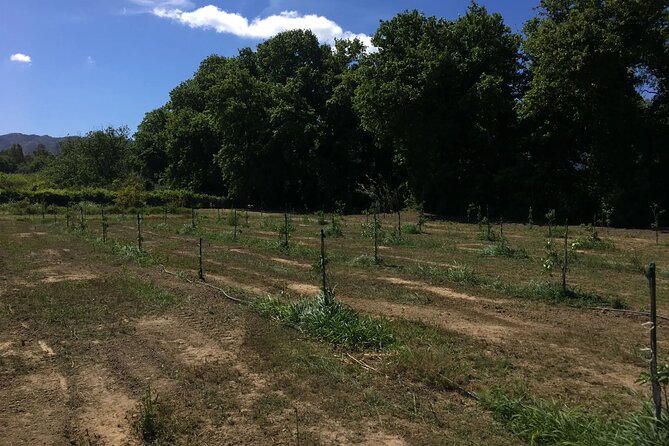
Many food tours stop at a tasting table. This one takes you behind the bottle. You see where olives are processed, how older equipment worked, and how farming continues on a private fruit and olive farm.
That range matters. A tasting can tell you whether you like an oil, but a factory visit explains how olives become oil. The old mill shows how slow and labor-heavy the process once was. The farm connects the finished product to soil, trees, weather, harvest work, and family routines.
The tour lasts about 6 to 7 hours and begins at 8:30 a.m. Since it is private, the pace and conversation are centered on your own group. That can be especially useful if you have detailed questions about olive varieties, organic farming, or the difference between modern and older production.
The guide is described as a professional farmer or olive oil producer as well as a historian licensed by the Greek Ministry of Tourism and Culture. That combination gives the day a practical angle. You are not only looking at old machinery or scenic villages. You are hearing how olive oil fits into Cretan life across time.
More Organic Olive Farms in Chania:
- Ronda: LA Almazara LA Organic, Olive Oil Museum and Tasting
★ 4.6 · 435 reviews - Organic cooking class with a sommelier in an Olive and wine farm
★ 5.0 · 69 reviews - Balsamic Vinegar, Olive oil and Organic Winery Tour in Assisi with tasting
★ 5.0 · 66 reviews
Vamos: seeing how modern olive oil is made
The first stop is a modern olive oil factory in Vamos, with about an hour set aside for the visit. You learn how olives are processed into extra virgin olive oil and see the different stages of contemporary production.
This is the best place to ask basic questions before the day moves into older methods. You can learn about oil qualities, the meaning of extra virgin olive oil, and the various byproducts created during processing. The tour also includes a tasting of fresh organic extra virgin olive oil.
The tasting has more value because it follows the factory explanation. You can connect the flavor and texture in the glass with the steps that came before it. If you already buy olive oil at home, pay attention to how the guide explains quality. This may change how you read a label or compare oils later.
The factory visit is listed as lasting one hour, but the day has several stops, so do not expect a long formal class at every location. The benefit is breadth. You get a clear introduction, then see how the subject changes when you move from industrial equipment to older local methods.
Vryses: an old mill and the work behind the oil
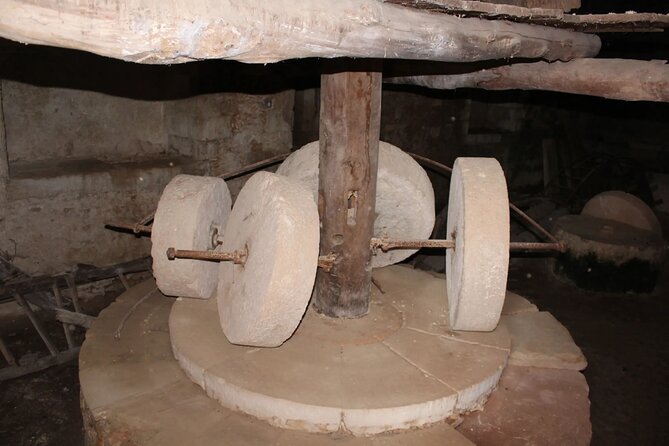
The next stop returns to Vryses for a 30-minute visit to a traditional olive oil mill. Here you see the machinery used in earlier centuries and learn how olives were once crushed and processed.
This stop gives the modern factory a useful contrast. Contemporary production is designed for efficiency and consistency. The older mill shows the physical effort and slower procedure that once shaped olive oil production in Crete.
Half an hour is enough for an introduction, though it may feel brief if you are fascinated by historic machinery. Still, the short visit keeps the day moving. You are not spending the entire morning in one building. Instead, you are building a timeline from old methods to modern production.
For me, this is one of the tour’s strongest ideas: olive oil is not treated as a simple souvenir. You see it as a product shaped by technology, labor, and local customs.
Kalyves: fruit, olive trees, and working farm life
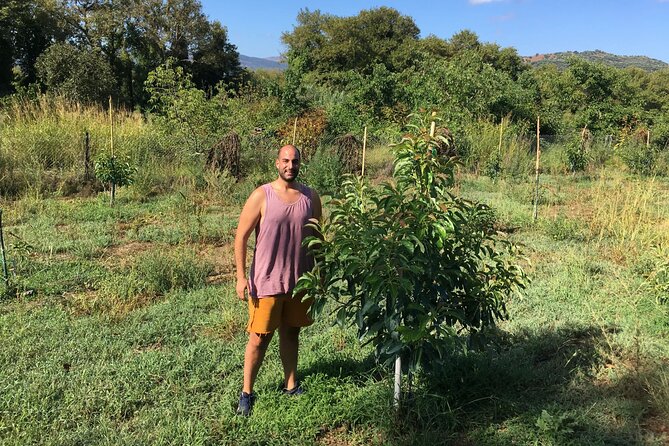
At a private farm in Kalyves, you spend about an hour learning about olive varieties and the daily routine of farming. You may collect fresh fruit directly from the tree, depending on what is available during your visit.
This stop brings the subject down to earth. Factories and mills explain machinery, but a farm shows the living side of agriculture. You learn how olive trees and fruit trees fit into a farmer’s routine, and you get a closer look at the work that supports Cretan food traditions.
The private setting also helps explain why this is a better choice for people who want contact with local life rather than a quick commercial tasting. You are visiting a farm and talking with a professional farmer. The focus is on the way the work is done, not just on buying a product at the end.
Season matters here. The description promises fresh fruit from the tree, but it does not specify which fruit or guarantee a particular harvest. If picking fruit is important to you, ask about seasonal availability when you book.
More Olive Oil Tours around Chania:
- Crete Wine and Olive Oil Tour
★ 5.0 · 272 reviews - Wine & Olive Oil Tour with Lunch at Milia Mountain Retreat
★ 5.0 · 194 reviews - Wine & Olive Oil Tour with Lunch – Semi Private Safari Tour
★ 5.0 · 156 reviews - Chania: Milia Mountain Tour w/Lunch Olive Oil/Wine Tastings
★ 4.9 · 97 reviews
Tsivaras: an ancient olive tree kept out of sight
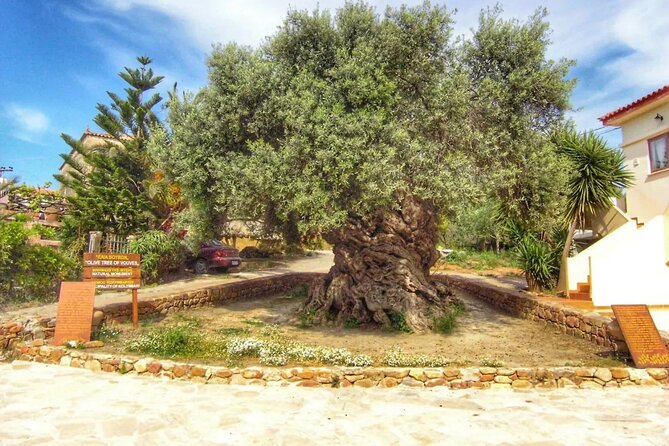
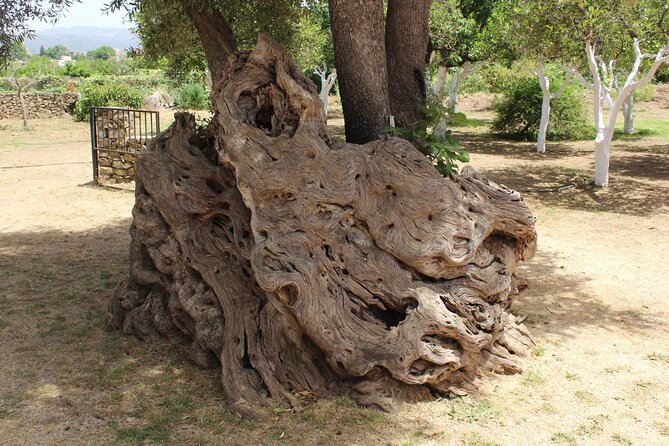
The visit to Tsivaras is the day’s most memorable claim. The guide takes you to an undisclosed location to see a living olive tree described as possibly the oldest in the world.
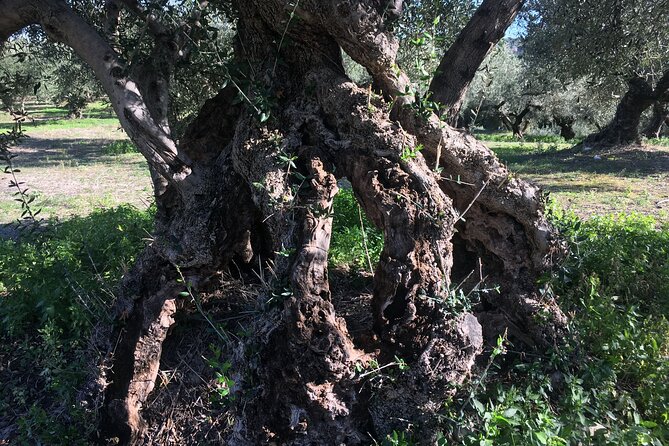
The tree is presented as more than 2,500 years old, and the tour also describes it as a 3,000-year-old olive tree. Since the age is an estimate rather than a settled fact, treat the claim with a little care. The important point is that you are seeing an exceptionally old tree with enormous dimensions, not visiting a standard orchard.
You are allowed to touch the tree, which makes the stop feel more direct than simply photographing it from a distance. The undisclosed location also suggests a desire to protect the site from heavy public traffic. Do not expect a marked attraction with a large visitor center or a developed tourist setup.
About an hour is planned here. That gives you time to look closely, hear the historical explanation, and take in the scale of the tree. If you care about ancient sites and living traditions, this may be the strongest reason to choose this particular tour.
At the same time, the exact age cannot be independently confirmed from the information provided. I would book this for the setting and the chance to see a remarkable old olive tree, not only for the world-record claim.
Apokoronas: olive oil, faith, and local life
The Apokoronas stop takes you to a monastery with a strong connection to olive oil production. You see the monastery’s olive oil factory and learn how important oil has been to local people over the years.
This hour adds a cultural layer that the factory and farm cannot provide on their own. Olive oil was not merely a commercial crop. It had a place in household life, religious settings, food, lighting, and local economies. The monastery visit helps explain that wider role.
The stop is also a useful change of pace. After seeing modern machinery, older equipment, and a working farm, you get a site where production connects with a religious community. The tour description does not name the monastery, so you should not book this expecting a particular famous landmark. The value is in the connection between place, faith, and olive growing.
Because it is a private tour, you can ask the guide to explain details that catch your attention. The guide’s historian qualification should be useful here, especially if you want more context about the monastery and the region.
Vryses riverside: a short break in a village setting
The tour returns to Vryses for a 50-minute break in a riverside village. This is the least structured part of the day, and that is a good thing after several focused visits.
You have time to pause, look around, and rest before the final viewpoint. The description calls the village romantic, but the practical point is simpler: this is your break in a local setting rather than another formal attraction.
Lunch and drinks are not included in the tour price. Since this stop lasts nearly an hour, you should plan to purchase food or refreshments yourself if needed. The supplied details do not state exactly what is available or whether a meal is arranged, so ask the operator if lunch matters to your plans.
The stop also gives you a chance to judge the day’s rhythm. This is not a fast checklist of photo stops. It combines explanations, short visits, a farm, a monastery, and time to pause.
Malaxa: wide views across Chania’s inland regions
The final stop is in Malaxa, where you pause for about 45 minutes to photograph valleys, villages, and the inland regions of Chania.
This viewpoint gives the day a visual finish. Much of the tour focuses on close details: olive fruit, mill machinery, oil samples, and the trunk of an ancient tree. Malaxa pulls your attention outward and shows how the villages and farming areas fit together.
Bring a phone or camera with room for more photographs. The tour specifically includes views of valleys and villages, so this is not just transport between stops. It is part of the experience.
The information does not specify the exact viewpoint or how much walking is required. You should be prepared for an outdoor sightseeing stop rather than a fully structured attraction. The broader setting may be especially appealing if you want a break from Chania’s old town and coast.
Is $179.43 per person a fair price?
At $179.43 per person, this is not a budget excursion. The price makes more sense if you value a private vehicle, hotel pickup, a specialist guide, several admissions, and a full day of varied visits.
You are paying for more than olive oil samples. The day includes a modern factory, a historic mill, a private farm, an ancient tree, a monastery, a village break, and a mountain viewpoint. Recreating that route independently would take planning, driving, and local knowledge.
The value is strongest for a small group that would otherwise hire a private guide or arrange several separate visits. Group discounts may also improve the cost for larger private parties. Since lunch and drinks are extra, include those costs in your day’s budget.
If your main goal is a quick tasting, this tour is probably too long and too expensive. If you want to understand olive oil production while seeing parts of mainland Chania that are not usually covered by a basic city tour, the price is easier to justify.
Who should book this private Chania day?
I would recommend this experience to you if you like food with a clear connection to place. It also suits people who enjoy old machinery, farms, local history, scenic drives, and small villages more than a tightly packed list of famous monuments.
The private format works well for families, couples, and groups with different interests. Someone interested in olive oil can focus on production. Someone more interested in history can ask about the old mill, monastery, and ancient tree. Someone who wants scenery gets the Malaxa viewpoint and the inland villages.
The tour is also suitable as a shore excursion because pickup is available from Chania and Souda cruise-port areas. The stated information says most people can participate, but it does not give detailed accessibility information. If your group has mobility concerns, ask the operator about walking surfaces, vehicle access, and the specific stops before booking.
You should think twice if you dislike rural drives, have no interest in olive oil, or want a relaxed day centered on one place. The itinerary covers several locations, and the full day may feel like too much if you prefer a slow café morning.
Practical details for a smoother day
Hotel pickup and drop-off are included from central Chania areas. The start time is 8:30 a.m., so be ready early and confirm the pickup point when you book.
The tour is private, meaning only your group participates. That gives you more room to ask questions and makes the day less rigid than a large group excursion.
Confirmation is provided at booking, and free cancellation is available up to 24 hours before the start time. Changes or cancellations made less than 24 hours before the start time are not accepted for a refund.
Only four ratings are provided, all at five stars, so the rating is positive but based on a small sample. One especially strong piece of advice is that the experience can become a highlight for people who already love olive oil. I would use that as a clue about the best audience, not as a reason to ignore the price or the lack of included lunch.
Should you book this olive oil tour?
Book it if you want a private, full-day look at Cretan olive oil that goes well beyond tasting. The combination of three production eras, a working farm, a monastery, an ancient tree, and inland views gives you a fuller picture of how olive oil connects to Cretan work and culture.
Skip it if you only want a short food stop or if $179.43 per person feels high once you add lunch and drinks. For everyone else, especially small groups who want a guide with both farming and history experience, this is a thoughtful way to spend a day outside Chania.
FAQ
How long does the tour last?
The experience lasts approximately 6 to 7 hours.
What time does the tour begin?
The stated start time is 8:30 a.m.
Is hotel pickup included?
Yes. Free hotel pickup and drop-off are included from central Chania areas.
Can I take this tour from a cruise ship?
Yes. The tour is also available as a shore excursion, with coverage for Chania and Souda cruise-port areas.
Is the tour private?
Yes. Only your group participates in the activity.
Is lunch included?
No. Lunch and drinks at the private tour stops are not included.
What is the cancellation policy?
You can cancel up to 24 hours before the experience start time for a full refund. Cancellations or changes made less than 24 hours before the start time are not accepted.
Freshly pressed around Chania
- Wine, Beer, Olive Oil Tasting Private Tour (price per group of 6)★ 5.0 · 4 reviews
- Wine & Olive Oil tasting one day private tour in Crete★ 5.0 · 2 reviews
- Chania Old Town – Millennial Olive Tree – Olive Oil Mill★ 5.0 · 2 reviews
- Discover Rethymno, Lake Kournas & the Secrets of Cretan Olive Oil★ 5.0 · 10 reviews
- Crete Off-Road & Flavors Safari: Wine, Olive Oil & Mountain Life★ 5.0 · 9 reviews
- Rethymnon Olive Tree Sponsorship Protect and Plant Tour★ 5.0 · 5 reviews
- Monastery – Ancient Olive tree & Museum-Cretan Brewery Private Tour from Chania★ 5.0 · 5 reviews
- Pottery – Honey & Olive Oil experience★ 4.5 · 9 reviews
Organic Olive Farms, compared.
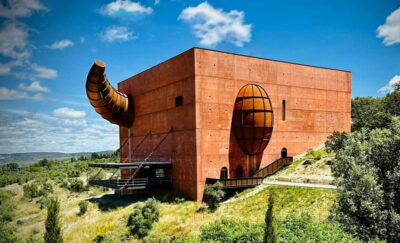
Ronda: LA Almazara LA Organic, Olive Oil Museum and Tasting
Read our review →
Organic cooking class with a sommelier in an Olive and wine farm
Read our review →
Balsamic Vinegar, Olive oil and Organic Winery Tour in Assisi with tasting
Read our review →
Organic Olive Grove tour & Olive oil tasting & lunch in Kalamata!
Read our review →
Assisi: Organic Balsamic Vinegar, Olive Oil & Wine Tour
Read our review →
Córdoba: Visit a family organic olive grove with tasting
Read our review →
Organic Wine and Olive Oil Tasting Experience near Lecce
Read our review →
Leonardo Da Vinci’s wind mill visit and Organic olive oil tasting
Read our review →Other lists with this tasting on them