
Review · ALGARVE
Tavira City & Olive Factory
Tavira’s best feature is the change of pace: first, you get a quick look at the city from an open-sided electric tuk-tuk, then you shift from old streets to the working world of olive production. I especially like the small five-person limit and the way the tour joins Tavira’s main sights with a local food stop instead of treating them as separate outings.
I also like the tasting itself, which goes beyond a splash of oil. You’ll sample olives, olive oil, orange marmalade, cheese, and wine. The main consideration is time: two hours is enough for an introduction, but not enough for a long visit inside every church or a slow exploration of Tavira on foot.
Key points
- Portuguese-pattern painted tuk-tuk: Meet the tour in a distinctive vehicle that fits Tavira’s compact streets.
- Castle, churches, and Republic Square: Cover several central landmarks without tiring yourself on foot.
- Salt pans included: The route reaches part of Tavira’s salinas area as well as the historic centre.
- Olive factory access: See how olive products are made, then taste several local foods and drinks.
- Small group of up to five: The limited size should make it easier to hear the guide and ask questions.
- Flexible booking: You can cancel up to 24 hours before departure for a full refund and reserve without paying immediately.
A quick electric ride through Tavira
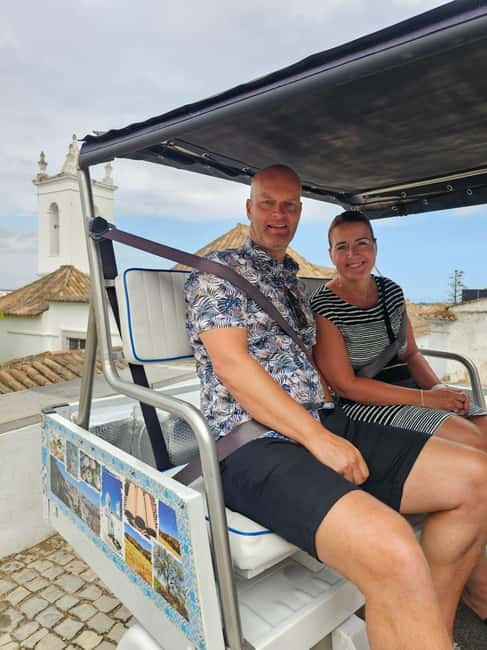
This is a compact city tour with a useful twist. Instead of spending two hours only looking at façades, you combine a guided ride around Tavira with a visit to an olive factory. The tuk-tuk handles the orientation, while the factory provides the hands-on part.
I see the format as a good fit if you have limited time in Tavira or want a first look before deciding where to return on your own. You are not signing up for a full-day excursion. This is a short introduction, with enough variety to keep the pace moving.
The vehicle is 100 percent electric, which suits the quiet lanes and close-set streets of the old centre. The meeting point is identified by the Portuguese-pattern painted tuk-tuk, so you should look for the vehicle itself rather than expecting a large tour office.
The group is limited to five people. That matters here because the route includes commentary about streets, churches, the castle area, and the salt pans. In a tiny vehicle, a small group generally makes it easier to hear the guide and ask for clarification.
More Olive Mill and Factory Tours in Portugal:
- Tavira: Olive Factory Tour and Tasting
★ 4.8 · 272 reviews - Tavira Olive Experience Factory Tour and Tasting
★ 5.0 · 190 reviews - Crete: Quad Safari, Olive Mill with Tasting & Ghost Village
★ 4.9 · 1,004 reviews
Republic Square, old streets, and the castle area
The first portion covers Tavira’s main historic area. You’ll pass through Republic Square, see historic streets, and reach the castle area. The tuk-tuk gives you a broad outline of the city instead of asking you to piece the centre together one corner at a time.
Republic Square is a natural place to begin understanding Tavira. It connects the city’s public life with its older streets, and the guide can give you a sense of how the main parts of town fit together. I like this kind of orientation because it helps you use the rest of your time with more purpose.
The castle area gives the tour a stronger visual focus. You should expect an outside look at the area and information about its place in Tavira, rather than a long castle visit built around every wall and detail. The supplied details do not promise an extended interior tour, so keep your expectations at the level of a guided city overview.
The same applies to the churches. Churches are among the named highlights, but no specific church names or interior access are given. You’ll hear about the main religious buildings and see them as part of the city route, but you should not book this expecting a dedicated church-art tour.
That limitation is also part of the appeal. The tuk-tuk lets you cover several points without turning the outing into a march between monuments. If your main goal is a detailed study of Tavira’s churches, you’ll want extra time after the tour.
A look toward Tavira’s salt pans
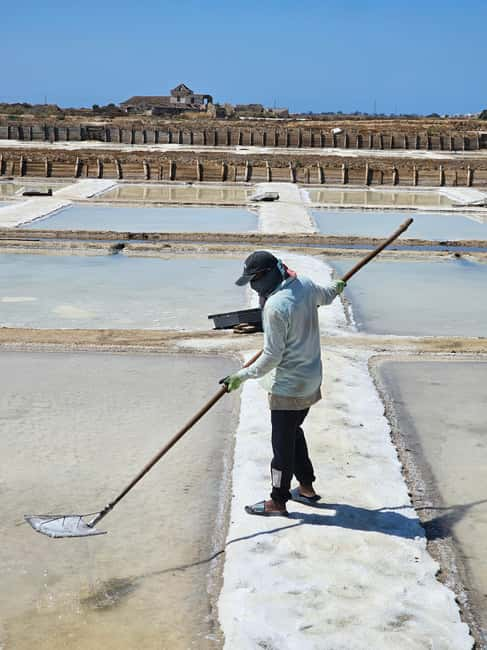
The route also includes some of the salinas area. This adds a different side of Tavira, one that is less about stone buildings and more about the local setting around salt production.
The information provided does not promise a full salt-pan visit, a walk among the ponds, or a detailed production demonstration. Think of this as a view and explanation within the tuk-tuk route. That distinction matters, especially if salt pans are your main reason for booking.
Still, the stop broadens the tour. You get old streets, public squares, religious buildings, a castle area, and the salt pans in one short outing. I like that mix because it avoids presenting Tavira as only a collection of monuments.
The route can also help you decide what deserves a return visit. You might want to go back to the historic centre for a slower walk, or spend more time around the salt pans if that part catches your interest. The tour gives you a first look rather than trying to replace independent exploring.
Behind the scenes at the olive factory
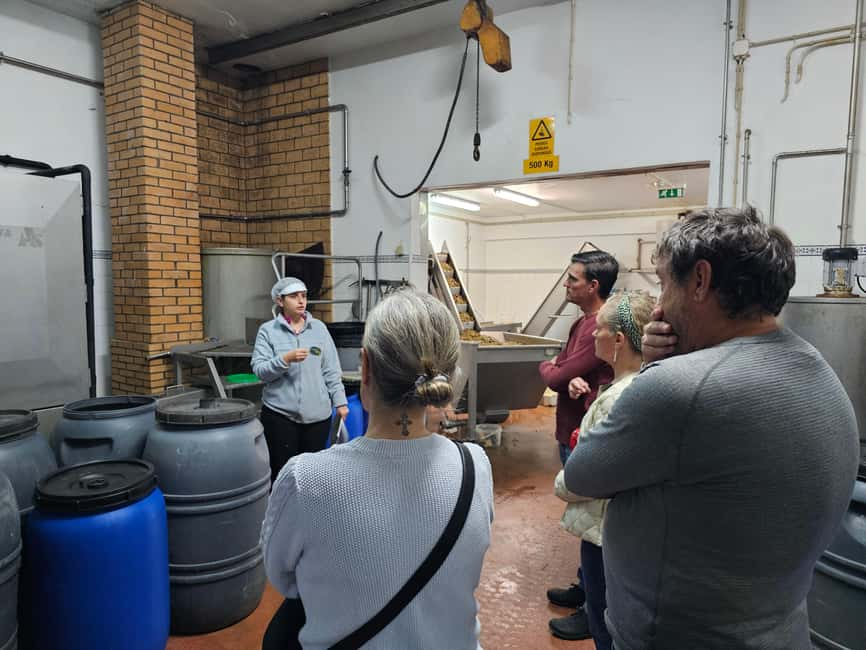
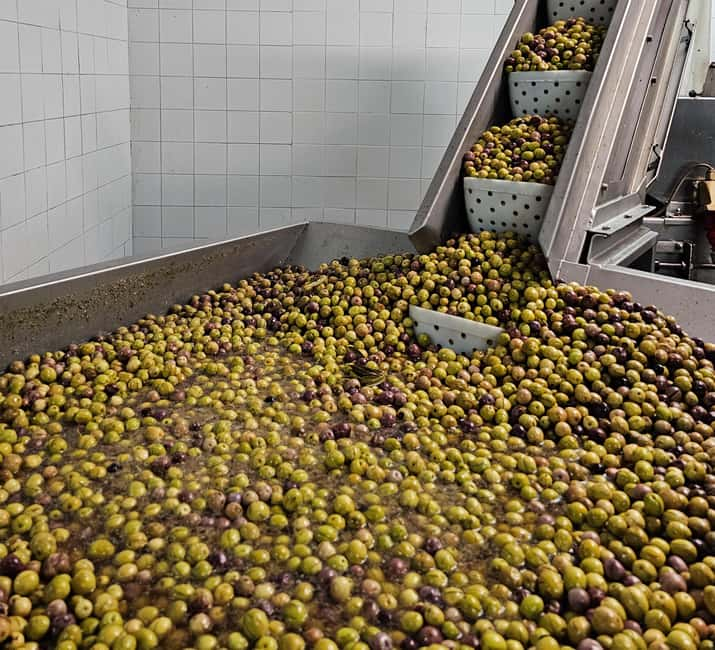
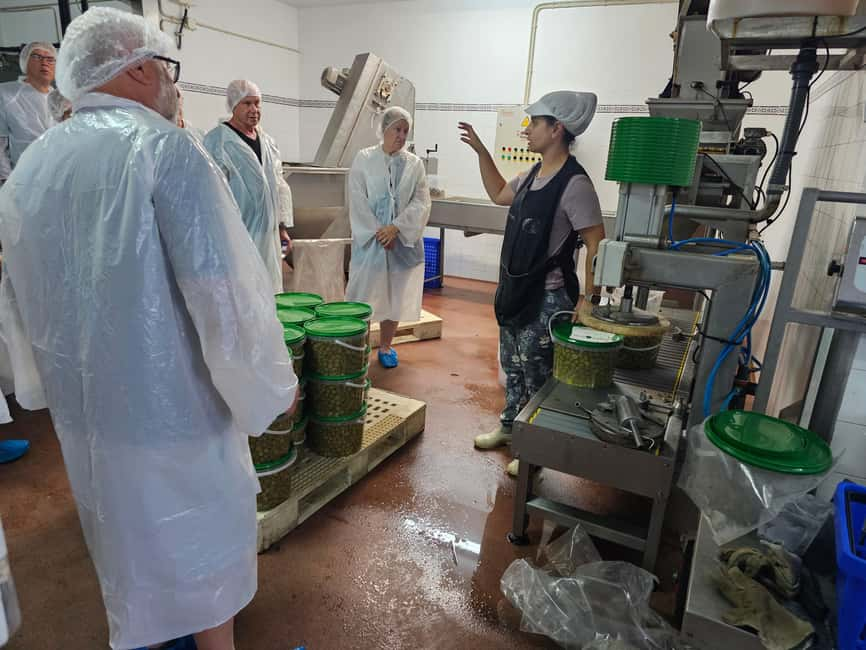
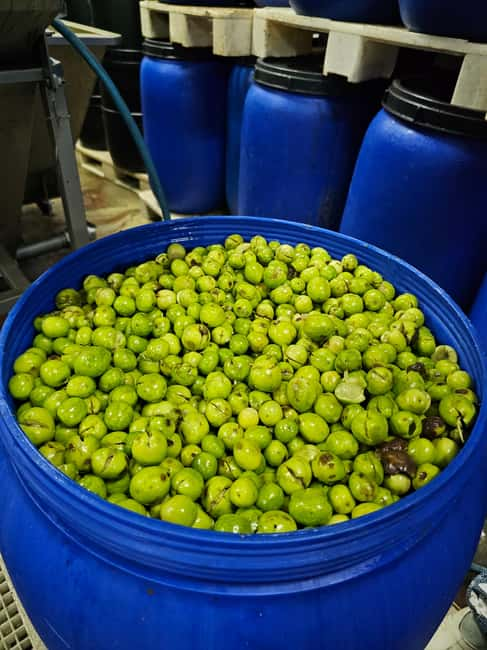
The second half changes the mood. You leave the city overview and visit an olive factory in Tavira. The factory tour is included in the price, and the focus is on the production of olive products.
The phrase behind the scenes suggests a look at how olives become finished products, but the available details do not specify the machinery, the length of the factory visit, or which stages of production are shown. You’ll get an introduction to olive production, not a guaranteed technical workshop.
That is fine for most people. A food stop works best when it connects what you see with what you taste, and this one does exactly that. Instead of treating olive oil as a generic souvenir, the visit gives you a reason to consider how olives are processed and how the finished oil is used.
The factory stop may also suit you better than a second round of sightseeing if you have already spent the morning in Tavira. It gives the two-hour experience a practical, local character. You are not only looking at the town. You are also learning about a product tied to Portuguese food culture.
More Olive Oil Tours around Portugal:
- Arrábida, Setúbal, Sesimbra, Olive with wine tasting
★ 5.0 · 75 reviews - Douro Valley: A Sensory Experience in the Douro: Wines, Olive Oil, and History
★ 4.9 · 15 reviews - Tour with Wine and Olive Oil Tasting
★ 4.6 · 8 reviews - Premium gastronomic mountain tour: Wine, olive oil, spirits, food
★ 5.0 · 8 reviews
The tasting includes more than olive oil
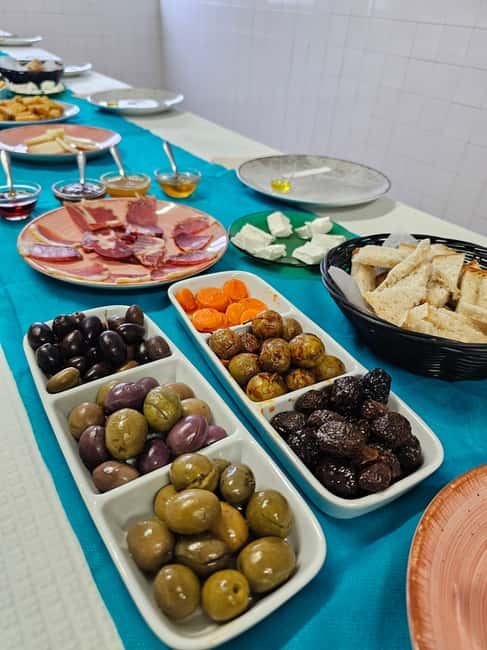
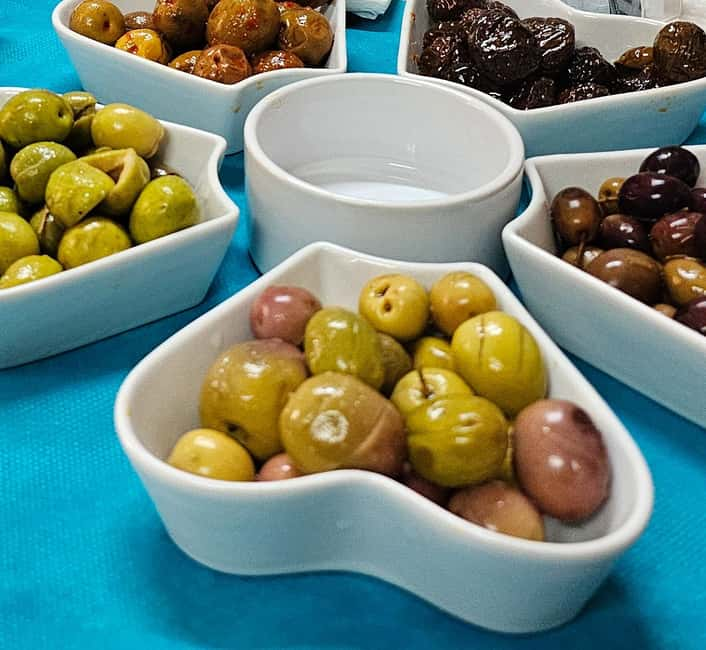
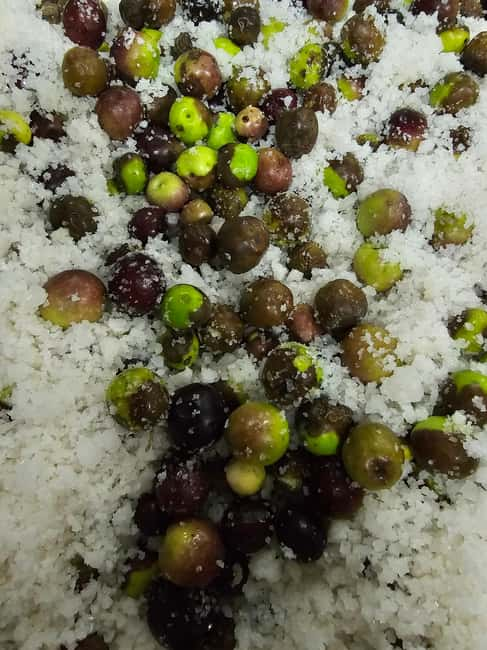
The tasting is one of the strongest parts of the experience because it includes several different flavors. You can expect olives, olive oil, orange marmalade, cheese, and wine.
The combination gives you more to compare than a single oil sample. Olives bring texture and salt, oil lets you focus on flavor and aroma, marmalade adds sweetness, cheese provides a savory contrast, and wine rounds out the table. I value this sort of tasting because it shows how the product fits into a meal.
The tasting is not described as a full lunch. You should treat it as a generous sample experience rather than a replacement for a restaurant meal. If you need a substantial meal, plan one separately.
You also should not assume that every tasting is tailored to special dietary needs, since no dietary information is provided. If that matters to you, ask the operator before booking. The confirmed tasting list is clear, but other arrangements are not stated.
For many people, this will be the part that turns a standard city ride into a more memorable outing. Tavira’s streets provide the setting, but the tasting gives you something concrete to remember and discuss after the tour.
What the $91 price means
At $91 per person, this is not the cheapest way to look around Tavira. The price needs to be judged against what is included: a private-feeling small-group tuk-tuk ride, a live guide, the Tavira route, the olive factory ticket, and the tasting.
The small group matters most. With up to five participants, you are paying for a more personal format than a large coach tour. You also avoid arranging separate transport to an olive factory, then finding a tasting on your own.
The two-hour length keeps the total commitment modest, but it also limits the amount of detail. If you divide the experience into a city ride and a factory visit, neither part can be very long. That makes the price easier to justify for a first orientation, but harder to justify if you want deep sightseeing or an extended food workshop.
I would compare this with the cost and effort of booking two separate activities. If you want both a guided look at Tavira and an olive tasting, this bundled format has practical value. If you only want to see the castle and churches, the price may feel high for a short city overview.
The perfect 5 out of 5 score from four verified bookings points to a consistently positive small-group experience, though the sample is small. One detailed account praised the guide’s explanations of Tavira’s history and sights, while also noting that the factory portion was different from the city tour but still worked well as part of the day. That is a useful warning and a useful recommendation at the same time: book this for variety, not for a single subject carried through the full two hours.
Guide language and group comfort
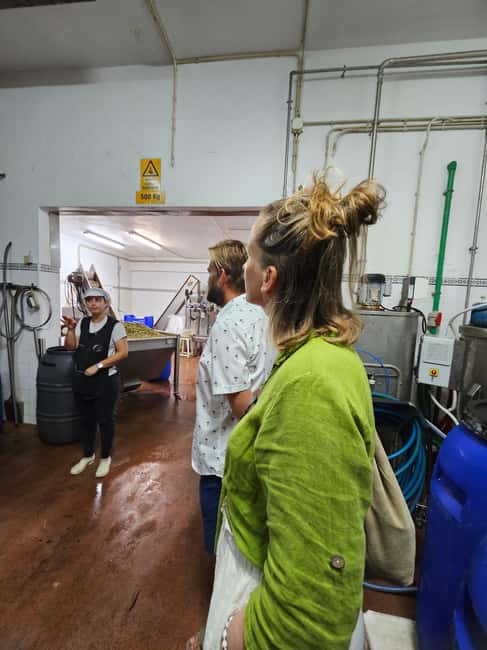
The live guide can lead the experience in Portuguese, English, Spanish, or French. English speakers should have a clear option, while multilingual groups may need to confirm the preferred language when reserving.
The guide’s role is important because the tuk-tuk route is short. A good explanation turns a passing church, square, or street into something you can place in Tavira’s story. One booking specifically noted that the guide explained the sights well and checked in to make sure the group understood.
That small check-in is worth noting. It suggests a more attentive style than simply speaking continuously from a script, though the guide for your departure is not named in the available information. The provider is Maria’s TukTuk, but you should not expect to choose a particular guide.
The five-person limit is especially helpful if you have questions. You can ask about the castle area, the churches, the salt pans, or the factory process without trying to catch a guide’s attention across a large group.
The practical side of the two-hour plan
The tour lasts two hours, with starting times based on availability. Since the city route and factory visit share that time, arrive ready to move from one part to the next rather than expecting long free periods.
The meeting point is the Portuguese-pattern painted tuk-tuk. That is a useful visual marker, but you should still check the exact meeting instructions when booking. The supplied information does not give a street address.
Cancellation is flexible: you can cancel up to 24 hours before the activity for a full refund. You can also reserve now and pay later, which helps if your Algarve plans are still shifting.
The tour is offered in a small group, not as a private booking for one party only. A maximum of five people keeps it intimate, but other participants may share the vehicle. If you want a completely private ride, the available details do not promise that option.
The vehicle is electric, but no accessibility information is provided. If you need specific assistance with boarding, seating, or mobility equipment, contact Maria’s TukTuk before booking rather than assuming the vehicle will meet your needs.
Who will enjoy this experience most
I would recommend this to first-time visitors who want a quick introduction to Tavira without committing to a longer excursion. It also suits couples, families, or small groups who like mixing sightseeing with food.
Food-focused visitors will appreciate the olive factory and the range of tasting items. The experience also works for people who want to learn about local production without spending half a day at a food estate.
It is less suitable if you want a long, slow tour of the churches, a full castle visit, or extensive time at the salt pans. The route touches those subjects, but it does not promise prolonged exploration of any one place.
It may also disappoint you if you expect a full meal. The tasting includes wine, cheese, marmalade, olives, and olive oil, but it is presented as a tasting rather than lunch.
Should you book the Tavira City and Olive Factory tour?
Book it if you want variety in a short time: Tavira’s streets, Republic Square, churches, castle area, part of the salt pans, and a local olive tasting all fit into two hours. The electric tuk-tuk, four guide-language choices, five-person limit, and included factory ticket make the format easy and focused.
Skip it if your priority is detailed monument visits or a long salt-pan outing. For most people seeking a compact first look at Tavira with a food experience attached, the $91 price is reasonable when you value convenience and a small group. The best reason to choose it is the balance: you see the city, then taste something made nearby.
FAQ
How long does the Tavira City and Olive Factory tour last?
The experience lasts two hours.
What places are included in the Tavira city tour?
The route includes parts of the salinas area and Tavira’s historic centre, including churches, Republic Square, historic streets, and the castle area.
What is included at the olive factory?
The olive factory visit includes a tour and tasting. The tasting features olives, olive oil, orange marmalade, cheese, and wine.
How many people can join the tour?
The tour is limited to five participants.
Which languages are available?
The live guide can conduct the tour in Portuguese, English, Spanish, or French.
Can I cancel the booking?
Yes. You can cancel up to 24 hours in advance for a full refund. You can also reserve now and pay later.
Freshly pressed around Portugal
- Historical Évora – PRIVATE Full Day Tour – Cork, Wine and Olive Oil Haven★ 5.0 · 3 reviews
- Tour with Wine and Olive Oil Tasting★ 4.6 · 8 reviews
- Porto: Tuk Tuk Tour with Olive Oil Tasting★ 4.4 · 5 reviews
- Douro Valley: Olive Oil & Wine Tour with Boat & Lunch★ 5.0 · 6 reviews
- Douro Valley: Private Tour & Guided Wine & Olive Oil Tasting★ 5.0 · 3 reviews
- Douro Valley: Private Lunch with Wine & Olive Oil Tasting★ 4.8 · 5 reviews
- Olive Oil Private Tour in Portugal★ 5.0 · 6 reviews
- Premium gastronomic mountain tour: Wine, olive oil, spirits, food★ 5.0 · 8 reviews
Olive Mill and Factory Tours, compared.
Crete: Quad Safari, Olive Mill with Tasting & Ghost Village
Read our review →
From Mendoza: 3 Wineries, Olive Oil Factory Tour & Tasting
Read our review →
Knossos-Zeus Cave -Old Traditional Villages-Olive Oil Factory
Read our review →
The Governor’s Olive Mill Tour with Olive Oil Tasting
Read our review →
Crete: Road-trip to Lasithi, Zeus Cave & Olive Mill Farm
Read our review →
Lassithi, Zeus Cave, Olive Mill Farm & Knossos Combo Tour
Read our review →
Zeus Cave, Lassithi Plateau, Olive Oil Factory, Kritza, Pottery
Read our review →
Crete: Zeus Cave, Lassithi Plateau, and Olive Factory Tour
Read our review →Other lists with this tasting on them