
Review · SEVILLE
Oleotourism and olive oil tasting in Seville – Private tour
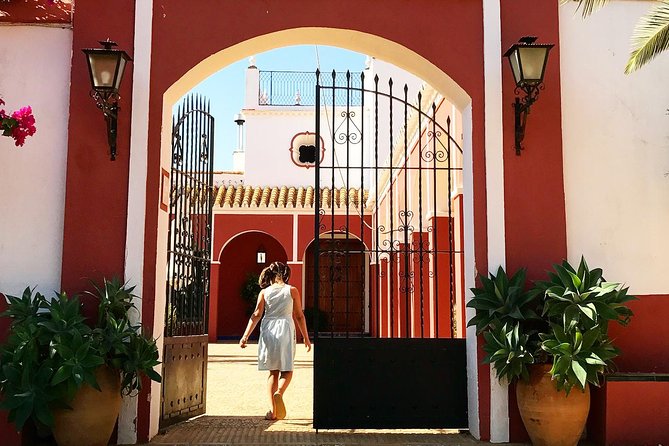
The most unusual part of this Seville outing is the chance to see olive oil as both an ancient craft and a modern food. At Hacienda Guzmán, a 17th-century mill with a 15-meter mahogany beam sits beside a modern oil facility, so you can compare old methods with today’s production.
I like the private format, since your group can focus on the parts of olive oil that interest you most. I also like the four-oil tasting, the food samples, and the small bottle you take home. The main consideration is the price: at $234.31 per person, this is a special-interest outing rather than a casual morning snack.
The guide and driver matter here. The guide explains the process, while Alfonso has been singled out for being an excellent, pleasant driver. The visit lasts about two to three hours, starts at 10:00 a.m., and returns you to the same central Seville meeting point.
Key points to know before booking
- A 500-year-old olive-oil story: Hernando Colón, Christopher Columbus’s son, once exported oil from this estate to the New World.
- An original 17th-century mill: You’ll see a large mahogany beam, part of a traditional process recreated at the hacienda.
- Four oils to compare: The tasting gives you a better sense of how olive oils differ in flavor and character.
- Food with an Andalusian angle: Snacks include salmorejo, avocado and anchovy toast, salmon and orange bagel, focaccia, and black rice.
- A genuinely private outing: Only your group takes part, with an English-speaking professional guide.
- A practical souvenir: A bottle of olive oil is included, giving you something useful to take home.
Why Hacienda Guzmán makes olive oil worth a morning
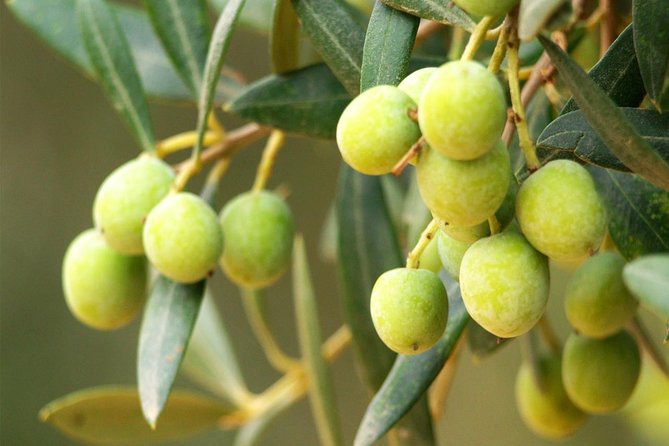
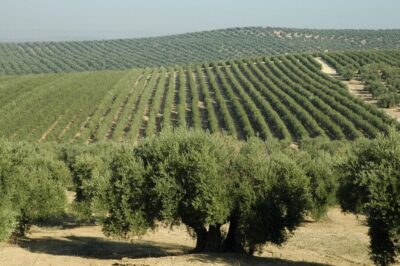
Seville sits in Andalusia, one of the world’s great olive-growing areas. Olive oil here is not just a cooking ingredient placed on the table without thought. It is part of farming, trade, family meals, local identity, and modern food culture.
Hacienda Guzmán gives that subject a physical setting. You are not only seated at a table tasting oil. You visit an estate where olive oil has been made and shipped for centuries, then see how the product is handled in a modern setting.
That contrast is the main reason to choose this experience. Many tastings explain flavor but skip the machinery and labor behind the bottle. Here, the older mill helps you picture how olives were pressed before modern equipment, while the current production side shows how selected oils are made today.
The property also has a strong connection to Spain’s early Atlantic trade. Hernando Colón, son of Christopher Columbus, exported oil made at the estate to the New World. That detail gives the visit a wider frame: this is not only a local farm story, but also part of the trade network that carried Andalusian products overseas.
Between the 16th and 19th centuries, the estate’s three towers housed beam mills. Hacienda Guzmán was then one of the largest oil mills of its time. You can expect the visit to connect these dates and structures to the practical business of producing oil, rather than treating the site as a pretty backdrop alone.
More Olive Oil Tours around Spain:
- Ronda: LA Almazara LA Organic, Olive Oil Museum and Tasting
★ 4.6 · 435 reviews - Guided tour and olive oil tasting in Alhaurin el Grande (Málaga)
★ 5.0 · 200 reviews - Guided Tasting Tour in 16th century House and Olive Oil Factory
★ 5.0 · 169 reviews
Entering the 17th-century beam mill
The historic mill is the most distinctive stop. Its 15-meter mahogany beam is a striking reminder of the strength and scale required for traditional olive-oil production.
The process is recreated inside the original mill, allowing you to see how older methods worked. I find this useful because olive oil can seem simple when it arrives in a bottle. The mill makes clear that the final pour began with heavy equipment, harvested olives, and a great deal of manual work.
Do not expect the old mill to function like a modern food factory. Its value is visual and historical. You are seeing a preserved method, not touring a fully old-fashioned production line. That distinction matters if you are hoping to watch every stage of the current harvest in action.
Still, the beam gives the visit a sense of place that a city-center tasting room cannot match. You are learning about oil in an estate built around the product, with the original machinery still part of the story.
From traditional pressing to modern production
Hacienda Guzmán also presents modern olive-oil production. The visit explains the change from traditional beam mills to current methods and places the estate’s select oils in that progression.
For you, this comparison can make the tasting more useful. You learn that the oil in your glass is shaped by more than the olive itself. Production methods, care, and the handling of the fruit all affect what eventually reaches the table.
The available details do not promise that you will see every modern machine operating during your visit. Conditions at an agricultural site can vary. You should think of this as a guided oil-tourism visit that combines production context, history, and tasting, not as a guaranteed behind-the-scenes factory shift.
That balance is sensible for a short two-hour stop. You get a clear introduction without spending half a day on technical machinery. If you have a strong interest in agricultural production, ask the guide to spend extra time on the modern process during your private visit.
Tasting four olive oils side by side
The tasting includes four varieties of olive oil. This is the part where you can put the historical explanation to practical use.
Tasting several oils in one sitting helps you notice differences that are easy to miss when you use only one bottle at home. You might find that one seems gentler, another more pronounced, or that certain oils work better with bread, vegetables, fish, or rice. The supplied information does not identify the four varieties or promise a formal technical tasting lesson, so you should not expect a fixed vocabulary or a professional certification session.
Instead, treat the tasting as a guided introduction. Pay attention to aroma, texture, bitterness, and the peppery finish that can appear in olive oil. If you are new to tasting, the private setting makes it easier to ask simple questions without feeling rushed.
The included gift bottle adds value. It gives you a way to continue comparing flavors after the visit, and it is more useful than a souvenir that simply sits on a shelf. Keep in mind that the bottle is a gift item, not a substitute for buying several different oils if you want to conduct a larger tasting at home.
Same olive country, a different way to taste it:
- Visit of the olive grove, olive oil tasting and snack
★ 4.9 · 111 reviews - Visit Oil Mill Museum and Olive Oil Tasting in Ronda
★ 4.5 · 105 reviews - Private Tasting of Olive Oil in Córdoba
★ 5.0 · 93 reviews - Olive Oil tasting breakfast & Tour in Cordoba
★ 4.5 · 84 reviews
Andalusian snacks, from salmorejo to black rice
Food is part of this experience, though the meal should not be confused with a full lunch. Snacks are included, while lunch is listed separately as not included.
The sample menu gives the food a broad, modern Andalusian feel. You might receive avocado and anchovy toast, salmon and orange bagel, avocado and sturgeon focaccia, salmorejo, and black rice.
Salmorejo is particularly useful for placing the tasting in local food culture. This cold Andalusian soup is closely linked with Córdoba and is usually made with tomato, bread, olive oil, garlic, and seasoning. Here it is presented as Salmorejo Basilippo, adding a named oil pairing to a familiar regional dish.
The other items are lighter and more contemporary. Avocado and anchovy toast combines a creamy fruit with a salty fish. The salmon and orange bagel brings citrus to the mix, while the focaccia uses avocado and sturgeon.
The sample main dish is black rice with tender squid, fish stock, and homemade garlic mayonnaise made with Basilippo extra virgin olive oil. That sounds more substantial than the small starters, but the overall offering is still best understood as a tasting menu or generous snack selection rather than a guaranteed restaurant lunch.
Because the menu is described as a sample, exact dishes may vary. If you need a large meal, plan to eat before or after the tour. The activity does not include lunch, and the short duration leaves room to dine elsewhere in Seville.
What the private format changes
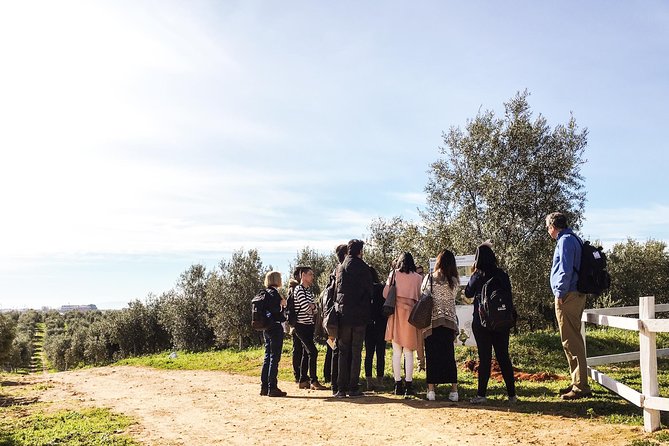
This is not a large coach outing. Only your group participates, which gives the experience a more personal pace.
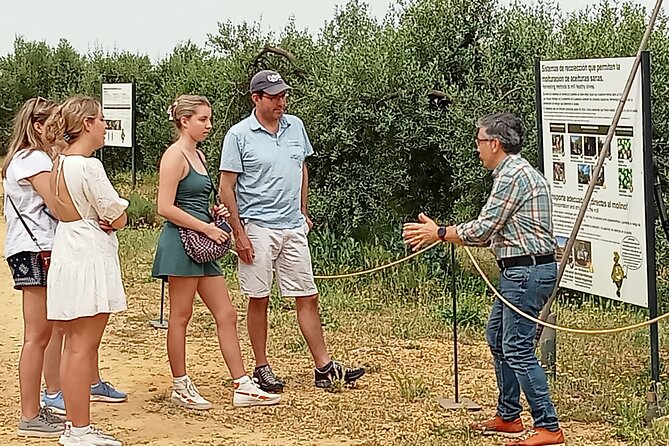
A private tour is especially useful for a subject like olive oil. You can ask why one oil tastes stronger, how the old beam worked, or how the modern process differs from the historic one. You are not limited to the questions that suit a mixed group of strangers.
The tradeoff is cost. At $234.31 per person, the private arrangement pushes the price well above a simple shared tasting. The fee also covers the air-conditioned vehicle, professional guide, four oil samples, snacks, and the gift bottle, so the comparison should not be made against a basic tasting alone.
I think the price makes the most sense for a small group that values door-to-door transport and a private guide. It is less convincing for a solo visitor who only wants to sample local oil cheaply. If you are splitting the cost among several people, the personal format becomes easier to justify.
The activity is offered in English. Confirmation arrives at booking, and the meeting area is near public transportation. Most people can participate according to the available information, but specific mobility details about the hacienda are not provided, so ask before booking if you have access concerns.
Meeting at 10:00 a.m. in central Seville
You meet at Sevilla Moving, Alojamientos y experiencias, at C. Luis Montoto, 19, Local Bajo, 41003 Sevilla. The start time is 10:00 a.m.
The location is useful if you are staying in Seville and want a morning activity without arranging a separate pickup from a distant hotel. The vehicle is air-conditioned, which matters during warm Andalusian weather, especially when you are leaving the city for a rural estate.
The tour ends back at the same meeting point. You should allow two to three hours for the complete experience, even though the Hacienda Guzmán visit itself is listed at about two hours. That gives you a sensible late-morning finish and leaves the afternoon open for Seville’s cathedral, neighborhoods, markets, or lunch.
The exact travel time to the hacienda is not stated, so do not plan a tight appointment immediately after the tour. Keep a little breathing room, as you would with any countryside visit that includes transport.
Who will get the most from this experience
I would choose this tour if you have already seen Seville’s major monuments and want a food-focused morning outside the standard city route. It suits couples, families, and small groups who prefer a private guide to a scheduled group visit.
It also works well for people who cook. The four-oil tasting gives you ideas for using different oils, while the food samples show how oil can shape familiar dishes rather than simply coat a piece of bread.
History fans have a good reason to come, too. The Columbus connection, the old beam mill, and the estate’s role in overseas trade add substance to what could otherwise be a short tasting.
This may not be the best choice if your priority is a full meal, a long farm walk, or a cheap food activity. The supplied details focus on the mill, the production story, the tasting, and the snacks. They do not promise extensive time among olive trees, a harvest activity, or a full lunch.
The tour also requires good weather. If poor weather causes cancellation, you are offered another date or a full refund. The provider can also cancel if the minimum number of participants is not met, with the choice of another date, another experience, or a full refund.
What the praise tells you about the service
The strongest positive feedback focuses on the people running the outing. The guide is described as excellent, and Alfonso, the driver, is specifically praised for being a very good person and an excellent driver.
That detail is worth taking seriously. A countryside food visit depends on more than the site itself. Clear explanations, a calm drive, and a friendly tone can make the difference between a pleasant morning and a stiff, rushed one.
The experience has a perfect rating from seven reviews, a small sample that should be treated with some restraint. Still, the consistent emphasis on the guide, the beautiful setting, and the explanation of the oil process points to the service as a major strength.
Tips are not included, so bring that cost into your planning. The experience is non-refundable and cannot be changed after booking for personal reasons. Only the stated weather or minimum-participant exceptions offer a refund or alternate arrangement.
Should you book this Hacienda Guzmán visit?
Book it if you want a private, English-language introduction to Andalusian olive oil with history, transport, food, and a four-oil tasting in one compact outing. The old beam mill and the modern production comparison give the visit more substance than a simple tasting at a Seville shop.
At $234.31 per person, I would reserve it for a special morning, a small group, or anyone with a real interest in food and agricultural traditions. If you mainly want a full lunch or a low-cost tasting, spend your money elsewhere.
For the best fit, leave room after the 10:00 a.m. start, ask questions about the four oils, and remember that the included food is a snack experience rather than a guaranteed lunch. If those limits suit you, Hacienda Guzmán offers a focused look at one of Andalusia’s defining products, with a useful bottle to carry home.
FAQ
Where does the tour begin?
It begins at Sevilla Moving, Alojamientos y experiencias, C. Luis Montoto, 19, Local Bajo, 41003 Sevilla, Spain.
What time does the tour start?
The scheduled start time is 10:00 a.m.
How long does the experience last?
The tour lasts approximately two to three hours. The Hacienda Guzmán visit itself is listed at two hours.
Where does the tour end?
The activity ends back at the original meeting point in Seville.
Is the tour private?
Yes. Only your group participates in the private tour or activity.
Is the experience offered in English?
Yes. English is the available tour language.
What is included in the price?
The price includes snacks, an air-conditioned vehicle, a professional guide, a tasting of four olive-oil varieties, and a gift bottle of oil.
Is lunch included?
No. Lunch is not included, although snacks and the listed sample food items are part of the experience.
What happens if bad weather cancels the tour?
If poor weather causes cancellation, you are offered a different date or a full refund. A full refund or alternative arrangement is also offered if the minimum number of participants is not met.
Freshly pressed around Spain
- Paella, Olive Oil, Wine & Relax in Rural Estate outside Madrid★ 5.0 · 2 reviews
- Olive Oil Tour and Tasting in Málaga★ 5.0 · 2 reviews
- Discover the varieties of wines, olive oil and food on Mallorca★ 5.0 · 8 reviews
- Olive Oil Excursion to an olive mill in the Lecrín Valley★ 3.5 · 3 reviews
- Authentic Olive Oil Tasting in Cordoba, Spain★ 4.0 · 2 reviews
- Cordoba Olive Oil mill, Wine, Passion★ 4.5 · 8 reviews
- Full day in Cordoba between Vineyards and Olive Trees with a Convertible Car★ 5.0 · 2 reviews
- Visit olive grove centenary with oil tasting course★ 5.0 · 11 reviews
Seville Olive Oil Tours, compared.
Olive Oil Tasting and Culinary Day Trip in Carmona
Read our review →Other lists with this tasting on them