
Review · CROATIA
Kastela: Wine & Olive Tasting Tour w/Delicacies & Live Music
The most memorable part of this Kaštela experience is that it lets you see the whole farm-to-table chain in one visit. You walk among vineyards, olive trees, almond trees, and wild herbs, then step into the cellar to taste the results. I especially like the chance to fill, cork, and label a bottle of wine straight from the fermentation tank, and the relaxed meal of Pag cheese, prosciutto, peka bread, figs, almonds, and local wine.
I also like the tiny group size, limited to six people, and Kathrin’s personal approach. She leads the tour in English, German, French, or Croatian and plays traditional Dalmatian songs on the accordion in folk dress. The main consideration is the price, $173 per person, which is high for a three-and-a-half-hour outing. It makes the most sense if you want a personal food and wine experience, not simply a quick tasting.
Key Points
- Fill your own wine bottle: Draw wine from a fermentation tank, then fill, cork, and label the bottle yourself.
- Walk a working organic farm: See vineyards, olive trees, almond trees, wild herbs, and seasonal fruit.
- Taste a full Dalmatian spread: Try Pag cheese, prosciutto, peka bread, salted fish, olives, peppers, tomatoes, figs, almonds, and wine.
- Meet Kathrin at the source: Her enthusiasm and hands-on hosting are central to the experience.
- Enjoy music with the meal: Traditional Dalmatian songs are performed on accordion beneath the farm pergola.
- Keep the group personal: With no more than six participants, the tour feels more like a hosted visit than a bus excursion.
A Farm Visit With More Than a Wine Tasting
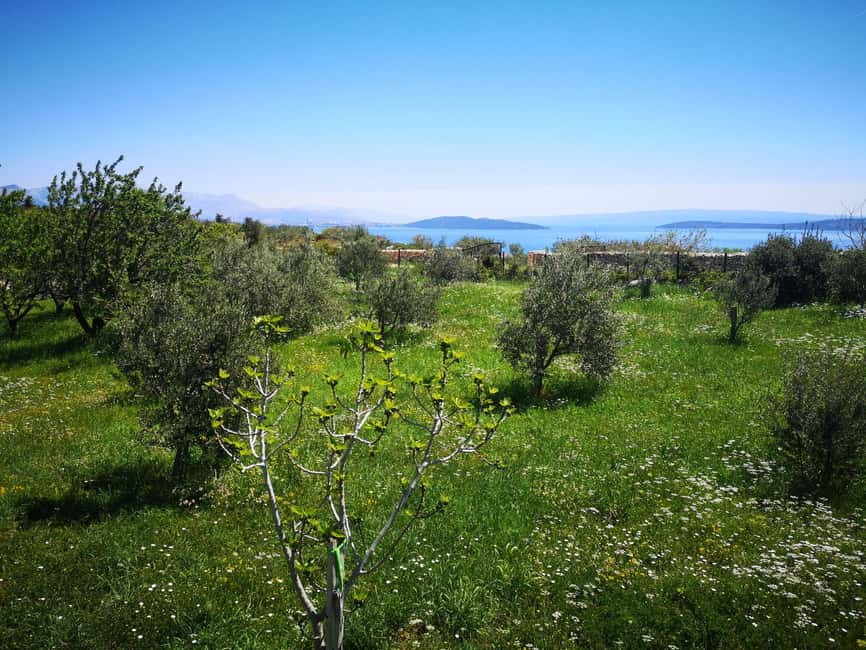
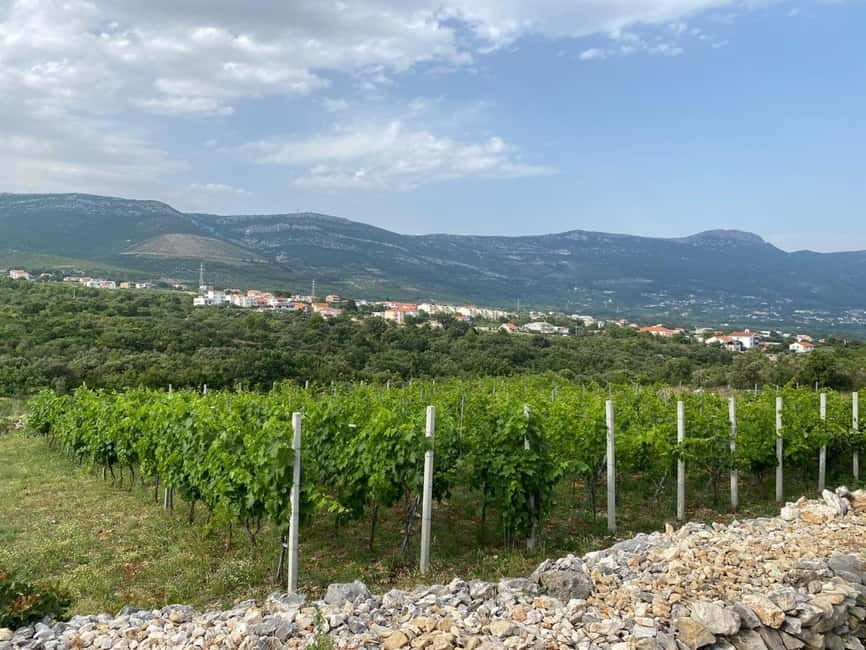
Family Farm Strizic sits at Put Bijaća 38 in Kaštel Novi, between Split and Trogir. The setting gives you views toward Kaštela Bay and Split, but the real attraction is closer at hand: vines, olive trees, almond trees, herbs, and a small family wine cellar.
This is not a tasting room where you stand at a counter and move on after three pours. The experience explains how the farm works across the year, from spring bloom to ripening fruit and late-season harvest. You learn how the family cares for the trees and vines, how grapes become wine, and how olives become extra virgin olive oil.
I find that useful because wine and olive oil tastings can sometimes feel detached from production. Here, you get the growing conditions, the seasonal work, and the cellar process in one visit. You also get to taste products made on the farm or sourced from nearby Dalmatian producers.
The tour lasts about 210 minutes, or three and a half hours. That is enough time for a proper farm walk, cellar visit, hands-on wine activity, and a leisurely meal. Wear comfortable shoes. The walk takes place outdoors and includes orchard and vineyard paths, so weather-appropriate clothing matters too.
More Olive Oil and Wine Tastings in Croatia
- Split: Krka Waterfalls With Boat Cruise, Wine and Olive Oil
★ 4.3 · 1,507 reviews - Wine, food and olive oil by PhD student
★ 5.0 · 111 reviews - Hvar: Island tour with Wine and Olive Oil Tasting
★ 4.9 · 77 reviews
Walking Through Bijaći’s Orchards and Vines
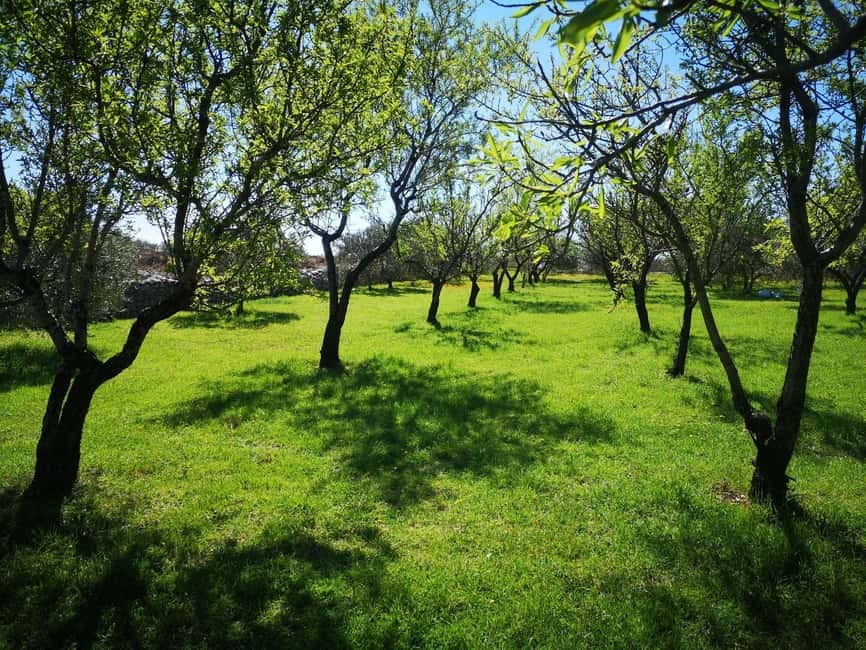
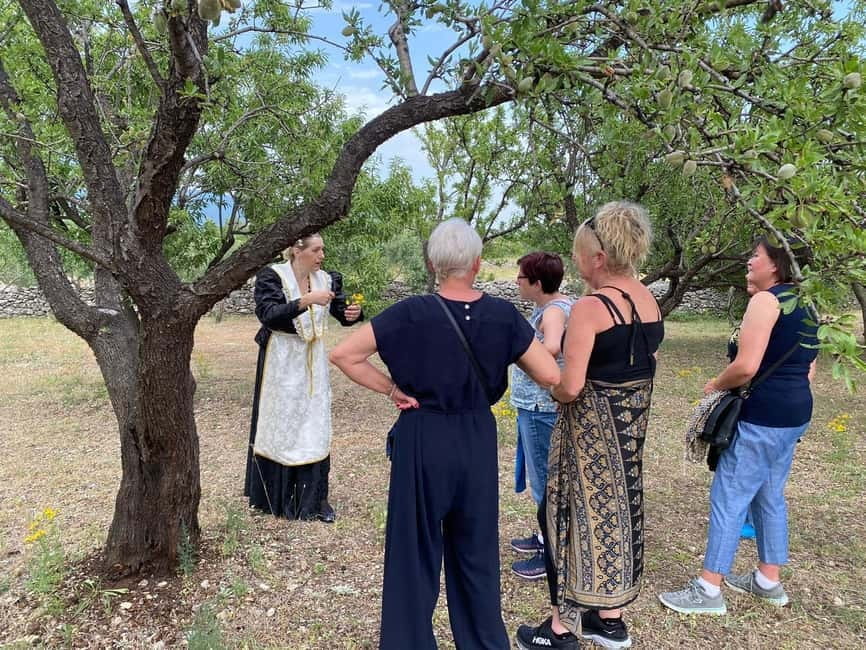
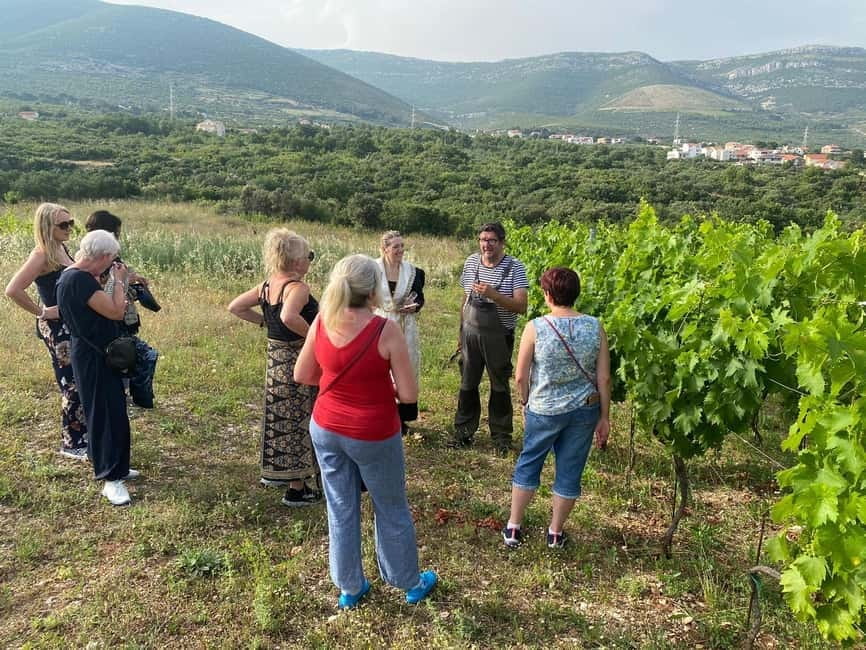
The visit begins with an agricultural tour through the olive and almond orchard and the vineyards. Kathrin explains what happens during the growing year, including how the farm tends its trees and vines from early spring through late fall.
Depending on the season, you may see almond or olive blossoms, ripening fruit, or a more mature harvest stage. You will also encounter the scents and uses of local wild plants, including thyme, rosemary, oregano, dill, bay leaves, St. John’s wort, wild asparagus, and other wildflowers.
One appealing detail is the chance to identify and pick wild herbs during the walk. This gives the farm visit a stronger sense of place than a standard wine tasting. The herbs are not just decoration. They connect the food on the table with the plants growing around the property.
The farm is described as 100 percent organic. The tour uses that setting to explain natural production practices rather than presenting organic farming as a slogan. You learn how olives are turned into extra virgin oil and how grapes move from the vineyard to the cellar.
The land around Bijaći also has historical importance. Kathrin explains the area as a cradle of Croatian history, dating back to the seventh century. That portion is brief compared with the food and wine, but it adds useful context. You are not visiting an isolated rural property with no connection to the region. You are in an old part of Dalmatia with a long agricultural tradition.
The walking portion is best for anyone who wants more than a seated tasting. If you have limited mobility, ask before booking because the experience includes time outdoors among orchards and vineyards. The available information does not specify a fully accessible route.
Inside the Wine Cellar
After the farm walk, you visit the wine cellar. Here Kathrin explains the basic wine-making process and how schnapps is distilled. You can taste a selection of homemade schnapps and liquors before moving on to the wine.
The cellar visit is valuable because it shows the less polished side of wine production. You are not only tasting finished bottles. You are hearing about fermentation and seeing where the wine develops before it reaches the table.
The hands-on highlight is filling, corking, and labeling a bottle directly from the fermentation tanks. This is a small activity, but it gives you a better sense of the work involved. You leave with a bottle that you helped prepare, rather than just a souvenir purchased from a shelf.
The wine is described as award-winning, and the tasting includes both white and red wine. The information provided does not list individual grape varieties or vintages, so do not book this expecting a technical regional wine seminar focused on grape chemistry. This is a friendly, practical introduction to the farm’s wines and cellar methods.
The schnapps and liquors add variety. They also help explain another part of local home production, where fruit and agricultural products are used in different ways. If you prefer wine only, you can still focus on the wine tasting, but the spirits are part of the cellar experience.
Lunch Under the Pergola
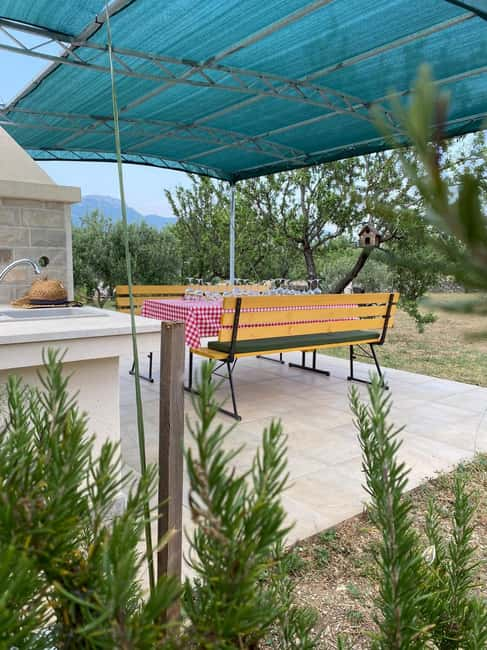
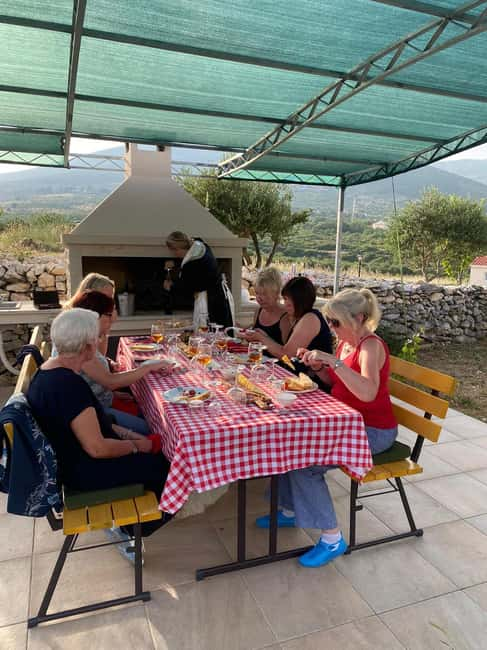
The meal takes place outside beneath a pergola beside the olive and almond orchards. The setting is quiet and rural, with views toward Kaštela Bay and Split. This is the point where the farm walk and cellar lesson come together.
The food is served as a spread of Dalmatian delicacies rather than a formal multi-course meal. You can expect:
- Dried prosciutto
- Aged cheese from the island of Pag
- Peka bread baked under a wood fire
- Locally sea-salted fish fillets
- Traditional black olives
- Cheese-filled small bell peppers
- Cherry tomatoes
- Extra virgin olive oil
- Wild herb-infused olive oil
- Organic dried figs
- Hand-picked dried almonds coated with sugar
- White and red wine
- Water
The Pag cheese is one of the most distinctive items. Pag is known for sheep’s cheese, and its salty, firm character works well with prosciutto, bread, olives, and wine. The sea-salted fish and black olives bring in the direct, briny flavors that suit the Dalmatian coast.
Peka bread is another worthwhile detail. Peka refers to a traditional cooking method using a covered dish or bell-shaped lid and hot embers. Here, the bread is baked under a wood fire, giving the table a stronger connection to local cooking than ordinary sliced bread.
The oils deserve attention. You taste the farm’s extra virgin olive oil and versions infused with wild herbs. Try them first on their own if you can, then with the bread. The comparison helps you notice how the base oil changes when herbs are added.
The dried figs and sugar-coated almonds finish the meal on a sweet note. They also show how the farm uses its own fruit and nuts beyond the fresh season. You may purchase the organic products on site if you want to take some home.
Same olive country, a different way to taste it:
- Private Krka Waterfalls tour with 30min Boat Cruse
★ 4.0 · 458 reviews - Split: Klis Fortress GOT and Olive Museum Entry Tickets
★ 4.6 · 283 reviews - Split: Blue Line Sightseeing to Trogir, Klis & Olive Museum
★ 4.3 · 197 reviews - Visit Klis fortress GOT & Olive museum Klis
★ 4.5 · 77 reviews
Accordion Music and a Personal Host
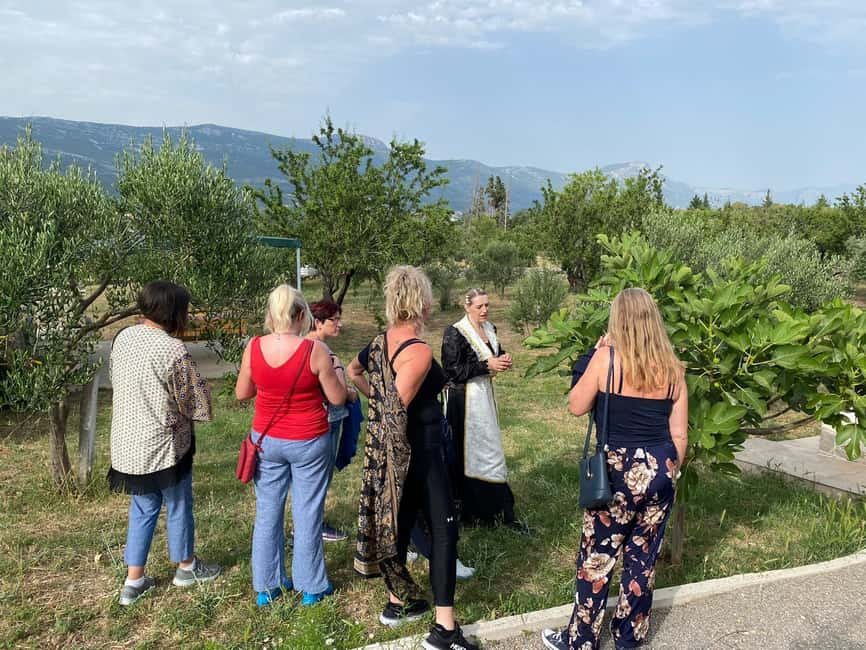
Kathrin is the named host, and the experience depends heavily on her personal involvement. She explains the farm, leads the walk, presents the cellar, serves the tasting, and performs traditional Dalmatian songs on the accordion.
She also wears traditional Dalmatian folklore dress during the meal. That can sound theatrical in a generic setting, but here it is paired with local food, farm products, and regional songs. The result is closer to a hosted cultural visit than background entertainment at a restaurant.
The small group limit matters. With up to six participants, you can ask questions about the vines, olive harvest, herbs, wine, or family production without trying to catch a guide’s attention across a large group. The German and English feedback about Kathrin consistently points to her warmth, passion, and personal attention. Those qualities are not an extra feature here. They are a major part of what you are paying for.
The music may not suit everyone. If you want a quiet, serious tasting with no performance, the accordion and folk dress could feel like more than you need. If you want food, wine, and a strong sense of Dalmatian character, they add atmosphere and help the meal feel special.
What the $173 Price Really Covers
At $173 per person, this is not a budget wine stop. You are paying for about three and a half hours, a small group, transport from selected pickup points, the farm walk, cellar access, spirits, wine, a substantial food spread, live music, and the bottle-filling activity.
The price also includes something harder to measure: direct time with the owner and host. A large commercial tasting can offer more pours for less money, but it will not usually include an orchard walk, local history, a personal explanation of farming, and a bottle prepared from the tank.
I would consider the price fair for a special occasion or for visitors who value food culture and personal hosting. It is less convincing if your only goal is to sample Croatian wine cheaply. You also need to remember that farm products purchased on site cost extra.
The included pickup helps if you are staying in Trogir or arriving through Split Airport. From Trogir, pickup is at Bistro Baketina on Trogir City Beach, by the T4 parking lot. It is about a five-minute walk along the seafront from the Trogir Bus Terminal, followed by a roughly ten-minute drive to the estate.
At Split Airport, the meeting point is the bus station on the main road. The directions are specific because the airport area has several roads and transfer points. If you have your own car, you can meet directly at Put Bijaća 38 in Kaštel Novi. The estate also provides detailed driving directions, which is helpful in this semi-rural area.
Who Will Like This Tour Most
I would choose this experience if you want a small, personal introduction to Dalmatian food and farming. It suits couples, friends, and independent visitors who enjoy asking questions and spending time with a host rather than rushing through a list of sights.
It is also a good choice for anyone staying in Split, Trogir, or near the airport who wants a rural outing without committing to a full-day trip. The pickup options keep the logistics simple, and the three-and-a-half-hour length leaves room for other plans.
Food-focused visitors will get the most from it. The tasting is not limited to cheese and crackers. You get fish, bread, olives, oils, peppers, tomatoes, dried fruit, almonds, and wine, with enough variety to make the meal part of the main experience.
Wine enthusiasts who want detailed technical information should check expectations. The tour explains wine-making and fermentation, but the supplied details do not promise a formal study of grape varieties, soil, or vintages.
The activity is not suitable for children under 18, and it is listed as unsuitable for people over 95. Comfortable walking shoes are important for everyone. The route includes outdoor farm areas, so weather can affect your comfort.
Should You Book the Family Farm Strizic Experience?
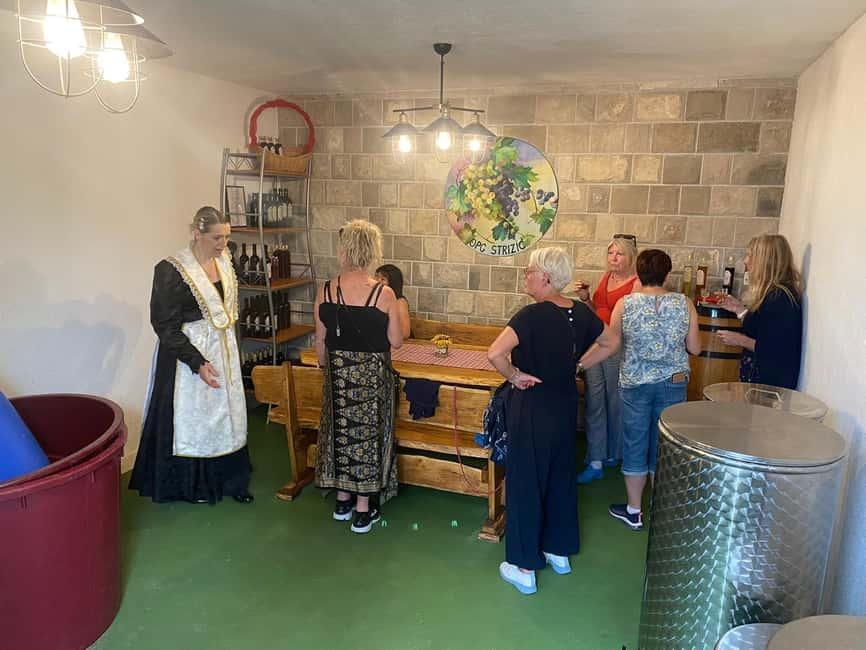
Book it if you want to connect Dalmatian wine and olive oil with the land where they are made. The orchard walk, cellar visit, bottle-filling activity, generous local spread, and accordion performance create a full experience rather than a quick tasting.
I would skip it if $173 feels too high for a half-day activity or if you prefer a quiet, strictly technical wine tasting. For most visitors who value personal hosting, local food, and a small group, the price is easier to justify. Kathrin’s energy is a major reason this works, and the excellent feedback about her warmth and passion matches the structure of the visit.
The best reason to book is simple: you get to see, taste, and take part in the process. You do not just drink the wine. You walk among the trees and vines, hear how the products are made, prepare a bottle, and sit down to enjoy the food with the person who runs the farm.
FAQ
How long does the wine and olive tasting tour last?
The experience lasts 210 minutes, or about three hours and 30 minutes.
Where does the tour take place?
It takes place at Family Farm Strizic, Put Bijaća 38, 21217 Kaštel Novi, Croatia.
Can I be picked up in Trogir?
Yes. Pickup is at Bistro Baketina on Trogir City Beach near the T4 parking lot. The meeting point is about a five-minute walk along the seaside from Trogir Bus Terminal.
Is pickup available from Split Airport?
Yes. Pickup is at the airport bus station on the main road in the direction of Split.
Can I meet the group directly at the estate?
Yes. Visitors with their own car can meet at the estate in Kaštel Novi.
How many people are in the group?
The group is limited to six participants.
Which languages are available?
The tour is offered in English, German, French, and Croatian.
What food is included?
The tasting includes dried prosciutto, aged Pag cheese, peka bread, sea-salted fish fillets, black olives, cheese-filled small bell peppers, cherry tomatoes, olive oils, dried figs, sugar-coated almonds, wine, and water.
Do I get to take part in making wine?
Yes. You can fill, cork, and label a bottle of wine directly from the fermentation tanks.
Can I buy farm products during the visit?
Yes. The organic products available at the farm can be purchased on site.
More Concerts around Croatia
- Classical guitar concert in a historic olive press
★ 5.0 · 23 reviews
Freshly pressed around Croatia
- Makarska Tuk Tuk Tour Olive Grove, Scenic Views and Tastings★ 5.0 · 3 reviews
- Small-Group Olive Oil Tour in Cres with Tasting★ 5.0 · 2 reviews
- Private Hvar Island Tour and Olive Oil Tasting★ 4.5 · 10 reviews
- Poreč: Olive Grove Walk and Tasting with Local Products★ 5.0 · 5 reviews
- From Biograd: Wine and Olive Oil Tasting in Ražnjevića Dvori★ 4.7 · 3 reviews
- Private Split & Klis Fortress Tour, Olive Museum & Port Pickup★ 4.5 · 13 reviews
- Istrian hill top cities tour with truffle and olive oil tasting★ 5.0 · 18 reviews
- Šibenik or Zadar: Krka falls, olive mill, oil & wine tasting★ 4.8 · 17 reviews
Olive Oil and Wine Tastings, compared.
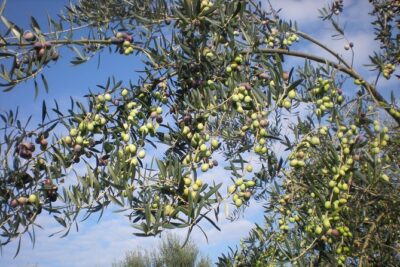
Sorrento Farm and Food Experience including Olive Oil, Limoncello, Wine tasting
Read our review →
From Mendoza: 3 Wineries, Olive Oil Factory Tour & Tasting
Read our review →
From Chania: Olive Oil, Wine, Cheese & Honey Tasting Tour
Read our review →
From Chania: Wine and Olive Oil Tasting Tour with Snacks
Read our review →
Athens: Acropolis Wine Tasting with Cheese and Olives
Read our review →
Sorrento: Lemon, Olive Oil and Wine Tasting Tour with Lunch
Read our review →
Alghero: Wine and Olive Oil Tasting at a Local Farm
Read our review →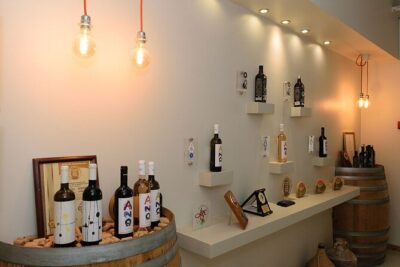
Other lists with this tasting on them