
Review · ITALY
Olive Mill Tour with Oil and Food Tasting in Chianciano
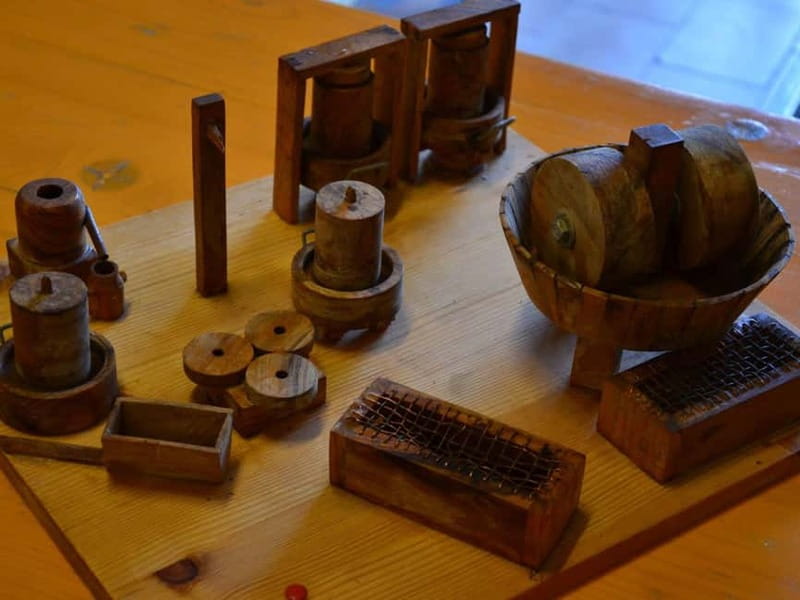
The most memorable part of this Chianciano experience is the old 16th-century wooden olive press, displayed alongside antique mill artifacts. It gives the tasting some context: you are not just dipping bread into oil, you are seeing how Tuscan families worked with olives long before modern machinery.
I like the clear lesson on how to taste extra virgin olive oil, and I like the generous pairing of oil with pecorino, salame, truffle sauce, bruschetta, and Chianti. The main thing to consider is the short one-hour schedule. Most of the visit should feel relaxed, but one French visitor found the tour rushed, so this may not suit you if you want a long technical visit.
Key points
- A working Tuscan mill near Siena: Frantoio La Macina Elena Bartolomei is in Chianciano Terme, about 55 minutes by car from Siena.
- A rare historic object: See a 16th-century wooden olive press and other antique artifacts inside the mill.
- A real tasting lesson: Learn about aroma, flavor, texture, sensory analysis, and the right conditions for tasting oil.
- A generous food table: Sample pecorino, Tuscan salame, two bruschetta toppings, local olive oil, and Chianti.
- Best during harvest season: From early October to mid-December, you may see olives being processed.
- A useful food stop: The mill shop sells olive oil, cheese, wine, and preserves for gifts or your Tuscan kitchen.
At Frantoio La Macina Elena Bartolomei
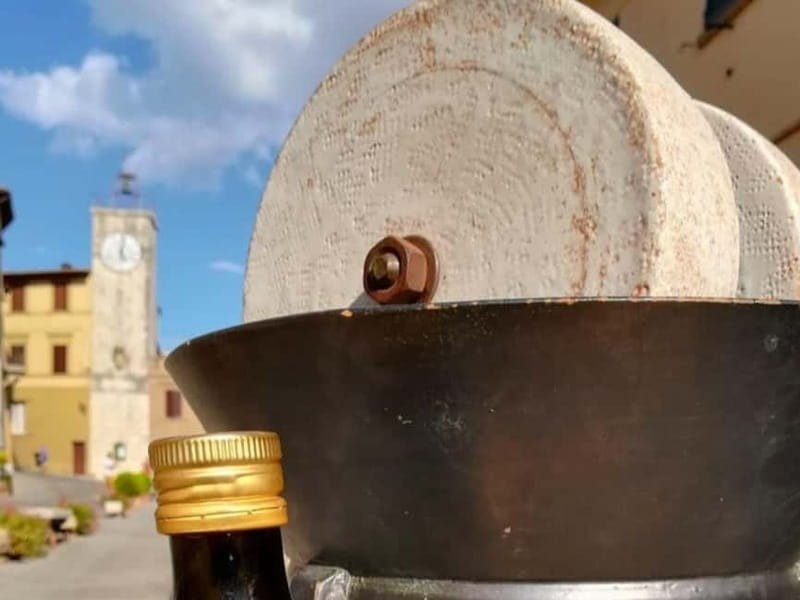
The mill is in Chianciano Terme, a thermal town in southern Tuscany. From Siena, the drive takes about 55 minutes, so this is easiest by car or as part of a day exploring the Val di Chiana and nearby wine towns.
You meet at Frantoio La Macina Elena Bartolomei and return there after the tasting. Transportation is not included, so plan your own way to the mill. The supplied information does not give a group size, parking details, or a full address, so check the meeting instructions carefully before setting out.
The setting matters here. This is a family-owned mill with a working connection to local food production, not simply a shop built around a tasting counter. The family story and old equipment help you see olive oil as part of daily Tuscan life rather than as a luxury bottle on a supermarket shelf.
The tour is offered in English and Italian. For other languages, a multilingual explanatory video is available. That makes the experience more useful for mixed-language groups, though the live guide remains limited to English and Italian.
More Olive Mill and Factory Tours in Italy
- Bardolino: Lake Garda Oil Mill Tour with Olive Oil Tasting
★ 4.9 · 205 reviews - Lecce to Galatina E-Bike: Olive Mill & Wine Tasting + Taxi back
★ 5.0 · 54 reviews - Olive Oil Tour Visit to the oil mill and olive oil tasting
★ 5.0 · 53 reviews
The 20-minute mill tour
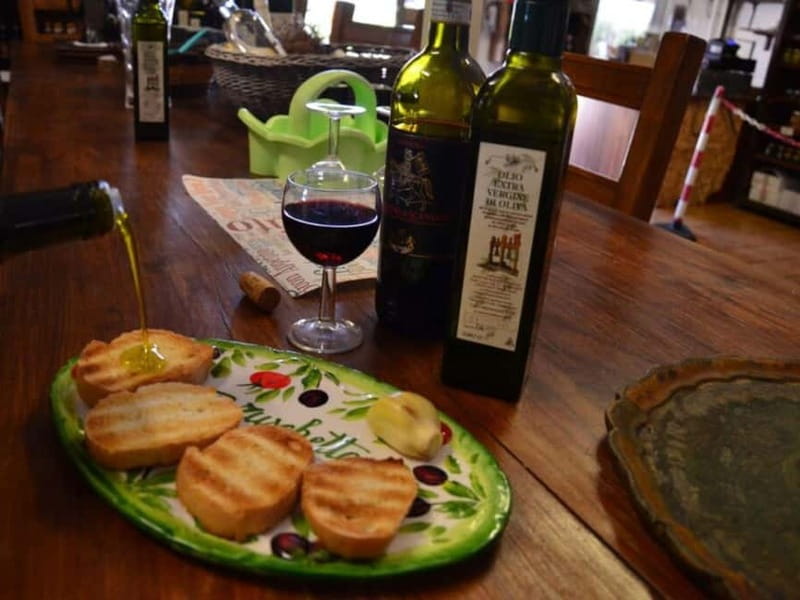
The guided portion lasts about 20 minutes. That is enough time for an introduction to the olive oil process, but it is not a long factory tour with every stage examined in detail.
You learn how olives move from harvest to finished oil. The explanation covers production from the picking of the fruit through processing and storage. This basic sequence is worth understanding because extra virgin olive oil is not made by adding flavor to a neutral oil. Its taste comes from the olive varieties, the condition of the fruit, and the way the fruit is handled.
During harvest, from early October through mid-December, you may be able to see olives being processed. That is the best time to visit if you want the mill to feel active and connected to the season. Outside those months, the machinery and explanations still provide a useful look at production, but you should not expect to see the harvest in action.
The mill’s oil uses a blend of several varieties: moraiolo, leccino, pendolino, maurino, leccio del corno, frantoio, and correggiolo. You do not need to memorize those names, but the mix helps explain why the oil has its own character. Different olive varieties can bring different levels of fruitiness, bitterness, and peppery heat.
The historic press is the visual highlight. The 16th-century wooden equipment and antique objects show how much labor olive production once required. They also make a useful contrast with the modern production process explained during the tour.
One important expectation check: the visit is short. A positive experience can feel friendly and personal, but one negative account described the family as rushed and the visit as lasting roughly 20 minutes before the food was served. If you want a detailed engineering tour, this is probably too brief. If you want a compact introduction before tasting local food, the timing is more suitable.
Learning to taste extra virgin olive oil
The oil tasting is not limited to spreading oil on bread. A small lesson is available on request, and it covers the parts of the oil, its organoleptic qualities, sensory analysis, and guided tasting methods.
That lesson can change how you shop for oil. You learn to pay attention to smell, flavor, mouthfeel, bitterness, and the peppery sensation that can appear at the back of the throat. You also learn that tasting conditions matter, including the way the oil is presented and the order in which oils are sampled.
Ask for the tasting lesson when you arrive if you want more than a casual food sample. The provided schedule does not say how long the lesson lasts or whether it is automatic for every group, so it is sensible to request it clearly.
The main oil is a blend of local varieties. The tasting gives you a chance to notice the oil on its own and then with food. That comparison is useful. Bread provides a simple base, while cheese, salame, and truffle sauce show how the oil behaves alongside stronger flavors.
A positive experience depends partly on the guide. Guido is one guide specifically praised for making the mill and tasting interesting. Another Italian visitor described the young guide as passionate and said the price matched the quality of the products. Guide assignments can change, but these comments point to the value of asking questions rather than treating the visit as a quick sample.
The 40-minute Tuscan food tasting
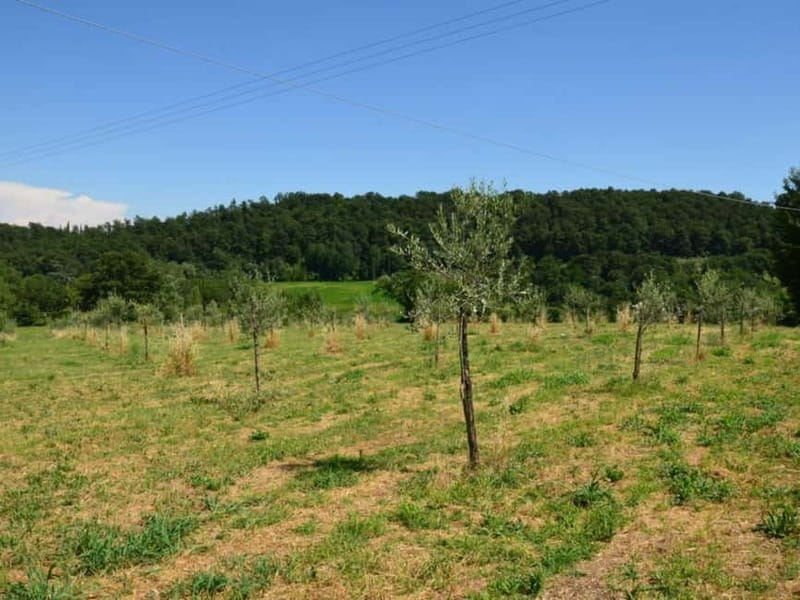
The food portion takes about 40 minutes and happens in a spacious tasting room. This is where the $35 price starts to make more sense. You are not receiving only a spoonful of oil. The tasting includes a small spread of regional food and a glass of Chianti.
You can expect:
- Extra virgin olive oil made from a blend of Tuscan olive varieties
- Tuscan salame
- Tuscan Pecorino cheese
- Bruschetta with green olive paste
- Bruschetta with truffle sauce
- Chianti red wine
The combination works because each item shows the oil in a different setting. The bruschetta lets you focus on the oil and olive flavor. Pecorino brings salt and firmness. Salame adds spice and richness. Truffle sauce changes the aroma entirely, while Chianti gives you a local drink pairing rather than a generic beverage.
One especially useful suggestion is to try chestnut honey with the pecorino if it is available during your visit. That pairing was singled out as a favorite by one recent participant. It is not included in the official tasting list, so treat it as a possible extra rather than a guaranteed part of the menu.
The food supply appears to be generous for the format. One account specifically noted plenty of cheese, sausage, and wine alongside the oil. Another described the cheeses, cured meats, and wines as good. At the same time, the negative account described receiving two pieces of toast with two different oils. That difference may reflect expectations, timing, or how the tasting was conducted, but it is a useful warning: this is a one-hour tasting, not a full Tuscan lunch.
The Chianti is part of the charm, but remember that you are responsible for getting to and from the mill. If you are driving, keep the wine sample in mind. The experience information does not state the serving size or provide transportation.
Same olive country, a different way to taste it:
- Sorrento Farm and Food Experience including Olive Oil, Limoncello, Wine tasting
★ 5.0 · 2,524 reviews - Olive oil tasting in Sorrento
★ 5.0 · 434 reviews - Sorrento: Lemon, Olive Oil and Wine Tasting Tour with Lunch
★ 5.0 · 300 reviews - Alghero: Wine and Olive Oil Tasting at a Local Farm
★ 4.8 · 294 reviews
Why the old press matters
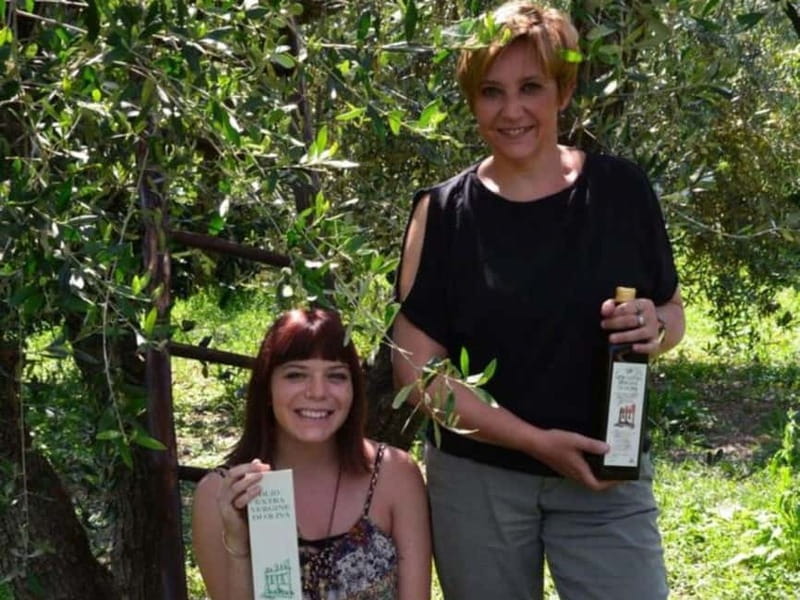
The wooden press is more than a photo stop. It connects the mill’s modern production to the work of earlier generations. Seeing the old equipment helps you understand why olive oil was such a valuable household product, and why harvest season shaped the rhythm of rural Tuscany.
The antique collection adds a short cultural layer to the visit. You can see objects from the past while hearing about the family and the mill. The tour does not claim to be a museum visit, and the historic display is small, but it gives the tasting a sense of place.
I find this particularly useful if you are already visiting vineyards and food producers in Tuscany. Wine tastings often focus on grapes, cellars, and aging. Here, you get a different agricultural story, one based on trees, harvest timing, pressing, and the careful handling of a perishable fruit.
Buying oil, wine, and local goods
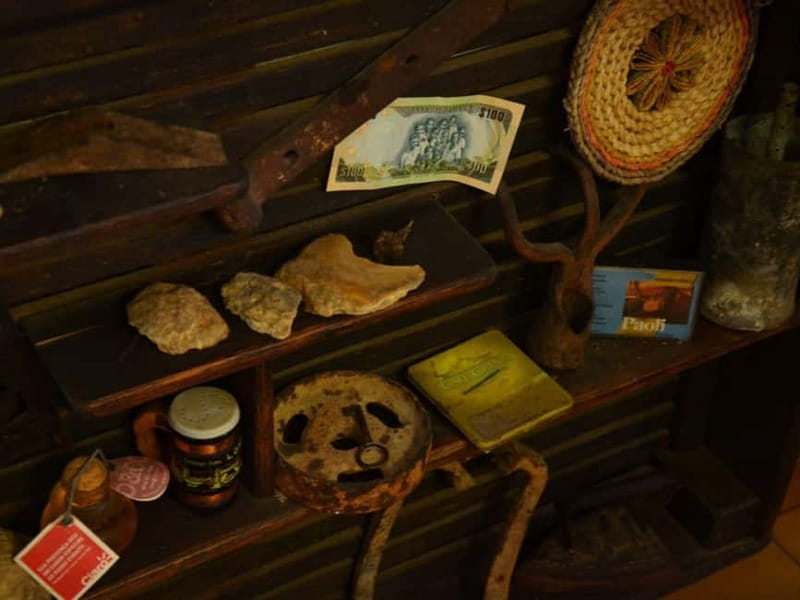
The mill has a small shop, so you can buy the oil you have tasted. That is one of the strongest practical reasons to visit a producer rather than simply buying a bottle in a town shop. You can compare the flavor first and decide if it suits your table.
The shop also carries pecorino, wines, and preserves. Wine choices include Brunello di Montalcino, Nobile di Montepulciano, and Chianti. These are well-known Tuscan names, so the shop can be useful if you want a regional food gift without making another stop.
Buy only what you can transport comfortably. Olive oil is heavy and bottles need protection, especially if you are moving between hotels. The experience information confirms that shopping is available, but it does not state prices, shipping options, bottle sizes, or packaging. Ask about those details before purchasing several bottles.
The danger is that a pleasant tasting can turn into an expensive shopping stop if you feel pressured. One negative account felt the tasting was mainly an attempt to sell oil. Most of the available comments describe good products and willingly purchased oil, but you should decide based on taste and price, not simply because you are already at the mill.
Is $35 a fair price?
At $35 per person, the value depends on what you want from the hour. For a guided introduction, a tasting lesson, several local foods, wine, and access to a historic press, the price is reasonable. It is especially fair if you are interested in Tuscan food and would otherwise pay separately for small samples and a glass of wine.
The price is less attractive if you expect a long production tour, a full meal, or a hands-on harvest activity. The scheduled format is only one hour, with approximately 20 minutes for the tour and 40 minutes for tasting.
I would think of the fee as paying for three things: an introduction to Tuscan olive oil, a regional snack with wine, and the chance to shop directly at the mill. That is a good small-town stop, but not a major half-day attraction.
The rating information gives the experience a 4.6 score from 10 reviews, with several five-star ratings and one very low rating. The pattern suggests that most people respond well to the food, the friendly family setting, and the oil, while expectations about the pace can shape the experience sharply.
The best time to visit
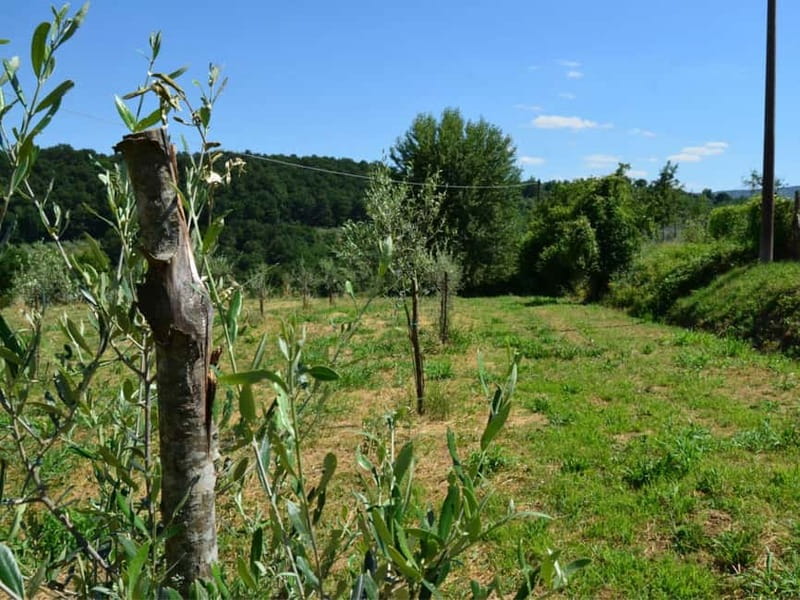
The strongest seasonal window is early October through mid-December, when olives are being harvested and processed. During this period, you may see the production work firsthand rather than only hearing about it.
Harvest season can also make the mill feel busier. The provided information does not promise a live processing demonstration, so do not book solely on that expectation. Ask ahead if seeing the machinery in use is important to you.
Summer visits can still work well as a short afternoon activity. One July visit was described as a fun way to spend a summer afternoon, with good oil and extra treats. The mill gives you a food-focused stop during a hot day, though the experience remains brief.
Bring comfortable shoes. The information does not describe difficult walking, but practical footwear is still sensible around a mill and its historic equipment.
Who will enjoy this mill visit?
I would recommend it most strongly to:
- People who want to understand Tuscan olive oil before buying it
- Food lovers who enjoy cheese, cured meat, truffle, and wine
- Couples or small groups looking for a one-hour stop near Chianciano Terme
- Visitors interested in family-run food production
- Anyone visiting during the October to December harvest period
- Families who can make good use of the short duration
It may be less suitable if you want a long agricultural tour, a large meal, or a fully hands-on activity. It may also disappoint if you expect every part of the visit to be slow and highly detailed.
The language setup is manageable for English and Italian speakers. If you speak another language, the multilingual video should help, though the live conversation will not be in that language.
Should you book the Chianciano olive mill tour?
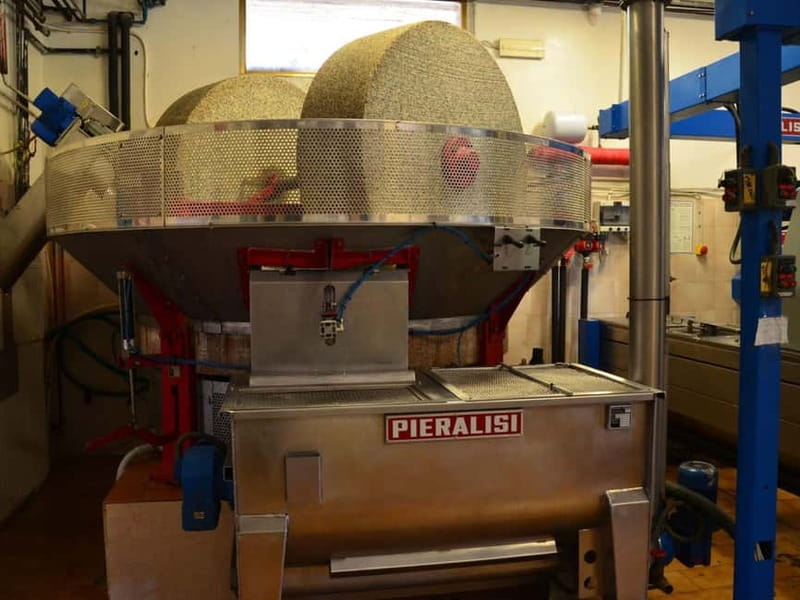
Book it if you are already driving through Chianciano Terme and want a compact, food-centered experience with a real local product at its core. The old wooden press, the oil-tasting lesson, and the pairing of oil with pecorino, salame, truffle bruschetta, and Chianti give you more substance than a basic shop tasting.
I would book it during olive harvest season if possible, and I would ask for the EVO oil lesson at the start. Go with realistic expectations: this is a one-hour introduction, not a full factory visit or lunch.
At $35, the tour makes sense for someone who values direct tasting and the chance to buy oil at the source. If you dislike sales pressure or want a longer visit, keep your schedule flexible and decide at the end whether the products merit a purchase. Free cancellation up to 24 hours before the start and a reserve-now, pay-later option add useful flexibility.
FAQ
Where does the olive mill tour take place?
It takes place at Frantoio La Macina Elena Bartolomei in Chianciano Terme, a thermal town in Tuscany. The mill is about 55 minutes by car from Siena.
How long does the experience last?
The experience lasts one hour. About 20 minutes are set aside for the guided mill tour, followed by about 40 minutes of food tasting.
What languages are available?
Live guiding is available in English and Italian. A multilingual explanatory video is available for other languages.
What food and drink are included?
The tasting includes extra virgin olive oil, Tuscan salame, Tuscan Pecorino cheese, bruschetta with green olive paste, bruschetta with truffle sauce, and Chianti red wine.
Can I see olives being processed?
You may see olive processing during the harvest season, which runs from early October through mid-December. The experience does not guarantee that processing will be taking place during every visit.
Can I buy products at the mill?
Yes. The mill shop sells extra virgin olive oil, pecorino cheese, wines including Brunello di Montalcino, Nobile di Montepulciano, and Chianti, along with preserves.
More Olive Oil and Food Pairings around Italy
- Bardolino: Vineyard Tour with Wine, Olive Oil & Food Tasting
★ 4.6 · 221 reviews - Seggiano: Guided Tour of the Olive Grove and Food Tasting
★ 4.8 · 30 reviews - Ascoli Olive Oil Tour with Tasting and Local Food Pairing
★ 5.0 · 18 reviews - From Florence: Horseback Ride and Olive Oil and food tasting
★ 4.3 · 8 reviews
Freshly pressed around Italy
- E-bike tour in Ostuni, the olive trees and the rock village★ 5.0 · 4 reviews
- Tuscan ExtraVirgin Olive Oil Tour★ 5.0 · 4 reviews
- Wine and Extra virgin olive oil tasting in Lucca, Tuscany★ 5.0 · 3 reviews
- Lecce : Half day E-Bike tour to Old Olive Mill & Olive Oil Taste★ 5.0 · 3 reviews
- Bellagio/Lezzeno/Oliveto Lario to/from Milan Malpensa Apt (Private Transfer)★ 5.0 · 4 reviews
- Sunset Magic E-bike Tour at Sunset in Capoliveri★ 5.0 · 4 reviews
- Chianti from Florence:PRIVATE Wine, Olive Oil Tasting in the Tuscan countryside★ 5.0 · 2 reviews
- Leonardo Da Vinci’s wind mill visit and Organic olive oil tasting★ 4.5 · 12 reviews
Olive Mill and Factory Tours, compared.
Crete: Quad Safari, Olive Mill with Tasting & Ghost Village
Read our review →
From Mendoza: 3 Wineries, Olive Oil Factory Tour & Tasting
Read our review →
Knossos-Zeus Cave -Old Traditional Villages-Olive Oil Factory
Read our review →
The Governor’s Olive Mill Tour with Olive Oil Tasting
Read our review →
Crete: Road-trip to Lasithi, Zeus Cave & Olive Mill Farm
Read our review →
Lassithi, Zeus Cave, Olive Mill Farm & Knossos Combo Tour
Read our review →
Zeus Cave, Lassithi Plateau, Olive Oil Factory, Kritza, Pottery
Read our review →
Crete: Zeus Cave, Lassithi Plateau, and Olive Factory Tour
Read our review →Other lists with this tasting on them