
Review · ITALY
Ostuni: Masseria tour among thousand-year-old olive trees with oil tasting
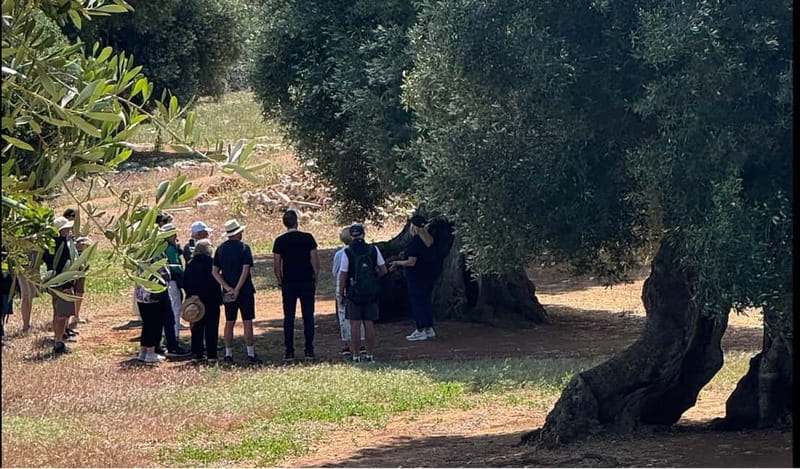
The most remarkable part of this Ostuni outing is not the tasting table. It is the chance to touch olive trees that may have grown here for one or two thousand years, then step into a cave where oil was pressed long before modern machinery existed. The setting links Puglia’s farming life to its very distant past in a way a city walking tour cannot.
I like the clear old-to-new structure: first the ancient trees and underground mill, then the modern production room. I also like the family connection. Guides such as Julia explain the farm’s work with real feeling, not as a polished museum script. The main limitation is that the tasting is fairly brief, and some visitors may find the sales opportunity at the end a little strong.
Key points to know before booking
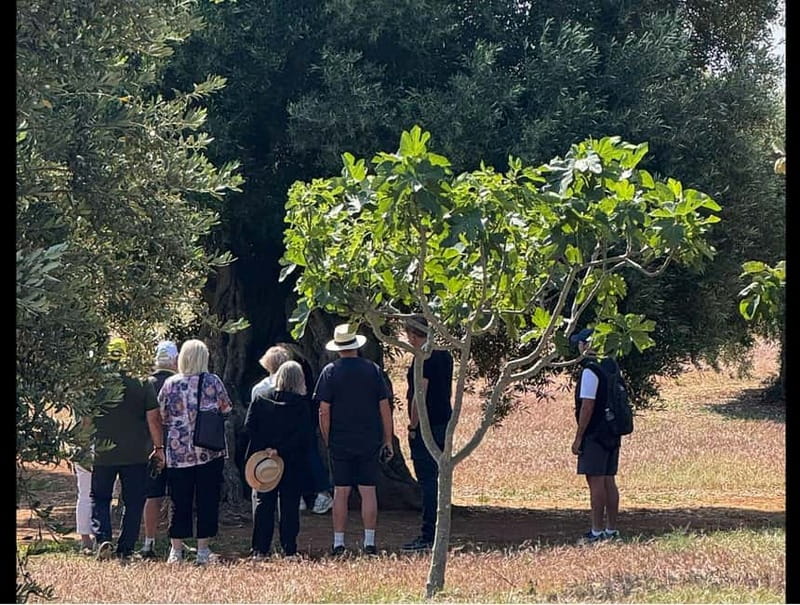
- Ancient trees: Walk among olive trees said to be up to 2,000 or even nearly 3,000 years old.
- Two very different mills: See an old underground cave press and a modern mill that can produce oil in roughly half an hour.
- Family-led storytelling: Julia and other family guides explain farming, production, and the responsibility of caring for old trees.
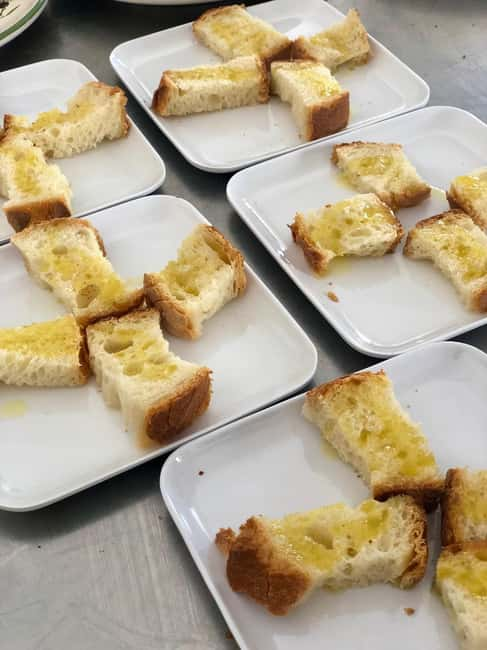
- Three oils to taste: The tasting includes three types of farm-produced extra virgin olive oil, plus friselline and water.
- Good value near Ostuni: At $33 per person, the tour offers a substantial look at local agriculture for a modest price.
- Allow a little extra time: The advertised duration is 1.5 hours, but one account found the visit ran about 10 to 15 minutes over.
Why these olive trees matter
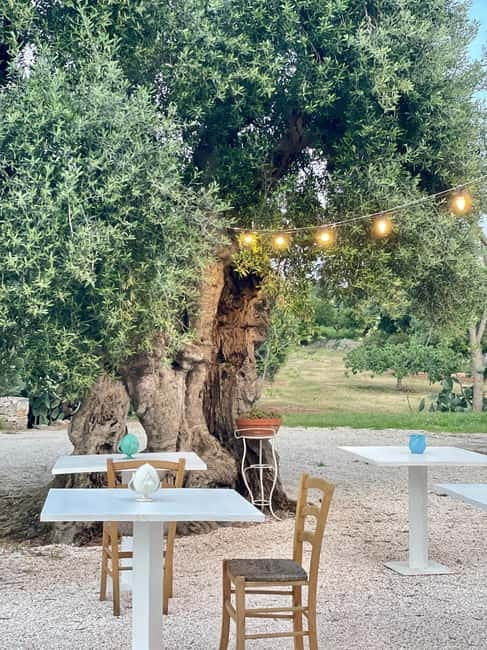
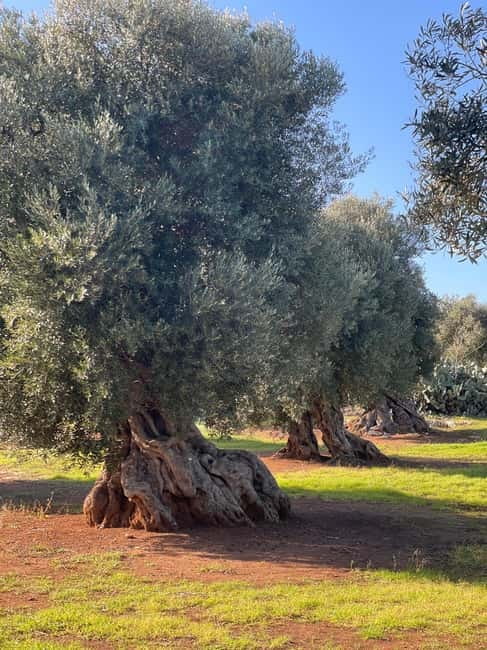
Puglia is often introduced through its whitewashed towns and Adriatic beaches. Yet olive oil is one of the clearest ways to understand the region. The trees are not simply crops planted in neat rows. Many are ancient, twisted, hollowed, and broad enough to look like small sculptures.
At Masseria Rienzo, you walk among these old trees before learning how their fruit becomes oil. That order matters. You see the source first, then the machinery and methods. It gives the tasting more meaning because you have already seen the land and the trees that support the farm.
Some trees here are described as more than 1,000 years old, with individual trees identified as roughly 2,000 years old or older. Exact ages can be difficult to prove, so I would treat the largest figures as part of the site’s traditional story rather than a laboratory measurement. Either way, the trees are genuinely ancient, and standing beside them gives the visit its strongest emotional moment.
You also hear about the current problems facing olive growing in southern Italy, including the incurable bacterium that has damaged olive trees in parts of the country. This adds an important modern note. The farm is not presenting olive oil as a frozen tradition. It is a working agricultural business dealing with disease, changing conditions, and the hard work of keeping old trees productive.
More Olive Grove Tours in Italy
- Balestrate: Olive Grove Tour with Wines & Olive Oil Tasting
★ 5.0 · 241 reviews - Bologna: Olive Grove and Vineyard Tour with Product Tastings
★ 4.8 · 109 reviews - Balestrate Olive Grove Tour: Wine and Olive Oil Tasting
★ 5.0 · 105 reviews
Walking through a working family farm
The visit begins at Masseria Rienzo and stays on the farm, returning to the same place at the end. A family guide leads you through the grove and explains the trees, the local olive varieties, and the role of oil production in the area.
The family connection is one of the tour’s best features. Julia is frequently named as the guide, while Chiara is also praised for explaining both traditional production and modern organic methods. The exact guide may vary, but the experience is built around a person who knows the farm directly rather than a general-purpose city guide.
Expect plenty of standing and walking outdoors. You are not taking a long hike, but comfortable shoes and protection from the sun make sense, especially in summer. The farm setting is especially pleasant in good weather, though the outdoor portion will feel different in hot midday conditions.
The discussion is not limited to olive oil as a food product. You learn about the farm’s history, the work required to care for the trees, and the place of olive growing in the local community. One of the more useful themes is the difference between simply buying oil and understanding what extra virgin olive oil should taste and smell like.
Entering the ancient underground oil mill
The most unusual stop is the old cave oil mill. Oil was produced underground here in earlier times, and the space gives you a physical sense of how demanding the old process was.
An underground mill is more than a photogenic ruin. It shows how production once depended on carved spaces, heavy equipment, animal or human labor, and methods that took far longer than modern processing. Some descriptions connect the site with oil production going back more than 2,000 years. One particularly striking account describes a cave that was continuously inhabited over several millennia.
The cave can feel like a step back in time, but it is also a useful lesson in scale. Modern olive oil production is fast and carefully controlled. The old mill represents patience, muscle, and local know-how. Seeing both systems in one visit helps you understand what has changed and what has not.
The underground setting may not suit everyone. If you dislike enclosed or uneven spaces, keep that in mind before booking. The supplied information does not give precise details about steps, floor surfaces, or accessibility, so ask the operator if you have mobility concerns.
Seeing the modern mill in action
After the ancient mill, you visit the modern olive oil mill. Here, technology and the family’s agricultural experience work together to produce their extra virgin oil.
The contrast is the point. In the cave, production is slow and historic. In the modern mill, the process is designed for speed and control, with one account noting that the newer method can make oil in about half an hour. This makes the visit more than a history lesson. You see how an old agricultural tradition continues as a present-day business.
The modern section may be especially interesting if you are curious about how oil moves from fruit to bottle. The guide explains the production process and the reasons quality matters. You will not simply be shown a machine and sent on your way. The modern mill completes the story begun among the trees.
Do not expect a large industrial plant or a long technical demonstration. The full activity lasts about 1.5 hours, so the mill visit is part of a compact experience rather than a full-day agricultural course. If you want an in-depth lesson on pressing temperatures, storage chemistry, or regional cultivars, this may leave you wanting more.
Same olive country, a different way to taste it:
- Sorrento Farm and Food Experience including Olive Oil, Limoncello, Wine tasting
★ 5.0 · 2,524 reviews - Olive oil tasting in Sorrento
★ 5.0 · 434 reviews - Sorrento: Lemon, Olive Oil and Wine Tasting Tour with Lunch
★ 5.0 · 300 reviews - Alghero: Wine and Olive Oil Tasting at a Local Farm
★ 4.8 · 294 reviews
Learning how to taste extra virgin olive oil
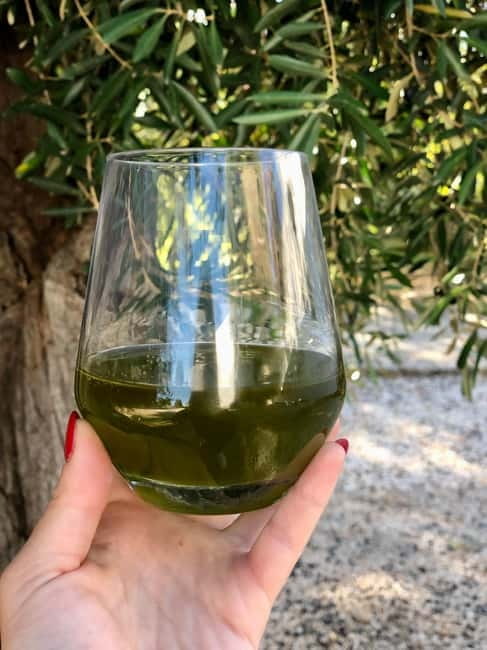
The final part is a guided tasting of three oils made on the farm. You taste the oils with friselline, a crisp Puglian bread traditionally used with toppings, and water.
This is a small tasting, not a meal. One visitor found the serving modest, describing a drop of oil on a small piece of bread. That is worth knowing if you are comparing this experience with a longer food tour. The tasting is designed to teach you how to notice differences, not to fill you up.
The guide explains the aromas and flavors and helps you think about what separates a genuine extra virgin oil from a bland supermarket product. The tasting can change the way you shop later. Fresh oil may have a grassy scent, a peppery finish, or a more complex flavor than the mild oil many people use at home.
You taste three types, although the supplied details do not name the varieties. Availability can also change. One person hoped to buy a lemon-flavored oil but found it was sold out, so do not arrive expecting every product shown or discussed to be in stock.
The farm sells its own products after the tasting. Buying a bottle or tin is optional, but the opportunity is practical, especially if you are interested in taking Puglian oil home. Check baggage rules and packing requirements before buying large quantities. Some oils are sold in tins, which may be easier to transport than glass, though the exact packaging and sizes are not specified here.
Is $33 a fair price?
At $33 per person, I consider this a good value for a 1.5-hour experience near Ostuni. You receive a guided walk, two mill visits, a tasting of three oils, friselline, and water. The ancient trees and underground mill provide access to something you cannot recreate by simply buying a bottle in town.
The value is strongest for people who want context. If you only want to taste olive oil, you may find a cheaper tasting elsewhere. If you want to see the farm, understand the old production method, compare it with a modern mill, and hear about the pressures facing olive growers, the price is easier to justify.
There is also a practical shopping advantage. Several visitors found the farm’s oil reasonably priced compared with buying similar quality back home. I would not buy purely because a guide suggests it, but tasting first gives you a sensible basis for deciding.
The tour has a 4.8 rating from 261 bookings, and the strongest praise centers on the family guides, the ancient trees, the old cave, and the quality of the oil. A small number of reservations are worth keeping in mind: the tasting can feel short, the sales portion may be noticeable, and the visit may run slightly longer than the stated 1.5 hours.
Getting there and planning your visit
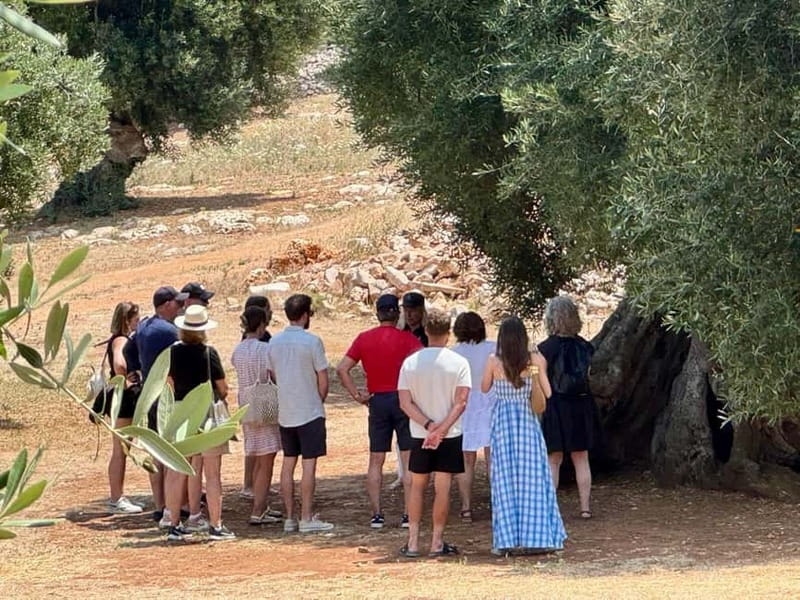
Masseria Rienzo is close to Ostuni, but you should plan to arrive by car or taxi. The information provided does not give a regular shuttle from the train station, and walking from the station was described as unsafe despite the distance not being especially great.
That makes this a better stop for a road trip through Puglia or for anyone already arranging a taxi. Do not assume you can step off a train and walk over comfortably. Ask for precise directions and allow time to find the entrance.
The activity is offered in Italian and English. Some material may remain in its original language, so an English-speaking guide is important if you want the historical and agricultural details. Julia is repeatedly praised for explaining the farm clearly in English, while other named guides include Chiara.
You can cancel without charge up to 24 hours before the start time, and the reserve-now, pay-later option can help if your Puglia schedule is still shifting. Starting times vary, so check the available slot when booking.
Who will enjoy this most?
I would recommend the tour to food lovers, road trippers, families with older children, and anyone who wants to see a working side of Puglia beyond its towns. The ancient trees give the visit a sense of wonder, while the mill comparison keeps it useful and grounded.
It also suits people who are curious about sustainable farming and the future of olive growing. The discussion of disease and the work involved in protecting old trees gives the experience more substance than a simple farm photo stop.
You may want to skip it if you have very little time in the Ostuni area and care mainly about monuments, or if you expect a large meal and a long formal tasting. The tour is short, the food element is light, and the main attraction is the farm itself.
Should you book the Masseria Rienzo tour?
Yes, if you have a car or taxi and want a memorable, reasonably priced introduction to Puglian olive oil. The combination of ancient trees, an underground cave mill, modern production, and three oils gives you a clear story from land to table.
Go with realistic expectations. This is not a full lunch, a lengthy technical course, or a completely sales-free visit. But for $33, you get close to the trees, enter a remarkable old mill, meet a family connected to the work, and leave with a better sense of what extra virgin olive oil should taste like. That is a worthwhile morning near Ostuni.
FAQ
Where does the olive oil tour begin and end?
The tour begins and ends at Masseria Rienzo near Ostuni in Puglia.
How long does the experience last?
The stated duration is 1.5 hours. It may run about 10 to 15 minutes longer, so allow a little extra time.
How much does the tour cost?
The listed price is $33 per person.
Which languages are available?
The tour is offered in Italian and English. Some content may be presented in its original language.
What will I see during the tour?
You will walk among thousand-year-old olive trees, visit an ancient underground cave oil mill, and see a modern olive oil mill.
How many oils are included in the tasting?
The tasting includes three types of extra virgin olive oil produced on the farm.
Is food included?
Yes. Friselline and water are included with the tasting.
Do I need a car to reach Masseria Rienzo?
The information advises reaching the farm by car or taxi. Walking from the train station may be unsafe, and no shuttle service is specified.
Can I cancel the booking?
Yes. You can cancel up to 24 hours in advance for a full refund. A reserve-now, pay-later option is also available.
Freshly pressed around Italy
- E-bike tour in Ostuni, the olive trees and the rock village★ 5.0 · 4 reviews
- Tuscan ExtraVirgin Olive Oil Tour★ 5.0 · 4 reviews
- Wine and Extra virgin olive oil tasting in Lucca, Tuscany★ 5.0 · 3 reviews
- Lecce : Half day E-Bike tour to Old Olive Mill & Olive Oil Taste★ 5.0 · 3 reviews
- Bellagio/Lezzeno/Oliveto Lario to/from Milan Malpensa Apt (Private Transfer)★ 5.0 · 4 reviews
- Sunset Magic E-bike Tour at Sunset in Capoliveri★ 5.0 · 4 reviews
- Chianti from Florence:PRIVATE Wine, Olive Oil Tasting in the Tuscan countryside★ 5.0 · 2 reviews
- Leonardo Da Vinci’s wind mill visit and Organic olive oil tasting★ 4.5 · 12 reviews
Olive Grove Tours, compared.
Balestrate: Olive Grove Tour with Wines & Olive Oil Tasting
Read our review →
Traditional Olive Grove and Dragon Fruit Farm Tour
Read our review →
Visit of the olive grove, olive oil tasting and snack
Read our review →
Bologna: Olive Grove and Vineyard Tour with Product Tastings
Read our review →
Guided tours of the olive grove with oil tasting.
Read our review →
Organic Olive Grove tour & Olive oil tasting & lunch in Kalamata!
Read our review →
Jaen: Olive oil tour with the 5 senses, grove and tasing
Read our review →
Umbria E-Bike & Wine Tour through Vineyards and Olive Groves
Read our review →Other lists with this tasting on them