
Review · CHANIA
Chania Private Olive Oil Tour: Oil Tasting & Villages Tour
The most memorable part of this day is the contrast between ancient olive farming and modern production. You move from a private grove and a centuries-old mill to a working factory, then finish with oil tasting beside today’s machinery. It gives olive oil a proper setting, not just a small tasting room.
I like the wide views over Chania’s farming valleys, and I like the private format, which lets the guide adjust the pace and answer questions. The stop at a possibly 3,000-year-old olive tree adds real character. The main consideration is time: seven and a half hours is a long outing, and lunch and drinks at private stops are not included in the price.
Key points at a glance
- See olive oil made across the centuries: Visit an old mill and a modern olive oil factory to compare equipment and methods.
- Walk through a working olive grove: Learn about varieties, irrigation, grafting, harvesting, and farming methods from a local producer.
- Visit a possibly 3,000-year-old olive tree: This is a striking stop for anyone interested in nature and Cretan farming traditions.
- Enjoy a private day from Chania: Hotel pickup, private transport, and flexible stops make the route easier than arranging it yourself.
- Taste organic extra virgin olive oil: You receive oil from the grove and finish with a tasting at the modern factory.
- Combine food, villages, and countryside: The route includes Apokoronas scenery, a village stop, coffee, lunch, and time beside a small river.
Why this olive oil day feels different
Many food tours in Crete begin and end with a tasting. This one gives you the full chain, from tree to bottle. You see the trees, hear how crops are cared for, visit an older mill, and then watch a modern factory process and refine the oil.
That wider view matters. Olive oil is not simply a condiment in Crete. It is tied to farm work, family land, village life, and the seasonal rhythm of the island. When you walk among the trees and then see the machinery that separates and processes the oil, the tasting makes more sense.
The day takes place around Chania and the Apokoronas villages. You leave the city behind and reach farming valleys where olive groves and other crops cover the lower ground. A high viewpoint gives you a chance to understand the scale of cultivation, as well as take photographs.
Because this is a private group, you are not tied to a large coach schedule. Your guide can spend more time on the subjects that interest you, make flexible stops, and adjust the route when practical. The guide is a licensed historian and driver certified by the Greek Ministry of Tourism, and a professional farmer or olive oil producer also contributes to the agricultural part of the day.
Apostolis is the guide named in one especially detailed account of the tour. He was praised for his historical background and for responding to the interests of the people in his vehicle. He may not be the guide assigned to every departure, so ask when booking if having him matters to you.
More Olive Oil and Village Tours in Chania:
- Crete: Quad Safari, Olive Mill with Tasting & Ghost Village
★ 4.9 · 1,004 reviews - Knossos-Zeus Cave -Old Traditional Villages-Olive Oil Factory
★ 5.0 · 694 reviews - Knossos & Lasithi Plateau: Zeus Cave,Villages, Olive Oil Tour
★ 5.0 · 328 reviews
The road from Chania into Apokoronas
Pickup is included from central Chania areas, and you should wait in your hotel lobby about 10 minutes before departure. The same service can work as a shore excursion from Chania or Souda cruise port, which is useful if your time on Crete is limited to a port call.
The first part is not a quick drive straight to a factory. You spend time looking at the countryside and learning how farming fits into the area. The route includes a guided visit in the Chania Regional Unit, followed by a longer guided section around Chania.
You will see olive groves and farming valleys from different points, including a photo stop with broad views. This is a good early moment to get your bearings. It also helps you understand why the region supports so many olive trees, rather than treating the groves as a pretty backdrop seen through a car window.
The road-based format has one drawback. The tour covers several separate stops, so the day can feel full. You should choose it because you want a full countryside outing, not because you are looking for a short tasting near town.
Walking through the private olive grove
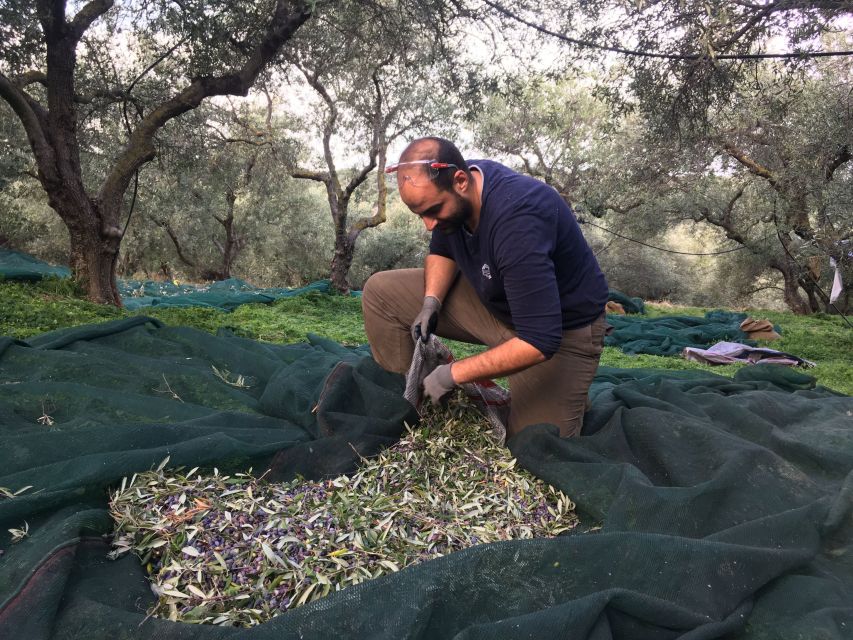
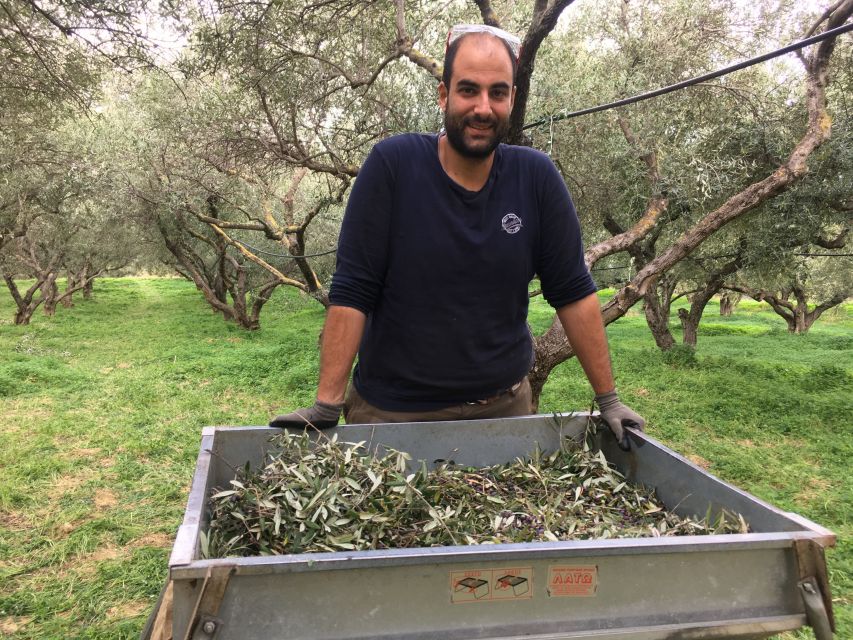
The olive grove is where the tour becomes hands-on. A local farmer explains the types of olive oil produced in Crete, the grades sold in Chania, and the connection between farming choices and oil quality.
You learn how olives are collected and how irrigation affects the crop. Grafting is also covered, along with the practical work needed to produce better fruit. These details are useful because they give you something to look for later when you taste the oil.
You also receive organic extra virgin olive oil from the grove to take home. That is a meaningful inclusion, especially for anyone who enjoys cooking or wants a souvenir with a clear connection to the place visited. The amount is not specified, so do not assume you are receiving a large bottle.
The grove visit is also the best part of the day for asking practical questions. You can ask about the age of the trees, farming methods, harvesting, and how the final grade is determined. In a large group, this sort of conversation can be difficult. A private setting gives you much more room.
The old mill and the work of earlier generations
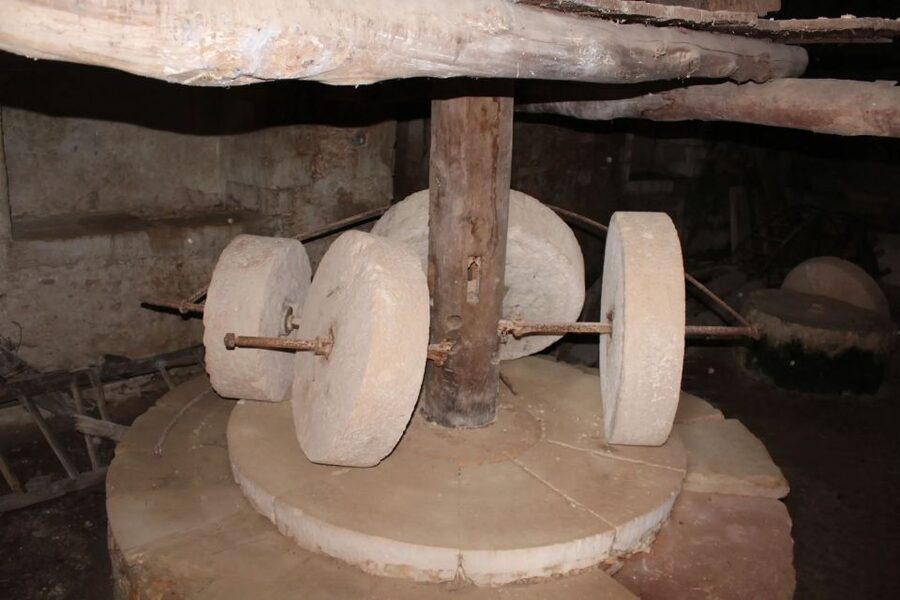
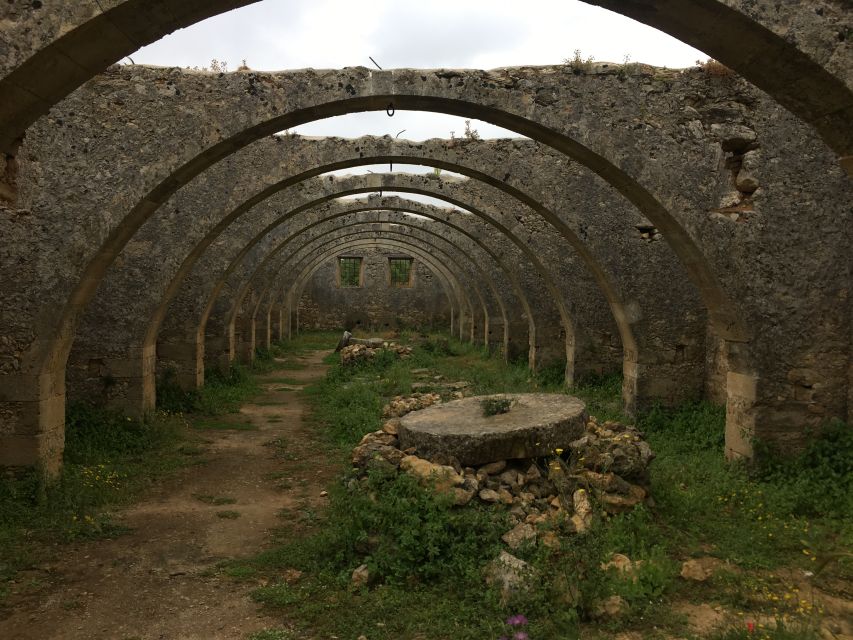
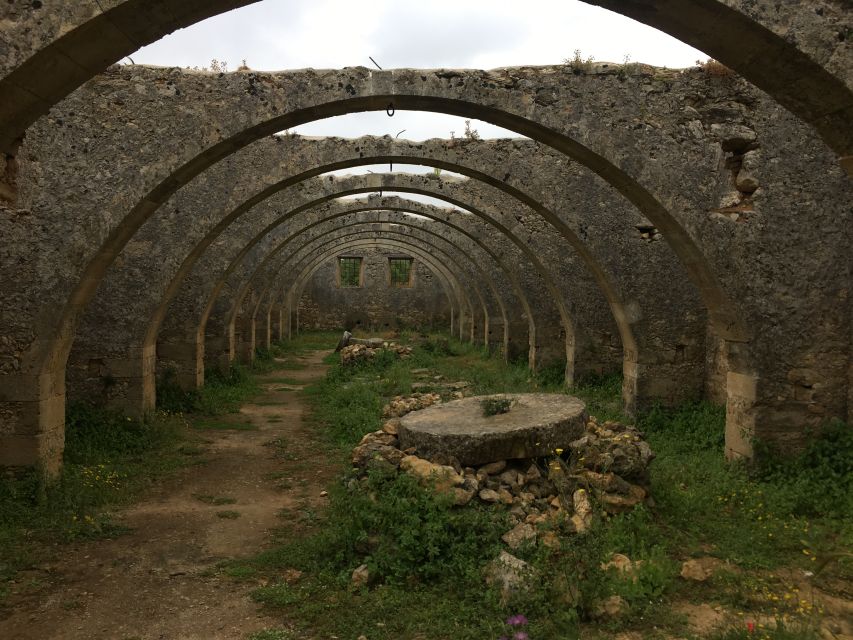
The tour then moves to an old olive oil mill, described as medieval. Here you see how Cretan farmers processed olives before modern factory equipment changed the work.
The value of this stop is comparison. At the old mill, production was slower and more dependent on basic mechanical methods. At the modern factory later in the day, you see how processing, refinement, and handling are organized now. You are not just told that production has changed. You see the stages in two different settings.
A guide walks you through the mill and explains the various phases of extraction through the ages. The historical angle is a strong part of the outing, especially if you enjoy old buildings, local customs, and the practical side of rural life.
The mill is not presented as a grand museum visit. It is part of a working story about farmers and food production. That can be more rewarding than a polished display, but it also means you should expect a rural visit rather than a highly staged attraction.
More Olive Oil Tours around Chania:
- Crete Wine and Olive Oil Tour
★ 5.0 · 272 reviews - Wine & Olive Oil Tour with Lunch at Milia Mountain Retreat
★ 5.0 · 194 reviews - Wine & Olive Oil Tour with Lunch – Semi Private Safari Tour
★ 5.0 · 156 reviews - Chania: Milia Mountain Tour w/Lunch Olive Oil/Wine Tastings
★ 4.9 · 97 reviews
Coffee, village life, and a small river valley
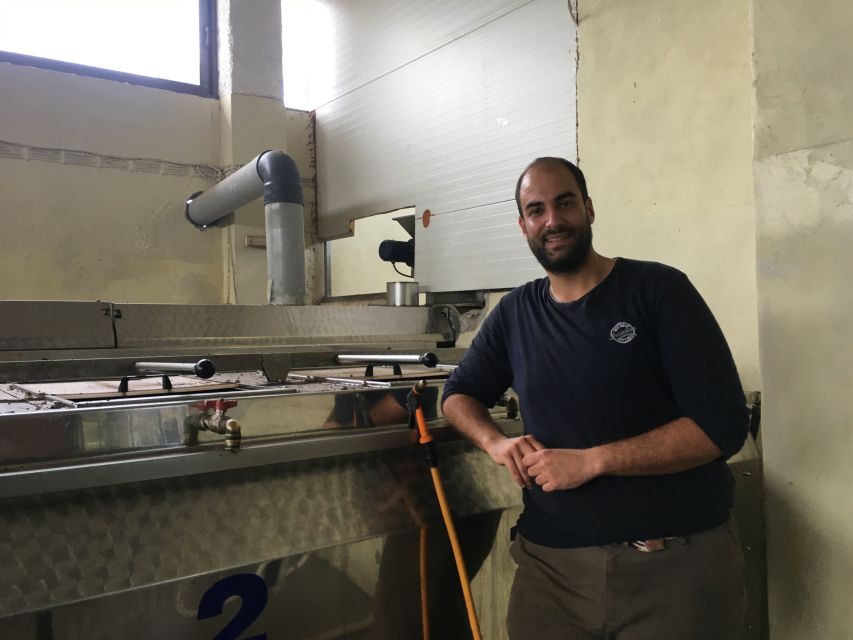
A break for coffee takes place in an area with thick vegetation and rivers passing nearby. The schedule allows about 50 minutes for this part of the day, giving you time to pause after the first set of visits.
The stop also opens a conversation about Apokoronas and its villages. You hear about farming life, local plants, and animal life, with the setting providing a natural backdrop. A detailed account of the outing also describes time in the village of Vryses, where a small valley, river, trees, and local geese added to the appeal.
Food and drinks at the private stops are not included. A box with water, a banana, an apple, and chocolate is included, but you should budget separately for coffee or any meal you order. This is worth noting because the tour lasts most of a day.
The village portion gives the schedule a needed human scale. After learning about equipment and farming, you have time to sit, eat, and talk about the people who live and work in the area. It is less about checking off a famous sight and more about seeing how the countryside is used.
A possible 3,000-year-old olive tree
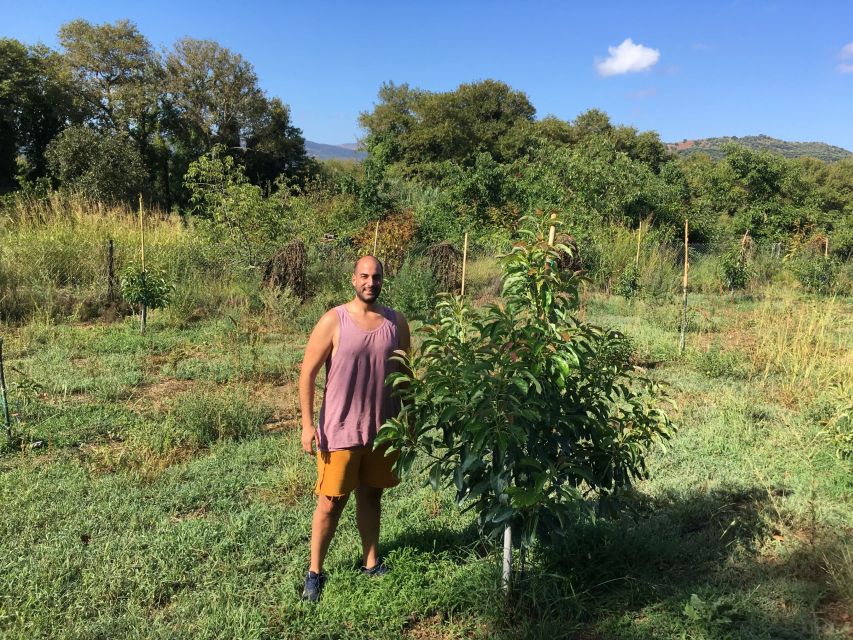
The oldest-tree stop is the emotional high point for many people on this route. The tree is described as more than 3,000 years old and still fruit-bearing. The exact claim about which olive tree is the oldest in Crete can vary, so treat the wording as a possibility rather than a settled scientific fact.
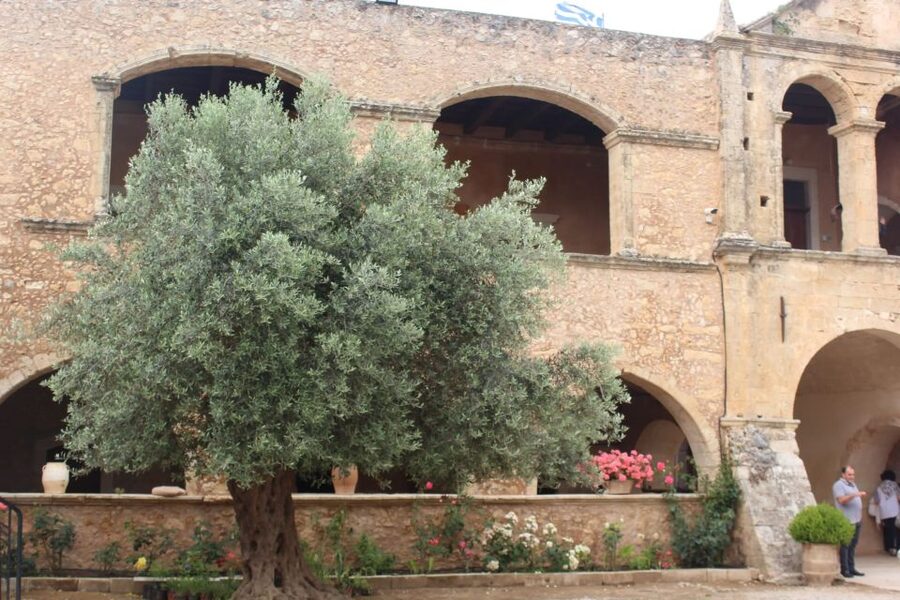
Even with that qualification, the tree is an impressive sight. Its circumference and age give you a direct sense of how long olive cultivation has been part of the island’s life. You can take photographs and spend time looking at the trunk, branches, and shape of the tree.
The location is described as being away from the usual visitor crowds. That makes the stop feel quieter and more personal, but the information does not specify the walking distance or ground conditions. If mobility is a concern, ask the provider what the approach involves before booking.
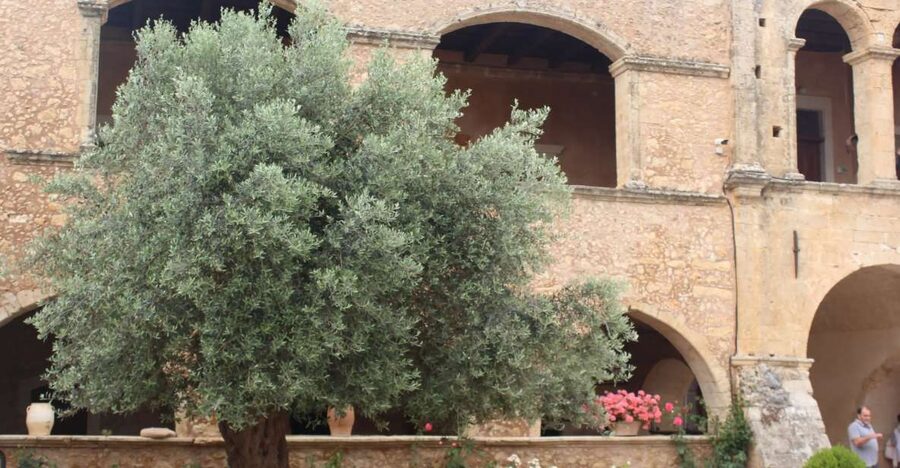
The route may also include a small monastery with two monks and centuries of history. This detail comes from an account of the outing and may depend on the day’s route or guide. A raki tasting was also described there, but it is not listed as a guaranteed inclusion, so confirm this if it is important to you.
The modern factory and the final tasting
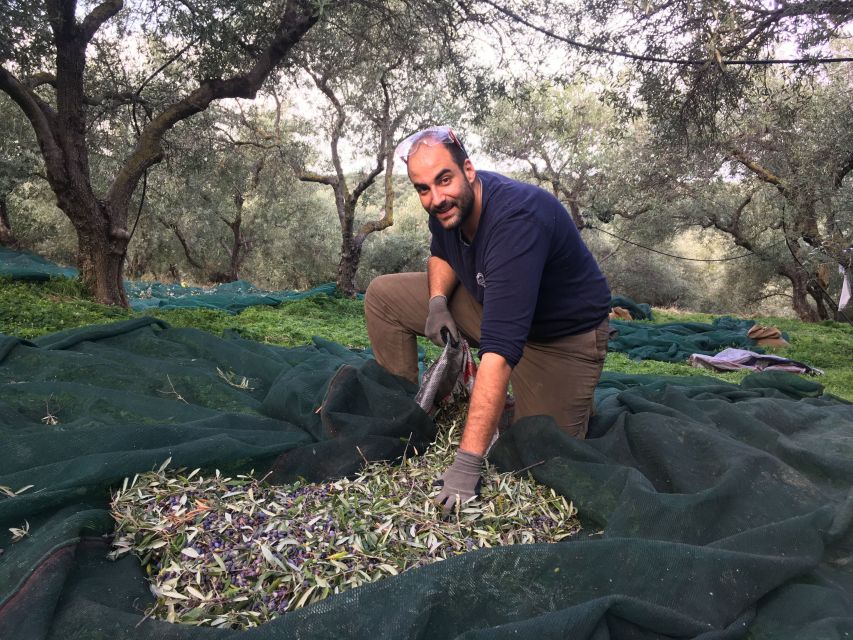
The last major visit is to a modern olive oil factory in the Chania area. Here the guide explains current production, processing, and refinement beside the equipment and machinery.
This is where the earlier parts of the day come together. You have already seen the trees and heard about crop care. You have then visited an older mill. Now you can follow the modern approach and understand why temperature, processing, separation, and storage affect the final product.
The tasting takes place inside the factory, next to the machinery. That setting is practical rather than fancy, and I think that works well for this tour. You are tasting oil in the place where it is made, not in an unrelated shop.
Free extra virgin olive oil tasting is included, along with organic extra virgin olive oil to take home. The tasting gives you a useful final comparison, but the supplied details do not list the number of samples or specific varieties. If you want a formal tasting lesson with printed notes and many pours, this may not be the right format.
What the $176 price really covers
At $176 per person, this is not a cheap half-day activity. It is a private, seven-and-a-half-hour outing that includes transport, a licensed guide and driver, a professional farmer or producer, hotel pickup and drop-off from central Chania, multiple visits, and food items for the road.
The price makes more sense if you are traveling as a small private group and value convenience. Hiring a car, finding the mills, arranging a farm visit, locating the ancient tree, and managing the route would take time and still might not provide the same explanations.
The value is also stronger for people who want more than a tasting. You are paying for context, transport between rural stops, historical interpretation, and flexibility. If you only want to buy a bottle and sample oil, a shorter local activity will likely suit you better.
Lunch and drinks at the private stops cost extra, and entrance fees may apply if required. Keep some money available for those items. The included box provides basic snacks, but it is not a replacement for a full lunch.
Who should book this day
I would choose this outing if you want a private day in the countryside and have a real interest in food, farming, history, or village life. It is also a good match for first-time visitors to the Chania area who want several kinds of experiences in one day.
The tour suits couples, families, and small groups that prefer conversation over a fixed large-group script. The private format is especially useful if your group has different interests. One person can ask about olive cultivation while another focuses on local history or photography.
It may be less suitable if you dislike long days in a vehicle, want a relaxed beach outing, or expect a formal gourmet tasting. The schedule includes many parts: viewpoints, a grove, old and modern production sites, coffee, food, a possible monastery, and the ancient tree.
The tour is conducted in English or Greek. Free cancellation is available up to 24 hours before the activity, and you can reserve now and pay later. Those terms help if your Chania plans are still changing, but they do not alter the basic need to keep most of a day free.
Should you book the Chania olive oil tour?
Book it if you want to understand Cretan olive oil from tree to factory, with countryside scenery and local history along the way. The strongest reasons are the private transport, the farmer’s explanation in the grove, the contrast between old and modern mills, and the ancient tree.
I would skip it if your main goal is a brief tasting, a low-cost activity, or a tightly timed excursion with no extra stops. For everyone else, $176 buys a full day rather than a single attraction, and the mix of agriculture, villages, machinery, food, and history gives the outing real range.
Ask about the assigned guide, the expected lunch stop, any entrance fees, and the walking conditions near the old tree before you confirm. If Apostolis is available, his background and flexible approach could be a particular plus.
FAQ
Where does the olive oil tour begin?
Pickup is included from central Chania areas. You should wait in your hotel lobby 10 minutes before the scheduled pickup time.
How long does the tour last?
The experience lasts 7.5 hours, with several stops in Chania and the surrounding regional unit.
Is this a private tour?
Yes. The activity is offered for a private group with private transport.
Is hotel pickup included?
Yes. Free hotel pickup and drop-off are included from all central Chania areas.
Can I take the tour from a cruise port?
Yes. The experience is also available as a shore excursion covering Chania and Souda Cruise Port.
Which languages are available?
The live guide service is available in English and Greek.
Is olive oil tasting included?
Yes. You receive an extra virgin olive oil tasting at the modern olive oil factory, and organic extra virgin olive oil is provided to take home.
Is lunch included?
A box with water, a banana, an apple, and chocolate is included. Lunch and drinks at the private tour stops are not included.
Can I cancel the booking?
You can cancel up to 24 hours in advance for a full refund. Reserve now and pay later is also available.
Freshly pressed around Chania
- Wine, Beer, Olive Oil Tasting Private Tour (price per group of 6)★ 5.0 · 4 reviews
- Wine & Olive Oil tasting one day private tour in Crete★ 5.0 · 2 reviews
- Chania Old Town – Millennial Olive Tree – Olive Oil Mill★ 5.0 · 2 reviews
- Discover Rethymno, Lake Kournas & the Secrets of Cretan Olive Oil★ 5.0 · 10 reviews
- Crete Off-Road & Flavors Safari: Wine, Olive Oil & Mountain Life★ 5.0 · 9 reviews
- Rethymnon Olive Tree Sponsorship Protect and Plant Tour★ 5.0 · 5 reviews
- Monastery – Ancient Olive tree & Museum-Cretan Brewery Private Tour from Chania★ 5.0 · 5 reviews
- In Crete Discover the miracle of Olive Oil and Organic Fruits★ 5.0 · 4 reviews
Olive Oil and Village Tours, compared.
Crete: Quad Safari, Olive Mill with Tasting & Ghost Village
Read our review →
Knossos-Zeus Cave -Old Traditional Villages-Olive Oil Factory
Read our review →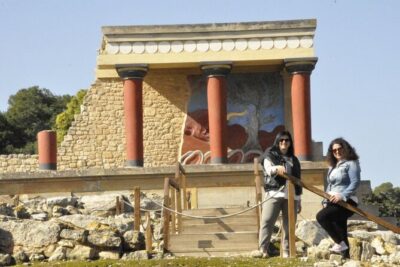
Knossos & Lasithi Plateau: Zeus Cave,Villages, Olive Oil Tour
Read our review →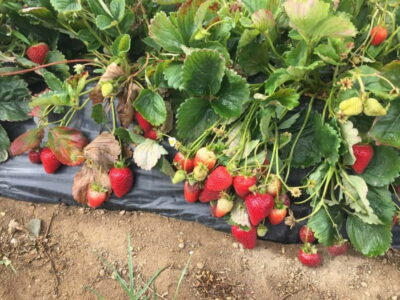
Heraklion: Knossos Zeus Cave Villages Olive Oil Factory Tour
Read our review →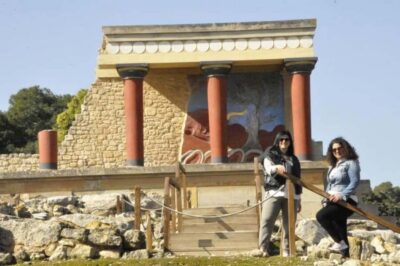
Heraklion: Zeus Cave & Knossos History, Villages & Olive Oil
Read our review →
PRIVATE-Knossos Palace-Zeus Cave-Olive Oil Tasting-Old Villages
Read our review →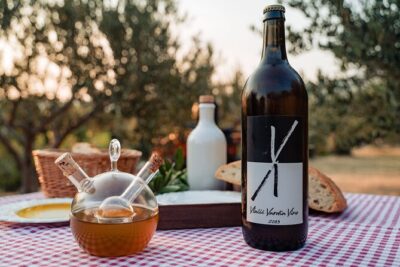
Knossos & Lasithi Plateau: Villages, Olive Oil Tour From Elounda
Read our review →Other lists with this tasting on them