
Review · MONTENEGRO
Olive oil farm to fork experience & short walking tour of Kotor
The best part of this experience is the move from Kotor’s stone lanes to a working olive estate in the Luštica region. You’ll meet a family that has owned its land for 200 years, walk among nearly 1,000 olive trees, and see both a 150-year-old mill and a modern olive press.
I like the easy mix of culture and food. Daniel and Lisette bring Kotor’s story to life on the short walking tour, then the farm visit gives you a direct look at how olive oil is made. I also like the generous homemade spread, with cheese, prosciutto, olives, bread, salad, sausages, and apple pie.
The main thing to consider is the price: $863.54 per private group of up to six is a serious spend for five hours. It makes the most sense for a small group that values a private guide, door-to-door transport, and a personal farm visit rather than a low-cost sightseeing outing.
Key points to know before booking
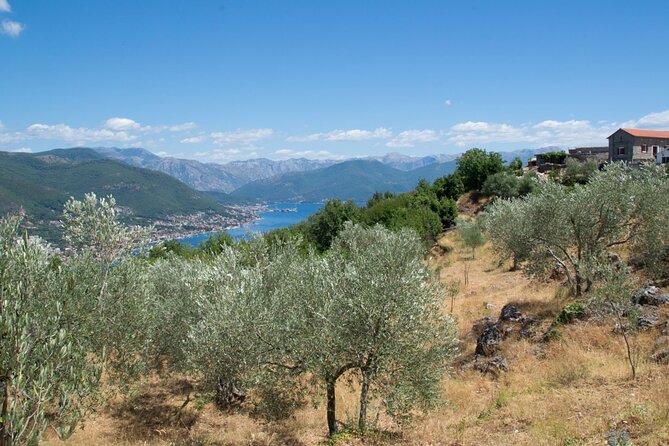
- Nearly 1,000 olive trees: Walk through an estate where many trees are centuries old and olive growing has continued for more than 2,000 years in the region.
- Two methods of oil production: See the old 150-year-old mill, then compare it with modern anaerobic production.
- Kotor plus countryside: Begin with a short Old Town walk before heading out to the Luštica olive farm.
- Personal family welcome: Meet Ilija, hear about the estate and oil business, and talk about daily life in the area.
- A full local tasting: Expect olive oil, bread, cheese, prosciutto, olives, local drinks, and homemade dishes.
- Private and flexible in feel: Only your group participates, with pickup from Kotor Old Town or the port.
From Kotor’s stone lanes to Luštica’s olive groves
This five-hour outing gives you two very different views of Montenegro. The first is Kotor, with its compact Old Town and short guided walk. The second is the rural Luštica region, where olive trees, family farming, and oil production remain part of daily life.
Daniel and Lisette guide the Kotor portion and drive you to the farm. The walking tour is described as short, so you should not expect a full historical tour of every church, square, and alley. That is actually useful if you have limited time or want to save your energy for the farm visit.
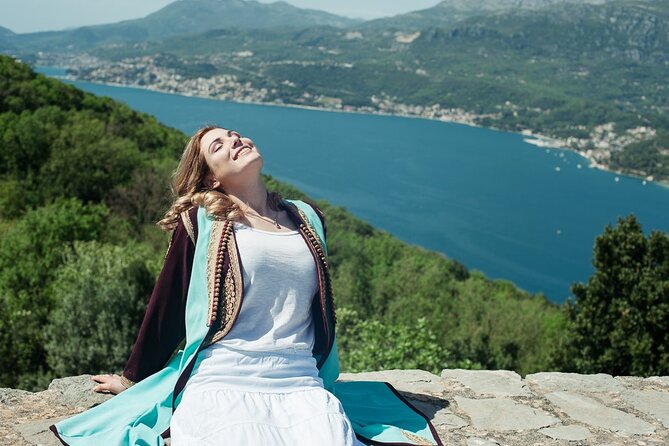
The city introduction also gives the day a sensible shape. You get your bearings in Kotor first, then leave the crowds and stone streets behind for a quieter food and agriculture experience. One version of the outing also includes a short drive to a good harbor viewpoint, adding a scenic stop without turning the day into a long sightseeing circuit.
If you are arriving by cruise ship, pickup can be arranged at Kotor port. At the Old Town or port meeting point, the guide holds a sign with your name. That simple detail matters in a crowded arrival area.
More Olive Farm Visits in the world:
- Sorrento Farm and Food Experience including Olive Oil, Limoncello, Wine tasting
★ 5.0 · 2,524 reviews - Crete: Road-trip to Lasithi, Zeus Cave & Olive Mill Farm
★ 4.4 · 451 reviews - Heraklion: Olive Farm Tour with Tasting of Local Delicacies
★ 4.9 · 411 reviews
Meeting the family behind a 200-year-old estate
The farm visit is the heart of the experience. The family has owned the estate for 200 years, and the property still reflects a working household rather than a polished commercial attraction.
You meet Ilija, who explains the family’s oil business and life in the area. The personal conversation is one of the strongest reasons to choose this tour. Instead of only hearing general facts about olive oil, you can ask about the land, the trees, production, and the changes brought by modern equipment.
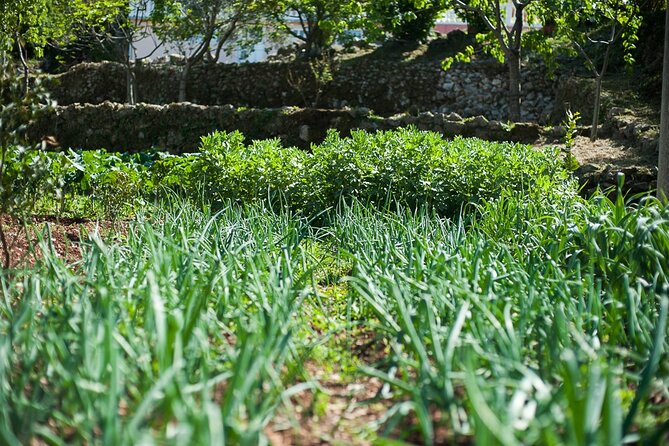
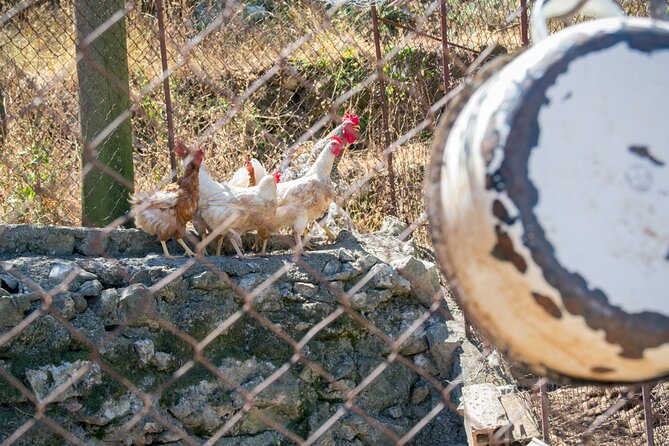
The family also grows vegetables and keeps animals on the estate. That gives you a wider view of rural life in Montenegro. Olive oil is not treated as an isolated product. It sits alongside gardening, livestock, preserving food, and cooking for family and visitors.
I like that the estate has a long connection to the same property. You are not simply stopping at a shop to buy a bottle. You are seeing the place where the crop grows, meeting the people who work with it, and tasting the oil with food from the household.
Keep your expectations grounded, though. This is a family farm visit, not a large visitor center with a formal museum, extensive retail area, or staged demonstration. Its appeal comes from the people and the setting.
Walking among ancient olive trees
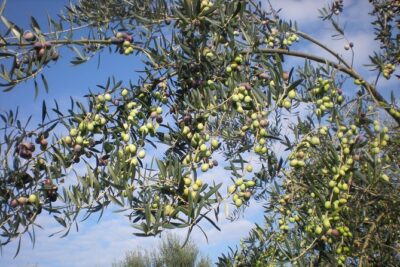
The estate has nearly 1,000 olive trees, many of them centuries old. The region has cultivated olives and produced olive oil for more than 2,000 years, so the trees connect the present-day meal with a long local tradition.
You will walk through the groves as part of the visit. The value here is not only the number of trees. It is the chance to understand olive oil as an agricultural product before it reaches your table. You see the trees, hear how the family works with them, and then taste the finished oil.
The grove walk should suit most people, since the activity notes say most people can participate. Still, it is wise to wear practical shoes. The supplied information does not describe the ground or the length of the farm walk in detail, so comfortable footwear is a sensible choice.
The setting also gives the meal more meaning. Bread, cheese, olives, and oil taste different when you have just seen the trees and equipment behind the process. That connection is the real lesson of the farm.
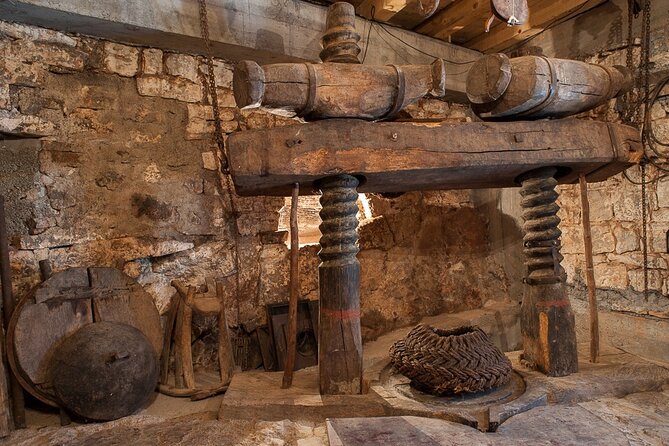
Comparing the 150-year-old mill with modern production
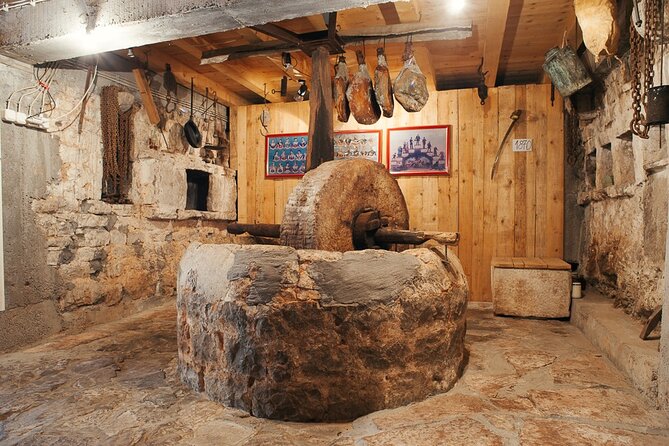
The farm preserves an authentic 150-year-old mill, showing how olive oil was once produced. You then see the newer press, which uses anaerobic production.
This side-by-side comparison is unusually useful. Many food tours stop after a tasting. Here, you can see how production methods changed and hear how the modern press affected the family’s way of life.
The old mill represents the labor and tools of an earlier period. The modern system shows how technology can change a small producer’s routine and output. The point is not to declare one method better in a simple way. It is to understand how a family business adapted while keeping olive growing at its center.
You will also learn how to notice differences in olive oil and judge quality through tasting. The details of the tasting format are not specified, so you should not expect a formal professional course. Think of it as a guided introduction that helps you pay attention to aroma, flavor, and the qualities of the oil you are eating.
For anyone interested in food production, this is likely the most educational part of the day. It gives you something to look for when you shop for olive oil later.
More Olive Oil Tours around the world:
- Split: Krka Waterfalls With Boat Cruise, Wine and Olive Oil
★ 4.3 · 1,507 reviews - Crete: Quad Safari, Olive Mill with Tasting & Ghost Village
★ 4.9 · 1,004 reviews - From Mendoza: 3 Wineries, Olive Oil Factory Tour & Tasting
★ 4.6 · 901 reviews - Knossos-Zeus Cave -Old Traditional Villages-Olive Oil Factory
★ 5.0 · 694 reviews
A homemade Montenegrin meal at the farm
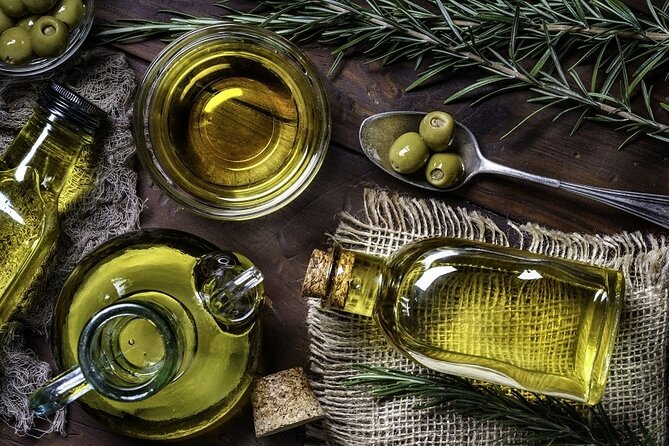
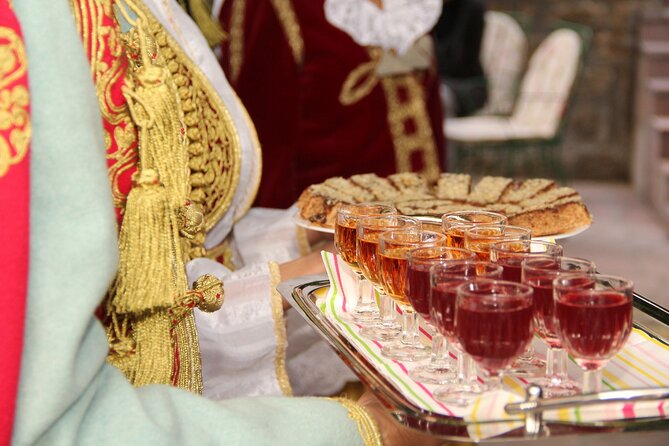
The meal is a major part of the experience, not a token snack. The listed food includes homemade bread, cheese, prosciutto, olives, and organic olive oil, with a welcome drink and homemade cherry or grape brandy.
The wider description adds smoked ham, bacon, sausages, salad, and apple pie. Local wine is also included in the farm meal described by the experience. Exact portions and the final menu can vary, but you should expect a generous spread of home-prepared food rather than a restaurant-style plated lunch.
That style suits the visit. You sit, eat, and talk with the family while taking in the surroundings. The meal gives you time to ask Ilija about the estate, the oil business, and life in the area. It also prevents the farm tour from feeling rushed.
The brandy is part of the welcome, but you do not need to treat it as a challenge. If you prefer not to drink alcohol, the listed menu also includes food and olive oil, and the experience offers a welcome drink rather than making drinking the main event.
The menu may be less suitable for someone seeking a strictly vegetarian or vegan meal. Cheese, prosciutto, bacon, sausages, and other meat products are central to the food described. No special dietary arrangements are provided in the information available, so ask before booking if you have allergies or dietary restrictions.
What the five-hour schedule means for you
Five hours is enough time for a short Kotor introduction, the drive to the estate, the farm visit, tasting, meal, and return to the meeting point. It is a good length for a port day or a first day in Kotor when you want more than a city walk but do not want to spend the whole day on a large excursion.
The tour operates from 9:00 a.m. to 2:00 p.m., Monday through Sunday, during the listed operating period from October 4, 2025, through July 12, 2026. The morning start makes sense for a private outing, especially if you are visiting Kotor from a cruise ship or have evening plans.
Because the tour ends back at the meeting point, you can plan to return to Kotor after the farm meal. The information does not give exact driving times or a fixed minute-by-minute schedule, so leave room around the five-hour estimate if you have a tight onward departure.
The private format is important. Only your group participates, and the maximum is six people. A family or group of friends can ask questions and move at a comfortable pace without being tied to a large coach group. The tradeoff is that the high group price is not shared with strangers.
Is $863.54 good value for up to six people?
The advertised price is $863.54 per group, not per person. With six people, that works out to about $144 per person. With four people, it is about $216 per person, and for two people it is about $432 per person.
That makes the group size a key part of the decision. For six people who want private transport, guides, a city walk, a farm visit, an olive oil lesson, and a substantial meal, the cost can be reasonable. For a couple, the same price becomes much harder to justify unless a private, personal experience is a top priority.
You are paying for more than transportation to an olive farm. The price includes the Kotor introduction, guiding by Daniel or Lisette, the estate visit, explanations of old and modern production, tasting, food, and a private group arrangement. The family welcome adds a personal element that a standard food stop may not offer.
Still, this is not the right choice if your main aim is simply to see Kotor cheaply or taste a spoonful of olive oil. You can get more value by filling the group to its six-person limit and by caring about the farm story as much as the meal.
Who will enjoy this experience most?
I would recommend it most to people who like food with a story. You do not need to be an olive oil expert. Curiosity is enough, especially if you enjoy seeing how local products are grown, processed, and served.
It also suits repeat visitors to Kotor. The short Old Town walk gives you a quick city refresher, while the farm adds something different from the usual fortress, church, and harbor sightseeing. One person described it as the best tour they had taken in Kotor after previous visits, which makes sense if you have already seen the main city sights.
Families and small groups should also consider it. The private format avoids the rigid feel of a large group, and the meal creates a relaxed shared experience. Service animals are allowed, and the activity states that most people can participate.
You may want to skip it if you dislike long meals, have strict dietary needs that have not been confirmed, or prefer a tightly timed sightseeing tour. The point of the day is conversation, food, and a working family estate. It is not a rapid list of landmarks.
Booking, cancellation, and practical details
Pickup is offered from Kotor, with meeting at the Old Town or port. Look for the guide holding a sign with your name. The activity is offered in English, and confirmation is received at booking.
Free cancellation is available if you cancel at least 24 hours before the start time. Cancellations made less than 24 hours ahead are not refunded, and changes inside that window are not accepted. The activity also requires a minimum number of participants. If that minimum is not met and the tour is canceled, you are offered another date or experience, or a full refund.
The experience is private, mobile-ticketed, and available for groups of up to six. Since the farm walk and food are central, I would wear comfortable clothes and shoes and arrive ready to spend time outdoors and at the table.
Should you book the olive oil farm and Kotor tour?
Book it if you want a private day built around local food, family stories, and a real working estate. The strongest elements are the contrast between the old mill and modern press, the walk among ancient olive trees, and the generous homemade meal with Ilija and his family.
I would be more cautious if you are a couple on a tight budget, since the group price is much better when divided among four to six people. For a small group that can share the cost, this is a thoughtful alternative to a standard Kotor sightseeing tour. You get a short city introduction, a taste of rural Montenegro, and a meal connected to the place where its key ingredient is produced.
FAQ
Where does the tour start and finish?
The tour starts in Kotor, Montenegro, and ends back at the meeting point.
Can I be picked up at Kotor Old Town or the port?
Yes. Pickup is offered, and at Kotor Old Town or Kotor port the guide will hold a sign with your name.
How long does the experience last?
The experience lasts approximately five hours.
What languages are offered?
The experience is offered in English.
How many people can join the private tour?
The private tour can include up to six people, and only your group participates.
What food is included?
The listed food includes homemade bread, organic olive oil, cheese, prosciutto, and olives. The wider meal description also includes smoked ham, bacon, sausages, salad, apple pie, and local drinks.
Can I cancel for a full refund?
Yes. You must cancel at least 24 hours before the experience start time for a full refund.
Are service animals allowed?
Yes. Service animals are allowed, and the activity states that most people can participate.
Freshly pressed around the world
- Private Tour in Historic Estate in Monemvasia with wine-olive oil tasting & meal★ 5.0 · 4 reviews
- Taste of Cyprus: Pasteli, Olive Oil, Wine & Mythology from Pafos★ 4.0 · 2 reviews
- Olive Facility Visit with Olive Oil Tasting Session★ 5.0 · 2 reviews
- SYSTASIS Olive Oil Tasting Experience in Ermioni Greece★ 5.0 · 4 reviews
- Olive Oil Tasting at the Mykonian Farm★ 4.5 · 3 reviews
- Olive Oil Tour close to Nafplio★ 4.5 · 3 reviews
- E-bike tour in Ostuni, the olive trees and the rock village★ 5.0 · 4 reviews
- The wines of the Luberon, the Château de Lourmarin & Bastide du Laval olive oil★ 5.0 · 2 reviews
Olive Farm Visits, compared.
Sorrento Farm and Food Experience including Olive Oil, Limoncello, Wine tasting
Read our review →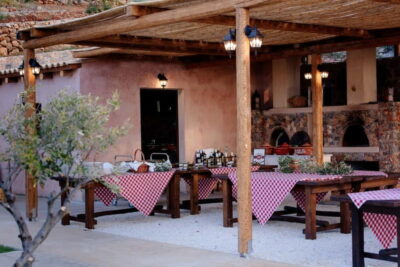
Crete: Road-trip to Lasithi, Zeus Cave & Olive Mill Farm
Read our review →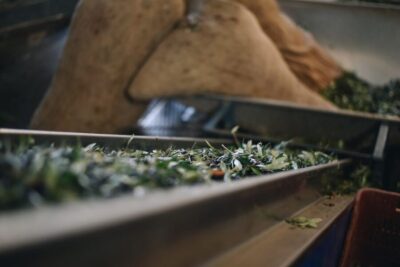
Heraklion: Olive Farm Tour with Tasting of Local Delicacies
Read our review →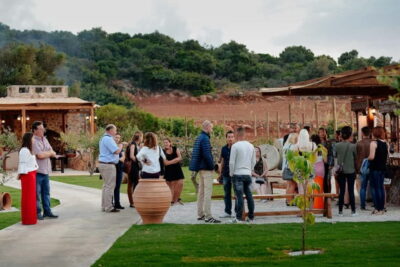
Lassithi, Zeus Cave, Olive Mill Farm & Knossos Combo Tour
Read our review →
Alghero: Wine and Olive Oil Tasting at a Local Farm
Read our review →
Traditional Olive Grove and Dragon Fruit Farm Tour
Read our review →
Moires: Cooking Class and Olive Oil Tasting at a Family Farm
Read our review →
Sóller: Olive Oil Guided Tour and Tasting at Can Det Estate
Read our review →Other lists with this tasting on them