Review · PELOPONNESE
Kalamata- Olive oil & Wine Tour with traditional lunch
Kalamata is known for olives, but this half-day outing shows you how those olives become the peppery oil poured over your lunch. You’ll visit Androusa’s olive groves, a modern mill, a 1904 olive mill, and a local winery, with the old castle above you and Messinia’s groves spreading below. The olive oil tasting is the heart of the experience.
I like two things especially: the tasting is taught by an olive oil sommelier rather than treated as a quick sample, and the meal turns the lesson into something you can taste for yourself. Guides such as Athanasia and Dimitra bring plenty of personality, while Georgia’s homemade lunch gives the afternoon a warm, family-table feel.
The main consideration is transport. You must reach Androusa on your own, and the advertised group limit can be as high as 16 people, not always the smaller group of 12 suggested in the highlights. Plan your drive carefully, since the tour starts at 10:00 and returns to the same meeting point.
Key points at a glance
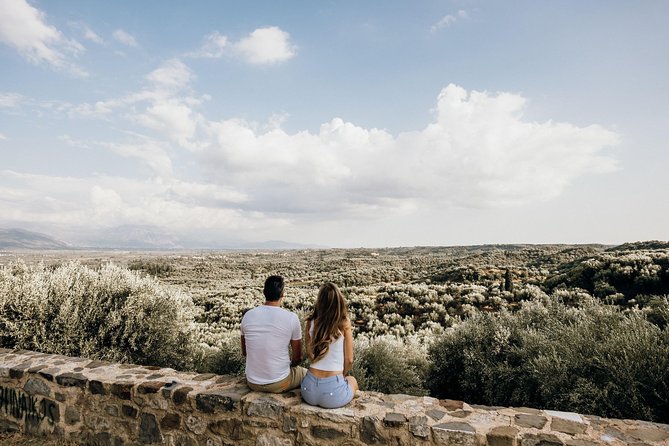
- Castle views begin the story: Meet at the 13th-century Castle of Androusa, with broad views over Messinia’s olive groves.
- Two olive mills show old and new: See modern extraction and storage methods, then step into a traditional mill founded in 1904.
- Three wine varieties are tasted: Visit a local winery and learn how Greek wines are made before a guided tasting.
- Olive oil gets serious attention: A certified sommelier explains quality, varieties, aromas, and food pairing.
- Lunch is part of the lesson: Expect salads, cheeses, olives, Kagianas, smoked pork, sausage, local pie, lalagia, and dessert.
- The price covers more than samples: At $108.84 per person, you receive the tour, tastings, a full meal, local wine, and dessert, but not hotel transport.
Why Androusa is the right setting for this tour
The experience begins at the 13th-century Castle of Androusa, not at a generic tasting room. That matters. From here, you get a clear sense of the setting before you start eating and tasting: olive groves stretch across Messinia, and the area’s farming traditions are tied closely to the villages around Kalamata.
The opening stop also gives your guide a place to explain the area’s past, local customs, and the myths connected with olive growing. You are not simply sampling a famous Greek product without context. You are seeing the trees, villages, mills, and food traditions that make the product meaningful.
The meeting point is at Epar.Od. Ellinoklissias-Androusa 26 in Androusa, about the rural area between Kalamata and Messine. The tour begins at 10:00 am and ends back at this same point. Since transportation from your hotel is not included, you will need to arrange your own way there. That is the biggest practical wrinkle, especially if you are staying in Kalamata and do not have a car.
More Olive Oil and Wine Tastings in Greece
- From Chania: Olive Oil, Wine, Cheese & Honey Tasting Tour
★ 4.6 · 490 reviews - From Chania: Wine and Olive Oil Tasting Tour with Snacks
★ 4.8 · 354 reviews - Athens: Acropolis Wine Tasting with Cheese and Olives
★ 4.9 · 337 reviews
The winery visit and Greek wine tasting
The winery stop gives the tour a useful second thread. Olive oil is the star, but Greek food is hard to understand without wine, and Androusa’s local production adds another taste of the region.
You will see how Greek wine is produced and taste at least three different wines. The tasting is guided, so you are encouraged to look for differences in aroma and flavor rather than simply decide which glass you like best. That makes the stop suitable even if you know little about wine.
The experience has been connected with Psaroulis Winery, and the tasting is designed to show several Greek varieties. Exact wines can vary, but the stated format is at least three wines with an explanation of their character. You will also have local wine with lunch, which lets you test how the flavors work alongside salty cheese, vegetables, pork, sausage, and olive oil.
Bring cash if you think you may want to buy bottles after tasting. That practical tip is easy to overlook, and it is better to have the option than to discover you cannot take home a favorite.
Two olive mills, one long farming tradition
The olive oil portion is stronger because it uses two different settings. First, you visit a modern olive oil mill in the center of Androusa Village. Here, the guide explains extraction, storage, and the quality points that affect the finished oil.
For a food lover, this is useful knowledge. Olive oil is not simply oil with a country name on the label. Freshness, handling, storage, and the extraction process all affect aroma and taste. The visit helps you understand why extra virgin olive oil can smell grassy, taste fruity, or finish with a peppery bite.
You then visit a traditional olive mill established in 1904. The older mill connects current production with the area’s long relationship with olives. It is not just a photo stop. You get a sense of how much the crop has shaped local life and how production has changed over time.
The contrast between the modern mill and the older one is one of the best reasons to choose this tour. A visit to only one facility might show you a process. Seeing both gives you a clearer sense of continuity, from older village methods to modern extraction and storage.
The olive oil tasting is more than dipping bread
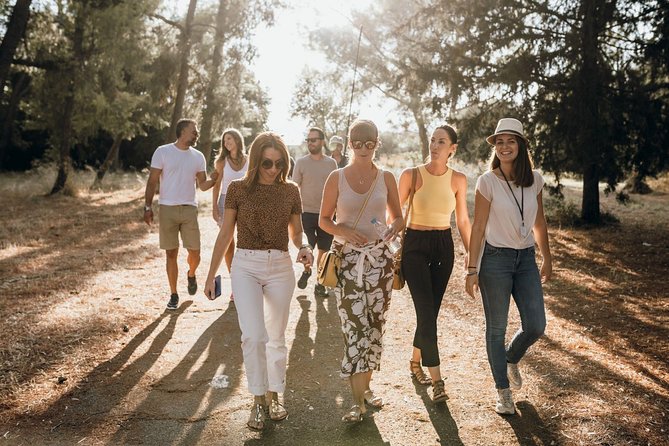
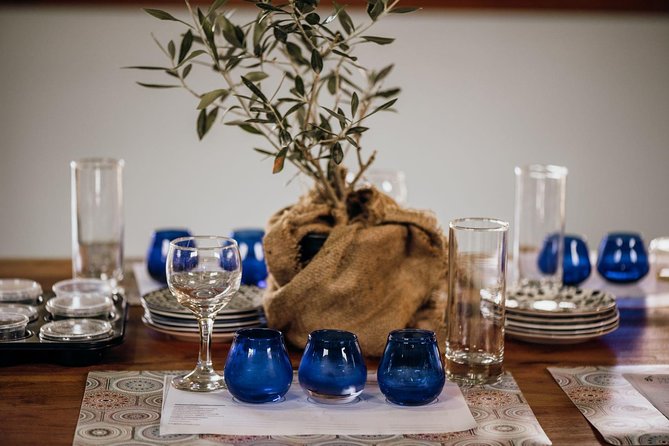
The tasting workshop is led by a certified olive oil sommelier. You will sample three different olive oils and learn how to recognize the qualities associated with extra virgin oil.
This is where the experience becomes practical. You learn to notice aroma, bitterness, and the peppery sensation that can appear at the finish. You also taste different olive varieties, which helps explain why oils from the same region can still have distinct personalities.
The food pairing adds another useful layer. Instead of treating oil as a separate product, the guide shows how it works with Greek mezedes, small dishes designed for sharing. A peppery early harvest oil can taste striking on its own, but it may also change the way you experience tomatoes, greens, cheese, or bread.
You should expect a hands-on session rather than a formal lecture. The explanations are intended to be easy to follow, and guides such as Athanasia and Dimitra are praised for making the material lively and personal. That balance is important. Olive oil tasting can become overly technical, but this format keeps the information tied to food and daily life.
More Olive Oil Tastings with Lunch in Greece
- Wine & Olive Oil Tour with Lunch at Milia Mountain Retreat
★ 5.0 · 194 reviews - Wine & Olive Oil Tour with Lunch – Semi Private Safari Tour
★ 5.0 · 156 reviews - Chania: Milia Mountain Tour w/Lunch Olive Oil/Wine Tastings
★ 4.9 · 97 reviews - Wine & Olive Oil Tour with lunch at the White Mountains
★ 5.0 · 71 reviews
A generous lunch built around local food
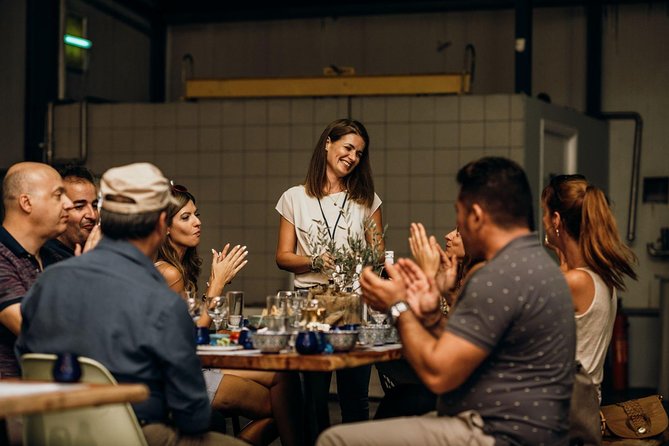
Lunch is not an afterthought here. It is a full spread of local dishes, wine, and dessert, and the meal is part of the value of the tour.
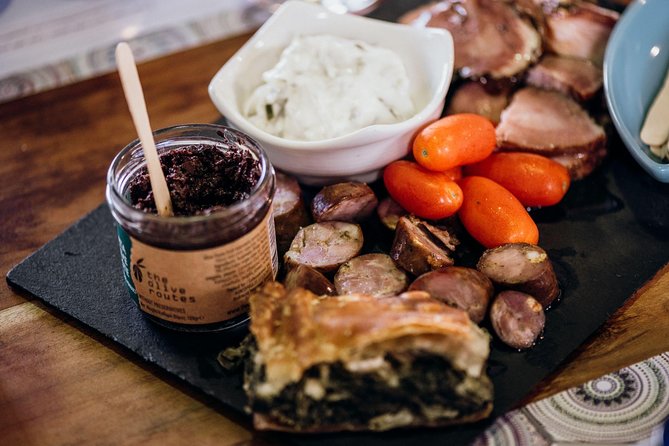
The menu includes fresh salads and vegetables from the garden, tzatziki, feta, Greek Gruyère, Kalamata olive tapenade, and Kalamata olives. You may also receive lalagia, fried bread sticks served with olive marmalade, and a local pie made with fresh phyllo dough.
The main dishes include Kagianas, a traditional preparation of eggs and tomatoes, along with smoked pork and sausage. Dessert is listed as either halvas or yogurt with fruit. These are straightforward foods, but that is exactly the point. You are tasting the everyday ingredients that make the region’s cooking work: tomatoes, eggs, pork, cheese, garden vegetables, olives, and oil.
The lunch has a home-cooked character rather than a restaurant tasting menu. Georgia is associated with preparing the meal, and the food is described as homemade and generous. You should come hungry. The number of dishes can make this feel more like being invited to a local family table than attending a quick tour add-on.
There is also a useful educational detail in the way different oils are paired with different dishes. The meal lets you compare the oils in a real setting, where bread, vegetables, cheese, and meat soften or sharpen their flavors. That is more memorable than tasting oil from a small cup and moving on.
How the four hours are likely to feel
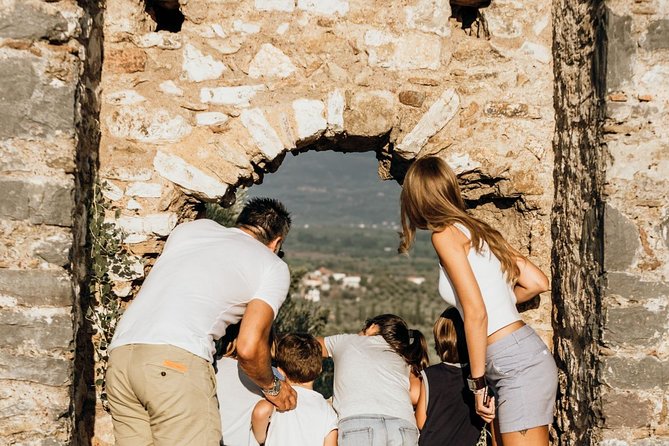
The experience lasts about four hours, beginning at 10:00 am and ending at the same meeting point. The exact pace can vary, since the tour includes several stops, a winery tasting, an olive oil workshop, and a full lunch.
The schedule should suit you if you want a substantial morning activity without giving up a full afternoon in Kalamata. It is long enough to make the subject worthwhile, but short enough to fit into a broader Peloponnese itinerary.
You will be moving between the castle area, the winery, olive facilities, and the lunch setting. The tour is not just a seated tasting. Expect some walking around groves and production spaces, plus time standing during demonstrations. Most people can participate, and service animals are allowed, but the available information does not describe specific wheelchair access or the walking surface at every stop. If mobility is a concern, ask the operator before booking.
The group may be no larger than 16 people, while the highlights describe a group no larger than 12. I would treat this as a small-group experience with a possible upper limit of 16, not as a private outing. That size still allows questions, though the lunch and tasting will feel more intimate when the group is smaller.
Is $108.84 a fair price?
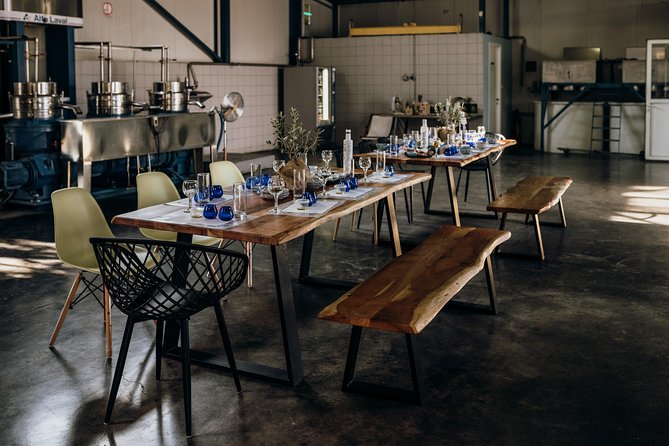
At $108.84 per person, this is not a bargain-priced tasting. It is also more than a simple winery visit or a one-hour olive oil stop. The price covers a four-hour guided experience with several locations, at least three olive oils, at least three wines, mezedes, food pairing, a full traditional lunch, local wine, dessert, and demonstrations at both modern and older olive mills.
That makes the value easier to judge. If you only want a few samples, you can find cheaper activities. If you want food, local agriculture, production details, and a proper meal in one morning, the price is reasonable for what is included.
The lunch is especially important to the calculation. You are not paying only for the guide and tasting glasses. You are also receiving a substantial meal with many local dishes, and the food itself helps explain how the oils are used.
The tour is booked an average of 53 days ahead, so it is sensible to reserve early if your dates are fixed. It has a five-star rating from 117 reviews, with 100 percent recommending it, and the strongest praise focuses on the same things that make the price work: the food, the personal guides, the setting, and the amount learned in a short time.
Who will enjoy this Androusa experience
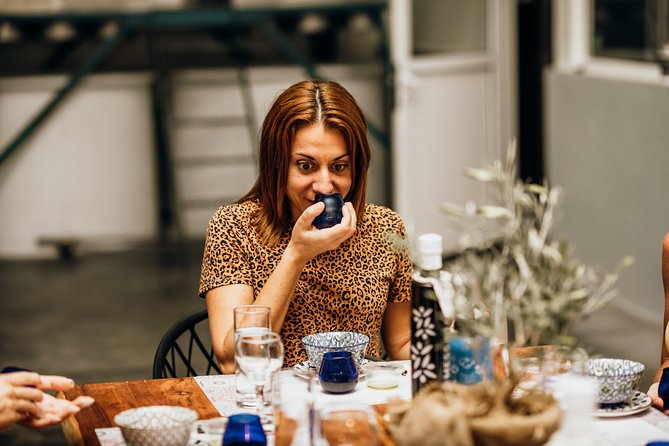
I would choose this tour if you care about Greek food beyond restaurant menus. It suits people who want to understand Kalamata olives, regional wine, and village cooking in the places where they are produced.
It is also a strong choice for couples, small friend groups, and food-focused families. The activities are social, but the guide-led format gives the day structure. You do not need to be an olive oil expert or a wine enthusiast. The tasting is explained for beginners, and the meal gives you an easy way to connect the technical details with familiar food.
The tour also works well for different age groups. Younger adults may enjoy the social meal and wine tasting, while older food lovers may appreciate the old mill, the farming traditions, and the slower pace of a village visit.
I would think twice if you dislike group activities, have no way to reach Androusa, or want a highly flexible schedule. Four hours is a meaningful commitment, and the tour follows a set route. It is also not the best fit if you want a late start, since the meeting time is 10:00 am.
Practical details before you book
You receive confirmation at the time of booking, and the ticket is mobile-friendly. The tour is offered in English.
Free cancellation is available if you cancel at least 24 hours before the 10:00 am start time. Changes or cancellations made less than 24 hours ahead are not accepted for a refund. The activity depends on good weather, so a weather cancellation offers you a different date or a full refund.
The tour ends where it begins, which is convenient if you are driving. There is no hotel pickup or drop-off, so allow enough time to reach the castle meeting point. Since the route includes olive groves and production sites, wear comfortable clothes and shoes suitable for walking, though the supplied information does not specify the exact terrain.
Should you book the Kalamata olive oil and wine tour?
Book it if you want one well-organized morning that links Messinia’s scenery, olive farming, wine, and cooking. The strongest reasons are the two olive mills, the guided oil workshop, the lively guides, and the homemade lunch prepared with local ingredients.
The biggest drawback is the need to arrange your own transport, followed by the possibility of a group of up to 16. If those points work for you, $108.84 buys much more than a tasting. It gives you a clear, tasty lesson in why Kalamata’s olive oil and food traditions matter.
FAQ
Where does the tour begin?
The tour begins at Epar.Od. Ellinoklissias-Androusa 26, Androusa 240 13, Greece, near the 13th-century Castle of Androusa.
What time does the tour start?
The start time is 10:00 am.
How long does the experience last?
The tour lasts approximately four hours.
Where does the tour end?
The activity ends back at the meeting point in Androusa.
Is transportation from my hotel included?
No. Transport from and to your hotel is not included.
How many people can join the tour?
The maximum group size is listed as 16 people. The tour highlights also describe a group no larger than 12, so the final group may vary.
What food is included?
Lunch includes local dishes such as salads and vegetables, tzatziki, feta, Greek Gruyère, Kalamata olives and tapenade, Kagianas, smoked pork and sausage, local pie, lalagia with olive marmalade, and a traditional dessert.
How many wines and olive oils will I taste?
The experience includes guided tasting of three different wine varieties and three different olive oil varieties.
What happens if the weather is poor?
The experience requires good weather. If it is canceled because of poor weather, you will be offered a different date or a full refund.
Freshly pressed around Greece
- Private Tour in Historic Estate in Monemvasia with wine-olive oil tasting & meal★ 5.0 · 4 reviews
- Olive Facility Visit with Olive Oil Tasting Session★ 5.0 · 2 reviews
- SYSTASIS Olive Oil Tasting Experience in Ermioni Greece★ 5.0 · 4 reviews
- Olive Oil Tasting at the Mykonian Farm★ 4.5 · 3 reviews
- Olive Oil Tour close to Nafplio★ 4.5 · 3 reviews
- Olympia Shore Ex: Premium Private Package -Tickets & Olive Market★ 4.5 · 5 reviews
- WIne & Olive Oil Tasting in an Organic Farm in Laconia, Greece!★ 5.0 · 2 reviews
- E-Bike Kalamata Olive Routes★ 5.0 · 10 reviews
Olive Oil Tastings with Lunch, compared.
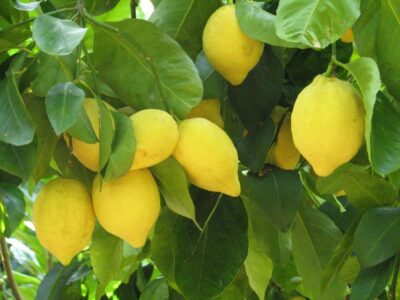
Sorrento: Lemon, Olive Oil and Wine Tasting Tour with Lunch
Read our review →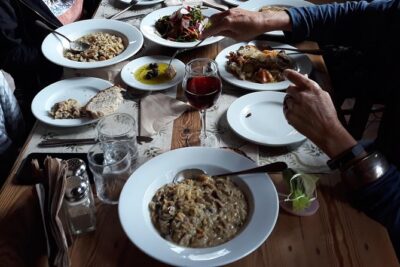
Wine & Olive Oil Tour with Lunch at Milia Mountain Retreat
Read our review →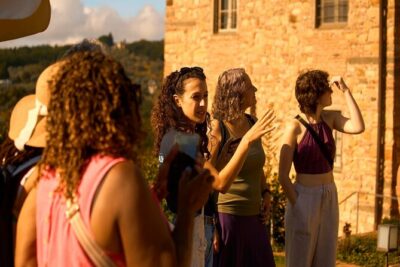
Florence: Great Chianti Wine and Olive Oil Trail with Lunch
Read our review →
Wine & Olive Oil Tour with Lunch – Semi Private Safari Tour
Read our review →
Chania: Milia Mountain Tour w/Lunch Olive Oil/Wine Tastings
Read our review →
Wine & Olive Oil Tour with lunch at the White Mountains
Read our review →
Organic Olive Grove tour & Olive oil tasting & lunch in Kalamata!
Read our review →