
Review · BRINDISI
Brindisi: Cooking Class and Tasting in the Olive Grove
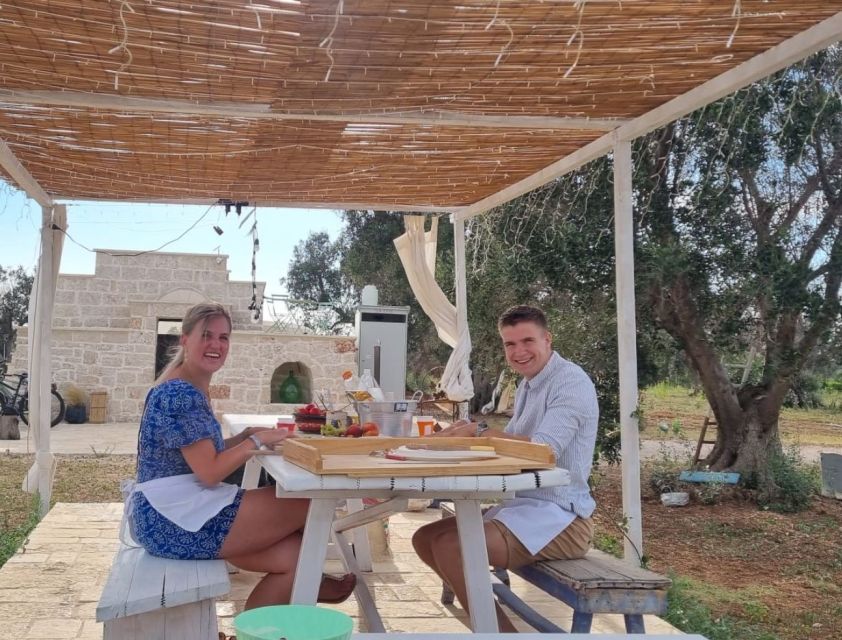
The best part of this Brindisi cooking class is that you do not simply watch someone make pasta. You work the dough with your own hands beneath centuries-old olive trees, shaping two of Puglia’s most recognizable pasta styles. Orecchiette should form a small shell, while strascinati keep a rougher, more handmade look.
I like the setting, a rural house surrounded by olive trees and cultivated fields, and I like the clear payoff: you sit down to eat the pasta you made. Antonella receives especially strong praise for her patience, warmth, and skill as a teacher. The main consideration is transport, since hotel pickup and drop-off are not included.
Key points to know before booking
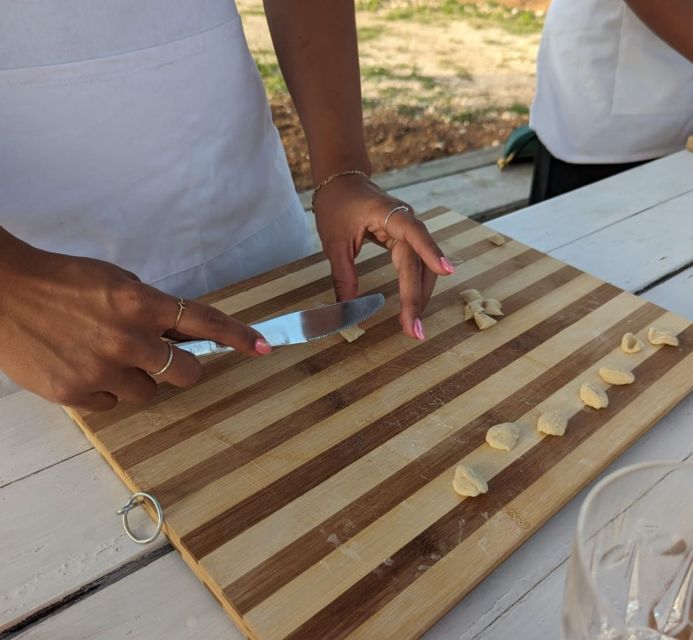
- Two pasta shapes in one class: Learn the shell-like orecchiette and the rustic strascinati.
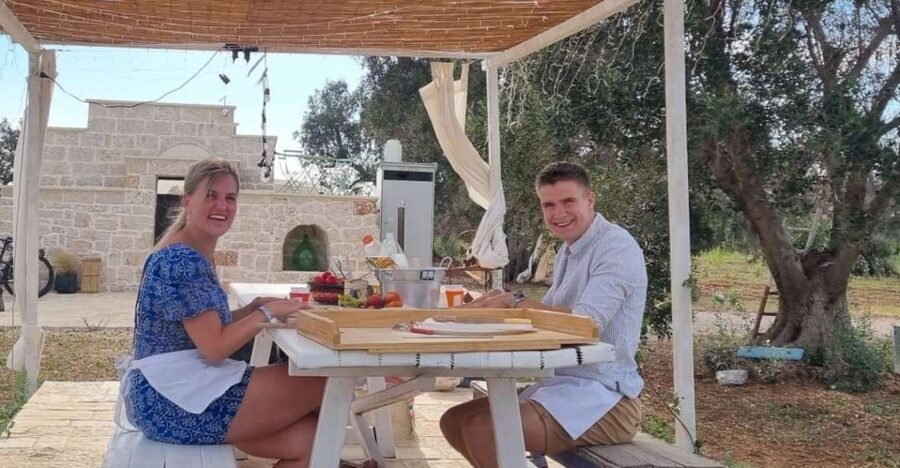
- A countryside setting: The class takes place outdoors at a rural house among centuries-old olive trees.
- Antonella leads the lesson: Instruction is available in Italian and English, with practical demonstrations and guidance.
- Your pasta becomes the meal: Lunch or dinner includes the orecchiette and strascinati prepared during class.
- Oil tasting and local wine included: The food experience goes beyond pasta making.
- Small-group format: The class is limited to 10 participants and lasts 2.5 hours.
Why this Brindisi pasta class feels different
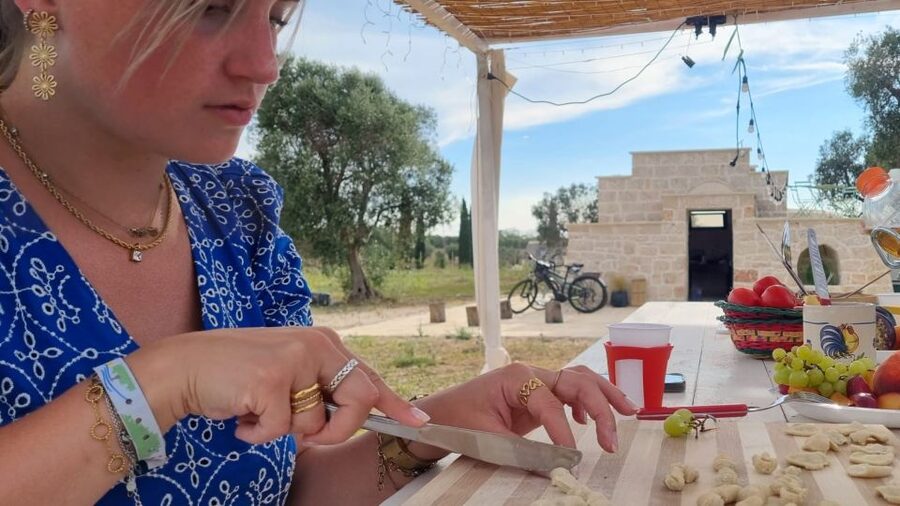
Puglia is closely tied to simple pasta made by hand. The ingredients are not the whole story. The shape, pressure, speed, and small movements of your fingers matter just as much. This class gives you time to practice those movements instead of treating pasta making as a quick photo opportunity.
You begin at a typical rural house in the Puglian countryside. The setting matters because it gives the meal a sense of place. You are not in a restaurant kitchen removed from the source of the food. You are surrounded by old olive trees and working fields, in the kind of setting that helps explain why local meals are built around straightforward ingredients and careful preparation.
The class lasts about two and a half hours. That is long enough to learn, make mistakes, try again, and eat afterward without making the activity take over your whole day. Check the available start times when booking, since the exact schedule is not fixed in the basic activity details.
More Olive Grove Tours in Italy
- Ostuni: Masseria tour among thousand-year-old olive trees with oil tasting
★ 4.8 · 261 reviews - Balestrate: Olive Grove Tour with Wines & Olive Oil Tasting
★ 5.0 · 241 reviews - Bologna: Olive Grove and Vineyard Tour with Product Tastings
★ 4.8 · 109 reviews
Meeting Antonella and getting started with the dough
Antonella leads the instruction in Italian and English. Her teaching is the strongest personal element of the experience. She is described as both a very sweet person and someone passionate about her work, which matters when you are trying to learn a physical skill for the first time.
You can expect the lesson to begin with the basic pasta mixture and the raw materials supplied for the class. The activity takes you through the process from mixing ingredients to working the dough by hand. The supplied information does not set out a precise recipe or list every ingredient, so you should not book this expecting a formal cooking lecture with exact quantities printed in advance.
Instead, the focus is on learning by doing. Antonella guides you through the hand movements and helps you see how the dough should feel and behave. That style suits people who want to leave with a practical memory of Puglian food, not just a plate of pasta made by someone else.
The group limit is 10 people. That is small enough to make personal help possible, though it is not a private lesson. If you prefer one-on-one instruction, keep this group size in mind. For most people, the small-group format should provide a social meal without the scale of a large commercial class.
Making orecchiette, Puglia’s little shells
The first major pasta shape is orecchiette, whose name refers to its small ear-like form. You learn the proper technique for molding each piece into its characteristic shell shape. This is the part that may look simple until you try it.
The method depends on controlled pressure and a quick motion with the knife or your fingers, followed by shaping the piece so it curls into a shallow cup. The class does not promise that every piece will be perfect. That is part of the fun, and the hand-shaped quality is the point.
I like that the activity teaches a recognizable regional food rather than a generic pasta style. Orecchiette is strongly associated with Puglia, so the lesson connects your meal to the area in a direct way. You also get a better sense of how much skill is hidden in a plate that may look modest at first glance.
Antonella also teaches other noodle types during the class, according to the information provided about her instruction. The central focus remains orecchiette and strascinati, but the lesson may give you a wider look at the shaping traditions used in the region.
Shaping strascinati with a rougher touch
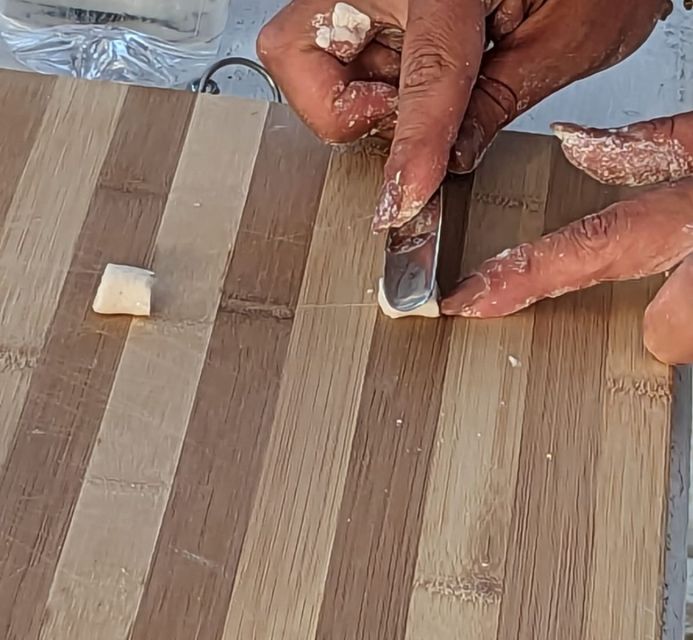
The second pasta is strascinati. Unlike the neat shell form of orecchiette, strascinati have a rough and artisanal appearance. The name reflects the way the pasta is dragged or drawn across the work surface, creating a different texture and shape.
This contrast makes the class more interesting. You are not repeating one technique for two hours. You learn how different hand movements produce different results, and you can compare the smooth curves of orecchiette with the more irregular look of strascinati.
For you, the main benefit is tactile. You feel the difference between shaping a small cup and creating a rougher piece of pasta. The finished dishes also have different visual character, even though both come from the same basic handmade tradition.
Do not expect factory-perfect pasta. The rough edges are part of the appeal. If you are particular about uniform shapes, this may test your patience. If you like food with visible human fingerprints, you will probably enjoy it.
More Cooking Classes around Italy:
- Organic cooking class with a sommelier in an Olive and wine farm
★ 5.0 · 69 reviews - Pasta lesson with extra virgin olive oil tasting
★ 5.0 · 3 reviews - Corfu: Greek Cooking Class & Olive Oil Tasting
★ 5.0 · 178 reviews - Cretan Cooking Class and Olive Oil Tasting
★ 5.0 · 178 reviews
Sitting down to eat what you made
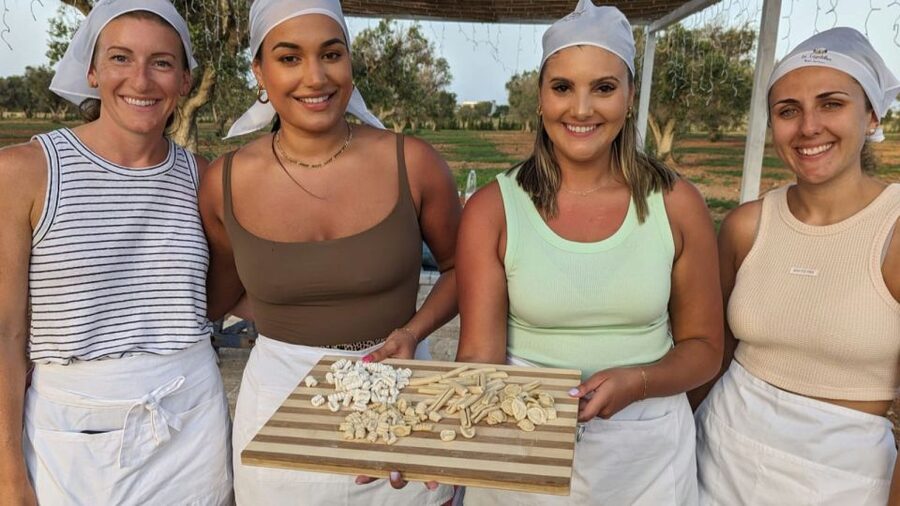
At the end of the lesson, the pasta you prepared becomes lunch or dinner. This is more satisfying than simply carrying a recipe home. You see the entire process through, from raw materials to a meal on the table.
The meal includes both the orecchiette and strascinati made during the class. Local wine and water are included as well. The information does not specify the exact sauces, side dishes, or wine variety, so do not choose this activity based on a promised menu beyond the handmade pasta itself.
That limited menu information is worth noting, but it is not necessarily a weakness. The central pleasure is the pasta you shaped yourself, served in the same rural setting where you learned to make it. The meal gives you time to enjoy the result and talk with the other people in the group.
I also like the no-waste spirit implied by the format. You make the food, then eat it all. The activity is not built around a cooking demonstration followed by a separate restaurant meal. Your effort and the meal are part of one continuous experience.
What the olive-oil tasting adds
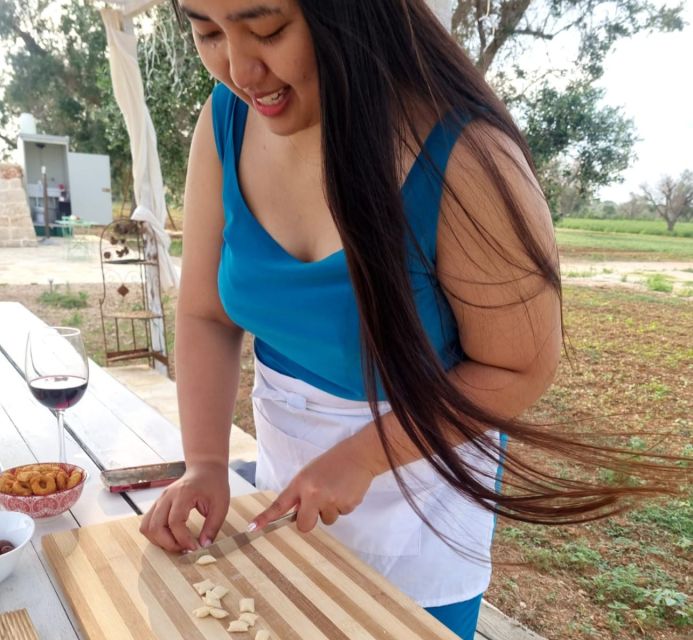
The oil tasting gives the class another distinctly Puglian element. Olive oil is not treated as a minor garnish here. You have a chance to taste it on its own and pay attention to the flavor, aroma, and texture that can disappear when oil is mixed into a finished dish.
The tasting is included in the price, along with the cooking lesson, raw materials, pasta meal, local wine, and water. It helps make the class feel like a regional food experience rather than only a pasta workshop.
The details of the tasting are not specified, so you should not expect a formal certification course or a technical lesson about olive varieties. Think of it as a guided food tasting that complements the countryside setting and the handmade pasta.
The olive trees around the rural house also give the tasting a useful visual context. You are not simply hearing that olive oil matters in Puglia. You are sitting among trees that form part of the area’s agricultural identity.
Is $104.22 a fair price?
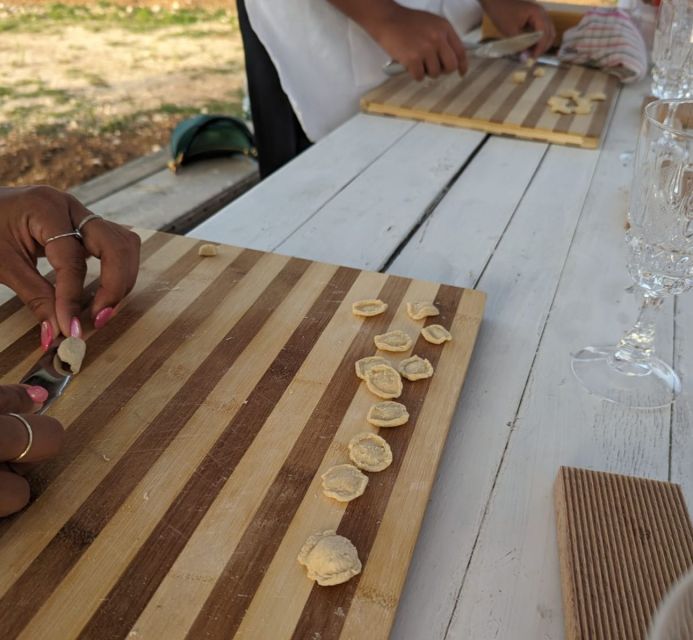
At $104.22 per person, this is more than the cost of a basic meal in Italy. The value depends on how you measure the experience. If you want only pasta and wine, you can likely spend less elsewhere. If you want instruction, a countryside setting, a hands-on activity, and a meal in one booking, the price is easier to justify.
The package includes the cooking class, raw materials, your prepared pasta, an oil tasting, local wine, and water. You are paying for the setting and the time with an instructor as well as the food itself.
The small group helps the value. With no more than 10 participants, the class is not designed for a crowd moving through a demonstration line. You should have a reasonable chance to follow the shaping process and ask for help, though individual attention can vary depending on the group.
I would consider this a stronger buy for someone who enjoys food activities than for someone simply searching for the cheapest lunch in Brindisi. The meal alone does not explain the price. The combination of learning, making, tasting, and eating does.
Timing, transport, and practical planning
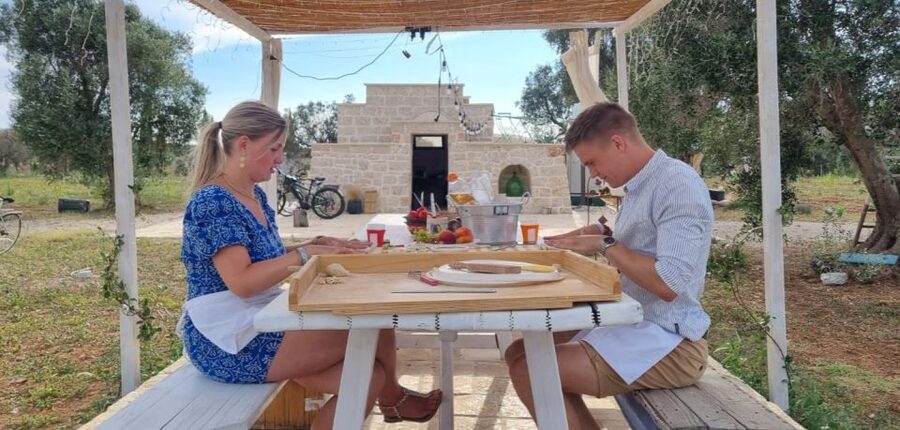
The activity lasts 2.5 hours, and the meeting point is marked by a signboard along the way. It ends back at the meeting point. Hotel pickup and drop-off are not included, so you need to arrange your own way there and back.
That transport detail is the biggest practical issue. The class takes place in the countryside rather than at a central Brindisi restaurant. The supplied information does not give a street address, transfer option, or travel time from Brindisi, so confirm the meeting instructions carefully before the day of the class.
Allow enough time to find the signboard and arrive without rushing. The class depends on a relaxed pace, especially when you are learning hand-shaping techniques. Arriving late could mean missing the dough preparation or the first demonstration.
The location may suit you best if you have a car or already have a clear plan for reaching the meeting point. Since no hotel transfer is included, this is not the easiest option for someone who wants a door-to-door activity.
Cancellation is flexible: you can cancel up to 24 hours in advance for a full refund. You can also reserve now and pay later, which helps if your route through Puglia is still taking shape.
Who will enjoy this experience most
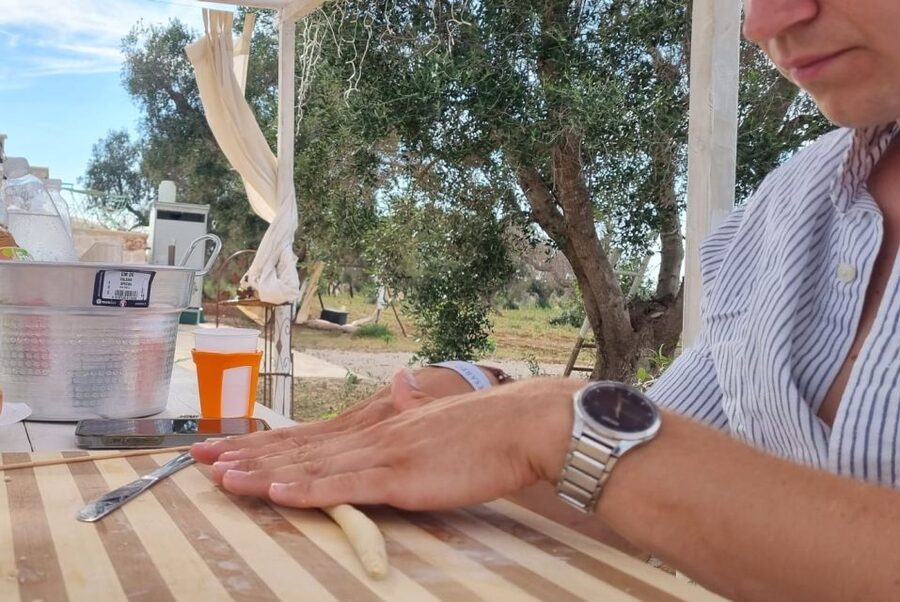
I would choose this class if you like food with a strong sense of place and want an activity that feels local rather than polished for mass tourism. It is also a good fit for couples, families, and small groups of friends who enjoy doing something together before sitting down to eat.
You do not need to be an experienced cook. The class is built around basic hand skills, and Antonella guides you through the process. Curiosity matters more than speed or precision.
It may also suit you if you are looking for an evening activity with a meal included. The available start times vary, so check the schedule if you want to fit the class around a day of sightseeing in Brindisi or nearby areas.
The experience is less suitable if you dislike group activities, need hotel transportation, or want a detailed wine and olive-oil seminar. It is also not the right choice if you expect a large menu with several courses. The focus is narrow and clear: make two Puglian pasta shapes, taste olive oil, and eat the pasta with local wine and water.
The strongest reason to book
The most convincing feature is Antonella’s role. A cooking class can easily become mechanical if the instructor rushes through the shapes. The available feedback about her repeatedly highlights her warmth, teaching ability, and passion for the work.
That matters because orecchiette and strascinati require more than a recipe. You need someone to show the movement, watch your hands, and explain why your pasta is turning out too thick, flat, or uneven. Antonella’s approach appears to add the human element that makes the class memorable.
The 4.9 rating from 18 reviews supports that impression, though the number of ratings is still modest. I would treat it as a strong sign of satisfaction, not a guarantee that every group will have exactly the same experience.
Should you book the Brindisi olive-grove cooking class?
Book it if you want a hands-on Puglian food experience, especially one that combines a rural setting with a meal made by you. The two pasta shapes, olive-oil tasting, local wine, and small group give the 2.5-hour class a clear sense of purpose.
Before paying, make sure you are comfortable arranging your own transport to the signposted meeting point. Also check the starting time and confirm that the food-focused format matches what you want. If those details work for your plans, $104.22 is a reasonable price for instruction, ingredients, tastings, and lunch or dinner in the olive grove countryside.
FAQ
Where does the cooking class take place?
The class takes place at a typical rural house in the Puglian countryside, surrounded by centuries-old olive trees and cultivated fields.
How long does the experience last?
The cooking class lasts 2.5 hours. Starting times vary, so check availability when booking.
What pasta will I learn to make?
You will learn to prepare orecchiette and strascinati. Orecchiette are shaped into their characteristic shell form, while strascinati have a rougher, more artisanal appearance.
Will I eat the pasta I make?
Yes. Lunch or dinner with the orecchiette and strascinati prepared during the class is included.
Is an olive-oil tasting included?
Yes. The activity includes an oil tasting, along with local wine and water.
What languages does the instructor speak?
Instruction is available in Italian and English. Antonella leads the class.
How many people can join the class?
The activity is limited to 10 participants, making it a small-group experience.
Is transportation from my hotel included?
No. Hotel pickup and drop-off are not included. You meet at the signposted meeting point and return there when the activity ends.
More Workshops around Italy
- Moires: Cooking Class and Olive Oil Tasting at a Family Farm
★ 5.0 · 93 reviews - Cooking Classes and olive oil tasting.The real taste of Greece!
★ 5.0 · 56 reviews - Chania Sourdough Bread Class – Olive Oil Tasting
★ 5.0 · 31 reviews - Cretan Delights – Wine, Olive Oil & Cooking Workshop from Chania
★ 5.0 · 25 reviews
Freshly pressed around Italy
- E-bike tour in Ostuni, the olive trees and the rock village★ 5.0 · 4 reviews
- Tuscan ExtraVirgin Olive Oil Tour★ 5.0 · 4 reviews
- Wine and Extra virgin olive oil tasting in Lucca, Tuscany★ 5.0 · 3 reviews
- Lecce : Half day E-Bike tour to Old Olive Mill & Olive Oil Taste★ 5.0 · 3 reviews
- Bellagio/Lezzeno/Oliveto Lario to/from Milan Malpensa Apt (Private Transfer)★ 5.0 · 4 reviews
- Sunset Magic E-bike Tour at Sunset in Capoliveri★ 5.0 · 4 reviews
- Leonardo Da Vinci’s wind mill visit and Organic olive oil tasting★ 4.5 · 12 reviews
- Chianti from Florence:PRIVATE Wine, Olive Oil Tasting in the Tuscan countryside★ 5.0 · 2 reviews
Olive Grove Tours, compared.
Ostuni: Masseria tour among thousand-year-old olive trees with oil tasting
Read our review →
Balestrate: Olive Grove Tour with Wines & Olive Oil Tasting
Read our review →
Traditional Olive Grove and Dragon Fruit Farm Tour
Read our review →
Visit of the olive grove, olive oil tasting and snack
Read our review →
Bologna: Olive Grove and Vineyard Tour with Product Tastings
Read our review →
Guided tours of the olive grove with oil tasting.
Read our review →
Organic Olive Grove tour & Olive oil tasting & lunch in Kalamata!
Read our review →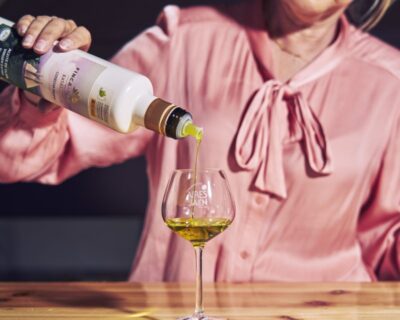
Jaen: Olive oil tour with the 5 senses, grove and tasing
Read our review →Other lists with this tasting on them