
Review · ITALY
Buti: Olive Oil Ancient Mill Tour and Tasting Experience
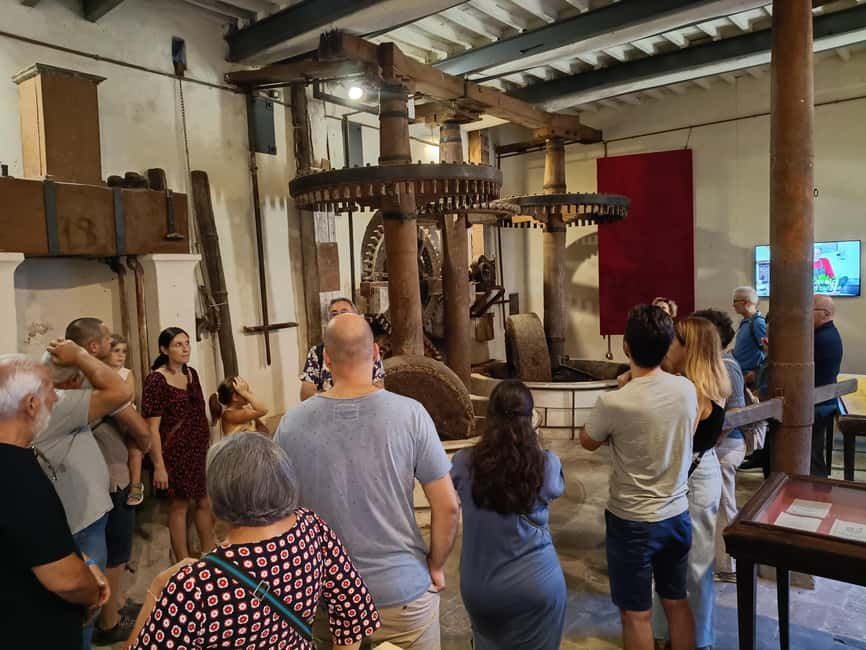
The best part of this Buti experience is the link between old mill machinery and a modern tasting lesson. You do not just sample oil and move on. You see where the work began, then learn how to judge what is in your glass.
I like the small-village setting and the practical tasting skills. Buti is known for olive oil, and the tour takes place at its Oleoteca, not in a generic city shop. I also like that Dimitri leads the experience in English and explains how to recognize good extra virgin oil.
The main consideration is time. One hour is enough for a focused introduction, but not for a long mill visit or a full meal. The experience includes short walks and a 15-minute village class, so you should expect a compact lesson rather than a leisurely afternoon in the countryside.
Key points at a glance
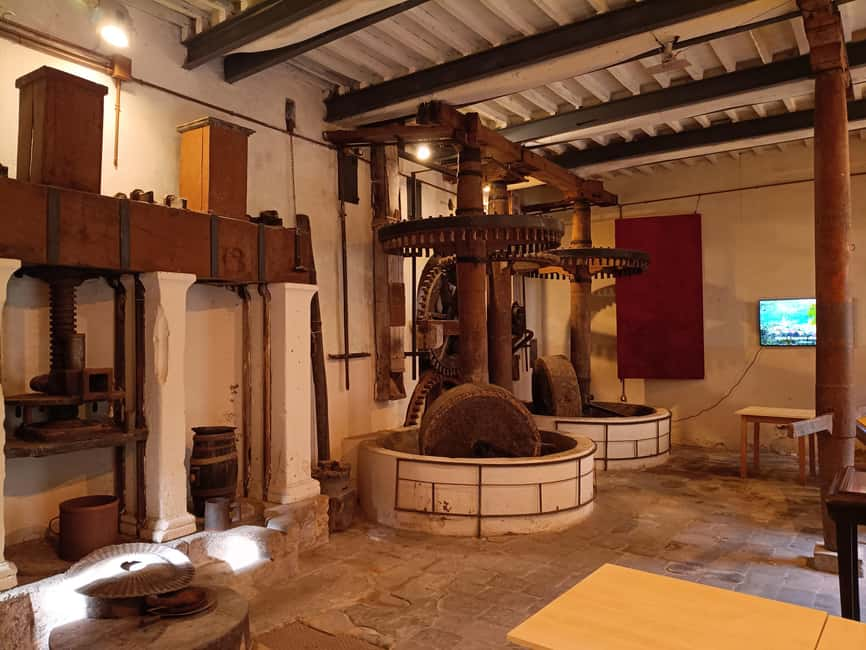
- See an ancient mill in Buti: Walk to Via Paola da Buti 30 and view the traditional equipment used in olive oil production.
- Learn how extraction works: The guide connects the machinery, production steps, and long history of Tuscan and Italian oil.
- Taste oils from across Italy: The Oleoteca tasting uses high-quality extra virgin oils made with advanced equipment.
- Build a useful tasting skill: You learn a few simple steps for judging an oil’s quality, flavor, and freshness.
- Stay in a real olive-oil village: Buti gives the experience a local setting instead of a showroom-only presentation.
- Keep the cost modest: At $17 per person, the tour offers a practical introduction without taking much of your day.
Why Buti makes a good setting for an olive oil lesson
Buti is a village known for olive oil production, so the subject fits the place. That matters. A tasting in a city food shop can explain flavor and labels, but Buti adds the physical setting where olive oil has been made and valued for generations.
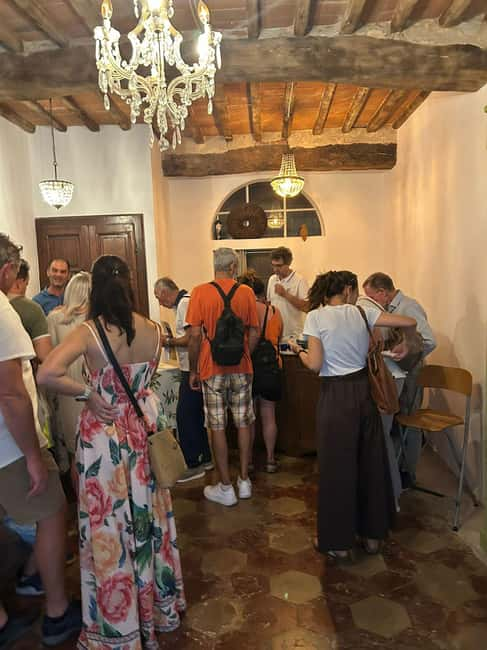
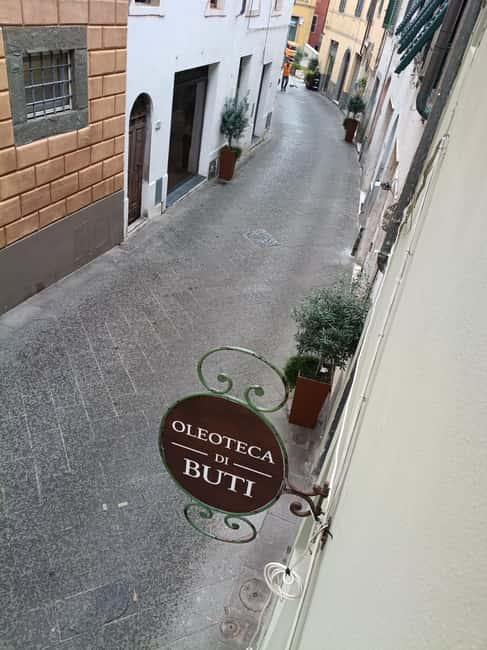
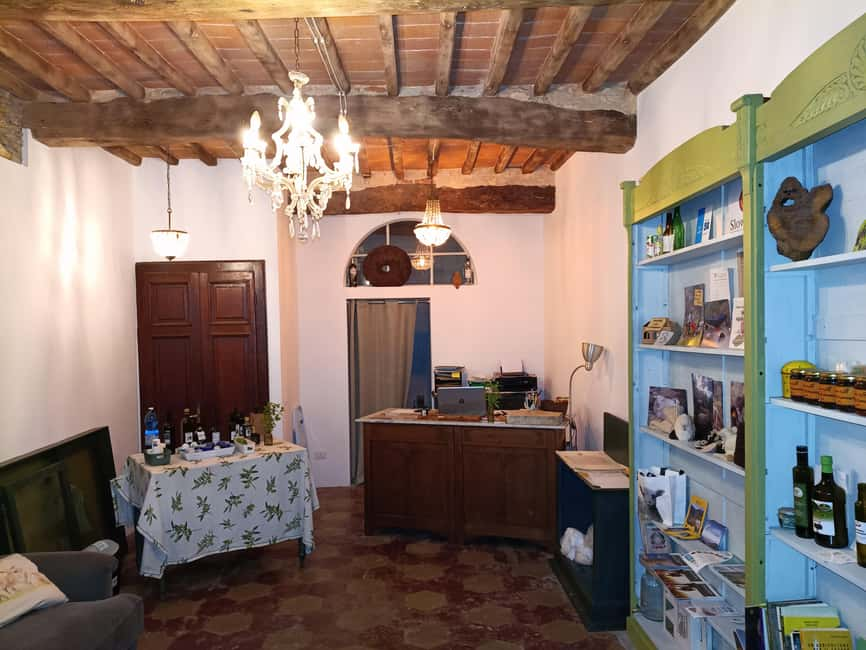
You begin at the Oleoteca di Buti, marked by its sign at Via Roma 10. This is both your meeting point and the base for the tasting. From there, you walk about five minutes to the ancient mill at Via Paola da Buti 30.
That short walk is useful because the tour does not keep you seated the whole time. You move from a tasting center into the village and then return for the sensory part of the experience. The route is brief, so it should be manageable for most people, though you will want comfortable shoes for walking on village streets.
The setting also helps explain why olive oil is more than a bottle on a supermarket shelf. In Tuscany and across Italy, it connects farming, food, local work, and family tradition. The guide gives you that background without asking you to commit to a full-day food tour.
More Olive Mill and Factory Tours in Italy
- Bardolino: Lake Garda Oil Mill Tour with Olive Oil Tasting
★ 4.9 · 205 reviews - Lecce to Galatina E-Bike: Olive Mill & Wine Tasting + Taxi back
★ 5.0 · 54 reviews - Olive Oil Tour Visit to the oil mill and olive oil tasting
★ 5.0 · 53 reviews
Inside the ancient mill on Via Paola da Buti
The mill visit lasts about 15 minutes. That is short, but it gives the tour a clear purpose: you see traditional machinery and learn how olives become oil.
Expect an explanation of the extraction process and the way older equipment was used. The available details do not promise that every machine will be running, so think of this as a guided look at the mill rather than a working production demonstration.
I like this part because it gives shape to an otherwise abstract process. Words such as pressing, extraction, and extra virgin can feel technical when you meet them only on a label. Standing near the old machinery helps you picture the work behind the finished product.
You also hear about the history of olive oil in Tuscany and Italy. The mill is not treated as a decorative stop. It provides the historical setting for the conversation about how production has changed and how quality has remained important.
The drawback is the length. Fifteen minutes will not satisfy you if you want a detailed engineering tour, a long discussion of farming, or time to photograph every piece of equipment. The benefit is that the visit keeps the experience focused and leaves enough time for the tasting, which is where the most useful shopping advice comes in.
The 15-minute village class and the walk back
After the mill, you walk back toward the Oleoteca for a 15-minute class in the traditional village. This part appears to connect the physical setting with the culture of olive oil production.
The schedule is tight, so expect a concise lesson. You may hear more about the centuries-old place of extra virgin oil in Tuscan and Italian food, along with the role of the village in that tradition. The tour is not designed as a broad history lecture, and the available details do not specify a particular building or monument used for the class.
That restraint can be a plus. If you have only a morning or afternoon in the area, you get a taste of Buti without giving up several hours. I would see this as a useful pause between the mill and the tasting, not as a separate sightseeing tour of the village.
The five-minute return walk also makes the route easy to follow. You finish back at the Oleoteca di Buti, where the tasting takes place. Since both the start and finish are at the Oleoteca, you do not need to arrange a second pickup point.
Tasting Italian extra virgin oils at the Oleoteca
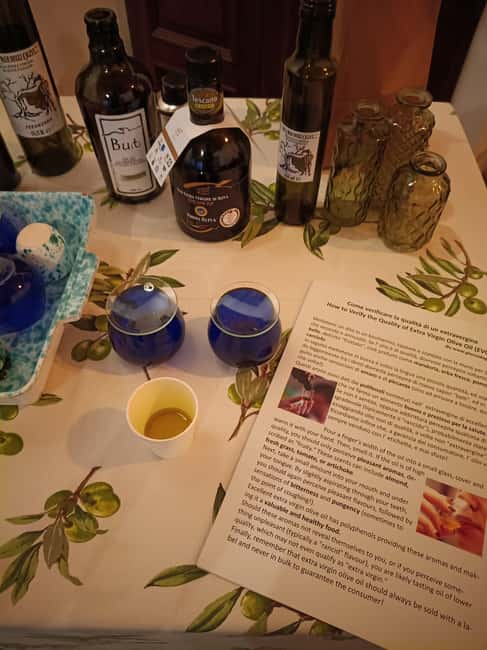
The tasting is the heart of the experience. At the Oleoteca, you sample a selection of high-quality extra virgin olive oils from different parts of Italy. The oils are made using advanced equipment, giving you a chance to compare modern production with the traditional mill you have just seen.
The point is not simply to decide which oil tastes best. You learn how to recognize quality through a few simple steps. That can help you at a market, specialty shop, or restaurant when you want to understand what you are buying rather than rely on a fancy label.
A useful tasting lesson should make you pay attention to the oil’s smell, flavor, and overall balance. The supplied information does not list the exact oils or a formal tasting sheet, so you should not expect a fixed lineup that is guaranteed to be the same every day.
That flexibility may work in the tour’s favor. The selection can focus on high-quality examples from Italy rather than force every group through the same script. Still, if you are hoping to taste a particular Tuscan olive variety, ask Dimitri what is available during your visit.
The setting at the Oleoteca also gives the tasting a personal feel. Dimitri is identified as the English-speaking guide and as part of the agricultural business behind the experience. The personal connection matters here because oil tasting can feel intimidating when you do not know the correct terms. A guide can show you what to notice without turning the session into a test.
Same olive country, a different way to taste it:
- Sorrento Farm and Food Experience including Olive Oil, Limoncello, Wine tasting
★ 5.0 · 2,524 reviews - Olive oil tasting in Sorrento
★ 5.0 · 434 reviews - Sorrento: Lemon, Olive Oil and Wine Tasting Tour with Lunch
★ 5.0 · 300 reviews - Alghero: Wine and Olive Oil Tasting at a Local Farm
★ 4.8 · 294 reviews
What you can learn about oil quality
Many people buy extra virgin olive oil by looking at the bottle shape, the Italian flag, or words such as cold pressed. This experience gives you a better starting point: use your senses and understand the basic production story.
You learn a few simple steps for recognizing a quality oil. The lesson is presented as something practical, not as specialist training. That makes it suitable if you cook at home but have never learned how oils differ.
The health angle also comes up. One detailed account of the experience specifically points to learning which good-quality oil is better for your health. You should treat that as general food education, not personal medical advice, but it shows that the tasting goes beyond flavor alone.
The distinction between extra virgin olive oil and lower-quality oil is useful in everyday shopping. Extra virgin oil is judged by production standards and sensory qualities, so a label alone does not tell the whole story. The tour helps you connect what you taste with what the bottle claims.
I especially like this kind of lesson for people who are already planning to buy oil in Italy. You can use the advice immediately. Instead of choosing the most expensive bottle or the prettiest label, you have a clearer idea of what quality should taste and smell like.
How the old and modern methods fit together
The experience makes an interesting comparison without needing a long lecture. At the ancient mill, you see the tools and machinery connected with traditional production. At the Oleoteca, you taste oils made with advanced equipment.
That contrast gives the hour a simple story. Olive oil has a long history in Tuscany and Italy, but the goal of producing good oil has not disappeared as methods have changed. The old mill shows continuity, while the modern tasting shows how producers work today.
Do not expect a technical factory tour. The information provided does not describe a working modern facility or a complete production line. Instead, the modern side appears through the oils selected for tasting and the guide’s explanation of how quality is achieved.
This balance should suit you if you want context without a heavy academic presentation. You get enough history to understand the place, enough process to follow how oil is made, and enough tasting practice to make the subject useful after you leave Buti.
Is $17 a fair price?
At $17 per person, the value is strong if you want a short, focused food experience. The price covers a guided visit to an ancient mill, an English-language lesson, a tasting of Italian extra virgin oils, and a visit to the Oleoteca.
You are also paying for interpretation. The mill itself may be interesting, but without an explanation, old machinery can be hard to understand. Dimitri’s role is to connect the equipment with the production process and then explain what you are tasting.
The one-hour format keeps the cost and time commitment low. You can fit it into a day in Buti or use it as a food-focused stop during a wider visit to Tuscany. It is less suitable if you want a full meal, a long farm visit, or several hours of olive growing and harvesting.
The price is particularly reasonable for people who cook with olive oil often. A short lesson that helps you avoid poor purchases can pay off over time. The value is less obvious if you already work with olive oil professionally or have taken several serious tastings, since this is an introduction rather than an advanced course.
The experience has a 5.0 rating from two verified bookings, with praise focused on Dimitri, the old mill tour, the tasting, and the ability to identify quality oil. That is encouraging, though the small number of ratings means you should treat it as a useful signal, not a guarantee of every future visit.
Who will enjoy this most
I would recommend this tour to several types of visitors:
- Food-focused visitors who want to understand a familiar Italian ingredient at its source.
- First-time olive oil tasters who want clear guidance instead of a formal or intimidating class.
- Couples and small groups looking for a one-hour activity with a local connection.
- Home cooks who want practical advice for buying better extra virgin olive oil.
- Visitors with limited time who prefer a compact experience rather than a full-day excursion.
- People interested in village life who want a short walk through Buti along with the mill visit.
It may not be the best choice for you if you want a long tour, a meal, a visit to olive groves, or a detailed look at every stage of commercial production. The schedule is deliberately brief, and the mill visit takes only about 15 minutes.
The tour is listed as wheelchair accessible. You should still confirm the route and current conditions if you have specific mobility needs, since the experience includes walking between Via Roma 10 and Via Paola da Buti 30.
Practical details before you book
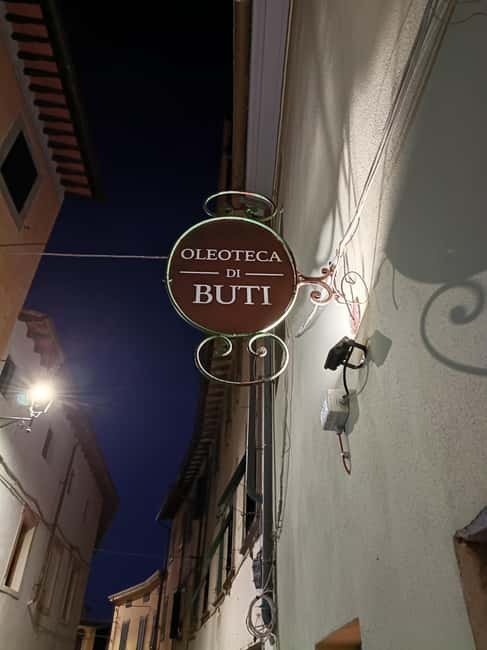
The meeting point is the sign for the Oleoteca di Buti at Via Roma 10. Look for that sign rather than heading directly to the old mill, since the tour starts at the Oleoteca and returns there.
The tour lasts one hour and is conducted in English by a live guide. Dimitri is the named guide associated with the experience, and the personal style is part of its appeal.
Wear comfortable shoes. The walking sections are each about five minutes, but this remains a village walking tour rather than a seated tasting from start to finish.
You can cancel up to 24 hours before the experience for a full refund, and you can reserve now while paying later. Those options are useful if your Tuscany schedule is still changing. Check the available start times when booking, since the exact departure schedule is not fixed in the information provided.
Should you book the Buti olive oil tour?
Book it if you want an affordable, one-hour introduction that combines a real old mill with a useful tasting lesson. The best reason to go is not simply the chance to sample oil. It is the chance to learn what to look for when you taste and buy it later.
I would especially choose this experience over a generic shop tasting if you care about place and process. You walk through Buti, see traditional machinery, learn about Tuscan and Italian oil, and finish with oils made using modern equipment.
Skip it if you need a long, detailed production tour or a full food experience. At $17, this is an accessible introduction, not a full agricultural visit. For most curious food lovers, that is exactly why it works: it gives you a taste of Buti, a better understanding of olive oil, and a practical skill you can carry into the rest of your trip.
FAQ
Where does the Buti olive oil tour begin?
The meeting point is at the sign for the Oleoteca di Buti on Via Roma 10.
How long does the experience last?
The tour lasts one hour.
Is the tour conducted in English?
Yes. The experience includes a live English-speaking guide.
What will I see at the ancient mill?
You will visit an ancient olive oil mill at Via Paola da Buti 30, see traditional machinery, and learn about the extraction process and olive oil production.
What happens during the tasting?
You will taste a selection of high-quality extra virgin olive oils from different parts of Italy and learn simple ways to recognize quality oil.
Is the experience wheelchair accessible?
Yes, the activity is listed as wheelchair accessible.
Can I cancel my booking?
Yes. You can cancel up to 24 hours in advance for a full refund. You can also reserve now and pay later.
Freshly pressed around Italy
- E-bike tour in Ostuni, the olive trees and the rock village★ 5.0 · 4 reviews
- Tuscan ExtraVirgin Olive Oil Tour★ 5.0 · 4 reviews
- Wine and Extra virgin olive oil tasting in Lucca, Tuscany★ 5.0 · 3 reviews
- Lecce : Half day E-Bike tour to Old Olive Mill & Olive Oil Taste★ 5.0 · 3 reviews
- Bellagio/Lezzeno/Oliveto Lario to/from Milan Malpensa Apt (Private Transfer)★ 5.0 · 4 reviews
- Sunset Magic E-bike Tour at Sunset in Capoliveri★ 5.0 · 4 reviews
- Chianti from Florence:PRIVATE Wine, Olive Oil Tasting in the Tuscan countryside★ 5.0 · 2 reviews
- Leonardo Da Vinci’s wind mill visit and Organic olive oil tasting★ 4.5 · 12 reviews
Olive Mill and Factory Tours, compared.
Crete: Quad Safari, Olive Mill with Tasting & Ghost Village
Read our review →
From Mendoza: 3 Wineries, Olive Oil Factory Tour & Tasting
Read our review →
Knossos-Zeus Cave -Old Traditional Villages-Olive Oil Factory
Read our review →
The Governor’s Olive Mill Tour with Olive Oil Tasting
Read our review →
Crete: Road-trip to Lasithi, Zeus Cave & Olive Mill Farm
Read our review →
Lassithi, Zeus Cave, Olive Mill Farm & Knossos Combo Tour
Read our review →
Zeus Cave, Lassithi Plateau, Olive Oil Factory, Kritza, Pottery
Read our review →
Crete: Zeus Cave, Lassithi Plateau, and Olive Factory Tour
Read our review →Other lists with this tasting on them