
Review · SPAIN
Johnny Madge Olive Oil Tastings
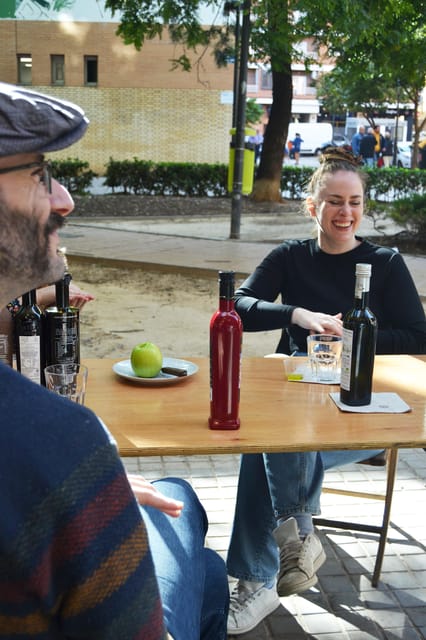
The clever part of Johnny Madge’s olive oil tasting is that the oils are chosen by an international competition judge, not simply poured by a producer promoting one brand. In one hour at La Ola Fresca in Benimaclet, you smell and taste at least three excellent oils from Spain and beyond, then learn what makes each one different.
I like the special biodegradable corn tasting cups, which let you focus on aroma before food enters the picture. I also like Johnny’s flexible teaching style: you can get the technical story of oil mills and competition judging, or keep things light and practical. The main limitation is the short format. One hour gives you a useful introduction, but not a long meal or a full tour of an olive farm.
Key points
- Taste oils selected by a competition judge: Johnny Madge chooses at least three high-quality oils rather than presenting only his own production.
- Learn the official tasting method: Smell and taste oil in the same general way used in International Olive Oil Competitions.
- Compare oils from different places: The selection can include excellent oils from Spain and other countries.
- Get practical kitchen advice: Ask about cooking, health, milling, bread dipping, storage, and how to use oil with food.
- Choose your level of detail: Johnny can explain oil-mill technology in depth or keep the class relaxed and easy.
- Meet at a leafy Benimaclet café: La Ola Fresca sits on a tree-filled square away from traffic, with a large sign outside.
Why this one-hour tasting is different
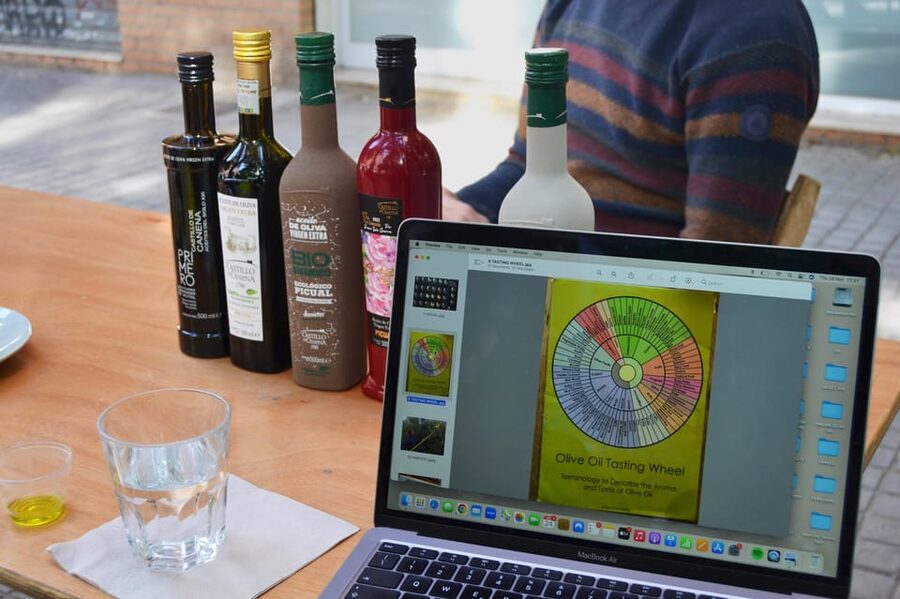
Olive oil is often treated as a supporting player. It sits beside the bread, disappears into a salad dressing, or becomes the base of a frying pan. Johnny Madge’s tasting asks you to slow down and pay attention to the oil itself.
That change of focus matters. Good extra virgin olive oil can smell and taste very different from another bottle labeled the same way. One may have fresh green aromas, while another may be softer, fruitier, or more peppery. The point is not to find one single best flavor. It is to understand the range.
Johnny has held tastings for 20 years and judges International Olive Oil Competitions. That experience shapes the class. You are not simply told that one oil is good and another is bad. You learn how trained judges assess aroma and flavor, and why defects affect an oil’s quality.
This makes the experience useful for two kinds of people. If you already cook with olive oil, you can sharpen your palate and make better buying choices. If you know little about oil, the class gives you a clear place to start without requiring specialist knowledge.
More Olive Oil Tours around Spain:
- Ronda: LA Almazara LA Organic, Olive Oil Museum and Tasting
★ 4.6 · 435 reviews - Guided tour and olive oil tasting in Alhaurin el Grande (Málaga)
★ 5.0 · 200 reviews - Guided Tasting Tour in 16th century House and Olive Oil Factory
★ 5.0 · 169 reviews
Meeting Johnny Madge at La Ola Fresca
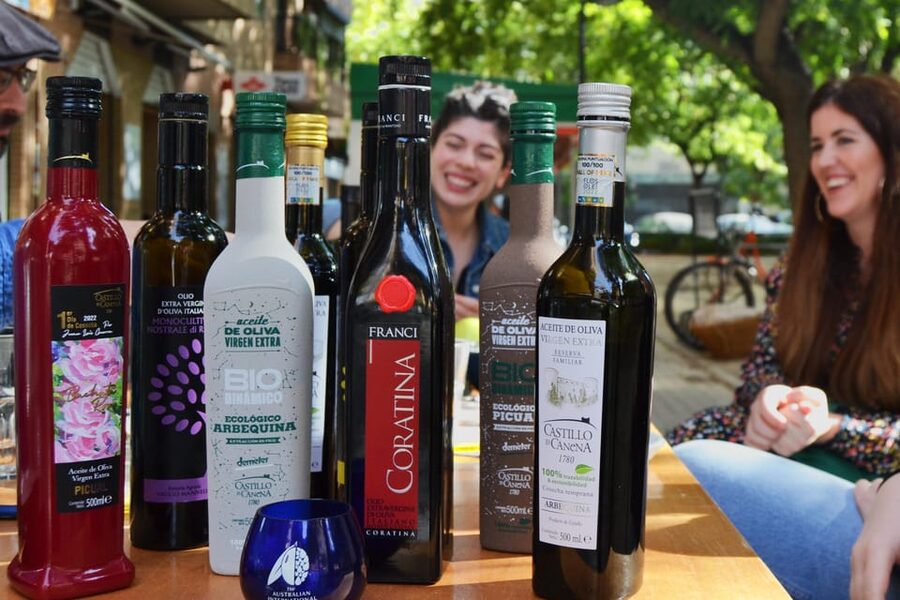
The tasting takes place at La Ola Fresca, a café in Benimaclet, one of Valencia’s neighborhoods. The café is on a square full of trees rather than on a car-filled road, and the large sign outside should make it easy to identify.
That setting helps set the tone. This is not a formal lecture in a conference room. It is a small café experience with a host who aims to make people feel like friends rather than clients. The supplied information describes Johnny’s approach as friendly, funny, and relaxed, and the strong feedback repeatedly points to his warmth and easy manner.
The neighborhood location also gives you a reason to spend time outside Valencia’s main sightseeing zone. Benimaclet has its own local feel, but the activity itself remains focused on the tasting rather than a neighborhood walk. Plan to arrive with enough time to find the square, since the meeting point is not on a normal street used by cars.
The experience is wheelchair accessible. Instruction is available in English, Italian, French, and Spanish, which makes it easier to ask detailed questions in the language that suits you best.
The first smell: learning to notice olive oil
The class begins with the way judges approach oil in competitions. Aroma comes before food. You use special tasting cups made from biodegradable corn, designed for examining olive oil rather than admiring its color.
This is a useful correction to a common habit. At home, you may look at the oil in a glass bottle and assume that color tells you something important. In professional tasting, smell and flavor matter more. The cup helps direct your attention toward the oil’s scent and keeps the process focused.
Johnny explains the aromas found in the oils he serves. The tasting selection includes at least three of the best oils available through his stock, with options from Spain and other countries. Since he is not presenting only oils made by one producer, the session can show genuine differences between oils.
You may notice that some oils seem mild while others have a sharper, peppery finish. That difference does not automatically make one oil better for every use. It gives you a starting point for discussing how flavor affects cooking and serving.
The format is also approachable for people who feel unsure about tasting language. Johnny’s job is not to test you. He can explain the details, answer questions, and help you understand what you are noticing without making the experience feel like an exam.
Tasting the oils plain or with bread
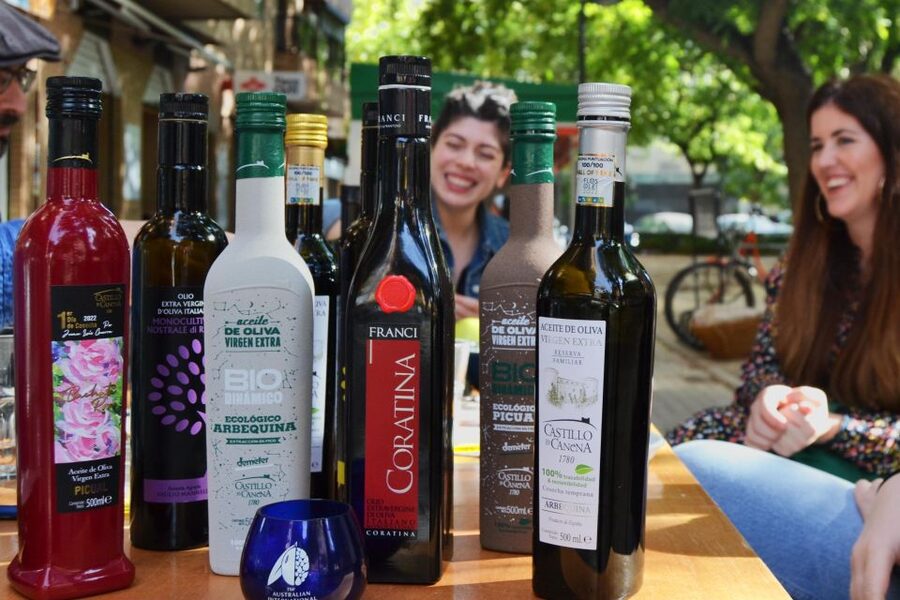
After smelling the oils, Johnny teaches anyone who wants to learn how to taste them directly. This is the clearest way to notice texture, flavor, bitterness, and the peppery sensation that can appear at the back of the throat.
Some people may prefer bread, and that option is available. You can dip the oil with locally made sourdough, or request gluten-free bread. Water is provided at no extra cost, helping you reset your palate between tastes.
The choice between plain tasting and bread dipping is more important than it may sound. Tasting oil by itself gives you the cleanest look at its character. Bread shows you how the oil behaves as food, which is closer to the way most people will use it at home.
I would suggest trying at least one oil both ways if Johnny offers that opportunity during your session. Plain tasting helps you compare oils fairly. Bread helps you decide which flavors you might actually enjoy at the table.
The tasting is not presented as a meal, so you should not book it expecting a large snack or a full food pairing. Bread is there to support the tasting. The main subject remains the oil.
Same olive country, a different way to taste it:
- Visit of the olive grove, olive oil tasting and snack
★ 4.9 · 111 reviews - Visit Oil Mill Museum and Olive Oil Tasting in Ronda
★ 4.5 · 105 reviews - Private Tasting of Olive Oil in Córdoba
★ 5.0 · 93 reviews - Olive Oil tasting breakfast & Tour in Cordoba
★ 4.5 · 84 reviews
What extra virgin really means
One of the most useful parts of the class is the explanation of the term extra virgin. It is easy to assume that the phrase is simply a marketing label for expensive olive oil. Johnny explains the standards behind it and asks the more useful question: how does an oil qualify as extra virgin?
This gives you a better way to read bottles after you leave Valencia. You learn that the words on the label connect to how the oil was made and how it performs in tasting and testing. The class also helps separate genuine quality information from attractive but confusing packaging language.
Johnny discusses first cold pressed as well. That phrase appears on many bottles, but its meaning can be confusing, especially in modern olive oil production. Understanding that point can stop you from paying extra for wording you do not fully understand.
The lesson is practical because olive oil labels can be hard to judge in a shop. A bottle may feature a grand estate, a traditional image, or a proud claim about production. Those details may be interesting, but they do not tell you everything about freshness, quality, or flavor.
How the best and worst oils are made
Johnny does not limit the conversation to excellent oil. He also explains how high-quality oil is produced and how poor oil comes about.
For people who want the technical version, he can discuss what happens in oil mills and show photographs. This helps connect the tasting cup to the larger production process. You learn that the final flavor depends on more than the olive variety alone.
The class can cover milling technology and the choices made before oil reaches the bottle. That is especially valuable if you are curious about how fresh olives become a stable food product, or why two oils made in the same broad region can taste different.
The discussion of poor oil is equally useful. It gives you a sense of what defects are and why some oils taste flat, stale, musty, or otherwise unpleasant. You do not need to memorize every technical fault to benefit. The aim is to recognize quality with more confidence.
This section can become quite detailed, but you control the pace to a degree. Johnny can provide the facts for people who want the full oil-mill explanation. If you prefer a lighter hour, he can keep the talk clear and informal.
From competition table to home kitchen
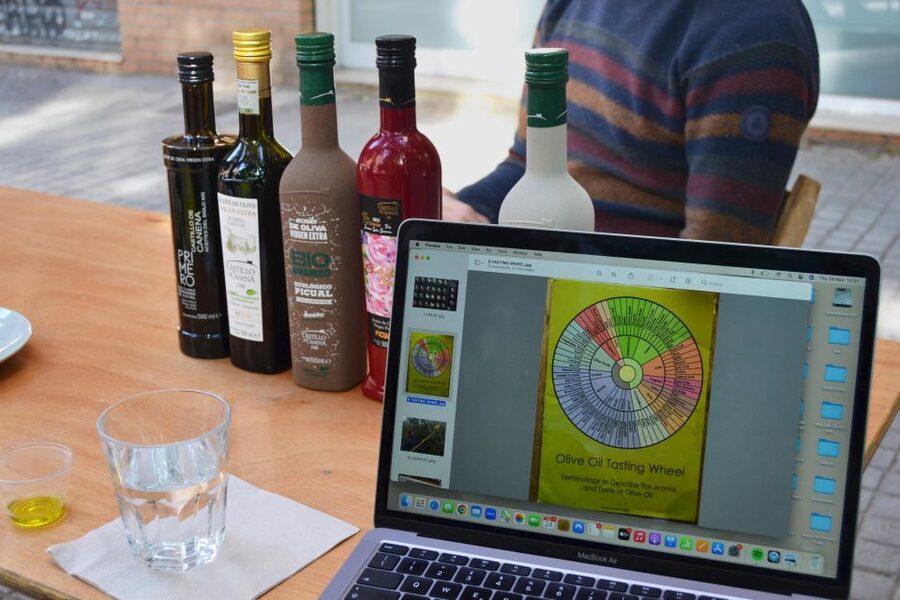
The class does not stop at tasting. Johnny answers questions about using olive oil with food, including the question many home cooks ask: can you cook with olive oil?
The answer given here is yes. That simple point is useful because many people have heard conflicting advice about heat and olive oil. Johnny can discuss cooking use along with health, storage, milling, and other practical concerns.
You can also ask how to match an oil with food. A strong, peppery oil may suit one dish, while a softer oil may be better when you want the ingredients to remain in front. The tasting gives you examples to discuss rather than leaving the advice at the level of general rules.
This is where the $23 price begins to make sense. You are paying for more than three small pours. You receive access to oils selected by someone with two decades of tasting experience, plus a chance to ask questions that would be difficult to answer from a label alone.
Still, value depends on your interest. If you only want a quick snack or a bottle to take home, this may feel like too much instruction. If you want to understand olive oil and make better choices in the future, the price is modest for a focused one-hour class.
A relaxed class with room for serious detail
Johnny’s strongest teaching asset is his ability to adjust the tone. Some people want the nerdy facts about mills, judging, production, and quality control. Others want a friendly introduction without a long technical lecture.
You can choose the level that works for you. The experience is designed to make people comfortable asking basic questions, but it also has enough depth for someone already interested in olive oil.
That balance is reflected in the feedback from Adam, who praised Johnny’s passion and clear explanations, and Callum, who described the experience as one of his best in Valencia. Rebecca also singled out the pleasant location and Johnny’s fun approach. Donna found that he shaped the discussion around the subjects she wanted to understand better.
The repeated praise for his character is worth noting, but it should not hide the real draw. Johnny’s friendly style works because it supports the subject. You get an expert who can explain complex points without making you feel behind.
One small caution: the exact balance of technical detail and casual conversation may depend on the questions in your session. If you want the fullest possible explanation of oil production, say so early. If you want a simple tasting, that can be made clear too.
How the $23 price compares with the experience
At $23 per person, this is priced as a short specialist activity rather than a full food tour. The one-hour length keeps the cost manageable and makes it easy to fit between other plans in Valencia.
The strongest value comes from the selection and instruction. The oils are not simply a producer’s own products. Johnny chooses them using 20 years of tasting experience and his work as an International Olive Oil Competition judge. That gives the comparison more purpose.
At least three oils are included, and you can taste them plain or with sourdough or gluten-free bread. Water is free, but coffee, tea, and other drinks cost extra. Keep that in mind if you plan to linger at the café.
The short length is also a benefit for a busy schedule. You do not need to devote half a day to the activity, and you still leave with a better sense of what to look for in a bottle. The tradeoff is that there is no listed farm visit, mill tour, long meal, or extended food pairing.
Free cancellation up to 24 hours before the start and the option to reserve now and pay later add useful flexibility. Check the available start times when you book, since the one-hour duration alone does not tell you when sessions run.
Who should book this tasting
I would recommend this experience most strongly to people who cook, enjoy food, or want a small local activity with real substance. It suits solo visitors, couples, and anyone who likes asking questions rather than simply watching a demonstration.
It is also a good choice if you are tired of standard sightseeing and want something connected to Spanish food culture without committing to a long cooking class. The setting is easygoing, and the subject gives you something useful to take home beyond photographs.
Families with older children might appreciate the sensory side, though the supplied information does not specify a minimum age or a child-focused format. If you are booking for children, ask ahead about suitability.
People who dislike tasting strong flavors may find the peppery finish of some oils surprising. The option to use bread can make the experience more comfortable, but the class still asks you to pay close attention to taste and smell.
You should also choose this over a producer-led tasting if you want comparison. A producer can tell you a great deal about one oil. Johnny’s independent selection gives you a broader view of what olive oil can be.
Practical details before you go
The meeting point is La Ola Fresca in Benimaclet. Look for the large sign outside and the tree-filled square, not a busy vehicle road. The activity lasts one hour.
Instruction is available in English, Italian, French, and Spanish. The class is wheelchair accessible. At least three oils are included, along with water and the option of sourdough or gluten-free bread.
Coffee, tea, and other drinks are not included. If you want the technical side of production, ask Johnny to explain oil mills and show the photographs available. If you prefer a relaxed tasting, tell him that as well.
The experience has a 4.9 rating from 10 reviews, with praise focused on Johnny’s welcome, clear explanations, flexibility, and enthusiasm. The most useful takeaway is simple: this is a personal tasting led by someone who has spent many years judging oil, not a quick sales pitch.
Should you book Johnny Madge’s olive oil tasting?
Book it if you want to understand what makes extra virgin olive oil different, taste several carefully selected examples, and learn how to use them in your own kitchen. The $23 price is fair for the quality of the selection and the chance to question an experienced international judge.
Skip it if you want a full meal, a farm visit, or a long excursion outside Valencia. This is a compact café class, and its value depends on your interest in food and flavor.
For most curious eaters, it is a smart one-hour addition to a Valencia visit. Just arrive ready to smell, taste, and ask questions. You may leave with a new respect for olive oil, and a harder time accepting the cheapest bottle on the shelf.
FAQ
Where does the olive oil tasting take place?
It takes place at La Ola Fresca, a café in Benimaclet, Valencia. The café has a large visible sign and sits on a square full of trees rather than on a road used by cars.
How long does the tasting last?
The tasting lasts one hour.
How much does the experience cost?
The price is $23 per person.
How many olive oils will I taste?
The experience includes a tasting of at least three of the world’s best olive oils.
Do I have to taste the oil without food?
No. You can learn to taste the oils directly, or choose to use bread. Locally made sourdough and gluten-free bread are available.
What languages are available?
The live guide can provide the experience in English, Italian, French, and Spanish.
Are drinks included?
Water is provided free. Coffee, tea, and other drinks are not included.
Can I cancel the booking?
You can cancel up to 24 hours in advance for a full refund. You can also reserve the experience and pay later.
Freshly pressed around Spain
- Paella, Olive Oil, Wine & Relax in Rural Estate outside Madrid★ 5.0 · 2 reviews
- Olive Oil Tour and Tasting in Málaga★ 5.0 · 2 reviews
- Discover the varieties of wines, olive oil and food on Mallorca★ 5.0 · 8 reviews
- Olive Oil Excursion to an olive mill in the Lecrín Valley★ 3.5 · 3 reviews
- Authentic Olive Oil Tasting in Cordoba, Spain★ 4.0 · 2 reviews
- Cordoba Olive Oil mill, Wine, Passion★ 4.5 · 8 reviews
- Full day in Cordoba between Vineyards and Olive Trees with a Convertible Car★ 5.0 · 2 reviews
- Visit olive grove centenary with oil tasting course★ 5.0 · 11 reviews
Spain Olive Oil Tours, compared.

Ronda: LA Almazara LA Organic, Olive Oil Museum and Tasting
Read our review →
Guided tour and olive oil tasting in Alhaurin el Grande (Málaga)
Read our review →
Guided Tasting Tour in 16th century House and Olive Oil Factory
Read our review →
Visit of the olive grove, olive oil tasting and snack
Read our review →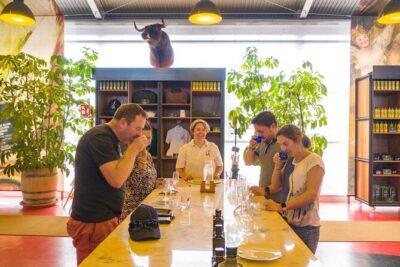
Visit Oil Mill Museum and Olive Oil Tasting in Ronda
Read our review →
Sóller: Olive Oil Guided Tour and Tasting at Can Det Estate
Read our review →Other lists with this tasting on them