
Review · KALAMATA
Traditional Food tour, Olive oil Tasting with Lunch in Kalamata, Messinia!
Kalamata is more than black olives, and this food walk proves it one bite at a time. You’ll stroll past neo-Classical buildings and stone-paved lanes, then step into family-run shops for local pastries, savory treats, herbs, drinks, and stories tied to Messinia. Maria of Mama’s Flavours leads the experience, with specialists joining for olive oil and wine.
I like the serious olive-oil tasting, where four Greek varieties are compared with a certified taster, and the friendly access to small local businesses. I also like the slow pace. Several guests have spent six hours with Maria instead of four because conversation and tastings continued naturally.
The main consideration is the price: $190.10 per person is a substantial spend for a half-day food tour. It makes the best sense if you want a private experience with a full meal, many tastings, and local contact, not just a quick sample of Kalamata olives.
Key points at a glance
- Six local food stops: Visit family-owned shops and a traditional workshop rather than eating at one single venue.
- Four olive oils to compare: A certified taster explains how aroma, bitterness, fruitiness, and finish differ.
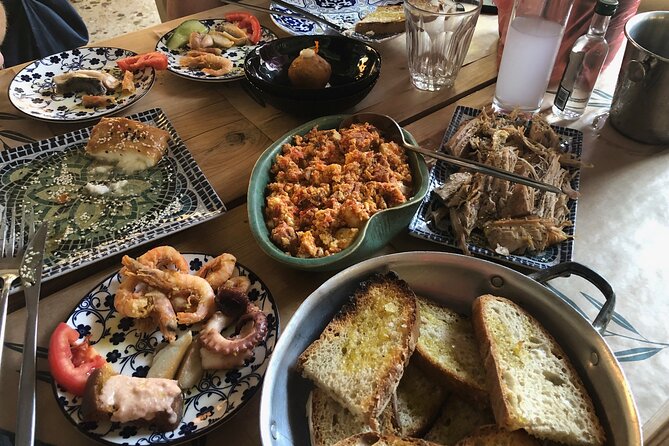
- More than 20 tastes: Expect sweet and savory mezedes, local products, drinks, and Greek specialties.
- Wine with local context: Taste two or three wines, with the timing adjusted if the tour runs in the afternoon.
- Lunch in an ouzo tavern: Finish with a light but filling meal and local drinks in the city center.
- Private and flexible: Only your group takes part, and the duration can be adjusted to suit your needs.
Kalamata beyond the famous black olive
Kalamata is a useful place to take a food tour because its best food culture is spread through ordinary streets, small shops, and personal connections. The city is known worldwide for its black olives and olive oil, but Messinian cooking also includes herbs, wild plants, baked goods, cheese, wine, coffee, and small plates meant for sharing.
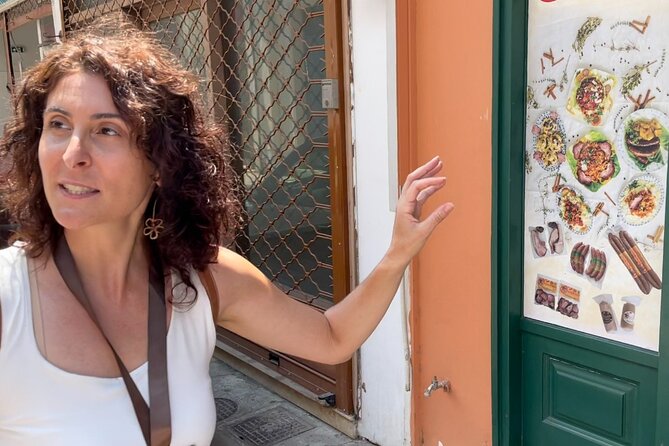
You begin at 39 King George Square, in the central part of town. From there, the walk takes you through the historic center, where two-storey neo-Classical buildings give Kalamata a distinct look. The route also uses narrow, stone-paved alleys lined with little shops.
I like this start because it gives you some sense of place before the eating begins. You are not simply dropped at a restaurant and handed a plate. The streets, shopfronts, and old buildings help explain how food fits into daily life here.
The experience is private, which matters. You can ask questions without holding up a large group, and Maria can adjust the pace. Families, couples, and small groups who enjoy conversation will get more from this format than people who prefer a tightly timed sightseeing circuit.
More Olive Oil Tastings with Lunch in Greece
- Wine & Olive Oil Tour with Lunch at Milia Mountain Retreat
★ 5.0 · 194 reviews - Wine & Olive Oil Tour with Lunch – Semi Private Safari Tour
★ 5.0 · 156 reviews - Kalamata- Olive oil & Wine Tour with traditional lunch
★ 5.0 · 117 reviews
Six stops through the old center
The tour includes six food stops, though the exact order can change. You visit local stores and a traditional workshop, meeting people involved in making or selling regional products.
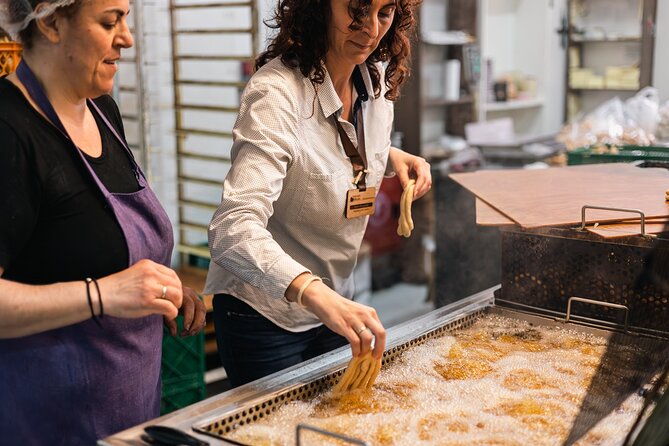
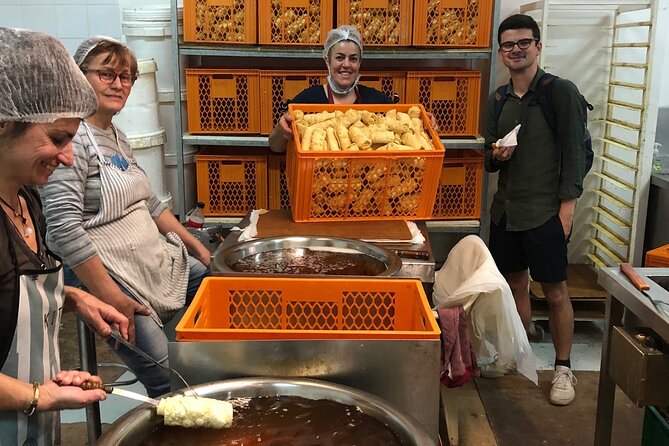
One stop may focus on baked goods or traditional preparation. A particularly interesting detail from the experience is the chance to learn about lalagia, a local fried dough specialty. You may also taste oven-cooked pork, bread, herbs, or other products connected to Messinian home cooking.
The food is not presented as a formal sequence of restaurant courses. It is more like a moving table, with small tastes appearing as you go. That makes the outing sociable and varied, though it also means you should not expect every stop to be predictable.
The shops are part of the point. You may see shelves of herbs, spices, sweets, oils, and packaged goods, with aromas that recall the slopes of Mount Taygetos. Maria’s relationships with the shop owners help turn a purchase into a conversation.
Personal shopping is not included, so you can decide for yourself if something is worth taking home. That is useful in a food town where it is easy to buy too much too early. I suggest waiting until you know which products you genuinely want, especially if you are carrying purchases for the rest of your trip.
The olive-oil tasting deserves your full attention
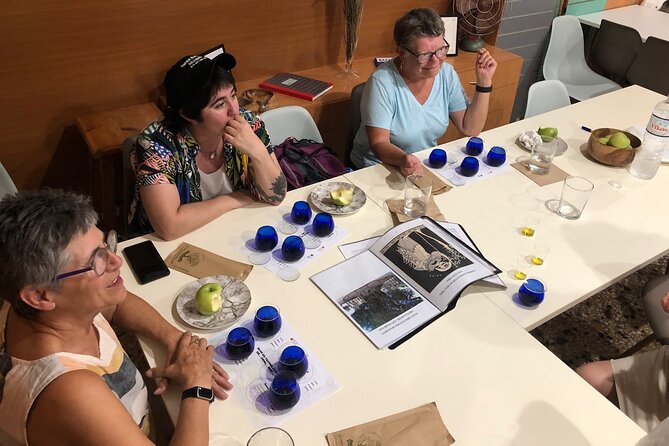
For many people, the olive-oil tasting will be the most valuable part of the morning. You taste four Greek olive oils and learn how to compare them, rather than simply hearing that one is good and another is better.
A professional certified olive-oil taster guides this section. The focus is on the qualities you can detect in the glass: fruitiness, bitterness, peppery heat, aroma, and the lingering finish. This is a short tasting, but it can change how you shop for oil afterward.
Kalamata’s fame makes this especially fitting. Olive oil is not just a souvenir here. It is part of everyday cooking, and Messinia is strongly tied to olive growing and production.
You may arrive thinking that darker color means better oil, or that all extra-virgin olive oil tastes about the same. A guided comparison gives you a more useful set of clues. Afterward, you can ask better questions in a shop and avoid choosing only by label design or price.
The tasting is also a good reason to take notes if you care about food. Remember the aromas and flavors you prefer, then use that memory when buying a bottle. The tour does not include personal purchases, but the local shops provide a natural place to look for gifts.
Wine, coffee, and mountain tea
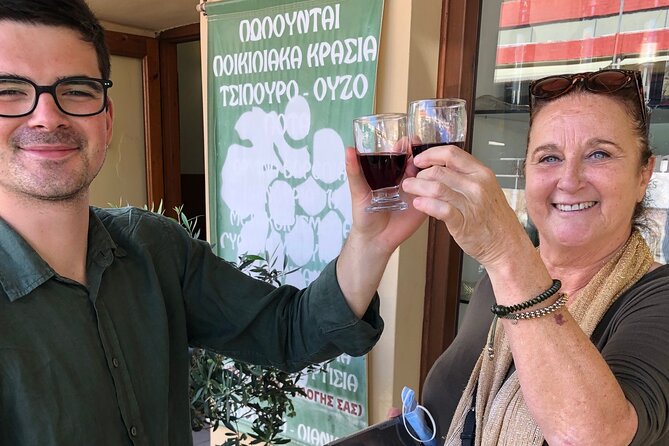
The drink portion gives the food stops a wider Messinian frame. You taste two or three local wine labels, and the experience includes Greek coffee and Greek mountain tea.
The wine tasting is led with the help of the local oenologist, Giannis. In the morning, it may take place at a wine shop. In the afternoon, the wine shop closes at 8:45 p.m., so the wine tasting moves to the light dinner.
That change is practical, not a loss. Wine with lunch can feel more natural than wine in a shop, but the setting will depend on the time you choose. If a formal wine-shop stop matters to you, ask about the schedule before booking.
Greek coffee adds another useful cultural note. On Monday, Wednesday, and Saturday afternoons, many shops are closed, including the coffee micro-roastery. In that case, you visit another coffee shop and drink your coffee while walking through the historic center.
The same applies to the traditional workshop. It is open only in the morning. Afternoon groups may visit another workshop, or receive two local products at the end before starting at a food shop instead.
These changes are worth knowing in advance. The core food experience remains, but morning and afternoon tours are not identical. If you want the widest choice of shops and workshops, choose a morning from Monday through Saturday.
Same olive country, a different way to taste it:
- Crete: Quad Safari, Olive Mill with Tasting & Ghost Village
★ 4.9 · 1,004 reviews - Knossos-Zeus Cave -Old Traditional Villages-Olive Oil Factory
★ 5.0 · 694 reviews - The Governor’s Olive Mill Tour with Olive Oil Tasting
★ 5.0 · 502 reviews - From Chania: Olive Oil, Wine, Cheese & Honey Tasting Tour
★ 4.6 · 490 reviews
A light lunch that is more than a final snack
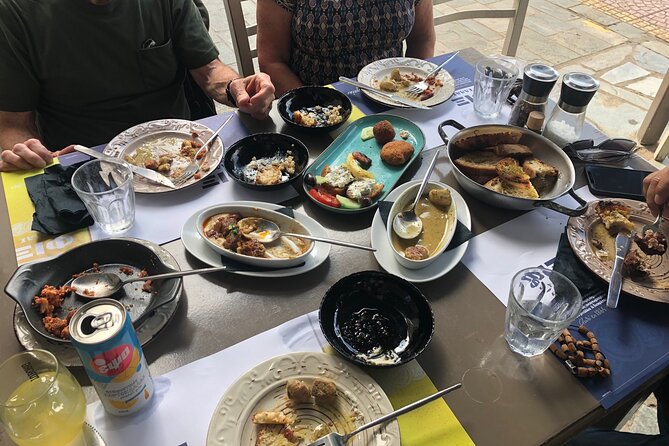
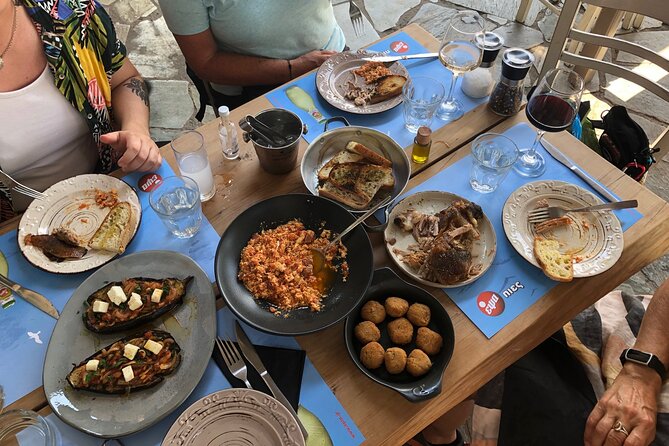
The tour ends with a light lunch at a cozy Greek ouzo tavern in the center. Do not read light as skimpy. After the earlier tastings, a selection of mezedes and local drinks can be enough to carry you comfortably through the rest of the day.
The meal is part of the experience rather than an afterthought. Greek food works well in this format because small plates encourage sharing and let you compare several flavors without committing to one large dish.
The food may include more local mezedes, with soft drinks or other local drinks provided. Wine tasting can also happen during this meal on afternoon departures.
I like the way this finish turns the walk into a proper social occasion. You have already met shop owners and food specialists, and lunch gives you time to talk with Maria about what you have tasted. It also means you will probably not need to plan dinner immediately afterward.
Still, this is described as a light lunch, not a large banquet. If you arrive very hungry, pace yourself at the early stops. There are more than 20 tastes, and small samples add up quickly.
Maria’s role makes the difference
The guide is central to this experience. Maria is presented as the local host and certified tour leader, and her connection with the shop owners is one of the strongest reasons to choose this tour.
You can expect more than directions between tasting stops. Maria shares stories about Kalamata, local customs, food preparation, herbs, wild edible plants, and the people behind the products. She also helps the experience feel personal rather than scripted.
Several parts of the tour can run longer when the group wants more discussion. One group spent six hours with Maria, with no sense of being hurried. The published duration is about four hours, but the duration can be tailored to individual needs.
That flexibility is valuable for families or anyone who wants a slower walk. It may be less useful if you have a firm ferry, cruise, or evening reservation. Build in extra time if your day is tightly planned, and confirm the expected finish when you meet.
The tour is family-friendly, but food tastings are not automatically suited to every diet. Tell the provider about vegetarian, vegan, pescatarian, or flexitarian needs, as well as food allergies. Bee allergies should also be reported.
Morning or afternoon: choose with care
The food tour runs in the morning from Monday through Saturday, excluding Sundays, Greek official holidays, and the period from Holy Friday through Easter Tuesday. Afternoon departures are also available, but the shop schedule changes.
Morning is the safer choice if you want the traditional workshop and the widest access to local businesses. Afternoon can work well if you prefer a later start, but Monday, Wednesday, and Saturday afternoons have more closures.
The city walk takes place outdoors, so wear comfortable shoes and bring a hat. You will spend a fair amount of time walking between stops, even though the tasting breaks keep the pace easy.
Public transportation is nearby, and the tour begins and ends at the same meeting point. Transfer service may be arranged for an extra charge, but it is not part of the standard price.
Because the tour depends on good weather, poor conditions can lead to a cancellation. In that case, you are offered another date or a full refund. The standard cancellation rule is strict: the booking is non-refundable and cannot be changed for personal reasons.
Is $190.10 good value?
At $190.10 per person, this is not a budget food walk. The value depends on what you want to buy with your time.
The fee includes more than 20 sweet and savory tastes, four olive oils, two or three wines, Greek coffee, mountain tea, a light lunch, drinks, a private guide, and all taxes. It also pays for access to several small businesses and the time spent explaining what you are tasting.
If you priced the food alone, you might not see the full value. The main benefit is the local structure: someone else has chosen the stops, arranged the introductions, explained the products, and connected the food to Kalamata’s streets and customs.
I would consider it good value for a couple or small family who wants a food-focused introduction to Messinia and may otherwise struggle to find these places. It is less suitable if you mainly want a cheap meal, a short olive-oil sample, or a large restaurant dinner.
Group discounts are available, which could improve the cost for a larger party. Since the experience is private, ask about the discount before booking rather than assuming the advertised per-person rate applies to every group size.
Who should book this Kalamata food walk?
I would choose this for people who plan to spend at least a day in Kalamata and want their first look at the city to include food, local businesses, and stories. It is also a strong choice for anyone curious about olive oil and unsure how to tell quality from marketing.
Families can benefit from the flexible pace, though parents should mention dietary needs early. Couples and small groups will enjoy the private format, especially if they like asking questions and stopping to browse.
Food-focused visitors will get the most from it, but you do not need expert knowledge. The tour begins with familiar ideas such as coffee, bread, wine, and olives, then adds enough explanation to make each one more interesting.
I would skip it if you dislike eating between meals, need a guaranteed four-hour finish, or want a purely historical walking tour. Kalamata’s old center is part of the route, but food remains the main subject.
Should you book it?
Book this experience if you want Kalamata explained through its food and its people. The standout elements are the four-oil comparison, Maria’s local connections, the six stops, and the relaxed lunch that brings everything together.
Choose a morning for the fullest workshop and shop schedule. Tell the provider about allergies and dietary needs, wear good shoes, and leave room in your day in case the conversation runs long.
At $190.10, it asks for a serious budget. For a private, food-heavy introduction to Kalamata with wine, coffee, lunch, and plenty of local guidance, I think the price is justified. For a quick tasting on the cheap, choose something shorter.
FAQ
Where does the Kalamata food tour begin?
It begins at Πλ. Βασιλέως Γεωργίου 39, Kalamata 241 00, Greece.
Where does the experience end?
The activity ends back at the meeting point.
How long does the food tour last?
The listed duration is approximately four hours, but the experience can be tailored to individual needs.
Is the tour private?
Yes. Only your group participates in the activity.
What food and drinks are included?
The experience includes more than 20 Greek mezedes and local delicacies, four Greek olive oils, two or three wines, Greek coffee, Greek mountain tea, a light local lunch, and local drinks or soft drinks.
Is the tour available every day?
Morning departures are available Monday through Saturday, excluding Sundays, Holy Friday through Easter Tuesday, and Greek official holidays. Afternoon schedules may vary because some local shops close.
Can dietary needs and allergies be accommodated?
You should notify the provider about vegetarian, vegan, pescatarian, or flexitarian needs and any food allergies. Bee allergies should also be reported.
What happens if bad weather cancels the tour?
If poor weather causes the cancellation, you will be offered another date or a full refund. The normal booking is otherwise non-refundable and cannot be changed for personal reasons.
Freshly pressed around Greece
- Private Tour in Historic Estate in Monemvasia with wine-olive oil tasting & meal★ 5.0 · 4 reviews
- Olive Facility Visit with Olive Oil Tasting Session★ 5.0 · 2 reviews
- SYSTASIS Olive Oil Tasting Experience in Ermioni Greece★ 5.0 · 4 reviews
- Olive Oil Tasting at the Mykonian Farm★ 4.5 · 3 reviews
- Olive Oil Tour close to Nafplio★ 4.5 · 3 reviews
- Olympia Shore Ex: Premium Private Package -Tickets & Olive Market★ 4.5 · 5 reviews
- WIne & Olive Oil Tasting in an Organic Farm in Laconia, Greece!★ 5.0 · 2 reviews
- E-Bike Kalamata Olive Routes★ 5.0 · 10 reviews
Olive Oil Tastings with Lunch, compared.
Sorrento: Lemon, Olive Oil and Wine Tasting Tour with Lunch
Read our review →
Wine & Olive Oil Tour with Lunch at Milia Mountain Retreat
Read our review →
Florence: Great Chianti Wine and Olive Oil Trail with Lunch
Read our review →
Wine & Olive Oil Tour with Lunch – Semi Private Safari Tour
Read our review →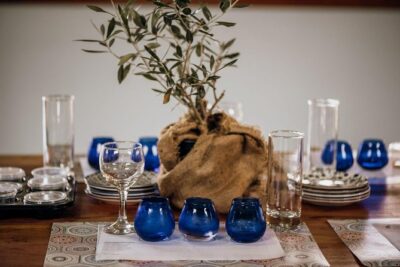
Kalamata- Olive oil & Wine Tour with traditional lunch
Read our review →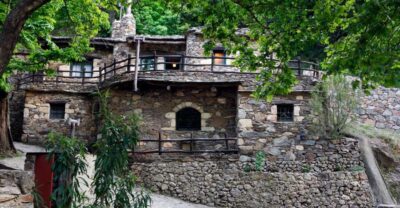
Chania: Milia Mountain Tour w/Lunch Olive Oil/Wine Tastings
Read our review →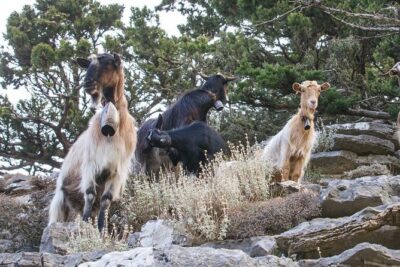
Wine & Olive Oil Tour with lunch at the White Mountains
Read our review →
Organic Olive Grove tour & Olive oil tasting & lunch in Kalamata!
Read our review →Other lists with this tasting on them