
Review · ENGLAND
Turmoil, Templars & Oliver Twist London’s Squalor and Splendour
Holborn gives you a sharper picture of London than the usual postcard stops. On this walk, Oliver Twist’s grim world meets the Knights Templar, grand courts, old prisons, and the legal quarter that still shapes the city. The route turns everyday streets into clues from medieval and Victorian London.
I like the small group of no more than 15, which gives you room to ask questions. I also like the range: the tour moves from crime and poverty to Freemasonry, silver merchants, and grand architecture. The main drawback is simple: you need to walk about two miles at a reasonable pace, and most stops last only about five minutes.
Key points to know
- Oliver Twist connections: See parts of Holborn linked with Charles Dickens and the grim city he described.
- Seven compact stops: The route covers crime, law, medieval religion, silver, and Victorian London in about two hours.
- Small-group format: A maximum of 15 people makes it easier to hear the guide and ask questions.
- Guide Tom’s strong suit: Tom is praised for clear explanations, useful facts, and suggestions for other historic places to visit.
- Good central ending: The walk finishes near Blackfriars Station on the northern bank of the Thames.
- Low-cost history lesson: At $27.42, the tour offers a focused introduction to an area many visitors pass without understanding.
Why Holborn makes such a good history walk
Holborn is not one single story. It is a meeting point for medieval religion, royal justice, criminal punishment, Victorian poverty, and modern commerce. That mix gives this tour more substance than a walk that simply strings together famous buildings.
You begin near Covent Garden and finish close to Blackfriars Station. Along the way, the route shows how institutions grew around one another. Courts needed lawyers. Lawyers gathered around the Inns of Court. Prisons sat near criminal courts. Religious orders claimed important land. Shops and workshops filled the gaps.
I find this kind of route useful early in a London visit. It gives you a framework for the city. Afterward, a court building is not just a grand facade, and an old timber-framed building is not just something attractive to photograph.
The tour also has a literary thread. Charles Dickens used London’s streets and social divisions in Oliver Twist. You will not be given a full Dickens walking tour, but you will see places connected with the world of crime, courts, prisons, and hardship that shaped the novel.
More tastings and mill visits worth booking around the world:
- Sorrento Farm and Food Experience including Olive Oil, Limoncello, Wine tasting
★ 5.0 · 2,524 reviews - Split: Krka Waterfalls With Boat Cruise, Wine and Olive Oil
★ 4.3 · 1,507 reviews - Crete: Quad Safari, Olive Mill with Tasting & Ghost Village
★ 4.9 · 1,004 reviews
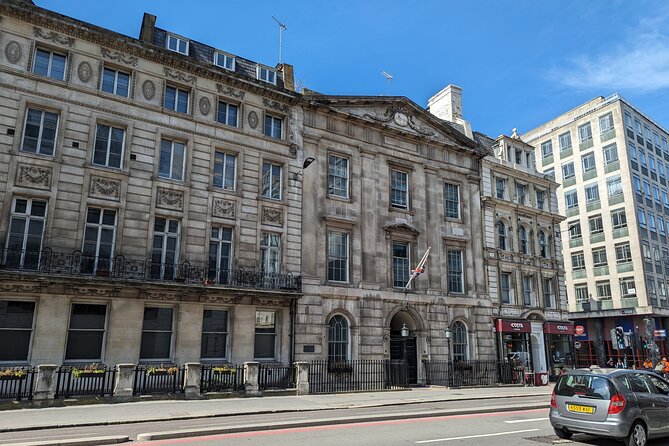
Starting at Bow Street and the Bow Street Runners
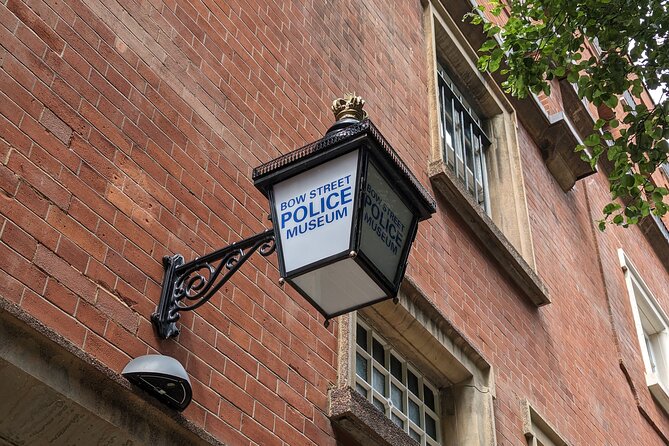
The first stop is the Bow Street Museum of Crime and Justice, where the guide explains the Bow Street Runners. The stop is brief, listed at about five minutes, so expect a focused introduction rather than a museum visit.
The Bow Street Runners matter because they offer a window into an earlier form of law enforcement. Their story helps explain how London dealt with crime before the modern police system took shape. It also sets the tone for the rest of the walk: this is a tour about the systems behind the streets, not only the buildings in front of you.
I would pay close attention here if you enjoy criminal justice or Dickens. The subject links neatly with Oliver Twist and the city’s older fears about theft, poverty, and disorder.
Do not expect a long indoor museum session. The guided walk is the attraction, and admission to the listed stops is free. If you want to spend serious time inside museums or read displays at length, this format may feel quick.
Freemasons’ Hall and the city of private societies
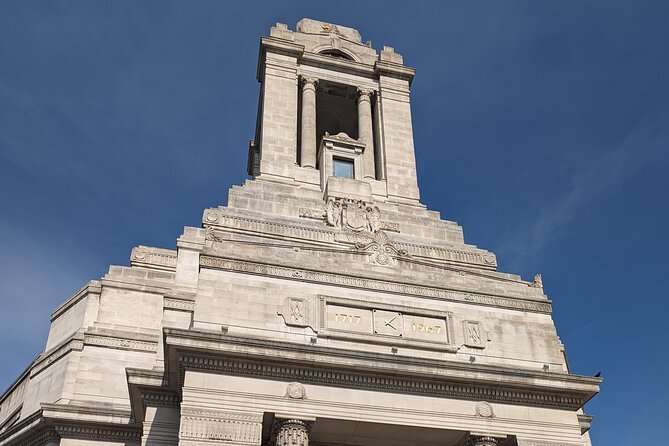
The next stop is Freemasons’ Hall, with a short explanation of its history. The building brings a different kind of power into the story. After hearing about crime and public order, you shift to an influential private society and the role it played in British life.
The stop is useful because it widens the tour beyond poverty and punishment. London’s past was also shaped by clubs, associations, institutions, and networks that brought people together around shared beliefs and interests.
Again, the timing matters. Five minutes gives the guide enough space to explain why the site belongs on the route, but not enough for an extensive architectural tour. You will get context from the pavement rather than a full interior visit.
This is where a question-friendly group helps. The tour is limited to 15 people, and previous comments about Tom point to a guide who takes questions seriously and explains complicated subjects clearly. If Freemasonry interests you, use the stop to ask for more context rather than expecting every detail to fit into the scheduled minutes.
The Royal Courts of Justice and London’s legal quarter
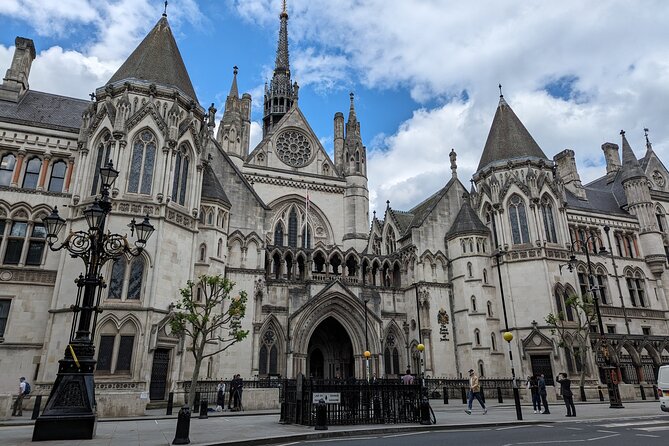
The Royal Courts of Justice is one of the route’s strongest visual and historical points. The guide explains the building’s place in London’s legal world, helping you understand why Holborn became associated with lawyers, judges, and court business.
The courts are valuable even if you have little interest in law. Their presence makes the area’s layout easier to read. This was not random development. Legal work created its own institutions, buildings, and traditions, and those institutions remain part of London’s daily life.
The stop also fits the tour’s larger contrast between splendour and squalor. Grand courts could exist close to prisons, poor districts, and stories of hardship. That physical closeness is part of what makes old London so striking.
The guide’s role matters here. Legal history can turn dry fast. The available information about Tom consistently points to clear, engaging explanations and a good command of historical facts. That is useful when a building’s importance is not immediately obvious from the street.
Same olive country, a different way to taste it:
- From Mendoza: 3 Wineries, Olive Oil Factory Tour & Tasting
★ 4.6 · 901 reviews - Knossos-Zeus Cave -Old Traditional Villages-Olive Oil Factory
★ 5.0 · 694 reviews - The Governor’s Olive Mill Tour with Olive Oil Tasting
★ 5.0 · 502 reviews - From Chania: Olive Oil, Wine, Cheese & Honey Tasting Tour
★ 4.6 · 490 reviews
Temple Church and the Knights Templar
Temple Church supplies the medieval heart of the route. Here you hear about the Knights Templar and the church’s history. The subject adds religious power, military orders, and medieval London to a walk that has already covered crime and modern legal institutions.
The Templars are one of the best hooks for the tour because their story feels far removed from the city you see today. Yet the church and the surrounding Temple area connect that medieval past with London’s legal quarter.
The stop is short, so you should think of it as a well-placed introduction. You will hear the story of the Knights Templar and understand why Temple Church matters, but the tour does not promise a lengthy church visit or a detailed examination of every feature.
This is also a good place to ask questions. The route covers several periods, and the Templar story can raise plenty of them. The small group keeps the conversation more manageable than a large walking party.
The London Silver Vaults and the value of ordinary trade
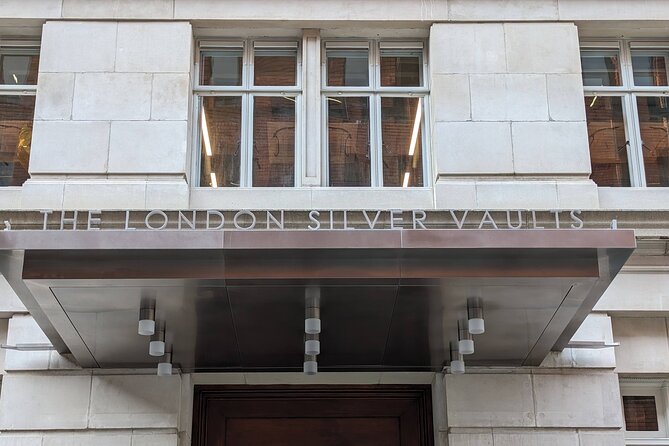
The London Silver Vaults changes the mood again. The site contains the world’s largest collection of retail silver, and the guide explains its place in London’s commercial life.
This stop is a reminder that the city was shaped not only by kings, churches, courts, and prisons. Retail trade mattered too. Silver connects London with craftsmanship, wealth, household goods, collecting, and business.
The phrase retail silver is important. This is not presented as a museum collection alone. It is a working commercial site with shops, making it a useful counterpoint to the formal institutions elsewhere on the route.
The stop lasts about five minutes, so expect an outside explanation or a quick orientation rather than time to browse the full collection. If silver and shopping are your main interests, you may want to return separately. On the walking tour, its value comes from the way it adds another layer to Holborn’s story.
Staple Inn and the last Inns of Chancery
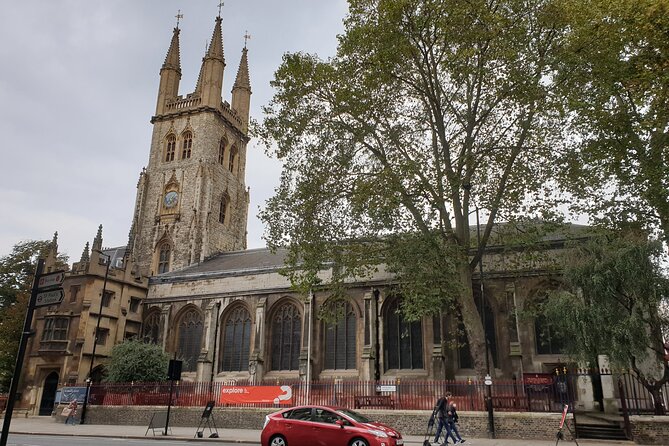
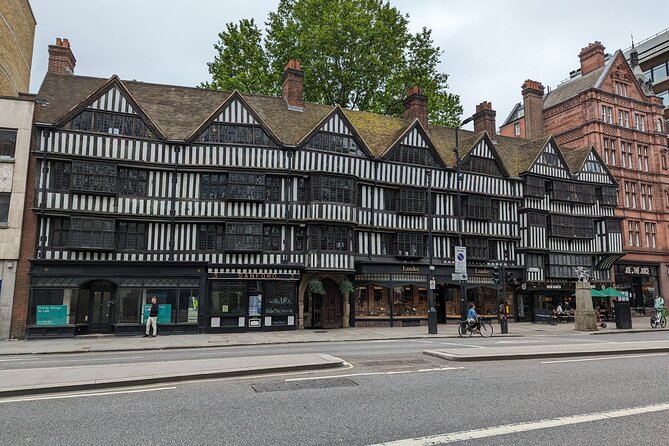
Staple Inn is one of the route’s most appealing architectural stops. It is described as the last remaining of the Inns of Chancery buildings, giving you a direct link to the legal history introduced at the Royal Courts of Justice.
This is where the different parts of the walk begin to connect. The courts are not isolated landmarks. They belonged to a wider legal world that included inns, lawyers, training, and professional communities.
Staple Inn also offers a welcome change from the tour’s darker subjects. After crime, prisons, and Victorian hardship, its older building fabric gives you something more visual and atmospheric to enjoy.
The stop is still brief, about five minutes. You should expect the guide to explain its importance and point out what to notice, not lead a long architectural study. Keep your eyes open for the details the guide highlights, since the historical meaning may not be obvious at first glance.
Old Bailey, Newgate Prison, and the Oliver Twist connection
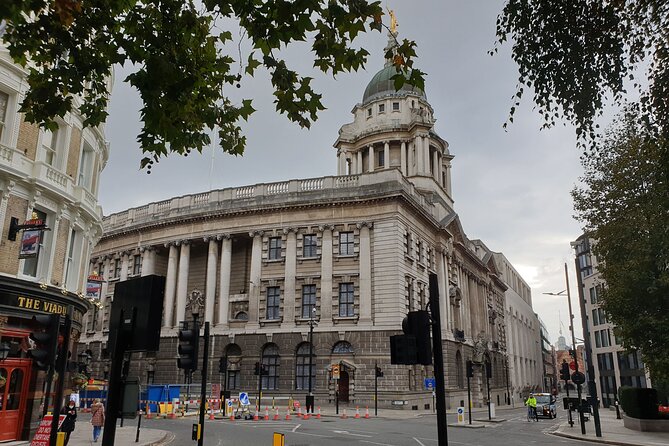
The route ends at the Old Bailey, the Central Criminal Court. This is also the site where Newgate Prison once stood, making it one of the clearest links between the tour’s criminal justice story and the world associated with Oliver Twist.
Newgate Prison carries the darker side of London’s past. Its former presence helps explain how punishment, courts, and public ideas about crime shaped the city. It also brings the tour back to the themes introduced at Bow Street.
This final stop works well because the route has already shown you courts, legal institutions, and stories of poverty. By the time you reach the Old Bailey, you can see how those pieces fit together.
Do not expect the building to recreate Dickens’s London. Modern London has changed, and the prison is no longer there. The value lies in understanding the location and the layers beneath the present city.
What the $27.42 price gives you
At $27.42 per person, this is a reasonably priced guided introduction to a complicated part of London. You are paying for roughly two hours of explanation, route planning, and local context rather than entry to paid attractions.
That distinction matters. Admission to the listed stops is free, and the experience does not include a museum ticket or a special interior visit. If you prefer to move at your own pace and read signs independently, you can walk through parts of this area without booking.
I think the fee makes sense for three reasons. First, the route covers several subjects that are hard to connect without guidance. Second, a good guide can point out meaning that is easy to miss from the pavement. Third, the small group gives you a better chance to ask questions than a large city walk.
The value depends heavily on your interest in history. If you want major royal sights and famous views, this is not the best use of two hours. If you enjoy stories about how London worked, the price is easier to justify.
Group size, pace, and practical comfort
The group has a maximum of 15 people. That is small enough for a more personal feel, while still allowing the guide to keep the walk moving.
You should be able to walk about two miles at a reasonable pace. The route includes several short stops, but it is still a walking tour, not a gentle stop-and-ride experience. Wear comfortable shoes and plan for changing London weather, although the supplied details do not specify shelter or weather arrangements.
The walk lasts about two hours. Each listed stop takes about five minutes, so much of the time goes toward moving through Holborn and explaining the links between locations.
The start is at Covent Garden Underground Ltd on Long Acre, London WC2E 9JT. The finish is outside Superdrug Health Clinic at 36 to 37 New Bridge Street, London EC4V 6BJ, near Blackfriars Station on the northern bank of the Thames.
Public transport is nearby at both ends. That makes the route easy to fit into a day of sightseeing, but remember that you finish in a different place from where you start.
The guide makes or breaks this experience
Tom is the guide name most closely associated with this walk. The comments about his tours point to a clear speaker who explains facts well, answers questions, and offers ideas for other historic places to visit.
That matters here because the subjects jump from medieval religious orders to Victorian fiction and modern legal institutions. A guide needs to keep those changes understandable. Tom’s approach appears especially suited to people who want both facts and conversation.
Several accounts also indicate repeat bookings with him. I would treat that as a sign that his personal style is a major part of the experience, not as a guarantee that every departure will feel identical. The tour is offered in English, and another guide may lead your date.
The small group also improves the odds of a useful exchange. You can ask about Dickens, the Templars, old prisons, legal history, or other places in London that catch your eye.
Who should book this Holborn walk?
I would recommend it to you if you like history with a strong sense of place. It suits people who want to understand how crime, law, religion, trade, and literature shaped London rather than simply photograph famous buildings.
It is also a good choice for returning visitors. You may have already seen Covent Garden, the courts, or the area around Blackfriars, but the guide gives those places a clearer connection.
Families with older children may enjoy the mix of Oliver Twist, crime, prisons, and medieval knights. The two-hour length is manageable, though the walking requirement still matters.
I would be less likely to suggest it if you dislike walking, want lengthy visits inside attractions, or prefer a tour centered on royal palaces and major landmarks. The stops are compact, and the route is built around explanation rather than admission-based sightseeing.
Should you book Turmoil, Templars & Oliver Twist?
Book it if you want a compact, thoughtful walk through London’s less obvious stories. The strongest reasons are the small group, the wide subject range, the Oliver Twist connection, and the chance to learn from a guide such as Tom, who is described as clear and engaging.
Skip it if two miles on foot feels difficult or if you need lots of time inside each place. At $27.42, the cost is fair for a guided history walk, but the value comes from the storytelling and connections, not from included tickets.
For most history-minded visitors, this is a smart way to spend two hours in Holborn. It leaves you with a better grasp of how London’s courts, churches, prisons, shops, and stories grew side by side.
FAQ
How long does the tour last?
The walking tour lasts about two hours.
How much does the experience cost?
The listed price is $27.42 per person.
Where does the tour begin?
It begins at Covent Garden Underground Ltd on Long Acre, London WC2E 9JT, United Kingdom.
Where does the tour end?
It ends at Superdrug Health Clinic, 36 to 37 New Bridge Street, London EC4V 6BJ, near Blackfriars Station on the northern bank of the River Thames.
How many people can join the tour?
The tour has a maximum group size of 15 people.
Is the tour offered in English?
Yes. The tour is offered in English.
How far do I need to walk?
You should be able to walk about two miles at a reasonable pace.
Which places are covered?
The route covers Bow Street Museum of Crime and Justice, Freemasons’ Hall, the Royal Courts of Justice, Temple Church, the London Silver Vaults, Staple Inn, and the Old Bailey.
Is admission to the stops included?
The tour includes a guided walking tour. Admission tickets for the listed stops are shown as free.
Can I cancel for a full refund?
Yes. You can cancel at least 24 hours before the experience start time for a full refund. Changes or cancellations made less than 24 hours before the start are not accepted for a refund.
Freshly pressed around the world
- Private Tour in Historic Estate in Monemvasia with wine-olive oil tasting & meal★ 5.0 · 4 reviews
- Taste of Cyprus: Pasteli, Olive Oil, Wine & Mythology from Pafos★ 4.0 · 2 reviews
- Olive Facility Visit with Olive Oil Tasting Session★ 5.0 · 2 reviews
- SYSTASIS Olive Oil Tasting Experience in Ermioni Greece★ 5.0 · 4 reviews
- Olive Oil Tasting at the Mykonian Farm★ 4.5 · 3 reviews
- Olive Oil Tour close to Nafplio★ 4.5 · 3 reviews
- E-bike tour in Ostuni, the olive trees and the rock village★ 5.0 · 4 reviews
- The wines of the Luberon, the Château de Lourmarin & Bastide du Laval olive oil★ 5.0 · 2 reviews