
Review · BAEZA
Visit an almazara + extra virgin olive oil tasting: Baeza
The real treat here is seeing how Andalusia’s liquid gold moves from an enormous olive grove to a bottle. I like the clear look at every stage, from unloading and cleaning the olives to milling, storage, and packaging. I also like that the tour ends with a proper tasting, where you learn to spot the flavors and faults that separate extra virgin olive oil from lesser oil.
The main consideration is language: the live tour is in Spanish, and the full visit lasts only 1.5 hours. That is enough time for a useful introduction, but not a long technical course. You’ll also need to reach the mill yourself, since El Alcázar sits about 1 kilometer outside Baeza.
Key Points
- See one of Andalusia’s largest olive mills: El Alcázar gives you a look at a major working facility rather than a small display room.
- Walk through the full production chain: The route covers reception, cleaning, classification, milling, storage, and packaging.
- Taste several EVOOs side by side: Compare varieties and early-harvest oils with guidance on aroma, flavor, and quality.
- Look across the famous sea of olive trees: The setting explains why olive oil shapes daily life, work, and food in this part of Jaén.
- Tour with a Spanish-speaking guide: Irene has led visits with a friendly manner and careful answers to questions.
- Pay $11 for a focused food experience: The low price makes this a useful addition to a Baeza day, especially for anyone interested in Spanish cooking.
Why This Olive Mill Belongs on a Baeza Day
Baeza is known for its beautiful old town, but the countryside around it tells another important part of the story. The surrounding province of Jaén is covered by seemingly endless rows of olive trees. From the mill, you get a direct look at the agriculture behind the oil poured over bread, salads, grilled vegetables, and countless Spanish dishes.
I like this experience because it connects scenery with food. You do not simply look at olive trees from a roadside. You learn why they are grown in such numbers, how their fruit is handled, and what happens before the oil reaches a kitchen.
The term almazara means olive mill. El Alcázar is described as one of the largest mills in Andalusia and one of the most advanced facilities involved in EVOO production. That scale matters. Instead of seeing only a traditional press or a few decorative tools, you can follow a modern process designed to handle large quantities of fruit while protecting the oil’s quality.
This is also a good choice if you want a short activity between visits to Baeza’s monuments. At $11 per person, it costs little compared with many guided food experiences, yet it gives you a clear sense of place. The value is strongest for people who enjoy understanding how local products are made, not just sampling them at the table.
More Olive Oil Tours around Spain:
- Ronda: LA Almazara LA Organic, Olive Oil Museum and Tasting
★ 4.6 · 435 reviews - Guided tour and olive oil tasting in Alhaurin el Grande (Málaga)
★ 5.0 · 200 reviews - Guided Tasting Tour in 16th century House and Olive Oil Factory
★ 5.0 · 169 reviews
Arriving at El Alcázar, One Kilometer From Baeza
The meeting point is the main office building of Almazara El Alcázar, on Ctra. Ibros, about 1 kilometer from Baeza. This is close enough to pair with a visit to town, but the mill is not presented as a stop inside Baeza’s historic center.
Plan that short transfer before your start time. The supplied details identify the meeting point clearly, but they do not provide transport arrangements from town. You should therefore arrange your own way to the office building and allow enough time to locate it.
The setting is part of the appeal. You are visiting an olive mill in the middle of the area often called the sea of olive trees. That phrase is not just marketing fluff. The repeated rows of trees give the region a distinctive appearance, and the view helps explain the importance of olive production to local life.
The tour is wheelchair accessible, which makes the facility a practical option for many people with limited mobility. If you have particular access needs within the production areas, it is still sensible to confirm details before booking.
From Olive Grove to Reception Yard
The visit begins with an introduction to EVOO, or extra virgin olive oil. This opening gives you the basic vocabulary needed for the rest of the tour. You learn that oil is not simply oil, and that variety, harvest timing, handling, and production methods affect what ends up in the bottle.
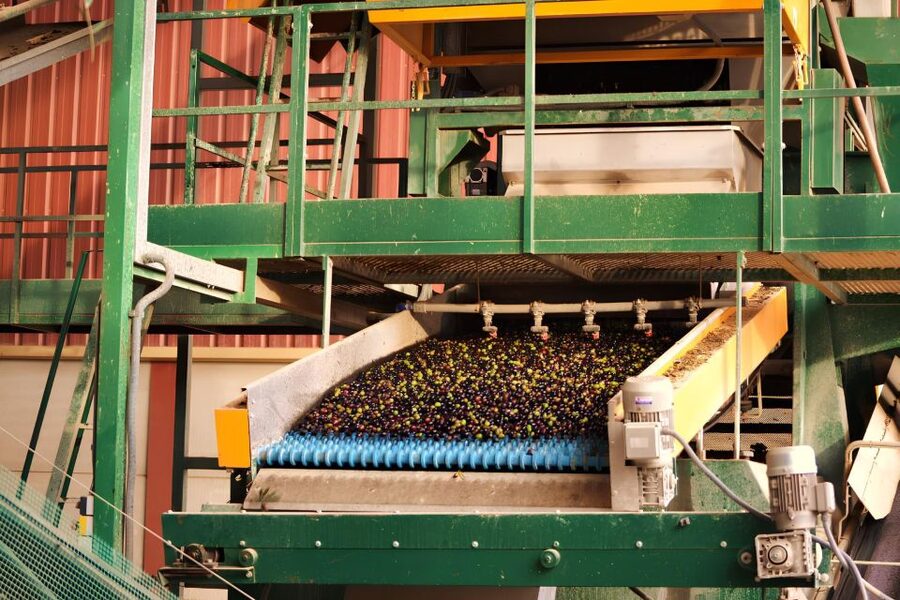
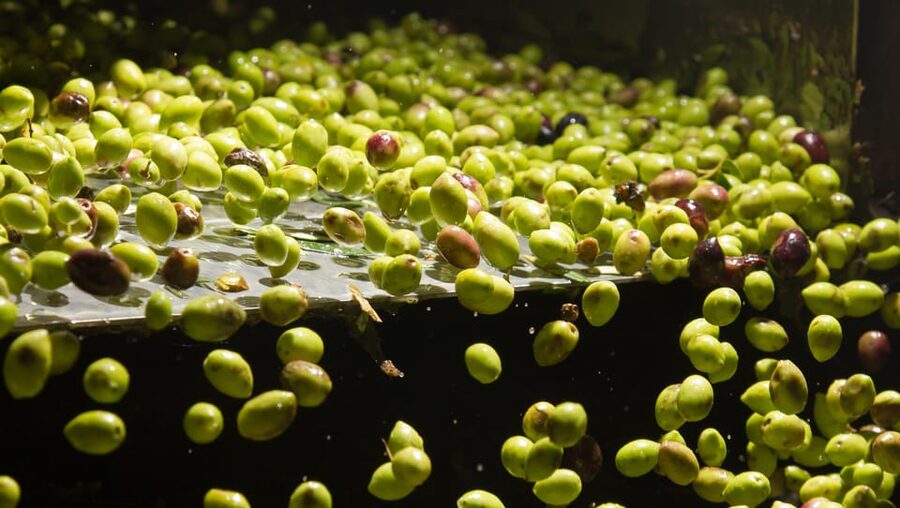
The first production stop is the reception yard. This is where the olives arrive at the mill. From there, the route continues through the cleaning and classification area, where the fruit is prepared and sorted before milling.
That sequence may sound plain, but it answers a question many people have never considered: how does a mill handle a crop that comes in by the truckload? Seeing the early stages makes the final tasting more meaningful. You begin to connect the character of an oil with the condition and treatment of the olives before they are crushed.
If your visit takes place outside the harvesting season, projections of the extraction process are used to explain what happens when the mill is fully active. This is a useful substitute, though it is not the same as watching fresh olives arrive and move through the machinery. If you want to see the real process in operation, ask about seasonal timing before you reserve.
Inside the Mill and Extraction Areas
The mill is the technical center of the visit. Here you learn how the prepared olives are processed to obtain oil. The exact machinery and operating details are not specified, so you should expect a guided explanation rather than a hands-on workshop.
The value of this part is that it removes some of the mystery from EVOO. A bottle labeled extra virgin is not just a regional souvenir. It represents a quality category connected to the condition of the oil and the way it has been produced and assessed.
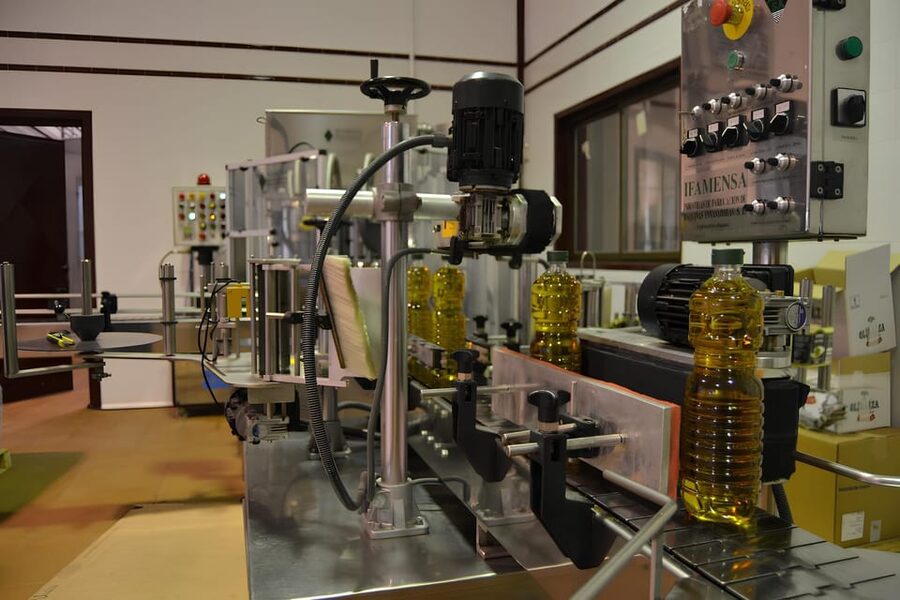
The tour also visits the storage area. Storage is easy to overlook, yet it is essential because oil quality does not end when extraction is complete. The presence of a dedicated storage stage helps you understand that the product must be managed after milling, before it is sent for sale.
Next comes the packaging area. This completes the chain from grove to bottle. You see the mill not only as a place where olives are crushed, but as a working operation that receives fruit, processes it, stores the oil, and prepares it for customers.
El Alcázar’s size gives this section extra interest. The facility is known for advanced EVOO production, so the tour offers a look at industrial-scale olive oil rather than only a nostalgic picture of old Andalusia. That is useful if you want to understand how a major regional product is made today.
Same olive country, a different way to taste it:
- Visit of the olive grove, olive oil tasting and snack
★ 4.9 · 111 reviews - Visit Oil Mill Museum and Olive Oil Tasting in Ronda
★ 4.5 · 105 reviews - Private Tasting of Olive Oil in Córdoba
★ 5.0 · 93 reviews - Olive Oil tasting breakfast & Tour in Cordoba
★ 4.5 · 84 reviews
The Tasting: Learning to Tell Good Oil Apart
The tasting is the part most people will remember. You sample different extra virgin olive oils, including early-harvest oils, and learn to compare their characteristics. The aim is not simply to pick a favorite. It is to notice the differences among varieties and to understand what makes an oil extra virgin.
A guided tasting can change the way you shop for olive oil. You learn to pay attention to aroma, taste, and the sensations left in your mouth. The activity also explains how to distinguish an extra virgin oil from a non-extra virgin oil.
The phrase early harvest matters here. Oil made from olives picked earlier in the season can have a different profile from oil made later, and tasting the two types side by side gives you a practical comparison. You do not have to become an olive-oil expert. A few careful samples are enough to make the labels on supermarket shelves more understandable.
I especially like the order of the experience. You first learn about the grove and production process, then taste the finished oil. By the time you reach the table, you know more about what you are sampling and why the differences matter.
The tasting is also a good place to ask questions. One visit led by Irene was praised for her friendly manner and her willingness to answer everything that came up. Another visit happened to coincide with farmers arriving, allowing a look at the real process during harvest. Those moments cannot be guaranteed, but they show how the experience can feel more immediate when the mill is active.
What the Spanish-Only Format Means
The live guide speaks Spanish. That is the most important practical point to consider before booking. If you understand Spanish, you can follow the explanations and ask about production, varieties, and tasting notes.
If you do not speak Spanish, the visual parts of the visit still have value. The route through the reception, cleaning, mill, storage, and packaging areas gives you a physical sense of the process. The tasting may also be enjoyable, though the lessons about distinguishing qualities and varieties will be harder to absorb without the guide’s explanations.
The activity is not described as multilingual, and no written translation is specified. I would not book it expecting an English-language presentation. Instead, treat it as a Spanish-language cultural visit and decide if that suits your plans.
The guide style appears to be warm and open to questions. Irene, specifically, has led the visit with a smile and clear replies. That personal touch matters in a short tour, because a rigid presentation can make technical subjects feel dry.
Timing, Harvest Season, and Group Feel
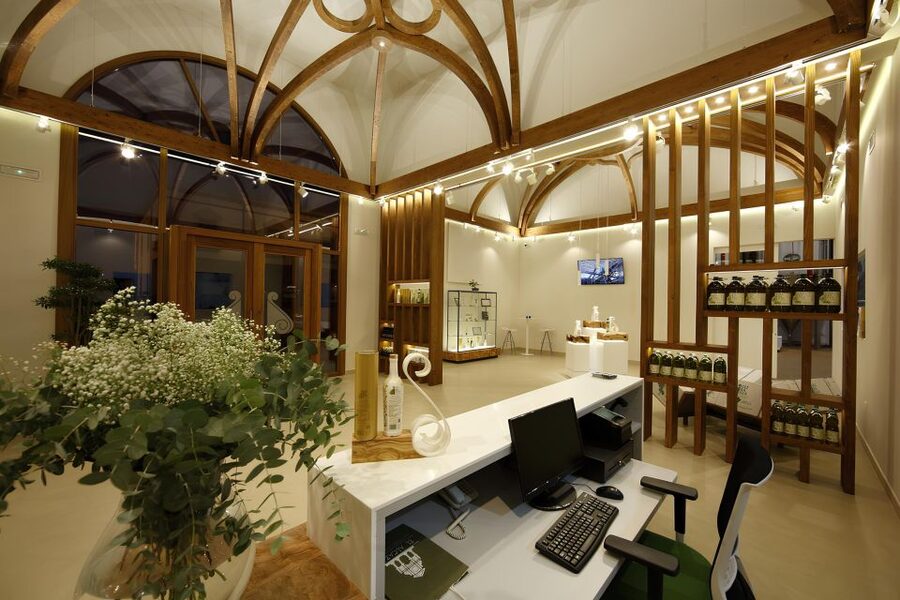
The visit lasts 1.5 hours. That is a sensible length for a first introduction. You have enough time to cover the facility and complete the tasting without giving up half a day in Baeza.
Do not expect an extended workshop on olive cultivation or a full meal. The activity is focused on the mill, the production process, and tasting. If you want a broader food tour, you will need to pair this with other plans.
The experience can differ depending on the time of year. Outside the harvest season, projections explain the extraction process. During harvest, you might see farmers arriving and the facility operating in a more active way. The seasonal version can offer extra energy and a clearer sense of how much work goes into getting olives from the grove to the mill.
The available information does not promise a particular group size. One visit was private by chance, but you should not assume that every departure will be just for you. If a small group is important, ask before booking.
The $11 Price and What You Receive
At $11 per person, this is one of the easier experiences to fit into a Baeza itinerary. The price includes an introduction to EVOO, a guided visit through the main parts of the mill, process projections when needed, and a tasting of different oils and early-harvest examples.
The strongest value comes from the combination of access and explanation. You are not only paying for samples. You are getting a look at a major olive mill and a framework for understanding what you taste.
The price is especially fair if you are already interested in Spanish food, cooking, or regional agriculture. It is less compelling if you have little interest in olive oil or if you need an English-language guide. In those cases, much of the technical explanation may be lost.
Flexible booking terms also help. You can cancel up to 24 hours before the visit for a full refund, and you can reserve now while paying later. Those policies make it easier to fit the tour around changing plans.
Who Will Get the Most From This Visit
I would recommend the tour to anyone spending time in Baeza who wants to see beyond the old streets and monuments. It suits food-focused visitors, home cooks, people curious about farming, and anyone who regularly buys olive oil but has never learned how to taste it properly.
It is also a good pick for a short regional activity. The 1.5-hour format leaves room for Baeza’s cultural sights, while the mill visit gives your day a strong connection to the surrounding countryside.
Families may appreciate the clear sequence of the tour, though the supplied details do not specify a children’s program. People with mobility concerns can note that the activity is wheelchair accessible.
I would think twice if you want a tour in English, a long meal, or a very old-fashioned mill with traditional equipment as the main attraction. El Alcázar is presented as a large, advanced facility, so the focus is on modern production and quality control.
Should You Book the El Alcázar Olive Mill Tour?
Book it if you want a practical introduction to the product that defines much of the area around Baeza. The views of the olive groves, the full production route, and the tasting work well together, and $11 is a modest price for the amount of context you receive.
Before reserving, check the Spanish-only format and consider the season. A harvest-time visit might give you a livelier look at the mill, while an off-season visit relies on projections for the extraction stage. If those points suit you, this is an easy, worthwhile addition to a Baeza itinerary.
FAQ
Where does the olive mill tour meet?
The meeting point is at the main offices building of Almazara El Alcázar, on Ctra. Ibros, about 1 kilometer from Baeza.
How long does the experience last?
The guided visit and tasting last 1.5 hours.
What language is the tour in?
The live tour guide speaks Spanish. No other guide language is specified.
What areas of the mill will I visit?
The route includes the reception yard, cleaning and classification area, mill, storage area, and packaging area.
Does the experience include an olive-oil tasting?
Yes. You taste different extra virgin olive oils, including early-harvest oils, and learn how to compare varieties and identify extra virgin olive oil.
What happens if it is not olive harvest season?
Projections of the extraction process are used when the mill is not operating during harvest.
Is the tour wheelchair accessible?
Yes, the activity is listed as wheelchair accessible.
Can I cancel the booking?
Yes. You can cancel up to 24 hours in advance for a full refund. You can also reserve now and pay later.
Freshly pressed around Spain
- Paella, Olive Oil, Wine & Relax in Rural Estate outside Madrid★ 5.0 · 2 reviews
- Olive Oil Tour and Tasting in Málaga★ 5.0 · 2 reviews
- Discover the varieties of wines, olive oil and food on Mallorca★ 5.0 · 8 reviews
- Olive Oil Excursion to an olive mill in the Lecrín Valley★ 3.5 · 3 reviews
- Authentic Olive Oil Tasting in Cordoba, Spain★ 4.0 · 2 reviews
- Cordoba Olive Oil mill, Wine, Passion★ 4.5 · 8 reviews
- Full day in Cordoba between Vineyards and Olive Trees with a Convertible Car★ 5.0 · 2 reviews
- Visit olive grove centenary with oil tasting course★ 5.0 · 11 reviews
Baeza Olive Oil Tours, compared.
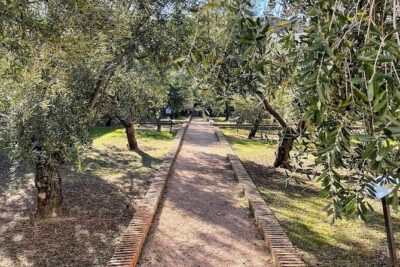
Guided tour of the Museum of Olive Culture Oil Tasting
Read our review →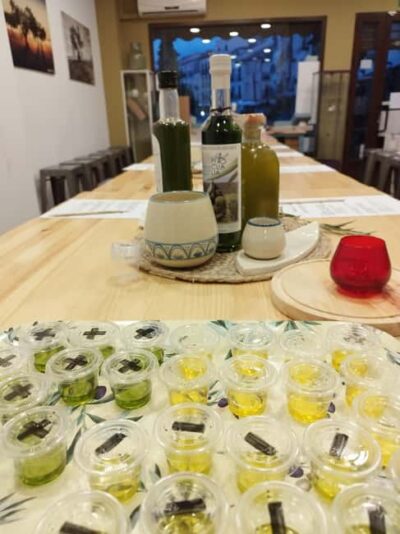
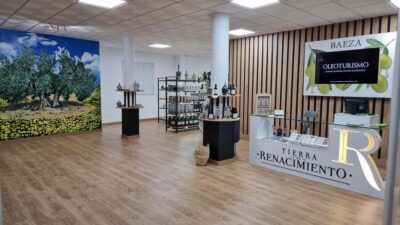
Baeza: Visit to an Organic Olive Grove + Oil Tasting
Read our review →Other lists with this tasting on them