
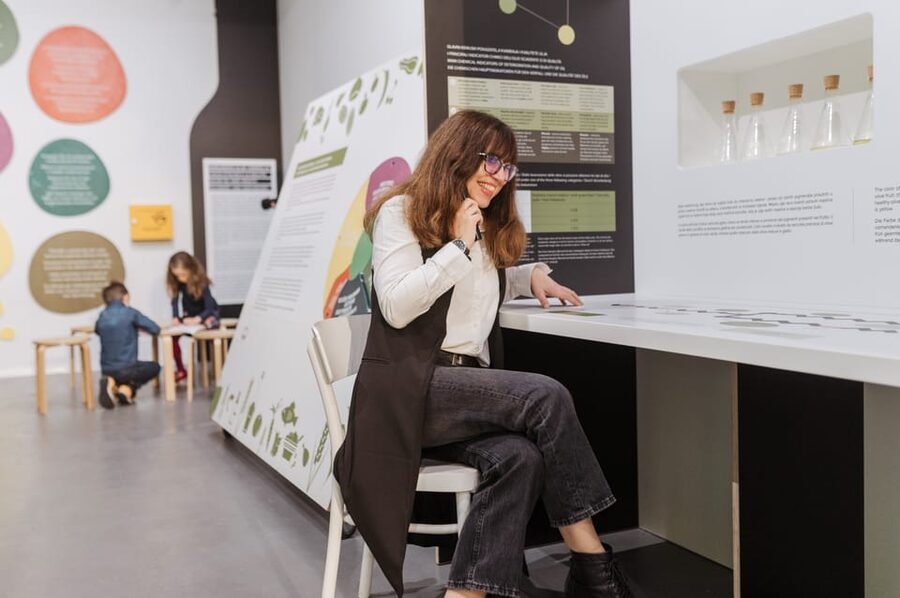
Review · ISTRIA
Pula: House of Istrian Olive Oil Museum and Guided Tasting
Pula’s House of Istrian Olive Oil turns a familiar kitchen staple into a small, engaging lesson in culture, farming, and taste. You’ll learn how Roman producers made and exported oil, then compare five extra virgin oils with the sort of bottle you might pick up at a supermarket.
I like the hands-on tasting, which gives you a practical way to judge aroma, flavor, texture, and appearance. I also like the central location and rainy-day appeal. Two short films keep the museum section easy to follow, and the tasting gives the visit a clear payoff.
The main consideration is scope. This is a compact museum and tasting, not a visit to an olive grove or working mill. If you want an active farm tour, you may find it too short. If you want a useful introduction to Istrian olive oil, the $35 price is easier to justify.
Key points at a glance
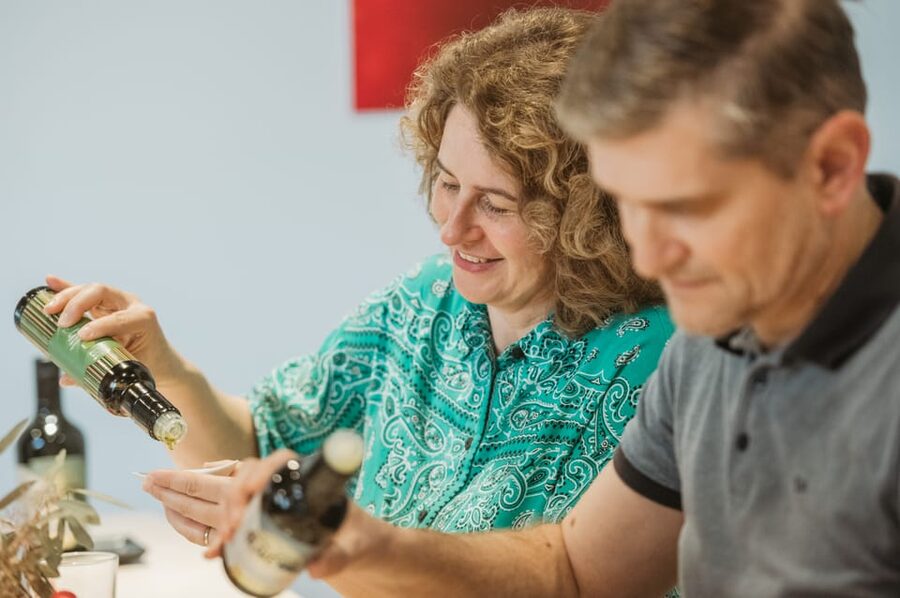
- Five extra virgin oils: Compare several Istrian oils and learn how their qualities differ.
- A supermarket comparison: See how an everyday supermarket oil measures up against premium oil.
- Roman-era context: Find out how the Romans produced olive oil and shipped it beyond Istria.
- Two short films: Watch traditional and modern production methods before tasting.
- Dessert with olive oil: Finish with a sweet pairing that shows how flexible good oil can be.
- A practical Pula stop: The museum sits in the city center and works especially well on a wet day.
Why olive oil makes sense in Pula
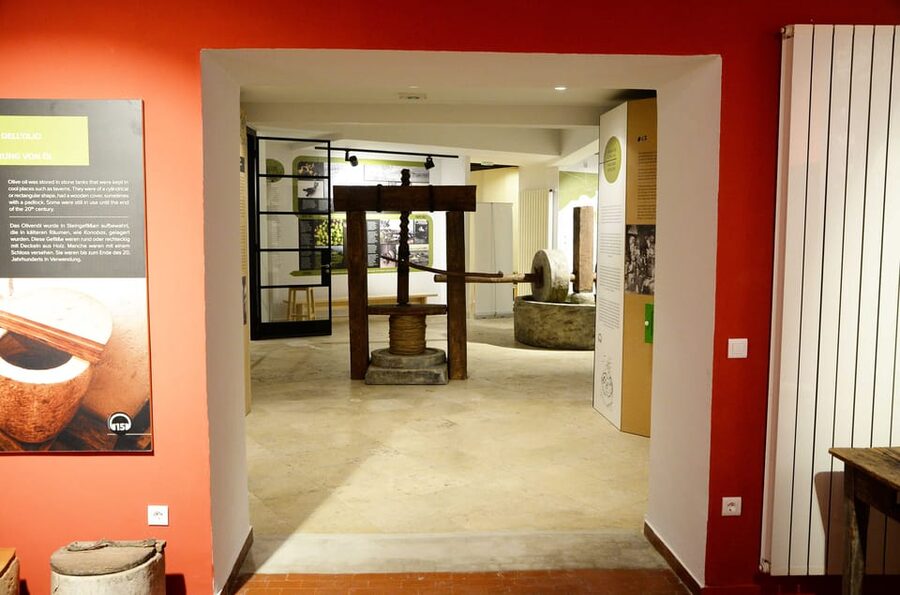
Istrian olive oil is not just a product to buy in a pretty bottle. It is part of the region’s food culture and trade story. At the House of Istrian Olive Oil, you begin with the basics: how oil was made, how people used it, and how it moved through the ancient economy.
The Roman connection adds useful context. You’ll learn where and how olive oil was exported, which helps explain why production mattered far beyond a single household or village. The subject becomes less about tasting a condiment and more about understanding one of the products that helped connect Istria with the wider Roman world.
That historical frame is brief but worthwhile. You are not signing up for a long academic lecture. Instead, the museum gives you enough background to make the later tasting more meaningful. Once you know that olive oil has been produced and traded here for centuries, the bottle on the tasting table carries more local meaning.
The displays are designed to be entertaining rather than solemn. Descriptions are easy to follow, and the audio guide is available in 12 languages. The guided tasting itself is offered in English and German, so check that those options suit you when booking.
More Olive Oil Museums around Croatia:
- Split: Klis Fortress GOT and Olive Museum Entry Tickets
★ 4.6 · 283 reviews - Split: Blue Line Sightseeing to Trogir, Klis & Olive Museum
★ 4.3 · 197 reviews - Visit Klis fortress GOT & Olive museum Klis
★ 4.5 · 77 reviews
Inside the House of Istrian Olive Oil
The museum is in central Pula, making it an easy addition to a day spent exploring the city. You do not need to arrange transport out to the countryside, and you can fit the visit around other central sights.
The first part introduces olive oil’s past. You’ll see how Romans made the oil and learn about its export routes. This section gives you a useful bridge between Pula’s ancient identity and Istria’s present-day food traditions.
You then watch two short films. One explains the traditional production method, while the other shows how olive oil is made today. The contrast is the point. Traditional production connects the oil to older tools and methods, while modern production shows how the same basic ingredient is handled with current techniques.
The films are a practical choice for a small museum. They let you see processes that would be difficult to demonstrate inside the building. You also avoid spending a long time reading technical panels. If you prefer a large museum with many rooms and objects, this experience may feel limited. If you like a clear story told at a manageable pace, the format works well.
The audio guide adds flexibility. You can take in the displays in one of 12 languages, while the tasting provides direct instruction in English or German. The information is not only about production. It prepares you to notice what is in your glass.
Learning to taste oil like a local
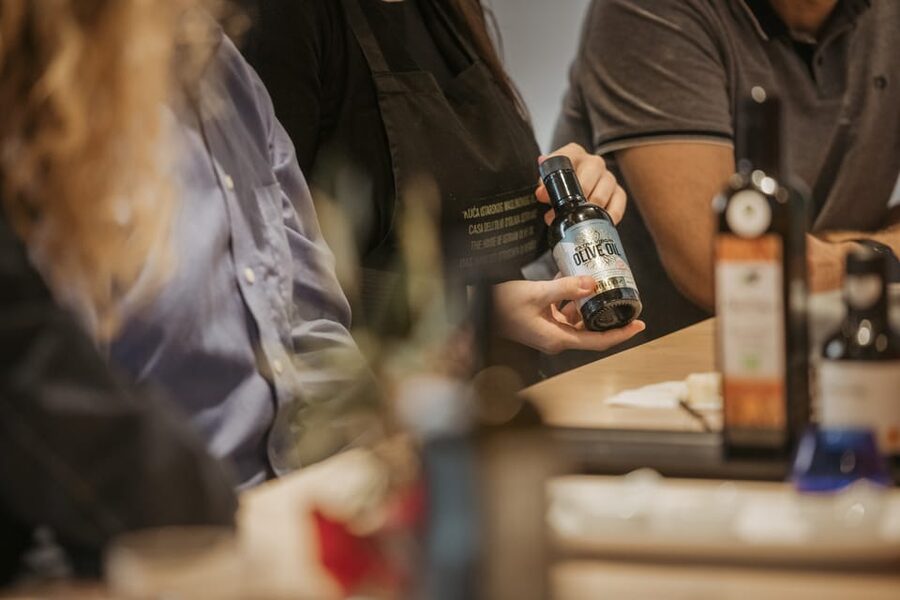
The tasting is the heart of the visit. You sit down and examine five extra virgin olive oils, paying attention to their taste, aroma, texture, and appearance. That structure makes the experience useful even if you normally pour oil over food without thinking about it.
You’ll be shown how to recognize positive qualities in olive oil. You’ll also learn about negative attributes, which is just as important. Many people know that extra virgin oil is supposed to be good, but fewer can explain why one bottle tastes fresh and balanced while another tastes flat, stale, or unpleasant.
The comparison with a typical supermarket olive oil is especially helpful. It gives you a reference point instead of asking you to judge premium oil in isolation. A high-quality oil can have a fresh aroma and clear character, while an everyday supermarket product may seem less lively beside it. The point is not that every supermarket oil is worthless. The point is that labels and price alone do not tell the whole story, and your senses can help.
You do not need a trained palate. The tasting is designed to teach you what to notice. Start with the aroma. Then consider how the oil feels in your mouth and what flavors remain. Appearance is part of the lesson, but it should not be your only guide. A pretty color does not automatically mean better oil.
The session also explains the difference between positive and negative traits. That gives you something practical to use later in a shop or restaurant. You can ask better questions, read labels with more care, and decide whether a bottle suits your taste and budget.
The experience received a high overall score of 4.9 from 35 ratings, and the strongest praise centers on this tasting section. That makes sense. The museum provides the setting and background, but the tasting changes the visit from passive sightseeing into a skill-building activity.
The sweet finish
The final food pairing is a sweet dessert matched with a selected olive oil. This may sound unusual if you only associate olive oil with bread, salad, or grilled vegetables.
That is exactly why it works as a closing course. The pairing encourages you to think about olive oil as a flavor, not simply as cooking fat. A good oil can add fruitiness, pepper, or a soft richness to a sweet dish. The dessert also breaks up the more technical parts of the visit.
You should not expect a full meal. It is a tasting portion designed to demonstrate an idea. If you arrive hungry, plan another meal in Pula. The dessert is a pleasant extra, not a substitute for lunch or dinner.
More Guided Tours around Croatia:
- Buje: Authentic Istrian family farm, guided walk, foods & wine
★ 5.0 · 37 reviews - Olive Oil Guided Tasting and History in Pula
★ 4.5 · 34 reviews - Guided tour and olive oil tasting in Alhaurin el Grande (Málaga)
★ 5.0 · 200 reviews - Guided Tasting Tour in 16th century House and Olive Oil Factory
★ 5.0 · 169 reviews
What you can buy after the tasting
The on-site shop gives you time to act on what you have learned. You’ll find a wide selection of Istrian extra virgin olive oils, along with brandies, truffles, lavender-based cosmetics, and souvenirs.
This is more useful than a generic gift shop because you can taste before buying. If one of the oils appeals to you, you have a better chance of choosing something you will actually use at home. You can also compare styles and prices after learning what quality means.
The shop may be the best part for anyone looking for an edible souvenir from Istria. Olive oil travels more easily than many fresh foods, and a bottle has a clear connection to the region. Truffles and brandies offer other local choices, while lavender cosmetics and standard souvenirs suit people who want a non-food gift.
Do not feel pressured to buy. The museum visit has value even if you leave with only a better understanding of olive oil. The shopping stop is an option, not the purpose of the experience.
Is $35 a fair price?
At $35 per person, this is not the cheapest short activity in Pula. You are paying for more than entry to a small museum. The fee includes the audio guide, the historical and production displays, a guided tasting of five extra virgin oils, and the dessert pairing.
I see the strongest value in the number of comparisons. Sampling five oils gives you enough variety to understand that Istrian oil is not one single flavor. The supermarket comparison also makes the lesson concrete. You are not merely hearing that premium oil is different. You are tasting the difference.
The price makes the most sense for people who enjoy food, cooking, or local products. It also works for couples and small groups looking for a calm indoor activity in central Pula. If you are watching every kuna or euro and have little interest in olive oil, the cost may feel high for a compact museum visit.
The rating of 4.9 from 35 ratings suggests a strong level of satisfaction, but I would still judge the experience by your interests. The praise focuses on the clear exhibits, friendly service, and tasting. Those are real strengths. They do not change the fact that the visit is focused and relatively narrow.
A good choice on a rainy day
Pula’s weather can change, and this museum gives you a useful indoor plan. You can spend time learning about local food without committing to a long tour or a full day away from the city.
The visit also suits a flexible schedule because the main elements are easy to understand: museum displays, two films, guided tasting, dessert, and shop. You will not need to prepare for a strenuous activity or complicated transport.
The indoor setting may appeal to families, but the tasting has more to offer older children and adults who can focus on subtle flavors. The information is accessible, though younger children may enjoy the films more than the tasting lesson.
This is also a good choice for a first visit to Istria. You get a compact introduction to a major regional product, along with practical advice you can use at restaurants and markets during the rest of your stay.
Who will enjoy this experience most?
I would recommend it most strongly to:
- Food-focused visitors who want to understand a product rather than simply sample it.
- Home cooks who want to recognize better oil and avoid buying by label alone.
- History fans who enjoy learning how Roman production and trade shaped local life.
- Couples and small groups looking for a relaxed indoor activity in central Pula.
- Rainy-day planners who want a useful alternative to outdoor sightseeing.
- Gift shoppers who want Istrian oil, truffles, brandy, lavender products, or souvenirs.
You may want to skip it if your priority is a countryside excursion, a working olive farm, or a large museum with extensive collections. None of those are promised here. The value comes from the focused lesson and the tasting.
Language, booking, and cancellation details
An audio guide is available in 12 languages. The guided tasting is listed in English and German, so those are the key language choices for the live portion.
You can reserve a place and pay later, which helps if your Pula plans are still shifting. You can also cancel up to 24 hours in advance for a full refund. Those policies reduce the risk of booking this as a weather backup.
The experience is provided by Idea Istra d.o.o. No individual guide name is supplied, but the staff member described in the available information was friendly and able to speak some German. The guide was also praised for answering questions with enthusiasm, which matters during a tasting where personal questions often make the lesson more useful.
Should you book the House of Istrian Olive Oil?
Book it if you want a focused, practical introduction to Istrian olive oil in central Pula. The five-oil tasting, supermarket comparison, Roman background, and dessert pairing give the $35 price a clear purpose.
I would especially choose it for a rainy afternoon, a food-centered itinerary, or a trip where you want to bring home a regional product with some understanding behind it. You’ll leave better prepared to judge oil by aroma, taste, texture, and quality rather than by packaging alone.
Skip it if you expect an olive grove, a full meal, or a long rural tour. This is a compact museum and tasting experience. Its appeal lies in making a familiar ingredient more interesting, then giving you a chance to taste the lesson for yourself.
FAQ
Where is the House of Istrian Olive Oil?
It is located in the center of Pula, in Istria County, Croatia.
How much does the experience cost?
The price is $35 per person.
What does the ticket include?
The experience includes an audio guide, a guided tasting of five extra virgin olive oils, and a sweet dessert paired with a selected olive oil.
How many olive oils will I taste?
You will taste five extra virgin olive oils during the guided tasting.
Is a supermarket olive oil included for comparison?
Yes. The tasting includes a comparison with olive oil typically found in a supermarket.
What languages are available?
The audio guide is available in 12 languages. The guided tasting is available in English and German.
Can I buy olive oil at the museum?
Yes. The shop sells a wide selection of Istrian extra virgin olive oils, as well as brandies, truffles, lavender-based cosmetics, and souvenirs.
Can I cancel or pay later?
You can reserve your place and pay later. Cancellation up to 24 hours in advance is available for a full refund.
Freshly pressed around Croatia
- Makarska Tuk Tuk Tour Olive Grove, Scenic Views and Tastings★ 5.0 · 3 reviews
- Small-Group Olive Oil Tour in Cres with Tasting★ 5.0 · 2 reviews
- Private Hvar Island Tour and Olive Oil Tasting★ 4.5 · 10 reviews
- Poreč: Olive Grove Walk and Tasting with Local Products★ 5.0 · 5 reviews
- Kastela: Wine & Olive Tasting Tour w/Delicacies & Live Music★ 5.0 · 5 reviews
- From Biograd: Wine and Olive Oil Tasting in Ražnjevića Dvori★ 4.7 · 3 reviews
- Private Split & Klis Fortress Tour, Olive Museum & Port Pickup★ 4.5 · 13 reviews
- Istrian hill top cities tour with truffle and olive oil tasting★ 5.0 · 18 reviews
Olive Oil Museums, compared.
Ronda: LA Almazara LA Organic, Olive Oil Museum and Tasting
Read our review →
Split: Klis Fortress GOT and Olive Museum Entry Tickets
Read our review →
Visit Oil Mill Museum and Olive Oil Tasting in Ronda
Read our review →
Olive museum Klis with educational olive oil tasting
Read our review →
Guided tour of the Museum of Olive Culture Oil Tasting
Read our review →
Lefkada: Olive Museum Fabbrica Ticket and Guided Tour
Read our review →Other lists with this tasting on them