Review · JAEN
Cazorla: Olive grove and mill tour
Cazorla’s olive oil story begins outdoors, among centenary trees and thousand-year-old olives, then moves indoors to one of the world’s biggest modern mills. You see the full path from harvested olives to bottled oil, rather than simply sampling a bottle at a shop.
I like the clear contrast between old farming methods and a large cooperative with more than 2,000 members. I also like the tasting, which goes beyond a quick sip: you smell common defects, compare two oils, and learn how an official tasting panel works. The main drawback is that the tour is conducted in Spanish, and transport is included only for the first four people who book.
Key points to know
- Centenary olive groves: See traditional trees and the striking size of thousand-year-old specimens.
- Full mill process: Follow production from the reception yard through extraction and bottling at SCA La Bética Aceitera.
- Practical tasting lesson: Taste two olive oils and learn to recognize both good aromas and defects.
- Small group format: The group is limited to eight people, which gives you more room for questions.
- Guide Antonio: His clear explanations and ability to answer questions are a major part of the experience.
- Plan your transport: A vehicle is supplied only for the first four bookings, so later bookings need their own car.
Why Cazorla is a fine place to study olive oil
Cazorla sits in Andalusia, a region where olive trees shape both the countryside and daily life. This tour gives you a useful way to understand that setting. You do not just hear that olive oil matters here. You see the trees, the machinery, the cooperative system, and the tasting standards that determine quality.
The experience lasts four hours and begins at the public car park next to the Villa Turística de Cazorla. It ends at the same meeting point, which keeps the day simple if you are staying nearby.
The group limit is eight people. That matters here because olive oil tasting works best when you can ask questions and compare impressions without being lost in a crowd. The tour needs at least four people to operate, so confirm that the minimum has been reached before setting aside your morning or afternoon.
The guide speaks Spanish. If you understand Spanish well enough to follow explanations about farming, machinery, and aromas, you should get much more from the visit. If you do not, the visual parts of the tour are still clear, but the technical explanations and tasting discussion will be harder to follow.
More Olive Grove Tours in Spain
- Visit of the olive grove, olive oil tasting and snack
★ 4.9 · 111 reviews - Jaen: Olive oil tour with the 5 senses, grove and tasing
★ 4.9 · 53 reviews - Córdoba: Visit a family organic olive grove with tasting
★ 5.0 · 30 reviews
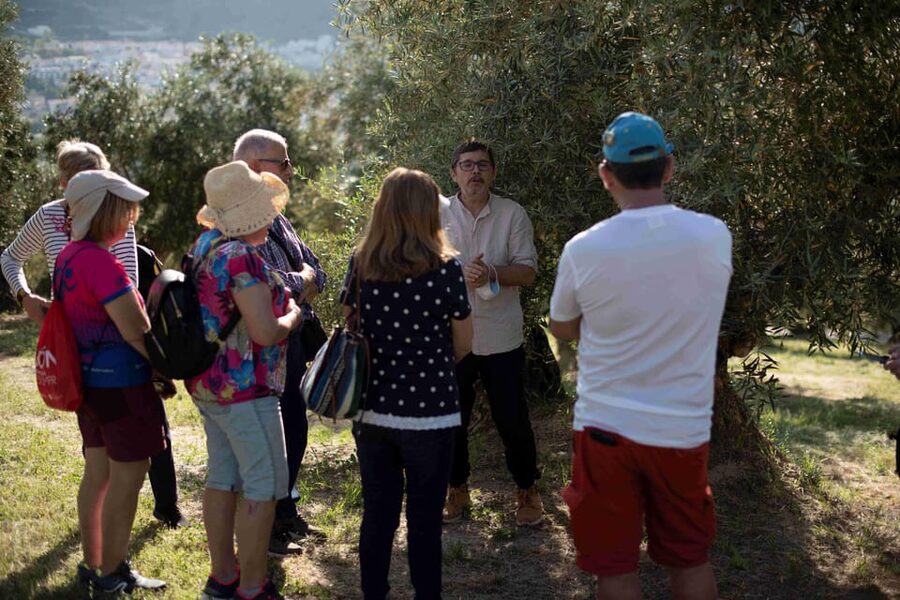
Starting among centenary olive trees
The first guided stop is listed at WX7M+49 Cazorla and lasts about an hour. This is the quietest and most traditional part of the tour, with time to look closely at the trees and understand how they are grown.
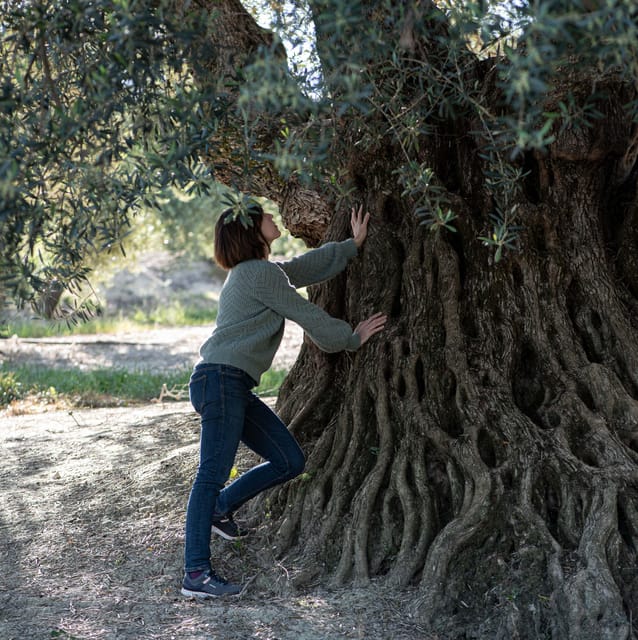
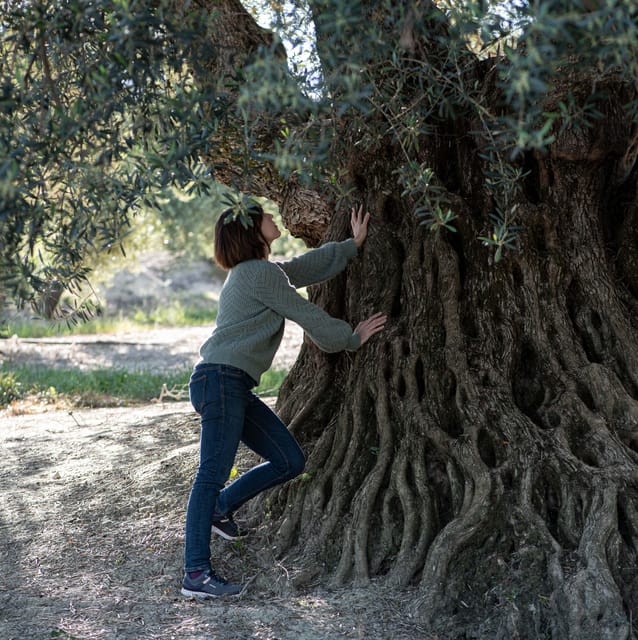
You will see centenary olive trees, along with the impressive dimensions of thousand-year-old specimens. The age of these trees gives the visit a sense of scale. An olive grove is not just a neat row of young plants. Some trees have developed thick, twisted trunks over many generations, and their size helps explain why olive farming is such a visible part of the region.
The guide introduces the different varieties grown in the area and explains the basic work involved in caring for the trees. The supplied information does not specify each variety by name, so you should treat this part as a general introduction rather than a formal agricultural class.
I like beginning outdoors because it gives the mill visit a useful setting. Once you understand that olive oil starts with trees that may be centuries old, the industrial equipment later in the day makes more sense. You can connect the finished oil with the fruit and the people who grow it.
Expect walking around an olive grove rather than a polished museum visit. Comfortable shoes are sensible, though the exact ground conditions are not specified. People with limited mobility should note that the activity is not suitable for wheelchair users.
Following the fruit into a major mill
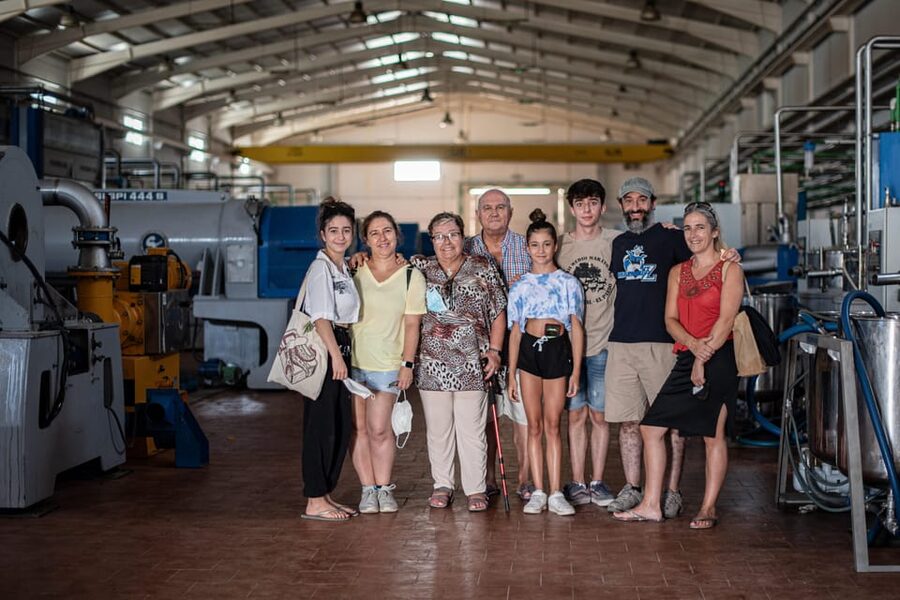
The second main stop is SCA La Bética Aceitera in Quesada, where the guided visit lasts about an hour. This is where the tour shifts from traditional cultivation to large-scale production.
You follow the process from the reception yard to the bottling stage. That sequence is valuable because it shows how many steps sit between harvesting olives and pouring oil over food. You see the mill as a working system, not just a room with a few old presses.
The mill is described as one of the biggest and most modern in the world. You also learn how a cooperative with more than 2,000 associates operates. That cooperative detail is one of the most useful parts of the visit. Olive oil production is not only the work of one farm or one family. A large cooperative brings together many growers and handles the processing on a much bigger scale.
The scale may appeal to you if you enjoy seeing food production from the inside. It also adds an important counterpoint to the old trees. The groves may look ancient, but the oil can pass through modern equipment designed for high-volume production and consistent handling.
The exact machinery and extraction temperatures are not specified, so do not book this expecting a technical engineering tour with detailed factory data. You should expect a guided overview of the main stages, with explanations from the reception yard through extraction and bottling.
One of the strongest features is the full route through the mill. A short factory stop can feel disconnected from the rest of a food tour. Here, the visit follows the product in a natural order, which makes the process easier to remember.
Learning what your nose can tell you
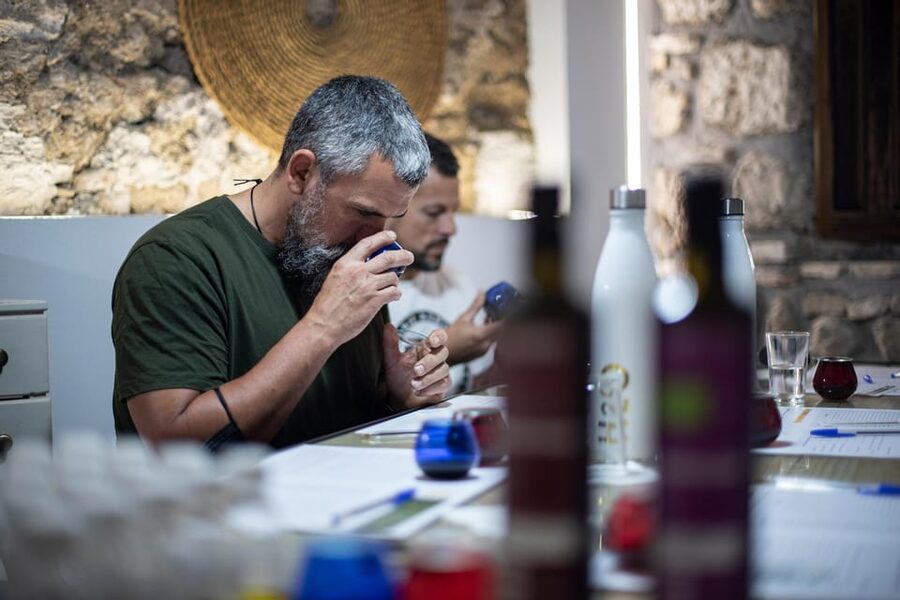
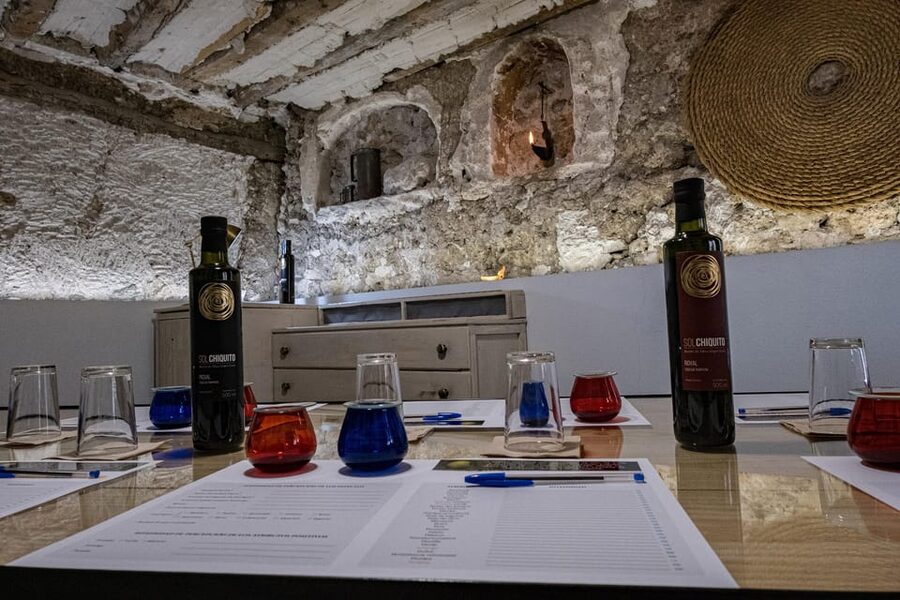
The final stop is Agraria OLEARUM, where the food tasting lasts about 75 minutes. This is more structured than a casual olive oil sample at a market stall.
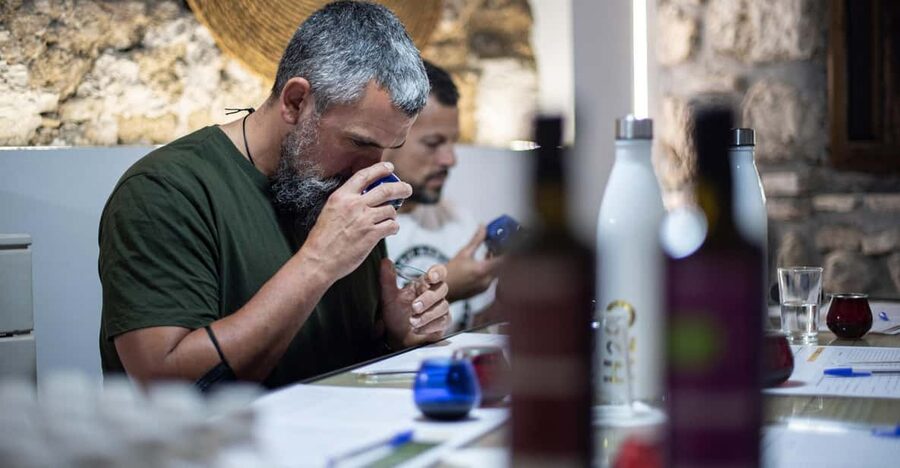
You receive official tasting materials, including tasting glasses and a tasting sheet. Water is provided during the tasting, and you sample two different olive oils. The point is not simply to decide which one you prefer. You are asked to pay attention to aromas and identify what you are sensing.
The session also introduces defects that can occur in olive oil. You have the chance to smell examples of those defects, which gives you a practical reference for future shopping and cooking. That is a smart use of the tasting time. Many people know that extra virgin olive oil should smell fresh, but fewer can explain why one oil smells clean and another seems flat or unpleasant.
You also take part in an aroma-identification game. It adds a light, hands-on element to what could otherwise become a serious lecture. The activity is designed to test your senses without requiring previous experience.
The official tasting format gives you a better method for judging oil at home. You can learn to notice aroma before flavor, consider balance, and identify faults instead of relying only on the color of the oil or the design of the bottle.
The tour also leaves time for questions about using olive oil and olive oil and health. The supplied details do not promise medical advice, so treat this as a chance to ask general questions rather than a health consultation.
More Olive Mill and Factory Tours in Spain
- Guided Tasting Tour in 16th century House and Olive Oil Factory
★ 5.0 · 169 reviews - Visit Oil Mill Museum and Olive Oil Tasting in Ronda
★ 4.5 · 105 reviews - Jaén: Guided Olive Mill Tour with Olive Oil Tasting
★ 4.9 · 74 reviews - Picualia, olive oil mill tour & EVOO tasting
★ 5.0 · 49 reviews
The guide can make or break the experience
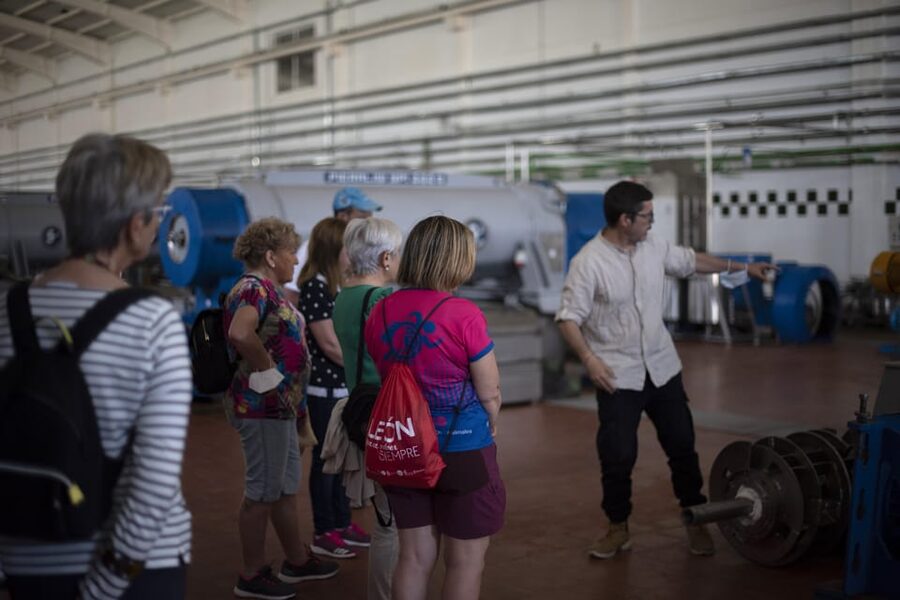
The guide is Spanish-speaking, and Antonio receives particular praise for explaining the subject clearly and answering questions. His teaching style appears to be a major reason the four hours feel lively rather than heavy.
That matters because olive oil has its own vocabulary. Cultivation, extraction, defects, aromas, and cooperative production can sound technical when presented without examples. A guide who explains each stage in plain language helps you connect the grove, the mill, and the tasting table.
The group size is limited to eight, so you should have a reasonable chance to ask about anything that catches your attention. A small group is especially useful at the tasting, where people often want to compare what they smell with what others detect.
Still, the language issue deserves a direct warning. This is not advertised as a multilingual activity. If your Spanish is limited, you may understand what you are seeing but miss much of Antonio’s explanation and the tasting discussion. Consider booking only if you can follow a Spanish guided tour or have a clear way to interpret it.
What the four-hour schedule feels like
The activity combines roughly one hour in the groves, one hour at the mill, and 75 minutes at the tasting stop. The remaining time allows for movement between locations and the general flow of the visit.
That mix works well. You begin with trees and cultivation, move to processing, and finish with the senses. The order gives the tour a clear beginning, middle, and end instead of scattering unrelated stops across the morning.
The experience starts and finishes at the public car park beside the Villa Turística de Cazorla. Transportation is included for the first four people who book. After those spaces are taken, you need to use your own vehicle.
This transport rule is the most important practical point. Do not assume that every booking includes a ride. If you are among the first four to reserve, the supplied transport may make the tour easy. If not, arrange your own vehicle and allow enough time to reach the grove, Quesada, and the tasting location.
The tour is not suitable for people with claustrophobia, wheelchair users, or people with hearing impairments. The claustrophobia warning likely relates to parts of the mill visit, though the exact area is not specified. The hearing-access restriction is also important because explanations are central to the experience.
Is $28 a fair price?
At $28 per person, this is a strong value if you want more than a short tasting. The price covers an expert guide, entry to the mill, official tasting materials, two olive oils, water during the tasting, and small souvenirs.
The souvenirs include a bookmark and photographs of you taking part in the tasting. These are modest extras, but the real value lies in the combination of access and instruction. You get a grove visit, a major production site, and a structured tasting in one four-hour outing.
The mill entrance is included, which saves you from arranging a separate visit. The tasting glasses and sheet also give the final stop a proper format rather than treating it as an informal sample.
The price does not include transport for everyone. That could add inconvenience, though no separate transport charge is given. You also need to account for your time and ability to follow Spanish.
I would consider it especially good value for people interested in food production, regional agriculture, or cooking. If you only want a scenic drive through olive country, you may find the tasting and production explanations more detailed than necessary.
What to bring and how to prepare
Bring comfortable clothes and shoes suitable for walking outdoors and moving through a mill. The supplied information does not specify the terrain, so simple practical footwear is the safest choice.
Arrive at the public car park next to the Villa Turística de Cazorla. Check the starting time when you book, since several start times may be available.
If you are driving yourself, confirm the route and plan for the fact that the tour uses more than one location. The first four bookings receive transportation, but later bookings do not.
Prepare to use your nose as much as your palate. The tasting includes aromas and defects, and you will get more from it if you slow down instead of treating each oil like a quick dip with bread.
You receive two oils to compare, so pay attention to your own reactions. The purpose is not to guess the correct answer every time. It is to learn a repeatable way to notice aroma and quality.
Who should book this Cazorla olive oil tour?
I would recommend it to anyone who wants a closer look at Andalusian olive oil, especially people who enjoy local food and working production sites. It also suits curious cooks who want to improve their ability to choose and use olive oil at home.
The tour works well for a small group of friends or family members who can follow Spanish. The eight-person limit keeps the visit personal, and the tasting gives everyone something active to do.
It is less suitable if you need wheelchair access, have claustrophobia, or cannot hear a Spanish-speaking guide. It may also disappoint you if you expect a free-flowing sightseeing trip with lots of unstructured time. The visit has a clear educational purpose.
Should you book it?
Book this tour if you want to understand olive oil from tree to bottle. The combination of old groves, a large cooperative mill, and a structured tasting gives you three different ways to look at the same product.
The strongest reasons to go are Antonio’s clear explanations, the chance to follow the complete production process, and the practical lesson on aromas and defects. Before booking, confirm the language, check transport availability, and make sure the minimum of four participants has been reached.
At $28, it offers a lot for a half-day activity. I would choose it for an authentic food-focused outing in Cazorla, but not for a casual sightseeing trip or a fully accessible tour.
FAQ
How long does the Cazorla olive oil tour last?
The activity lasts four hours.
Where does the tour begin?
It begins at the public car park next to the Villa Turística de Cazorla.
Where does the tour finish?
The activity ends back at the original meeting point.
What language is the tour conducted in?
The live guide speaks Spanish.
How many people can join the group?
The group is limited to eight participants.
How many people are needed for the tour to operate?
A minimum of four people in total is required for the activity to take place.
Is transportation included?
Transportation is included for the first four people who book. After that, participants need to use their own vehicle.
What will I see at the olive oil mill?
You will see the olive oil process from the reception yard through extraction and bottling at SCA La Bética Aceitera in Quesada.
How many olive oils will I taste?
You will taste two different olive oils.
What is included in the tasting?
The tasting includes official tasting materials such as glasses and a tasting sheet, water, two olive oils, and photographs of you taking part. You also receive a bookmark as a souvenir.
Freshly pressed around Spain
- Paella, Olive Oil, Wine & Relax in Rural Estate outside Madrid★ 5.0 · 2 reviews
- Olive Oil Tour and Tasting in Málaga★ 5.0 · 2 reviews
- Discover the varieties of wines, olive oil and food on Mallorca★ 5.0 · 8 reviews
- Olive Oil Excursion to an olive mill in the Lecrín Valley★ 3.5 · 3 reviews
- Authentic Olive Oil Tasting in Cordoba, Spain★ 4.0 · 2 reviews
- Cordoba Olive Oil mill, Wine, Passion★ 4.5 · 8 reviews
- Full day in Cordoba between Vineyards and Olive Trees with a Convertible Car★ 5.0 · 2 reviews
- Visit olive grove centenary with oil tasting course★ 5.0 · 11 reviews
Olive Mill and Factory Tours, compared.
Crete: Quad Safari, Olive Mill with Tasting & Ghost Village
Read our review →
From Mendoza: 3 Wineries, Olive Oil Factory Tour & Tasting
Read our review →
Knossos-Zeus Cave -Old Traditional Villages-Olive Oil Factory
Read our review →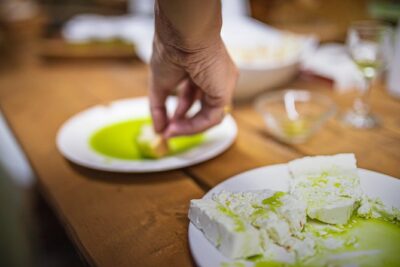
The Governor’s Olive Mill Tour with Olive Oil Tasting
Read our review →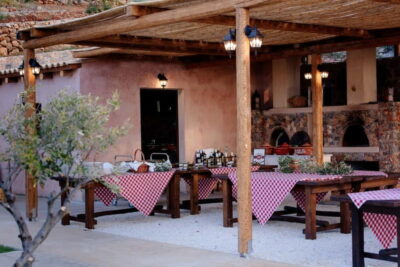
Crete: Road-trip to Lasithi, Zeus Cave & Olive Mill Farm
Read our review →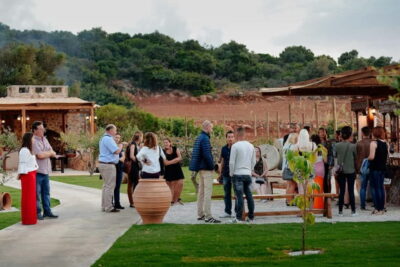
Lassithi, Zeus Cave, Olive Mill Farm & Knossos Combo Tour
Read our review →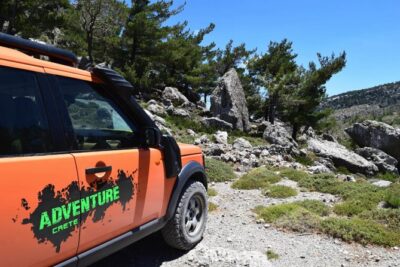
Zeus Cave, Lassithi Plateau, Olive Oil Factory, Kritza, Pottery
Read our review →