Review · ANDALUCIA
Tour of Olive Grove and Oil Mills with Oil Tasting
Cazorla’s hills are covered by an immense sea of olive trees, and this four-hour visit shows you what that sight means beyond a pretty view. You’ll walk through a centenary olive grove, see how olives become oil inside a modern cooperative, then test the finished product in a proper tasting room.
I like two things right away: Antonio, an agronomist with a clear passion for the olive tree, leads the experience, and the tour connects farming, machinery, and tasting instead of treating oil as a souvenir. The small group, capped at 10 people, should also make it easier to ask questions.
The main consideration is timing. The tour starts at 9 a.m. and needs good weather, so it is less flexible than a casual museum visit. Pickup is offered, but the stated meeting point is the public parking area at La Villa, so confirm your exact pickup details before setting out.
Key points at a glance
- A centenary olive grove near Cazorla: See the mountain setting and the old trees that shape local culture and work.
- A full oil-making visit: Follow production from the olive grove into one of the region’s largest, most modern cooperatives.
- Antonio as your guide: Expect explanations from an agronomist who covers both farming and tasting.
- Royal and Picual oils: Compare the two main local varieties and look for their different aromas and flavors.
- A professional tasting: Learn to identify good qualities and possible defects, rather than simply sampling oil with bread.
- Small-group format: A maximum of 10 people keeps the four-hour experience personal and easier to follow.
Why Cazorla is the right place to study olive oil
Jaén province produces more olive oil than any other place in the world, and Cazorla gives you a strong sense of the scale. From the surrounding hills, olive trees spread across the countryside in long, orderly rows. The trees are not a side note here. They shape local customs, agriculture, income, food, and even the way the region looks from the road.
That setting gives the tour more weight than a tasting held in a shop. You first see where the crop grows, then how it is handled, and only after that judge the oil in the glass. I like this order because it helps you connect the final flavor with the work behind it.
The grove is described as centenary, so you are not looking at a newly planted farm designed only for visitors. You can expect a place with a long link to local olive growing, along with views toward Cazorla’s mountains. The visit also presents this scenery as a possible UNESCO World Heritage candidate, though that status should not be taken as an established designation.
More Olive Grove Tours in Spain
- Visit of the olive grove, olive oil tasting and snack
★ 4.9 · 111 reviews - Jaen: Olive oil tour with the 5 senses, grove and tasing
★ 4.9 · 53 reviews - Córdoba: Visit a family organic olive grove with tasting
★ 5.0 · 30 reviews
Starting at the centenary grove near Cazorla
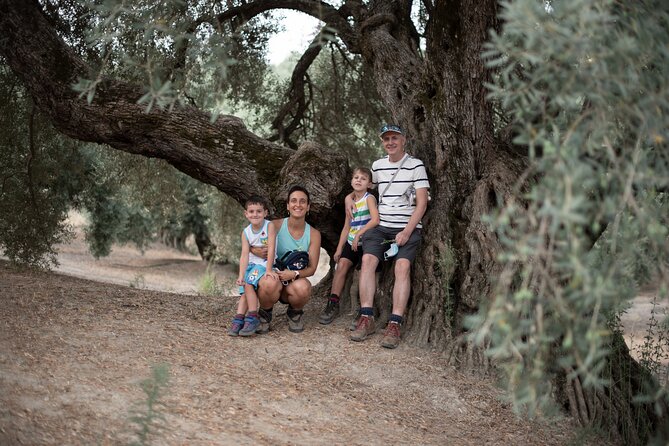
The first part takes place beside Cazorla, in an olive grove where the trees and mountain setting provide the lesson. This is the moment to pay attention to the scale of the crop. A single tree can look modest, but thousands of olive trees covering the hills explain why olive oil matters so much to Jaén.
Antonio uses the grove to explain olive culture, local traditions, and the place of the tree in daily life. The supplied details do not give a precise walking distance or terrain description, so comfortable shoes remain a sensible choice without assuming a demanding hike. You are visiting an agricultural site, not following a marked mountain trail.
This stop is especially useful if you know olive oil only as a bottle on a kitchen shelf. You begin to see that variety, harvest timing, growing conditions, and handling all affect the result. The early start can also work in your favor. At 9 a.m., you are out before the day becomes too warm, though you will need to organize breakfast around the departure.
The views are a key part of the visit, but the grove is not just a photo stop. The point is to understand how the olive tree fits into the local economy and culture. If your main interest is dramatic mountain scenery, you may find the technical discussion more detailed than expected. If you enjoy food, farming, or regional traditions, this is likely to be the most grounding part of the morning.
Inside the modern cooperative and oil mill

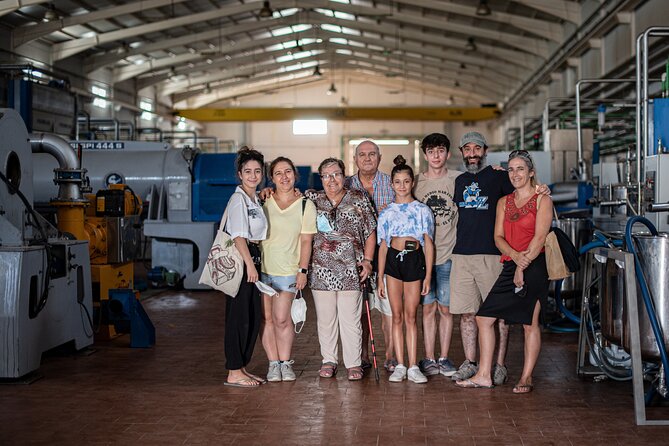
After the grove, you continue to a large cooperative, described as the biggest and most modern in the region. Here the visit shifts from old trees and rural customs to machinery and production.
You can expect to follow the oil-making process and see the equipment used to turn olives into oil. The available information does not specify every machine or each stage by name, so I would not promise a particular layout. The useful point is that you see production as an organized process rather than a mysterious trick carried out behind a shop counter.
This part helps explain why timing and care matter. Olive oil quality depends on what happens after the fruit leaves the tree, not only on the variety or the age of the grove. A visit to the mill gives you a practical reason to ask how olives are treated and how producers protect the qualities found in the finished oil.
The cooperative setting also adds a local-business angle. You are not only learning about a small family plot. You are seeing how a major regional operation handles a product that supports much of the province. That makes the stop valuable for anyone who wants a clearer picture of Andalusian agriculture.
There is one tradeoff. Large production spaces can feel more industrial than intimate, and the machinery may interest some people more than others. Still, the tour works well because the cooperative follows the grove. You first see the source, then the scale required to process the crop.
The tasting room at Olearum in Cazorla’s old center
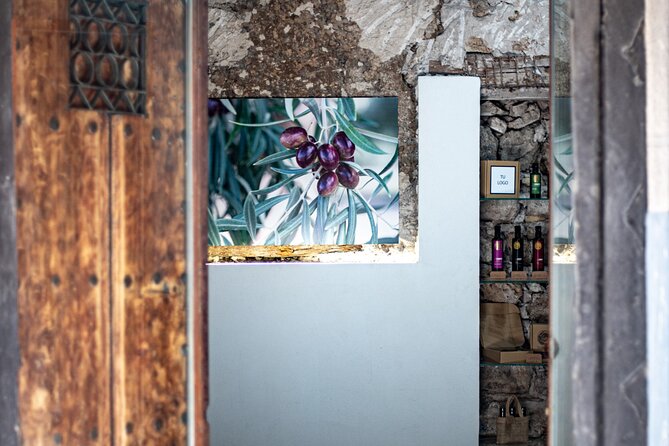
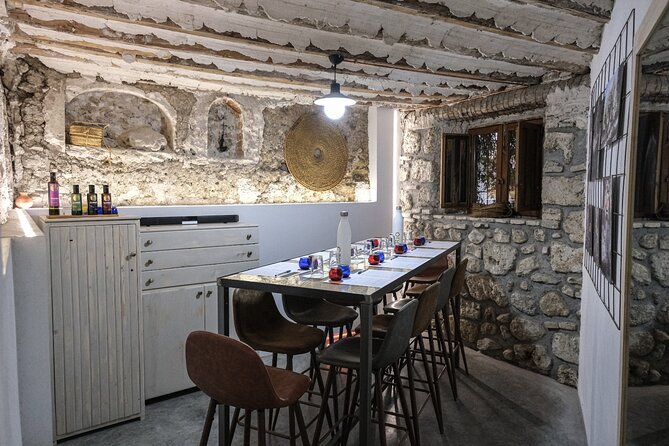
The final stop takes place at Olearum’s tasting room on C. Gómez Calderón, 14, in Cazorla’s historic center. This is also where the tour ends, close to shopping, bars, and restaurants. The location is convenient if you want to continue exploring town or stop for a meal after the morning visit.
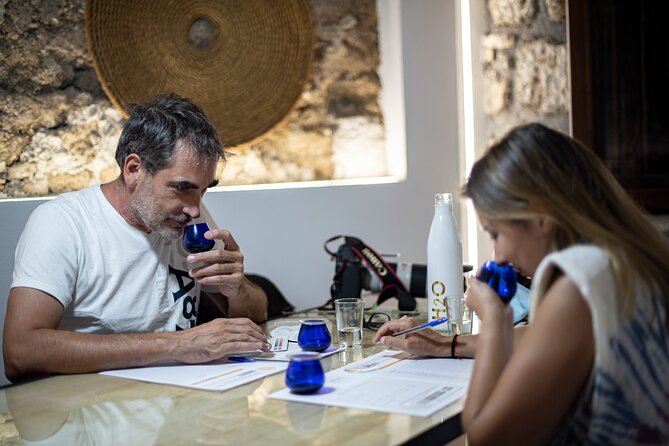
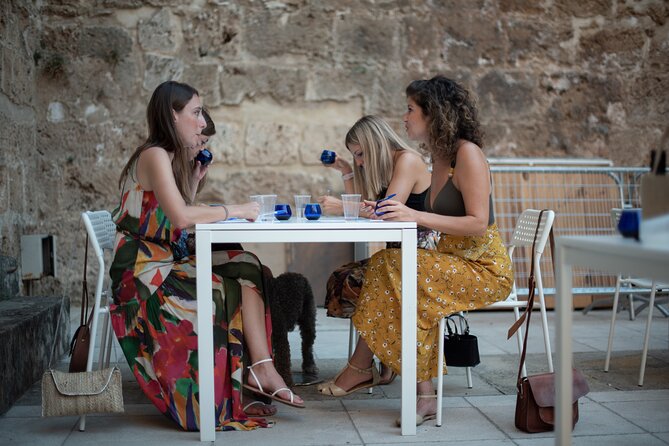
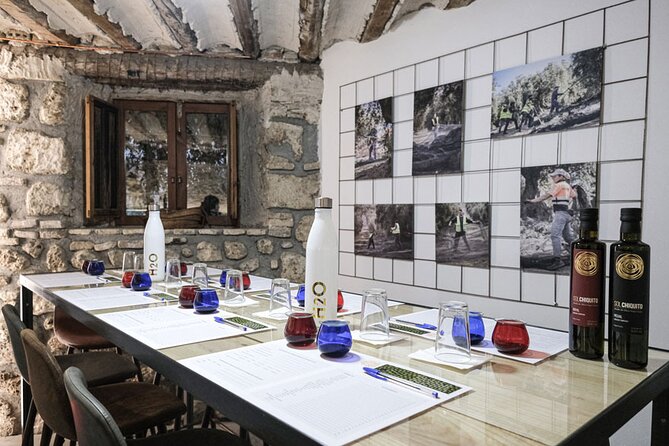
The tasting is more structured than simply pouring oil into a small dish. You learn how positive qualities are judged and how defects can be detected. That distinction matters. Good olive oil is not defined only by being green, peppery, or strong. Aroma, balance, freshness, and unwanted notes all play a part.
You will taste early-harvest oil and compare the two main local varieties, Royal and Picual. The goal is to use your senses to notice different aromatic details. This gives the tasting a clear purpose: by the end, you should have a better vocabulary for describing what you smell and taste.
Royal and Picual are not presented as identical products with different labels. The tasting lets you compare them directly, which is more useful than trying to remember descriptions from a shop shelf. The experience can also change the way you buy oil later. You may start looking for variety, harvest information, and quality terms rather than choosing only by bottle design or price.
Families can take part, too. The tasting is presented as understandable and engaging for adults and children, though children’s interest will naturally vary. The group size of no more than 10 should help Antonio keep the session active and respond to different levels of experience.
More Olive Mill and Factory Tours in Spain
- Guided Tasting Tour in 16th century House and Olive Oil Factory
★ 5.0 · 169 reviews - Visit Oil Mill Museum and Olive Oil Tasting in Ronda
★ 4.5 · 105 reviews - Jaén: Guided Olive Mill Tour with Olive Oil Tasting
★ 4.9 · 74 reviews - Picualia, olive oil mill tour & EVOO tasting
★ 5.0 · 49 reviews
Antonio’s role makes a real difference
The guide is Antonio, described by participants as an agronomist and a professional who works closely with olive trees, oil, and the land. His role appears to be one of the strongest reasons to choose this activity. He is not simply directing you from one stop to another. He explains cultivation, production, and sensory evaluation as connected subjects.
That matters because olive oil can become technical very quickly. A guide who knows only tasting may skip the agricultural side. Someone focused only on farming may struggle to make the tasting useful. Antonio’s background allows the tour to move between both areas.
The experience is also designed to be easy to follow. The descriptions of his guiding emphasize clear explanations, a lively pace, and a tasting with plenty of sensory discovery. I would expect questions to be welcome, especially in a group of 10 or fewer.
A practical note: one account of the experience describes Antonio collecting the group from a hotel, while the published meeting point is Parking Público la Villa, Cam. de San Isicio, 0. Pickup is offered, but you should confirm the arrangement after booking rather than assume hotel collection is automatic.
What the $28.81 price gives you
At $28.81 per person, this is a strong value if you want more than a quick sample of local food. The fee covers about four hours, admission to the olive grove and oil mill visit, and the guided tasting. You are paying for access, transport arrangements where applicable, and instruction from a specialist.
The value is strongest when you consider the three-part structure. A short tasting alone might be cheaper, but it would not show you the trees or the production process. A countryside outing without the tasting would leave out the part that helps you understand quality. Here, each stage supports the next.
The price may feel less attractive if you are interested only in buying a bottle or taking a quick look at an olive grove. You could also find four hours too long if you are not interested in food production. For anyone curious about Andalusia’s main agricultural product, though, the amount of time gives the subject room to make sense.
The activity is booked, on average, 40 days ahead. That suggests you should not leave it until the last morning of your Cazorla stay, especially if your schedule is fixed. Confirmation arrives within 48 hours, subject to availability, so allow time for that response when planning.
Timing, pickup, and the small-group setup
The advertised start is 9 a.m., and the full visit lasts about four hours. It ends at Olearum’s tasting room in the town center, not back at the stated starting parking area. That is useful to know when planning lunch, shopping, or a second activity.
Pickup is offered, but the published start location remains the public parking area at La Villa. Ask where and when you will be collected if you want hotel pickup. This small check can prevent a rushed start.
The group limit is 10 people. That is a good fit for a subject that depends on questions and sensory comparison. In a large bus group, an oil tasting can become a quick presentation. With fewer people, you have a better chance to hear explanations and take part without feeling lost in the crowd.
The tour is mobile-ticket friendly, and service animals are allowed. Most people can participate, according to the available details. No special physical demands are specified, so ask the operator directly if you have concerns about the grove or mill setting.
Weather and cancellation details worth knowing
The grove visit depends on good weather. If conditions force a cancellation, you are offered another date or a full refund. The same options apply if the minimum number of participants is not reached.
You can cancel for a full refund up to 24 hours before the start time. Changes or cancellations made less than 24 hours before the local start time are not accepted for a refund. That policy is reasonable for a small, weather-dependent activity, but it makes it important to keep your Cazorla schedule flexible until the morning is secure.
Who should book this olive-oil experience?
I would choose this for anyone who enjoys regional food, farming, small-group instruction, or a fuller sense of place. It is especially good if you are staying in Cazorla and want an activity tied directly to the area rather than a generic sightseeing stop.
It also suits families, since the grove, machinery, and tasting offer different ways to stay interested. Children may not follow every technical detail, but the sensory part gives them something practical to do.
Food lovers should get the most from it. You will leave with a better idea of why extra virgin olive oil can smell fresh, bitter, grassy, fruity, or peppery, and why defects matter. Even if you already cook with good oil, comparing Royal and Picual side by side can sharpen your palate.
I would think twice if you dislike early starts, have no interest in agriculture, or want a short, drop-in attraction. Four hours is a substantial part of a morning. The reward comes from the complete story, not from rushing through a single highlight.
Should you book it?
Yes, if you want to understand why olive oil is central to Cazorla and Jaén. The combination of a centenary grove, a working cooperative, and a guided tasting gives you much more than a bottle purchase or a scenic drive.
Book it early if your dates are fixed, confirm pickup details, and wear practical shoes for the grove. The best reason to go is the link between place and flavor: you see the trees, follow the production, then taste the result with Antonio’s guidance. That makes this a worthwhile half-day for curious eaters and anyone hoping to experience a less obvious side of Andalusia.
FAQ
Where does the tour start?
The stated meeting point is Parking Público la Villa, Cam. de San Isicio, 0, 23470 Cazorla, Jaén, Spain. Pickup is offered, so confirm your specific arrangement with Olearum.
Where does the tour finish?
The tour ends at Olearum’s tasting room at C. Gómez Calderón, 14, in Cazorla’s historic center, near shops, bars, and restaurants.
What time does the experience begin?
The start time is 9 a.m.
How long does the tour last?
The experience lasts approximately four hours.
What olive oils will I taste?
The tasting includes early-harvest oil and compares the Royal and Picual varieties, two main varieties from the area.
Can I cancel for a full refund?
Yes. You can cancel at least 24 hours before the local start time for a full refund. Cancellations or changes made less than 24 hours before the start are not accepted for a refund.
Freshly pressed around Spain
- Paella, Olive Oil, Wine & Relax in Rural Estate outside Madrid★ 5.0 · 2 reviews
- Olive Oil Tour and Tasting in Málaga★ 5.0 · 2 reviews
- Discover the varieties of wines, olive oil and food on Mallorca★ 5.0 · 8 reviews
- Olive Oil Excursion to an olive mill in the Lecrín Valley★ 3.5 · 3 reviews
- Authentic Olive Oil Tasting in Cordoba, Spain★ 4.0 · 2 reviews
- Cordoba Olive Oil mill, Wine, Passion★ 4.5 · 8 reviews
- Full day in Cordoba between Vineyards and Olive Trees with a Convertible Car★ 5.0 · 2 reviews
- Visit olive grove centenary with oil tasting course★ 5.0 · 11 reviews
Olive Mill and Factory Tours, compared.
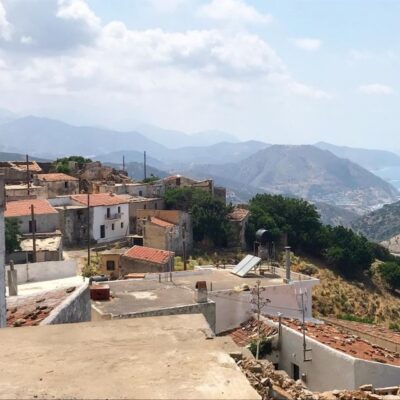
Crete: Quad Safari, Olive Mill with Tasting & Ghost Village
Read our review →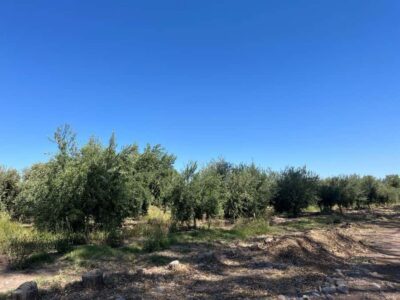
From Mendoza: 3 Wineries, Olive Oil Factory Tour & Tasting
Read our review →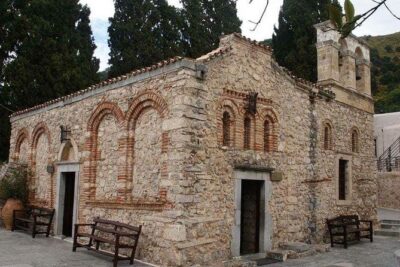
Knossos-Zeus Cave -Old Traditional Villages-Olive Oil Factory
Read our review →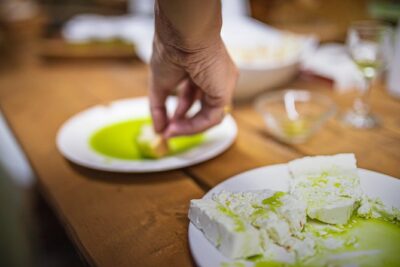
The Governor’s Olive Mill Tour with Olive Oil Tasting
Read our review →
Crete: Road-trip to Lasithi, Zeus Cave & Olive Mill Farm
Read our review →
Lassithi, Zeus Cave, Olive Mill Farm & Knossos Combo Tour
Read our review →
Zeus Cave, Lassithi Plateau, Olive Oil Factory, Kritza, Pottery
Read our review →