
Review · BAEZA
Guided tour of the Museum of Olive Culture Oil Tasting
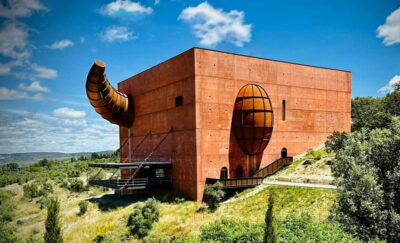
The best part of this Jaén experience is that it takes olive oil out of the bottle and puts it in its proper setting: an old mill, an olive garden, and the working traditions of Andalucía. You’ll see more than 30 olive varieties, original late-19th-century machinery, and a remarkable cellar known as the Cathedral of Oil.
I like the clear two-part plan: a guided museum visit followed by a hands-on tasting workshop. I also like the small group limit of 20 people, which should make it easier to hear the guide and ask questions. The main consideration is location. You must make your own way to Hacienda La Laguna in Puente del Obispo, rather than joining from a central Jaén meeting point.
Key points to know
- See more than 30 olive tree varieties: The museum garden gives you a useful look at the different trees behind Andalucía’s famous oil.
- Explore a late-19th-century mill: Original milling and pressing systems make the production process easier to understand.
- Enter the Cathedral of Oil: This former mill winery has been declared a Cultural Interest site.
- Taste oil with proper equipment: You’ll use tasting glasses, sheets, pencils, apple, and water rather than simply dipping bread.
- Plan for a compact two-hour visit: The 11:00 a.m. start leaves time for other Jaén-area plans.
- Pay $17.94 for a focused introduction: The price is reasonable if you want both cultural background and practical tasting skills.
Why olive oil makes sense as a Jaén experience
Jaén is closely tied to olive growing, and this visit gives you a way to understand that connection without spending a full day on a large food tour. The subject is narrow, but that is part of the appeal. You come away with a clearer idea of how trees, mills, storage, and tasting all fit together.
The museum is at Finca Hacienda La Laguna, in Puente del Obispo. That setting matters. Instead of hearing a generic explanation in a shop, you visit a place built around the production and culture of olive oil.
The tour is offered in English and lasts about two hours. That is enough time to cover the museum spaces and tasting workshop, but not so long that the subject is likely to feel heavy. If you have only a short window in the Jaén area, this format works well.
The experience has a 4.8 out of 5 rating and a 94 percent recommendation rate from 17 published evaluations. Those numbers suggest that the visit delivers what it promises, especially for people interested in traditional farming, local food, and the details of oil quality.
More Olive Oil Museums around Spain:
- Ronda: LA Almazara LA Organic, Olive Oil Museum and Tasting
★ 4.6 · 435 reviews - Visit Oil Mill Museum and Olive Oil Tasting in Ronda
★ 4.5 · 105 reviews - Split: Klis Fortress GOT and Olive Museum Entry Tickets
★ 4.6 · 283 reviews
Walking through the olive tree garden
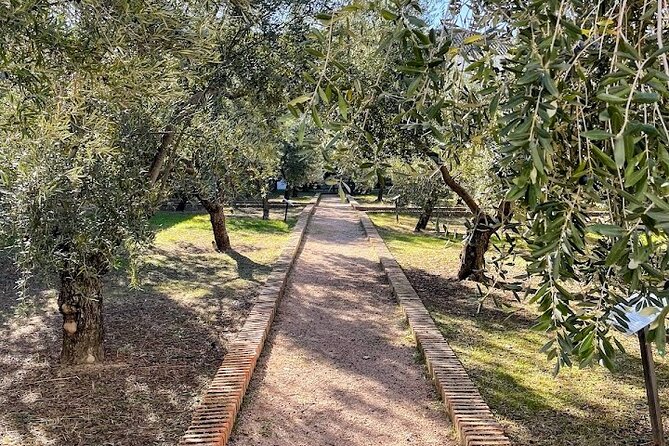
Your first look at the museum includes a garden with more than 30 varieties of olive tree. This is a useful beginning because olive oil can seem like one simple product until you learn that the tree itself affects the result.
You’ll be able to connect the final taste with the plant that produces the fruit. The garden also gives the visit a more physical quality. You are not only looking at machinery and panels. You are seeing the raw material in the open air.
The garden is especially worthwhile if you normally buy olive oil by price or label alone. The visit may help you pay closer attention to the type of olive used and to the regional traditions behind different oils.
Do not expect a botanical tour with a long scientific lesson. The available information points to an introduction to the varieties, not an advanced agricultural course. That is fine for most visitors. The garden supplies context, then the museum moves you toward the production process.
Understanding the original mill machinery
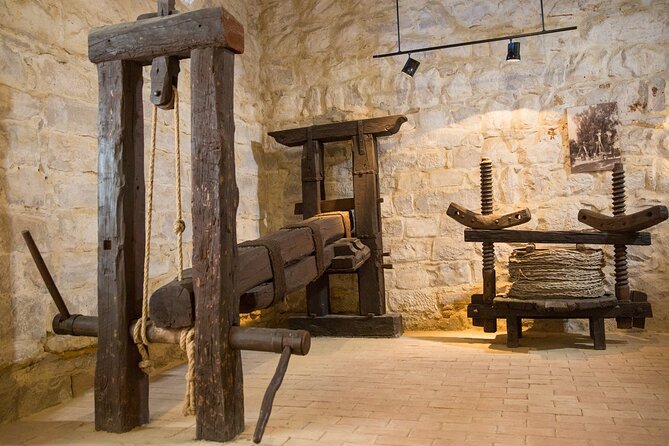
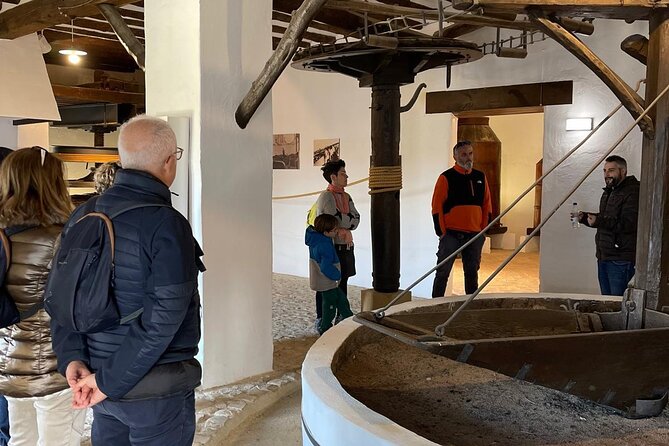
The old milling and pressing equipment gives the museum its strongest sense of place. These systems date from the late 19th century, and the guide explains how they were used to turn olives into oil.
Machines make more sense when you see them in their original setting. You can better picture the physical work once required, the stages of pressing, and the tools used by people working in the field and mill.
The museum also includes other agricultural tools. These objects help broaden the story beyond the finished bottle. Olive oil depends on cultivation, harvesting, transport, crushing, pressing, and storage. Even a short visit can show you that the product is tied to a whole working tradition.
I would pay close attention during this part if you want to make the later tasting more useful. The workshop is not isolated from the museum. The machinery explains how the oil was produced, while the tasting teaches you how to assess the result.
Because the tour lasts around two hours, the guide will need to keep the explanations moving. You should expect an accessible overview rather than a slow, highly technical examination of every tool. That makes the visit suitable for first-time learners, though dedicated food historians may want more time.
Entering the Cathedral of Oil
The museum’s cellar, called the Cathedral of Oil, is one of the most distinctive parts of the visit. It is the winery of the mill and was declared a Cultural Interest site in 1992.
The name is not just marketing language. It points to the scale and character of the storage space, where oil formed the center of the mill’s work. A cellar also helps explain why storage matters. The process does not end when olives are pressed. The finished oil must be kept and handled properly.
This is the point where the museum’s cultural side becomes strongest. The building reflects the role olive oil played in local work and tradition, not just in modern kitchens. If you enjoy old industrial spaces, the cellar may be the most memorable room of the tour.
Your guide should help connect the architecture with the mill’s function. Listen for how the storage area relates to production, since that link is more useful than simply treating the cellar as a photogenic stop.
The provided information does not promise extensive access to every part of the historic property, so keep your expectations practical. You are visiting the museum’s defined spaces during a guided tour, not taking an independent architectural survey.
More Guided Tours around Spain:
- Guided tour and olive oil tasting in Alhaurin el Grande (Málaga)
★ 5.0 · 200 reviews - Guided Tasting Tour in 16th century House and Olive Oil Factory
★ 5.0 · 169 reviews - Sóller: Olive Oil Guided Tour and Tasting at Can Det Estate
★ 4.8 · 82 reviews - Jaén: Guided Olive Mill Tour with Olive Oil Tasting
★ 4.9 · 74 reviews
Learning how a professional tasting works
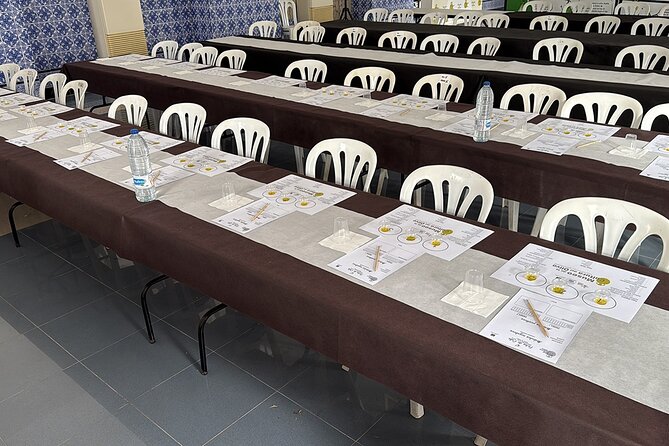
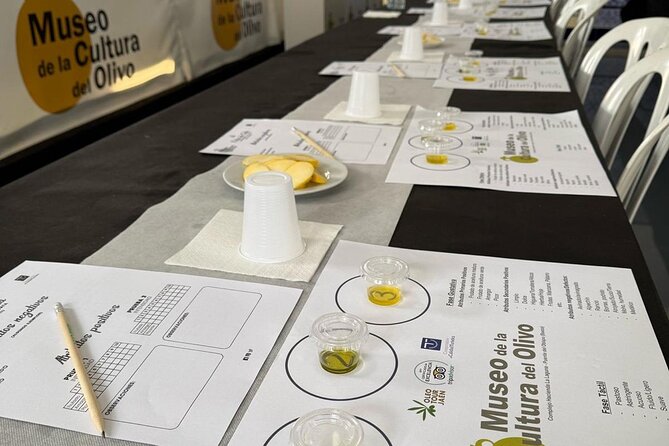
After the museum visit, you join an introductory oil tasting workshop. This is more structured than trying oil at a restaurant table. You’ll use tasting glasses, tasting sheets, pencils, apple, and water.
The equipment matters. Proper tasting glasses help you focus on aroma and flavor, while the water and apple help clear your palate between samples. The tasting sheet gives you a way to record what you notice rather than relying on a vague impression.
You’ll learn to recognize the main organoleptic characteristics of olive oil. In plain terms, that means paying attention to what you smell and taste, along with the overall sensory impression.
The workshop places you in the role of a professional taster, but it is clearly an initiation rather than a certification course. You do not need prior knowledge. The value is in learning a method you can use later when comparing oils at home or shopping in Andalucía.
This part also makes the visit more social. A museum tour can sometimes become passive, with one person speaking while everyone else looks around. The tasting gives you a small task and a reason to discuss what you notice.
One published comment praises the chance to learn how to recognize oil quality and understand traditional methods. That is exactly where this experience has practical value. You are not only collecting facts about Jaén. You are learning a simple skill that can change how you taste olive oil afterward.
What the $17.94 price includes
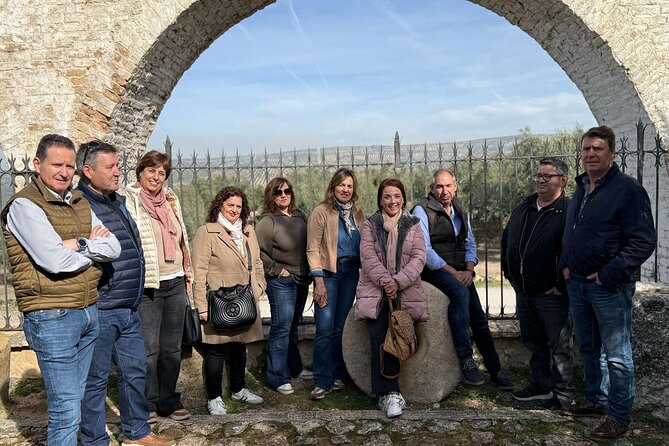
At $17.94 per person, the price is fair for a two-hour guided activity that combines admission, a specialist-led museum tour, and a tasting workshop. You are paying for more than entry to a collection of old equipment.
The value is strongest if you want an organized introduction. Admission to a museum alone may be cheaper elsewhere, but it would not give you the explanation of the milling systems or the guided tasting tools included here.
The price is less compelling if you already know olive oil tasting well or mainly want a quick sample. This is not designed as a brief stop for a free taste. The visit gives equal weight to local culture, historical equipment, and sensory education.
A maximum group size of 20 helps support the price. It is not a private visit, but it is small enough that the guide should be able to manage the room and tasting activity without turning the workshop into a crowd scene.
The rating of 4.8 out of 5 supports the idea that the experience offers solid value, though the total number of published evaluations is modest. I would treat the score as encouraging rather than as a guarantee for every visitor.
Timing, meeting point, and practical planning
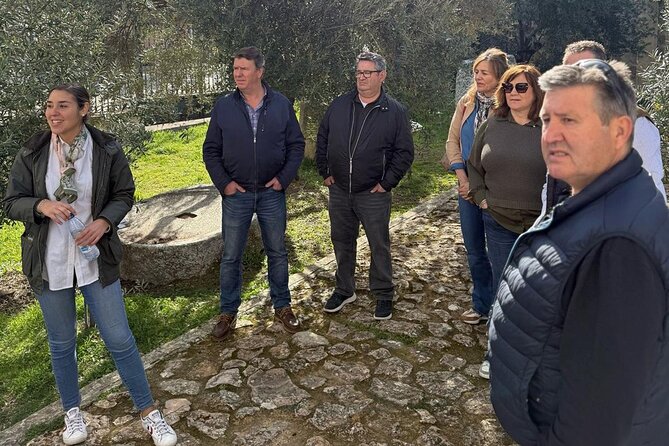
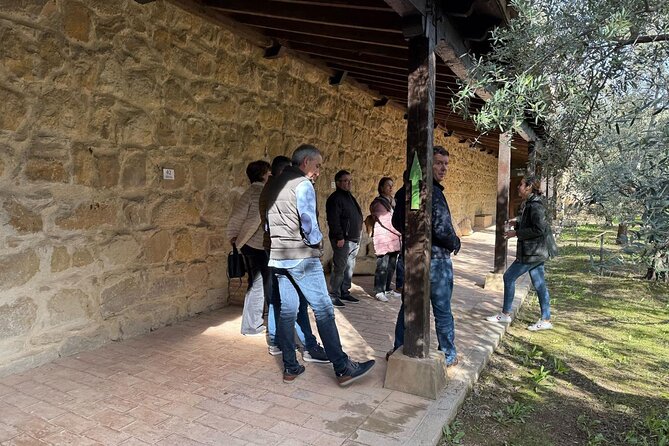
The tour begins at 11:00 a.m. at Museo de la Cultura del Olivo, Oleoturismo, Cata de Aceites, at Finca Hacienda La Laguna, 23529 Puente del Obispo, Jaén, Spain. It ends back at the same meeting point.
That return to the starting point makes the activity easy to combine with your own plans, provided you arrange your transport to and from the finca. The information supplied does not include a transfer from Jaén or another town, so do not assume transportation is included.
The two-hour duration is also useful for planning meals and visits later in the day. Since the start is midmorning, you can schedule lunch afterward without having to rush through the museum.
The tour is offered in English. If you need another language, radio guides may be hired on arrival for an additional €1.50. The information does not specify which languages are available, so ask at the site rather than counting on a particular option.
Confirmation is provided at booking. Service animals are allowed, and most participants can take part. If you have a specific access need beyond that information, contact the provider before booking, since the details supplied do not describe every physical feature of the property.
You can cancel for a full refund up to 24 hours before the local start time. Changes or cancellations inside that 24-hour window are not accepted for a refund. That is a useful safety net, but the cutoff is firm.
Who will enjoy this visit most
I would recommend this tour to you if you enjoy food traditions and want more than a restaurant tasting. It also suits anyone curious about rural Andalucía, historic working machinery, or the daily importance of olive growing in Jaén.
It is a good match for first-time olive oil tasters. The supplied materials give you a clear structure, and the workshop does not require you to arrive with specialist vocabulary.
Families and mixed-age groups may also find the format manageable because the visit changes pace. You move from garden to machinery to cellar, then take part in a short tasting activity. The two-hour length helps keep the subject focused.
You may want to skip it if you have no interest in olive oil or old agricultural equipment. The experience stays firmly on that subject. It is not a general Jaén sightseeing tour, and it does not include a broad selection of Andalusian foods.
You should also think about the setting. Since the meeting point is at Hacienda La Laguna in Puente del Obispo, this works best when you already plan to visit that part of the province or have a reliable way to reach it.
Is this Jaén olive oil tour worth booking?
Book it if you want a concise, well-priced introduction to Jaén’s olive culture, especially if the chance to taste oil properly appeals to you. The combination of 30-plus olive varieties, original mill machinery, the Cathedral of Oil, and a guided tasting gives the two hours a clear purpose.
Think twice if your priority is convenience from central Jaén, since transport to the meeting point is not included in the supplied details. Also skip it if you want a full food tour or a highly technical professional course.
For most curious visitors, $17.94 is a sensible price for a focused cultural stop. Arrive ready to look closely, take notes during the tasting, and pay attention to the link between the old mill and the oil in your glass.
FAQ
Where does the olive oil tour begin?
It begins at Museo de la Cultura del Olivo, Oleoturismo, Cata de Aceites, at Finca Hacienda La Laguna, 23529 Puente del Obispo, Jaén, Spain.
What time does the tour start?
The scheduled start time is 11:00 a.m.
How long does the experience last?
The experience lasts approximately two hours.
Where does the tour end?
It ends back at the meeting point at the Museum of Olive Culture.
Is admission to the museum included?
Yes, the museum admission ticket is included.
Is the tour offered in English?
Yes, English is one of the offered languages.
Can I hire a guide in another language?
Radio guides in different languages may be available for €1.50, paid on arrival.
What is included in the oil tasting workshop?
The workshop provides tasting sheets, pencils, an apple, water, and tasting glasses.
How many people can join the tour?
The activity has a maximum group size of 20 participants.
Can I cancel for a full refund?
Yes. You can cancel at least 24 hours before the local start time for a full refund. Cancellations or changes made less than 24 hours before the start are not accepted for a refund.
Freshly pressed around Spain
- Paella, Olive Oil, Wine & Relax in Rural Estate outside Madrid★ 5.0 · 2 reviews
- Olive Oil Tour and Tasting in Málaga★ 5.0 · 2 reviews
- Discover the varieties of wines, olive oil and food on Mallorca★ 5.0 · 8 reviews
- Olive Oil Excursion to an olive mill in the Lecrín Valley★ 3.5 · 3 reviews
- Authentic Olive Oil Tasting in Cordoba, Spain★ 4.0 · 2 reviews
- Cordoba Olive Oil mill, Wine, Passion★ 4.5 · 8 reviews
- Full day in Cordoba between Vineyards and Olive Trees with a Convertible Car★ 5.0 · 2 reviews
- Visit olive grove centenary with oil tasting course★ 5.0 · 11 reviews
Olive Oil Museums, compared.
Ronda: LA Almazara LA Organic, Olive Oil Museum and Tasting
Read our review →
Split: Klis Fortress GOT and Olive Museum Entry Tickets
Read our review →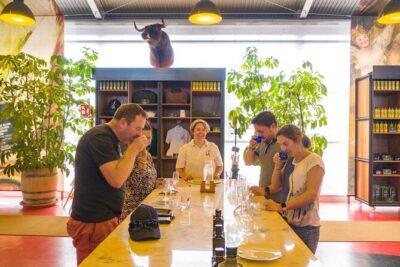
Visit Oil Mill Museum and Olive Oil Tasting in Ronda
Read our review →

Olive museum Klis with educational olive oil tasting
Read our review →
Pula: House of Istrian Olive Oil Museum and Guided Tasting
Read our review →
Lefkada: Olive Museum Fabbrica Ticket and Guided Tour
Read our review →Other lists with this tasting on them